
The recent trilateral diplomatic engagement in Egypt between Eritrea and Somalia facilitated in part by shuttle diplomacy involving US Ambassador Massad Boulos has highlighted emerging realignments in the Horn of Africa. The absence of Djibouti from these discussions signals more than a routine diplomatic omission and it reflects a deeper divergence based in Djibouti’s evolving security and economic priorities. Rather than just snub this non participation shows Djibouti’s recalibration toward a formalized partnership with the European Union creating both challenges and opportunities for regional actors.
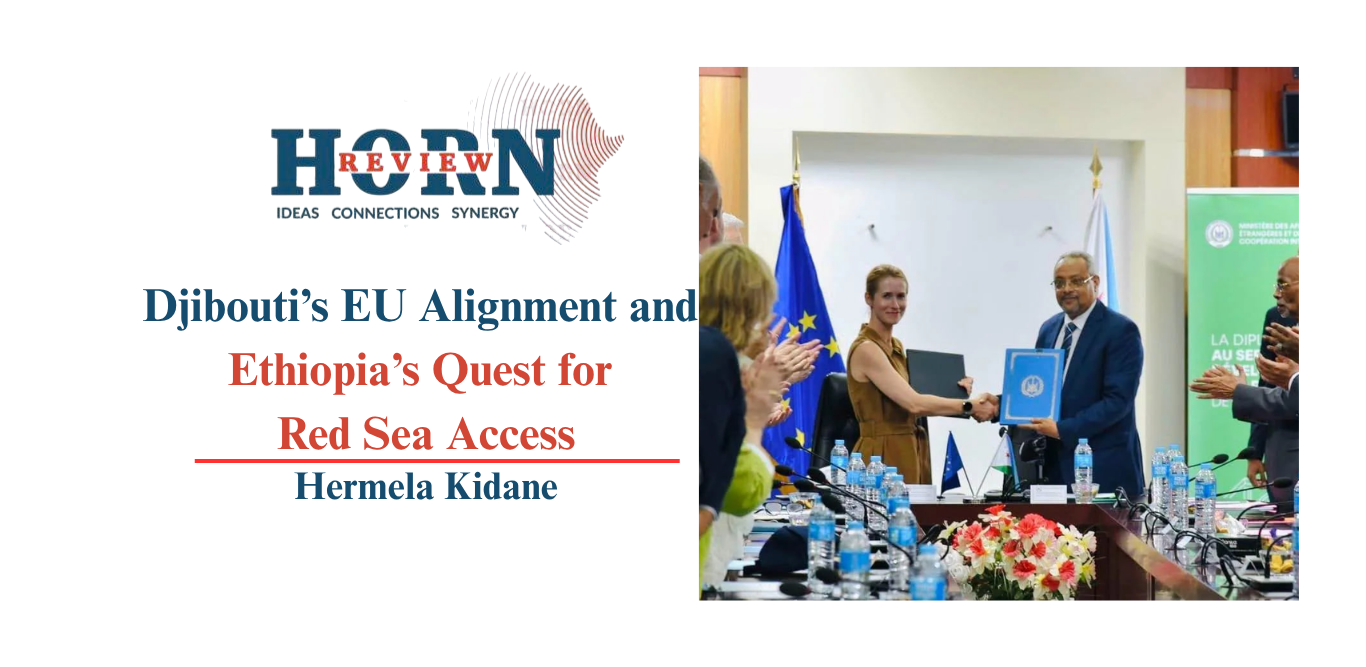
Djibouti’s decision to remain outside the Egypt led process stems primarily from its recent Status of Forces Agreement with the European Union concerning Operation EUNAVFOR ASPIDES signed on 16 July 2026. This agreement provides the EU with sustained logistical and operational access to Djiboutian facilities enabling maritime patrols across the Red Sea and Gulf of Aden while securing land based support for naval operations. As High Representative Kaja Kallas noted during the signing effective maritime security requires reliable shore based partners.
In roughly 29 months ASPIDES has escorted over 670 merchant vessels, assisted in the rescue of 128 seafarers and responded to multiple threats reinforcing its role in safeguarding a critical global constriction. For Eritrea long wary of external military presences along its coastline the deepening EU Djibouti partnership raised concerns about encirclement. This perception contributed to Eritrea turning toward Egypt seeking counterbalancing arrangements with Somalia. Djibouti having committed to the EU regime evidently assessed that participation in the emerging Egypt axis offered limited additional value relative to its existing commitments. Its absence thus appears as a deliberate choice consistent with its security alignment.
Djibouti derives a substantial portion estimated at around 90% of its port related revenue from Ethiopian transit and logistics. This interdependence creates a powerful incentive for caution. Any alignment perceived as antagonistic to Ethiopian interests risks economic repercussions including potential diversification by Ethiopia toward alternative ports. Djibouti therefore prioritized stability in its vital economic relationship adopting a hedging posture that has left it somewhat isolated from the nascent Cairo Asmara-Mogadishu alignment while anchored to Brussels on security matters.
This isolation while limiting Djibouti’s regional diplomatic flexibility opens a window for Ethiopia. As an actor with established ties to the European Union Ethiopia is well positioned to engage more proactively in Red Sea security structures. The EU’s ASPIDES operation though effective at sea benefits from deeper land based depth and regional integration. Ethiopia’s participation could enhance situational awareness, information sharing and operational sustainability areas where a continental power with substantial interests can add value. Ethiopia’s reconstituted naval capabilities currently developing at the inland facility in Bishoftu could transition toward meaningful coastal engagement through structured cooperation. By negotiating complementary arrangements with the EU, Ethiopia could integrate its assets into broader patrols or escort missions advancing its blue water aspirations under a legitimate multilateral structure. Such collaboration would align with the EU’s interest in burden sharing for freedom of navigation.
The recent European Peace Facility support approximately $10 million to equip and train the Djiboutian navy will likely strengthen its role as a maritime security provider. However a capable Djiboutian force requires a stable hinterland to maximize effectiveness. Ethiopia as the region’s largest economy and primary user of Djiboutian ports can position itself as an indispensable partner. Negotiations for enhanced naval and logistical cooperation potentially including dedicated access or joint facilities should be framed as mutual reinforcement Ethiopia gains reliable Red Sea access while Djibouti diversifies its security and revenue base beyond commercial port fees. This approach shifts the relationship from transactional to mitigating risks of over reliance on any single partner.
The island of Dumeira subject to periodic Djiboutian-Eritrean frictions presents one such avenue. Historical Ethiopian interests in this feature predate certain post colonial delineations. While claims in this domain require careful legal and diplomatic handling, a well documented review of Ethiopia’s position could form part of a broader maritime strategy. Pursuing this through quiet statecraft and multilateral forums would complement. The Djiboutian shift illustrates lessons for Horn of Africa geopolitics. Economic interdependence often outweighs fleeting diplomatic coalitions and security partnerships with extra regional powers can reshape local alignments in unexpected ways. For Ethiopia the current configuration dismantles notions of a unified coastal front opposing its interests and highlights the value of patient multi track diplomacy combining bilateral negotiations, multilateral security cooperation and prudent assertion of historical positions. By leveraging its EU partnership transforming economic leverage into depth with Djibouti and methodically advancing its maritime doctrine Ethiopia can convert a moment of regional divergence into a durable foundation for Red Sea access. The result would not only address Ethiopia’s long standing quest for maritime outlets but also contribute to a more stable and balanced regional security order.
By Hermela Kidane, Researcher, Horn Review

Egypt’s Geopolitical Paradox on the Nile: Selective Partnerships as a Strategy of Containment
Egypt’s response to Ethiopia’s development and utilization of the Nile...

The Houthis at Bab el-Mandeb and the Stakes Ahead
The Houthis have completed their takeover of the Bab...
Isaias's Ideology of Defiance Renders Engagement Without a Viable Outcome
Eritrea appears, in recent years, to be making diplomatic strides....
Sudan’s War and Ethiopia’s Narrowing Strategic Space
How SAF–Eritrea Cooperation and TPLF Mobilization Are Reshaping the Regional...
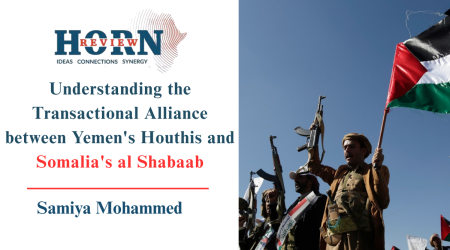
Understanding the Transactional Alliance between Yemen's Houthis and Somalia's al Shabaab
The alleged al Shabaab fighters among Houthi casualties on...
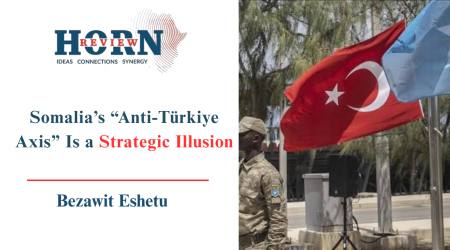
Somalia’s “Anti-Türkiye Axis” Is a Strategic Illusion
The Red Sea Axis article, “Why Somalia's Military Rise...
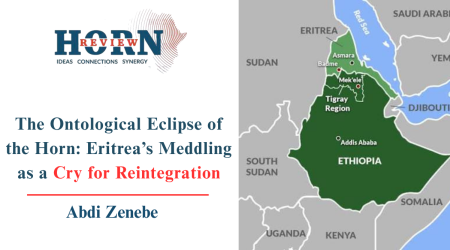
The Ontological Eclipse of the Horn: Eritrea’s Meddling as a Cry for Reintegration
By Abdi Zenebe (PHD), Deputy Director, FDRE Institute of Foreign...
TPLF's Obasanjo Complaint Masks a Leverage Deficit, Not a Neutrality One
The Tigray People’s Liberation Front’s September 6 statement accusing...
Clan Realism and the Capture of Somalia's Intelligence
The National Intelligence and Security Agency of Somalia occupies a...