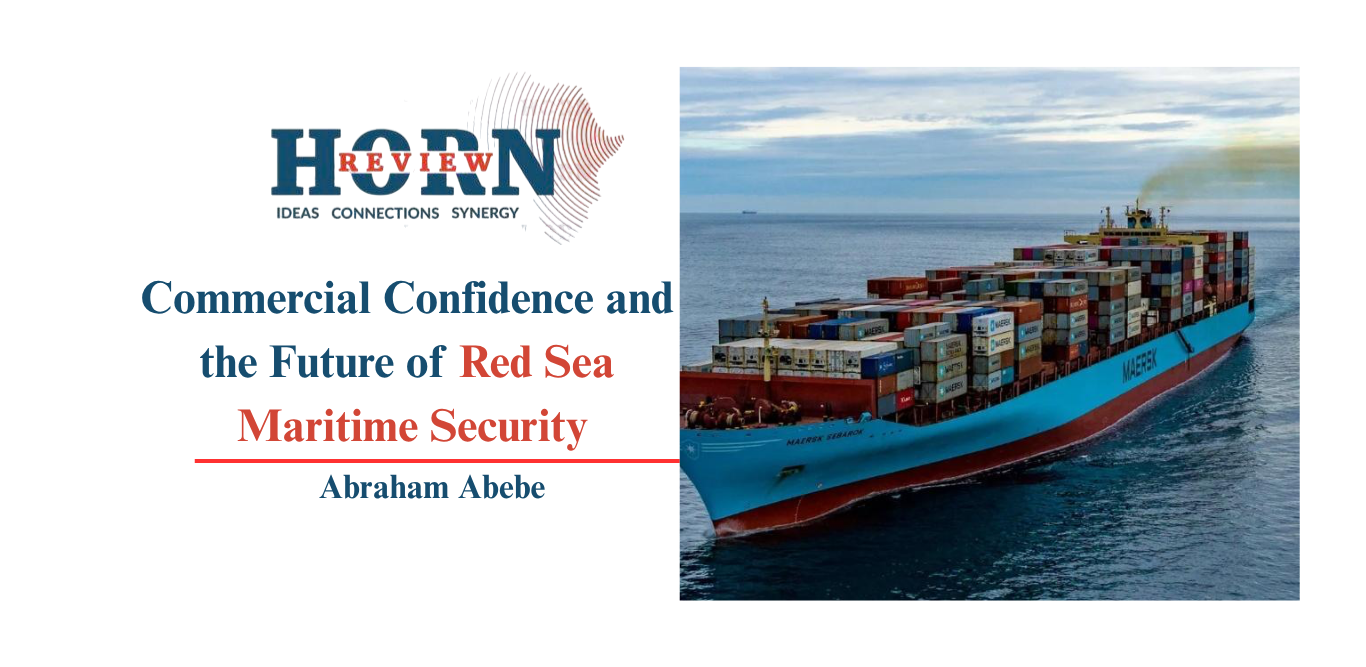
Following an improvement in the security environment in the Red Sea, major shipping companies are showing renewed interest in returning to the corridor, signalling a cautious recovery of trust in one of the world’s most important maritime routes. This recovery is still fragile, however, and depends on whether improved security can be sustained. On 6 July 2026, Maersk and Hapag-Lloyd announced the gradual restoration of selected services through the Suez Canal and the Red Sea under their Gemini Cooperation. The decision marked an important shift in commercial calculations after months of avoiding the route. The first restored Gemini service, AE15/SE3, began its return with the Majestic Maersk, whose successful transit through the Red Sea was confirmed by Maersk on 9 July 2026. On the same day, Maersk also announced that its Middle East-US East Coast service would return to the trans-Suez route. Although operations have resumed, they remain limited and conditional rather than representing a full return to normal maritime activity.
The significance of this decision extends beyond the two companies themselves. As two of the world’s largest container shipping operators, Maersk and Hapag-Lloyd influence wider industry expectations. Their return is likely to serve as an important market signal, prompting other shipping companies, insurers, and logistics providers to reassess the corridor’s commercial viability. The successful implementation of the first restored Gemini service provides an operational benchmark that other carriers will closely monitor before making similar routing decisions. Because commercial shipping companies base their routing decisions on integrated assessments of security conditions, insurance costs, operational efficiency, and customer demand, the return of major carriers represents more than a simple operational adjustment. It suggests that leading market actors increasingly view the security environment as sufficiently manageable to justify a cautious re-engagement with the corridor. If these operations continue without major disruption, the Suez-Red Sea route could gradually regain its importance in global trade networks, reducing dependence on longer, more costly diversions around the Cape of Good Hope.
However, the return of commercial activity remains conditional. The security environment has improved, but shipping companies continue to make decisions based on risk assessments rather than assumptions of lasting stability. The attack on a cargo vessel on 5 July 2026, shortly before Maersk’s announcement of the return of selected services, demonstrated that significant security challenges remain. Such incidents may deter companies from expanding their operations in the corridor, as renewed security threats can lead to increased caution and risk aversion among commercial operators.
The current moment represents an important turning point in the recovery of the Red Sea corridor. The central issue is whether this fragile recovery can be sustained. Although commercial confidence is beginning to return, the durability of that recovery will depend on whether the recent improvement in security can be maintained. Shipping decisions are shaped not only by immediate security conditions but also by expectations about whether improvements can endure. A corridor that appears calm for a short period may still be viewed as unpredictable if companies lack assurance that risks will remain manageable. The challenge for regional and international actors is to transform temporary calm into a more reliable environment for long-term commercial planning.
While improved security conditions have created the immediate conditions for commercial operators to return, sustaining this recovery also depends on whether international actors can reinforce those improvements through continued diplomatic engagement. Commercial decisions are shaped primarily by security conditions, but perceptions of long-term predictability are also influenced by whether international actors remain engaged in addressing maritime risks. In this context, the United Nations Security Council’s decision on Resolution 2722 is significant. On 14 July 2026, one day before the existing mandate expired, the Security Council extended the Secretary-General’s monthly reporting requirement on Houthi attacks against merchant and commercial vessels in the Red Sea until 15 January 2027. The decision preserves an important international framework for monitoring maritime security developments and maintaining diplomatic attention on threats to commercial navigation during a critical stage of commercial recovery.
However, political divisions among Security Council members persist. Supporters viewed the extension as necessary to sustain international attention on attacks against commercial shipping and freedom of navigation, while those abstaining continued to express concerns about the broader political context and the potential for further regional escalation. These differences demonstrate that ongoing diplomatic engagement among international actors can persist even when there is no agreement on the best approaches to maritime security challenges.
These unresolved divisions still influence how commercial operators assess the long-term predictability of the security environment. For shipping companies, uncertainty stems not only from physical threats but also from doubts about whether international actors will maintain coordination and effective response if security conditions worsen. Diplomatic engagement therefore supports a more predictable operating environment, but its effectiveness ultimately depends on whether it reinforces expectations of lasting stability.
The importance of maintaining commercial confidence extends beyond individual shipping companies. The corridor remains essential for international trade flows, linking European and Asian markets through the Suez Canal and the Bab el-Mandeb Strait. A sustained recovery would benefit not only shipping companies but also economies connected to maritime trade and countries dependent on reliable access to global markets.
The gradual restoration of Gemini services by Maersk and Hapag-Lloyd should be interpreted as an initial sign of shifting commercial expectations, not as a resolution of the Red Sea crisis. The fact that the first Gemini service has resumed operations shows that enhanced security conditions can affect commercial risk assessments and prompt leading operators to return to the corridor. Simultaneously, the Security Council’s extension of the Resolution 2722 reporting framework maintains essential international focus on maritime security during this pivotal phase. While these actions mark real progress in restoring confidence in the Red Sea corridor, the recovery remains precarious and could be set back by any renewed deterioration in regional security, which would likely erode commercial trust.
In conclusion, the Red Sea crisis reveals that the restoration of this vital maritime corridor is not achieved simply by reopening shipping lanes, but by building a durable foundation of maritime security, diplomatic engagement, and commercial confidence. While the return of major shipping companies and the renewal of the Resolution 2722 reporting framework are promising, the future of the corridor hinges on the capacity of regional and international actors to maintain a stable environment that enables long-term commercial commitment. Ultimately, lasting recovery will only be possible if all three elements; security, diplomacy, and confidence, are sustained together.
By Abraham Abebe, Researcher, Horn Review