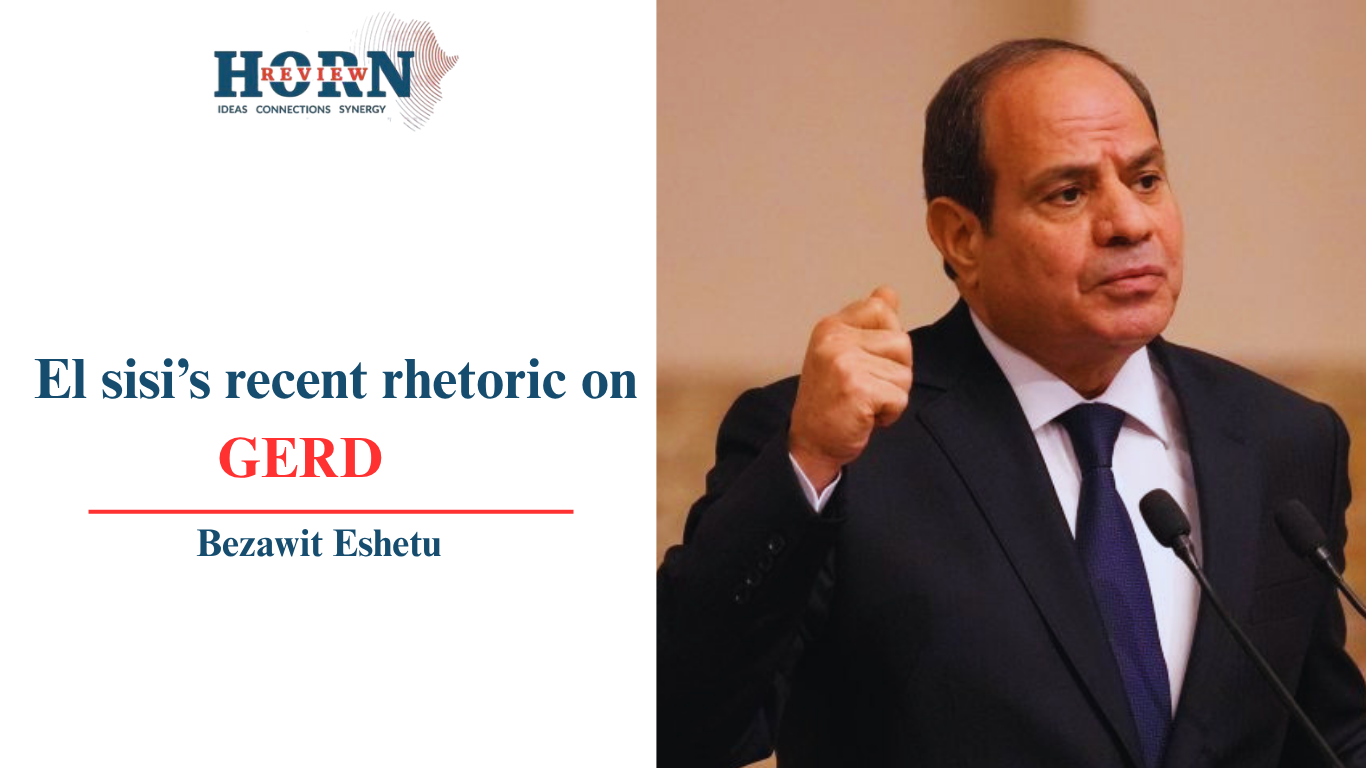
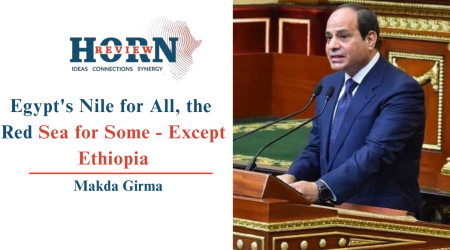
On April 4, 2026, Egyptian President Abdel Fattah el-Sisi used a high-profile official address to lay out Cairo’s strategic response to the long-running dispute over the Grand Ethiopian Renaissance Dam. He made it unequivocally clear that Egypt had deliberately internationalized the issue, placing the United Nations at the forefront while directly calling on the United States, the wider international community, and African nations in particular to confront what he described as the Ethiopian administration’s “erratic and irresponsible approach” to the GERD.
This move, however, stands in sharp contrast to El-Sisi’s broader regional posture. While he has carefully avoided open alignment with Washington or Jerusalem amid the Iran-Israel conflict, instead casting Cairo as a “balanced” mediator and quietly urging Donald Trump to help ease tensions, he has adopted a starkly different posture on the Nile question by globalizing what is fundamentally a bilateral dispute. Far from a contradiction, it is a calculated strategic maneuver: a declining power deliberately exploiting a moment of global distraction to shift the balance in its favor.
The pattern is not new. Since 2020, El-Sisi has repeatedly timed peaks of hostile rhetoric to coincide with GERD milestones and periods of domestic stress. After the collapse of Congo-mediated talks in April 2021, he warned that “all options are open” and that Egypt should not be pushed to the point where even “a drop” of its water is touched. At various points before the UN Security Council and in cabinet meetings, he described the dam as an “existential threat” and rejected any unilateral measures.
At Cairo Water Week on October 12, 2025, he again accused Ethiopia of causing “significant harm” and acting recklessly, echoing the same “we will not stand idly by” and “all necessary measures” formula almost verbatim. A December 2025 clarification then denied outright war threats while reaffirming the need for a legally binding agreement. The April 2026 address is simply the latest iteration of the same script, now delivered after the dam had moved into full operational mode following its inauguration.
The selective engagement with Washington reflects Cairo’s broader search for external backing at a time of strategic weakness. While projecting neutrality on Gaza and Iran, Egypt still turns to the United States when it comes to the Nile, revealing a dependence that sits uneasily beside its rhetoric of autonomy. This posture is less about conviction than leverage: Cairo tries to preserve domestic credibility by appearing independent in regional crises while quietly seeking external support on water security.
But the deeper problem is structural. Suez revenues are falling amid disruptions in the Red Sea and Hormuz, the economy remains trapped in emergency borrowing, and subsidy pressures continue to strain an already fragile state. In a world moving toward BRICS, multipolarity, and African self-determination, appealing to Washington to preserve downstream dominance over the Nile looks increasingly obsolete.
This focus on security is not new. Historical examples show that Egypt has often used threats around the Nile during times of regional instability or domestic struggles. Anwar Sadat’s 1978–79 threats of “going to Ethiopia to die there” occurred alongside realignments after Camp David, economic issues, and disruptions caused by the Iranian Revolution and the Lebanese civil war. Hosni Mubarak engaged in quiet veto diplomacy against upstream projects during the Gulf War and the post-9/11 climate.
El-Sisi’s actions since 2014 follow this pattern: strong rhetoric often emerges when GERD milestones align with stress within Egypt. This could be categorized as traditional diversionary foreign policy, framing the Nile as an existential “gift from God” to garner domestic support, mask economic troubles, and gain external leverage while global focus shifts to Hormuz. The timing of the April 2026 address is strategic: the GERD is now a reality in full hydropower and flood-management mode, Egypt’s economy is suffering from war-related spikes in fuel, fertilizer, and food prices, and Cairo is leaning on familiar security rhetoric to project strength, shore up domestic support, and preserve leverage in a rapidly changing regional order.
Egypt’s approach goes beyond rhetoric; it reflects a broader containment strategy unfolding across multiple fronts. Over the past 18 months, Cairo has pursued a coordinated southern policy aimed at expanding its influence while tightening pressure on Ethiopia. The 2024 defense agreement with Somalia was reinforced in 2025 through arms deliveries and military training. In 2025, Egypt also sent 1,091 troops, along with additional personnel, into AUSSOM, which the UN Security Council extended through December 31, 2026. Based on operational plans and recent troop movements, these forces have been deployed in Gedo, Hiraan, Lower Shabelle, and Jubaland—areas that either border Ethiopia’s Ogaden region or lie close to it.
That military posture has grown more politically significant in recent months. On March 2026, the speaker of Southwest State’s parliament publicly accused Somalia’s federal government of diverting Egyptian-supplied weapons to local militias rather than using them against al-Shabaab. This accusation coincided with a rapid consolidation of power in Southwest State by figures linked to local power broker Hussein. Taken together, these developments suggest that Egyptian supplies, reported weapons transfers, AUSSOM supply routes, and militia connections are being used to build a closer strategic position near Ethiopia’s border.
The wider dispute over the GERD, however, should not be reduced to political pressure alone. The actual hydrological and environmental effects of the dam challenge Cairo’s alarm and reveal the more complex role of Sudan. Technical studies, including some to which Egypt has contributed, show that the dam’s hydropower design does not consume water. Instead, it can provide basin-wide benefits by regulating flows, reducing downstream flooding, lowering siltation, extending the life of reservoirs in Sudan and Egypt, and creating room for better drought coordination. While short-term filling during dry periods can temporarily reduce flows, the longer-term operation of the dam tends to stabilize seasonal variation.
Sudan, as a mid-basin country, has already experienced some of these effects. It has benefited from reduced flooding and from greater irrigation potential, even though it remains attentive to the risks of low-flow years. In this sense, the GERD is not simply a source of conflict. It is also a development project with consequences that extend beyond Ethiopia’s borders, challenging the long-standing pattern in which upstream states were expected to accept downstream dominance without meaningful participation.
Ethiopia’s position rests on strong historical, geographical, and legal foundations. The Blue Nile begins in Ethiopia and contributes about 86 percent of the Nile’s total flow, a reality that colonial treaties deliberately ignored. The 1929 Anglo-Egyptian Agreement and the 1959 agreement with Sudan allocated nearly all measured river flow to downstream states while giving Egypt veto power over upstream projects. Ethiopia, which was never a British colony and is the source of most of the river’s water, was excluded entirely. Those arrangements reflected imperial security interests rather than fair resource governance.
Modern international water law points in a different direction. The 1997 UN Watercourses Convention emphasizes equitable and reasonable use, along with a duty to avoid significant harm. Likewise, the 2010 Nile Basin Cooperative Framework Agreement, which became active in October 2024 after ratification by Ethiopia and other upstream states, reflects a more balanced approach to basin governance, while Egypt and Sudan stayed outside it. For Ethiopia, then, the GERD is more than an infrastructure project. It is a step toward energy independence and a claim to the right to use national resources after decades of exclusion. By contrast, appeals to “historic rights” look increasingly like an effort to preserve colonial-era privileges in a changing regional order.
Taken together, these pressures help explain why Egypt’s geopolitical influence is under strain. Once central to the Arab world through Suez transit, U.S. support, and its diplomatic role, Cairo now faces instability from Gaza spillover, Sinai violence, disruptions in the Red Sea, and energy shocks linked to the Strait of Hormuz. Its economy relies heavily on emergency LNG imports and external support from Gulf states, while domestic confidence continues to erode under authoritarian fatigue.om war-related spikes in fuel, fertilizer, and food prices.
Against that backdrop, Ethiopia is emerging as a more consequential actor in the Horn of Africa. As a BRICS member, it now occupies a place within a major multipolar forum, while the Nile Basin Cooperative Framework Agreement has entered into force. UN Convention on the Law of the Non-Navigational Uses of International Watercourses also reflects the modern legal principle that shared rivers should be used in an equitable and reasonable manner. Against that backdrop, any external effort to pressure Addis Ababa into accepting older downstream claims would sit uneasily with contemporary water-law norms and would narrow diplomatic room for a more durable basin-wide settlement. A more prudent U.S. approach would be to encourage negotiation, data sharing, and cooperative management rather than appear to arbitrate the dispute on behalf of one side.
Seen this way, the GERD dispute now exposes a larger truth. Egypt is no longer shaping the terms of the Nile debate, but reacting to a new reality it cannot reverse. Ethiopia has transformed the dam from a contested project into a permanent strategic fact, and the legal and political center of gravity in the basin is moving toward equitable use, shared management, and negotiated coexistence rather than inherited downstream privilege. Cairo’s repeated escalation, appeals to outside powers, and language of existential threat do not restore control. They reveal the limits of a posture built on pressure rather than adaptation.
The most important lesson is that this is no longer a battle over whether Ethiopia should be allowed to develop, but over whether Egypt will accept a new order based on mutual rights or cling to an outdated hierarchy that no longer matches reality. In that sense, the GERD has done more than alter water politics. It has exposed the decline of coercive Nile diplomacy itself.
By Bezawit Eshetu, Researcher, Horn Review