The Four Meta‑Crisis and Ethiopia’s Readiness: Toward Durable State Formation
The Age of Meta‑Crisis
By Blen Mamo
The contemporary international system is no longer characterized by discrete, manageable crises. Rather, it has entered a phase best understood as a meta‑crisis: a condition in which multiple structural breakdowns – geopolitical, ecological, ideological, and technological – interact, amplify one another, and erode the foundational assumptions of modern statehood. This conjuncture places exceptional pressure on states whose processes of nation‑building and institutional consolidation remain incomplete. Ethiopia, a civilization‑state with deep historical continuity but unresolved modern political form, stands at a decisive juncture.
Preparedness under conditions of meta‑crisis is not a matter of policy optimization; it is a question of survival and durability. The central challenge is not merely how Ethiopia responds to external shocks, but whether it can complete the project of durable state formation while the global environment that once supported late development is itself disintegrating.
This analysis examines the four core dimensions of the global meta‑crisis and evaluates Ethiopia’s strategic readiness through eight interrelated domains: food security, water and energy security, industrial capacity and structural independence, defense autonomy, macroeconomic reform and state entrepreneurship, sovereign access to the sea, digital sovereignty and tech adaptation, and internal cohesion and elite consolidation. It argues that the decisive variable is prioritization – specifically, the capacity to distinguish between imminent threats requiring immediate stabilization and ultimate challenges that determine long‑term state viability.
The Structural Dimensions of the Meta‑Crisis
- The Crisis of the Post-1945 World Order
The contemporary crisis of world order constitutes a meta-crisis not because power is shifting among states, but because the organizing principles that once structured global interaction are eroding simultaneously. Unlike previous periods of hegemonic transition, the current transformation undermines not only the distribution of power but the institutional, normative, and economic frameworks through which power was rendered predictable and governable.
First, the crisis of world order collapses the distinction between rulemaking and rule-enforcement. The post-1945 international system operated as a hierarchical order in which rules were selectively applied but broadly enforced by a dominant power whose credibility depended on sustaining the system itself. Today, enforcement has become fragmented and instrumental. Rules are invoked opportunistically, suspended when inconvenient, and increasingly decoupled from shared expectations of compliance. Among other developments, the global establishment’s reaction to the United States’ action in Venezuela – arresting the leader of a foreign country on his own soil and extracting him back to the US – is the most recent confirmation of that effect. This does not eliminate power; it dissolves constraint. The result is an international environment in which legal and institutional frameworks persist formally but no longer stabilize behavior.
Second, the crisis erodes multilateralism as a mechanism of governance while preserving it as a language of legitimacy. International institutions continue to function procedurally, but their capacity to coordinate collective action or resolve disputes has sharply declined. Decision-making is increasingly displaced into informal groupings, bilateral arrangements, sanctions regimes, and coercive economic instruments. Multilateralism survives as rhetorical, but governance occurs through ad hoc power bargaining. This gap between form and function generates systemic uncertainty, particularly for weaker states that rely on institutional predictability.
Third, the crisis of world order undermines the developmental bargain that once linked integration into the global system with material advancement. During much of the postwar period, peripheral states could leverage geopolitical competition to secure aid, market access, security guarantees, and technological transfer. In the current environment, integration no longer promises convergence. Global finance is risk-averse, supply chains are securitized, and advanced technologies are increasingly enclosed within strategic blocs. Rather than serving as a pathway to development, incorporation into the global system often entrenches dependency and exposure to external shocks.
Fourth, the crisis transforms alignment from a stabilizing strategy into a source of vulnerability. In a rule-based order, alignment provided predictability and protection. In a fragmented order, alignment is transactional, conditional, and reversible.
Commitments are calibrated to preserve leverage rather than mutual obligation, and partnerships are continually reassessed in light of shifting rivalries and domestic politics within great powers. For weaker states, this produces a condition of strategic volatility in which external relationships generate as much risk as benefit.
Finally, the crisis of world order interacts with other dimensions of the meta-crisis – climate stress, technological disruption, and ideological exhaustion – creating feedback loops that accelerate systemic instability. Geopolitical fragmentation weakens collective climate action; technological competition weaponizes interdependence; ideological incoherence erodes the legitimacy of global governance. These interactions ensure that no single reform or realignment can restore order in isolation.
For states such as Ethiopia, the significance of this transformation lies not in exclusion from the international system, but in exposure to its contradictions. Appeals to international law, moral universalism, or historical legitimacy offer diminishing protection in an environment structured by asymmetrical power and strategic ambiguity. Survival under these conditions requires a shift from expectation-based diplomacy to capacity-based statecraft. Sovereignty is no longer secured through participation in rules, but through the possession of autonomous capabilities and the disciplined management of dependence.
- Climate as a Systemic Stressor
Climate change constitutes a meta-crisis not because of the scale of its environmental impacts alone, but because it simultaneously destabilizes multiple, interdependent systems upon which modern statehood rests. Unlike discrete crises that affect particular sectors or regions, climate change operates across temporal, spatial, and institutional dimensions, transforming the conditions under which economic production, social reproduction, and political authority are organized.
First, climate change collapses the distinction between external shock and internal vulnerability. Environmental volatility – manifested through altered rainfall patterns, rising temperatures, and ecological degradation – directly reshapes livelihood systems, settlement patterns, and resource availability. These shifts, in turn, reconfigure social relations, fiscal capacity, and security dynamics. Climate impacts are therefore not exogenous disturbances to otherwise stable systems; they become endogenous drivers of political and economic instability.
Second, climate change disrupts temporal governance. Modern states are structured around predictable cycles of planning, taxation, production, and redistribution. Climate volatility undermines this predictability by introducing permanent uncertainty into agricultural output, water availability, and infrastructure reliability. As a result, states are forced into reactive modes of governance, prioritizing short-term crisis management over long-term institutional development. This temporal compression weakens strategic planning and entrenches emergency governance as a permanent condition.
Third, climate change functions as a multiplier of existing structural inequalities and political fractures. It does not generate conflict or fragility independently; rather, it intensifies underlying tensions related to land access, ethnic competition, regional marginalization, and state neglect. By lowering material thresholds for grievance and survival, climate stress accelerates the translation of latent disputes into open conflict. In this sense, climate change reshapes political behavior by narrowing the space for compromise and increasing the salience of zero-sum calculations.
Fourth, climate change erodes fiscal and administrative capacity simultaneously. Recurrent environmental shocks expand state obligations through humanitarian relief, reconstruction, and security expenditures, while degrading the productive base from which revenue is extracted. This dual pressure produces a chronic condition of institutional overstretch, in which the state’s ability to invest in adaptation, infrastructure, and legitimacy-building measures steadily declines. Over time, governance shifts from development-oriented to survival-oriented.
Finally, climate change interacts with other dimensions of the global meta-crisis – geopolitical fragmentation, technological disruption, and ideological exhaustion – creating feedback loops that amplify systemic instability. Climate-induced migration strains urban systems already under economic pressure; competition over resources intersects with militarized borders and weakened norms; adaptation technologies are unevenly distributed and often externally controlled. The cumulative effect is a form of structural entanglement in which no single crisis can be addressed in isolation.
Climate change, therefore, represents not an environmental challenge to be managed alongside others, but a constitutive condition shaping the entire field of state action. Its significance lies not only in material damage, but in its capacity to reorder priorities, compress time horizons, and erode institutional coherence and escalate conditions of systemic vulnerability.
- The Exhaustion of Ideology
The contemporary world is characterized by the exhaustion of grand ideological frameworks. Liberal universalism has lost normative authority, revolutionary ideologies lack mobilizing coherence, and identity-based politics increasingly fragment political communities rather than integrate them. This ideological vacuum is not merely a theoretical or rhetorical issue; it constitutes a structural component of the global meta-crisis, undermining the cognitive and institutional scaffolding through which societies coordinate collective action, generate legitimacy, and maintain long-term stability.
Globally, the erosion of ideology manifests in three interrelated ways. First, it undermines elite cohesion. In the absence of shared normative or state-centered frameworks, political actors increasingly rely on narrow, often zero-sum identities – ethnic, religious, regional, or populist – to mobilize support. Second, ideological fragmentation lowers the threshold for conflict, as competing groups interpret political contests as existential rather than negotiable. Third, it constrains long-term governance, as institutional investment, strategic planning, and adherence to shared rules lose legitimacy relative to short-term, identity-driven, or transactional objectives.
These processes are evident across multiple contemporary cases. The fractious fallout between the United States under Trump and key European allies revealed the fragility of liberal internationalist norms; commitments previously treated as durable became contingent on domestic politics, exposing the limits of shared frameworks. Rising populist movements in Europe, from Hungary and Poland to Italy and France, have challenged institutional norms and prioritized nationalistic, zero-sum politics over transnational problem-solving. Meanwhile, Europe’s cautious strategic recalibration toward China – motivated by energy, trade, and technological considerations – reflects a shift from normative alignment to transactional pragmatism. Across Asia, Africa, and Latin America, similar patterns emerge: governance is increasingly mediated by identity, self-interest, and selective adherence to norms rather than integrated ideological commitments.
Such ideological exhaustion operates as a meta-crisis because it amplifies systemic vulnerabilities. By weakening consensus on values, priorities, and institutional norms, it reduces the capacity of states and societies to coordinate responses to other converging meta-crises, including climate stress, technological disruption, and global disorder. It creates feedback loops: fragmented ideologies hinder multilateral cooperation, which in turn limits collective responses to environmental crises, migration, trade volatility, and transnational security threats. Populist and identity-driven politics, by emphasizing immediate group interests over shared institutional priorities, erode the mechanisms of long-term planning, compromise risk management, and exacerbate elite and societal polarization, while fragmenting legitimacy.
Addressing this dimension of the meta-crisis does not necessarily require the revival of old ideologies or universalist frameworks. Instead, it demands the creation of pragmatic, locally legitimate doctrines capable of coordinating elites, stabilizing institutions, and reconciling diverse constituencies under a shared strategic purpose. Ideology, in this sense, functions not as a moral or rhetorical instrument but as a structural tool: it organizes collective action, maintains social and political cohesion, and enables states to navigate the intersecting pressures of climate, technological, and geopolitical instability. Without such frameworks, states risk ad hoc, reactive governance, fragmented authority, and systemic vulnerability in an era defined by cascading and interdependent crises.
- Technology Beyond Human Agency
Technological transformation has entered a phase in which complex systems increasingly outpace the institutional and cognitive capacities of human governance. Advances in artificial intelligence, automation, cyber operations, surveillance infrastructures, and autonomous weapons are reshaping power relations at multiple scales: within states, between states, and across global supply and knowledge networks. Unlike previous technological waves, these developments do not merely enhance productivity or military capability; they create structural pressures that redefine the distribution of power, the vulnerabilities of states, and the modalities of governance itself.
The meta-crisis of technology manifests in several interrelated ways. First, the acceleration of technological innovation exceeds the ability of political and bureaucratic institutions to absorb, regulate, or deploy it effectively. Legal, administrative, and ethical frameworks lag behind capabilities, leaving states exposed to emergent risks such as cyber disruption, algorithmic manipulation, and the weaponization of civilian infrastructure. Second, reliance on externally controlled digital infrastructure, cloud computing, and integrated supply chains creates dependencies that are strategic in nature: states that cannot exercise informational sovereignty or control over critical platforms are exposed to coercion, surveillance, and strategic asymmetry. This form of vulnerability is less visible than conventional military threats but equally consequential, as it can erode autonomy without triggering conventional conflict.
Third, technological transformation interacts with other dimensions of the meta-crisis. Climate adaptation, food systems, industrial capacity, and state security increasingly depend on high-tech tools and platforms. States lacking the ability to control, adapt, or indigenize these technologies face a compounding disadvantage, as their vulnerabilities amplify both domestic fragility and external exposure. Conversely, states capable of embedding technology within coherent strategies of sovereign control can achieve structural leverage, leapfrogging traditional developmental or military constraints. Applications in administration, industrial management, and defense coordination illustrate how technology, when strategically governed, can accelerate capacity building and resilience under conditions of systemic uncertainty.
Finally, the technological meta-crisis is institutional as well as technical. It pressures political systems to develop regulatory, strategic, and cognitive capacities at speeds rarely achieved by bureaucracies. States that fail to internalize these capacities risk strategic obsolescence: the inability to integrate or regulate advanced technologies undermines sovereignty, constrains policy autonomy, and amplifies exposure to both domestic disruption and international coercion.
In this sense, technology functions as both a source of systemic risk and a potential mechanism for structural empowerment. It is not inherently destabilizing; its impact depends on whether states can internalize control, build resilient infrastructures, and coordinate elites around technological adaptation. In a world defined by cascading meta-crises – geopolitical fragmentation, climate stress, ideological exhaustion, and technological acceleration – technological governance is no longer peripheral to statecraft. It is central to the capacity of states to survive, project power, and maintain autonomy.
Ethiopia’s Strategic Readiness
- Food Security as the Foundation of Sovereignty:
Ethiopia’s approach to food security has evolved into one of the most ambitious agricultural transformations in sub‑Saharan Africa, shaped by decades of investment in production systems, deepening infrastructure, and an increasing emphasis on self‑sufficiency. Historically, food insecurity in Ethiopia was chronic: recurrent droughts, reliance on rain‑fed agriculture, and limited access to agricultural inputs made the country highly vulnerable to seasonal and multi‑year shocks. In response, the federal government, in partnership with regional authorities and development partners, has pursued multi‑layered strategies that integrate staple crop expansion, irrigation development, improved inputs, and now a major shift toward domestic fertilizer production.
National wheat production offers one of the clearest indicators of this transformation. Government data indicate that total wheat output reached approximately 23 million tonnes in the 2023/24 agricultural year, with roughly 12.3 million tonnes produced in the main rainy (Meher) season and an additional 10.7 million tonnes from irrigated cultivation. These figures reflect a deliberate scaling of irrigation‑anchored agriculture and intensified cultivation practices across key producing regions. This rapid increase has been driven by policy initiatives that prioritize food staples as strategic commodities, supporting expanded cultivated area, mechanization, and targeted seed programs tailored to local agro‑ecological conditions.
Central to Ethiopia’s strategy is irrigation, which reduces dependence on erratic rainfall and increases yield stability. Ethiopia’s irrigation potential is among the largest in East Africa, with estimates suggesting several million hectares of land suitable for irrigation that remain underdeveloped. Government planning and investment have doubled the equipped irrigation capacity in recent years, bringing an increasing share of cropland into year‑round productive use and enabling multiple harvest cycles where feasible. This development has direct implications for food security, as irrigated households systematically demonstrate higher yields, improved dietary outcomes, and greater participation in regional markets compared with strictly rain‑fed farms.
Yet despite these gains, a structural bottleneck has long persisted: fertilizer availability and affordability. Traditionally, Ethiopia has relied heavily on imported fertilizers – particularly urea – exposing farmers to volatile global markets, foreign exchange pressures, and logistical delays linked to its landlocked geography. By some estimates, the country imported nearly 1.94 million metric tons of fertilizer in the 2024/25 season, even as fertilizer delivery to planting areas was delayed by foreign currency shortages and logistical constraints. These shortages have historically suppressed crop response rates and discouraged timely application during critical planting windows, undermining yield potential.
To confront this long‑standing vulnerability, Ethiopia has taken a landmark step into fertiliser self‑production. In August 2025, Ethiopian Investment Holdings (EIH), the government’s strategic investment arm, signed a $2.5 billion joint shareholding agreement with Nigeria’s Dangote Group to develop a world‑class urea fertilizer production complex in Gode, in the Somali Region. Under the agreement, the Dangote Group will hold 60 percent equity while EIH holds 40 percent, aligning international industrial expertise with state participation. Once completed – targeted within approximately 40 months of commencement – the facility is designed to produce up to 3 million metric tons of urea annually, placing it among the largest single‑site urea production complexes globally and dramatically exceeding Ethiopia’s current domestic demand.
This initiative has several strategic implications. First, by producing fertilizer domestically, Ethiopia aims to break its chronic dependence on imports – which have previously strained foreign exchange and disrupted agricultural cycles – and ensure a reliable, cost‑competitive supply of high‑quality inputs to its agricultural sector that employs the majority of the population. Second, the sheer scale of the planned facility means that, in addition to satisfying domestic needs, Ethiopia could generate a surplus for export, strengthening its position in regional agricultural value chains and potentially serving neighboring markets in East Africa. Third, the industrial complex is structurally integrated with energy infrastructure: the production hub will be linked to natural gas reserves in the Calub and Hilala fields via a dedicated pipeline, ensuring feedstock security and cost efficiency that are critical for competitive fertilizer manufacturing.
The establishment of this fertilizer complex complements other parts of Ethiopia’s agricultural strategy. Expanded mechanization, liberalized seed markets, and increased agricultural extension services are collectively aimed at raising farm‑level productivity. For example, high‑yield and disease‑tolerant wheat varieties have been disseminated through public and private channels, and duty‑free import regimes for agricultural machinery have lowered barriers to mechanization, enabling broader adoption of tractors, combines, and irrigation pumps.
Empirical research confirms that where these interventions are implemented, household food security outcomes improve measurably: irrigation adoption correlates with higher yields, increased calorie availability, and greater participation in market economies. In places like Adami, Tulu, Jido Kombolcha, and East Hararghe, households actively engaged in small‑scale irrigation show statistically significant improvements in food access and income relative to non‑irrigating communities, illustrating the concrete gains possible when technology and policy intersect.
The fertilizer production initiative thus represents a structural attempt to fortify the agricultural value chain at its core: by ensuring that inputs are both plentiful and affordable, Ethiopia can unlock higher potential yields across cereals and cash crops. This shift addresses a long‑recognized constraint – the limited availability of fertilizer – and aligns food security with industrial strategy, linking upstream manufacturing capacity with downstream agricultural productivity. If successfully realized, the Gode complex will not only improve yield responsiveness but also stabilize input prices, reduce vulnerability to global supply disruptions, and provide a platform for related chemical fertilizer production, including ammonia‑based blends that further diversify input options.
Ethiopia’s food security strategy, thus, represents an integrated transformation that combines production expansion, infrastructure development, input availability, and industrial capacity. Production statistics illustrate a trajectory of rising outputs, irrigation growth demonstrates resilience to climatic variability, and the forthcoming fertilizer complex – a major industrial leap – promises to remediate a critical structural bottleneck that has historically constrained productivity. Stability in food availability, therefore, is emerging not as a by‑product of aid, but as a product of endogenous capacity building – a shift that, if sustained and effectively managed, could reshape Ethiopia’s agricultural landscape and strengthen its broader sovereign resilience.
- Water and Energy Security, and Strategic Stability:
Ethiopia’s push for expanded dam infrastructure reflects a strategic effort to harness its considerable hydrological resources not only for energy generation but also for water management, irrigation support, flood control, and drought resilience. Beyond the landmark Grand Ethiopian Renaissance Dam (GERD), additional projects – both underway and in planning – signal an ambitious national agenda to translate water endowment into sovereign capacity.
The Grand Ethiopian Renaissance Dam itself remains the centerpiece of this strategy. Commissioned and inaugurated in 2025, GERD has an installed capacity of approximately 5,150 MW, making it Africa’s largest hydroelectric project and among the major hydro facilities globally. Its reservoir stores some 74 billion cubic metres of Blue Nile water, and its energy output is projected to reach roughly 15.7 terawatt‑hours annually, sharply expanding Ethiopia’s electricity supply and forming a backbone for exportable power to neighbouring markets.
Yet GERD is only the first stage of a broader cascade vision. Studies of the Abbay (Blue Nile) basin highlight the value of a multi‑dam system: scenarios that incorporate GERD alongside additional dams and expansive irrigation (1.2 million hectares) project cumulative economic benefits up to $34 billion by 2050, significantly higher than GERD alone, due to integrated hydropower, irrigation, and water management synergies.
In parallel, Ethiopia is constructing and planning other major hydroelectric projects. The Koysha Hydroelectric Project on the Omo River, now under construction, is designed with a capacity of about 2,200 MW. Once completed, it will become the second‑largest hydroelectric installation in the country, supplying energy to both national grids and regional export networks. Webuild – the Italian contractor also involved in GERD – has overseen much of Koysha’s development, which remains a strategic complement to the Renaissance Dam in consolidating renewable energy capacity.
Further dam planning extends beyond these headline projects. Recent integrated studies and government planning documents have mapped out a portfolio of potential dam sites, particularly on tributaries of the Nile and other basins, with dual purposes of energy generation and water regulation. These include conceptual designs for dams in the Dedessa sub‑basin, potential expansion of the Tekeze system (for example, Tekeze II alongside the existing Tekeze I), and smaller but strategically placed reservoirs within the Abbay and Genale‑Dawa systems. While financing, environmental and social impact assessments, and private‑public partnership structures remain in early stages for many of these, the planning reflects a policy shift from a single‑project focus to a cascade and network model of water infrastructure.
This infrastructure strategy serves several overlapping strategic purposes. Hydropower development directly addresses Ethiopia’s internal electrification gap: despite rapid growth, large segments of the rural population have historically lacked reliable grid access, and expanding generation capacity is viewed as essential for industrialization, employment creation, and technological upgrading. Generation projections for GERD and subsequent dams envision a dramatic rise in both domestic coverage and electricity exports to neighbours like Kenya and Sudan, leveraging Ethiopia’s position as a regional energy hub in East Africa.
Water security concerns beyond energy are also addressed through this infrastructure build‑out. Dams like GERD and others provide controlled storage that can mitigate the impacts of interannual rainfall variability, reduce the severity of drought shocks, and improve flood regulation in wetter years. Proponents point out that, when operated with attention to downstream needs, reservoirs can smooth seasonal flows and reduce the exposure of both upstream and downstream communities to climatic extremes – essential considerations in a period of increasing hydrological uncertainty.
However, these efforts also intersect with regional geopolitical tensions. GERD, in particular, has been a point of contention with downstream riparians – most particularly Egypt – which rely mainly on Nile waters for agriculture and domestic use. Despite Ethiopia’s assurances of the absence of significant harm and cooperative water release and flood control, pressure persists from Egypt for legally binding water‑sharing agreements that maintain Egypt’s hydro-colonial legacy. This dynamic underscores how dam construction in Ethiopia is not only an infrastructural programme but also a strategic assertion of resource sovereignty in an evolving transboundary water politics landscape.
Ethiopia’s energy security strategy increasingly extends beyond hydropower toward a diversified renewable and long-term baseload mix designed to reduce systemic vulnerability to climate variability and demand growth. Large-scale wind projects such as Ashegoda, Adama I and II, and Aysha have already added hundreds of megawatts to the national grid, demonstrating Ethiopia’s capacity to deploy non-hydrological renewables at scale and to smooth seasonal fluctuations in power generation that accompany reliance on river flows. Solar energy has likewise entered the strategic portfolio through utility-scale photovoltaic projects and off-grid systems aimed at rural electrification, reflecting an effort to align energy expansion with spatial equity and climate resilience.
At the far end of the planning horizon, Ethiopia has also signaled interest in nuclear energy as a future source of stable, non-carbon baseload power, formalized through cooperation agreements focused on regulatory capacity, human capital development, and feasibility assessment rather than immediate construction. While nuclear deployment remains long-term and contingent on institutional maturity, its inclusion in strategic discourse illustrates a shift in Ethiopian planning toward energy sovereignty understood as redundancy, diversification, and technological depth rather than reliance on a single resource. Taken together, hydropower, wind, solar, and exploratory nuclear planning reflect an emerging recognition that energy security under conditions of meta-crisis requires not maximal capacity alone, but resilience against climatic, geopolitical, and technological disruption.
That said, Ethiopia’s expanded water and energy security programme – from GERD to Koysha and a portfolio of future energy sites – represents a deliberate effort to convert water and climate wealth into multi‑dimensional security: ensuring reliable energy for industrialisation, buffering hydrological risks to agriculture and communities, and strengthening negotiating positions in regional governance. The underlying logic is one of integrated infrastructure planning: dams and windfarms are not merely energy projects but strategic assets embedded in national resilience frameworks under conditions of climate uncertainty and geopolitical fragmentation.
- Industrial Capacity and Structural Independence:
Industrial capacity represents a foundational pillar of sovereign state power and long-term economic autonomy. For Ethiopia, a country historically dependent on agriculture and raw-material exports, industrialization has been elevated to a strategic priority aimed at reducing external dependence, generating employment, capturing value within national borders, and diversifying the economic base beyond primary production. Over the past decade, the Ethiopian state has pursued an ambitious industrial transformation through the construction of industrial parks, the establishment of special economic zones, the scaling of domestic manufacturing in key sectors, and policies designed to encourage local content under initiatives such as the “Made in Ethiopia” campaign. This industrial expansion is a central component of Ethiopia’s resilience strategy under conditions of meta-crisis. By producing essential goods domestically – from construction materials to pharmaceuticals – the country mitigates the vulnerabilities associated with global supply chain disruptions, volatile commodity prices, and cross-border shocks.
Central to this strategy is the Industrial Parks Development Corporation (IPDC), established in 2014 to drive integrated industrial infrastructure across the country. The IPDC has developed and currently manages clustered manufacturing hubs – including now at least 11 designated special economic zones (SEZs) – strategically located along major economic corridors. These zones provide plug-and-play infrastructure, dedicated utilities, simplified administrative services, and logistical connectivity that reduce startup barriers and operational risk for manufacturers. Industrial parks such as Bole Lemi, Hawassa, Adama, Debre Birhan, Kombolcha, Bahir Dar, Dire Dawa, Mekelle, and Jimma collectively illustrate a nationwide spatial strategy to cultivate industrial ecosystems rather than ad hoc factory development.
The expansion of industrial parks has yielded tangible results. Over 90 percent of the 177 manufacturing sheds across the 13 industrial parks have been allocated to investors, creating more than 100,000 jobs and anchoring production capacity in both export-oriented and domestic markets. These sites host a variety of sectors, including textiles and apparel, leather and footwear, agro-processing, chemicals, pharmaceuticals, and construction inputs – with industrial output contributing significantly to import substitution and, increasingly, export diversification. Production within these zones directly supports the Made in Ethiopia campaign, which has increased the domestic supply of import-substituting goods and strengthened economic linkages between industrial production and rural value chains. In the most recently reported fiscal year, industrial parks and SEZs produced goods worth roughly 16 billion Birr in import replacements, creating over 45,000 new jobs and attracting approximately USD 1.2 billion in foreign direct investment. The campaign’s success is reflected in higher utilization rates and growing participation by Ethiopian investors – now exceeding 50 percent of zone enterprises in some areas.
Industrial diversification efforts extend beyond traditional textiles and leather. Ethiopia has strategically targeted agro-industry and food processing, chemical and construction materials, pharmaceuticals, and metal engineering – sectors identified as having high potential for import substitution and forward linkages to agriculture and construction. The government’s industrial policy identifies nearly 96 products for proxy domestic production, including processed food and beverages, textiles, leather products, chemicals, and non-metallic materials, broadening the industrial base and improving competitiveness.
A striking recent development in industrial capacity is the commissioning of the Lemi National Cement Factory in the Lemi Building Materials Industrial Park. Operational since late 2024, the facility – developed through a joint venture between East African Holding and West International Holding – is Ethiopia’s largest cement producer, with a production capacity of approximately 15,000 tonnes per day (8 million tonnes annually) – capable of covering over 50% of the country’s current cement demand. This project underscores Ethiopia’s ability to attract significant capital for heavy industrial investment and to reduce reliance on imported construction materials, a major driver of foreign exchange demand.
Industrialization is also linked to broader socioeconomic objectives. The parks and SEZs not only generate employment (with tens of thousands employed in manufacturing at the Hawassa Industrial Park alone) but also facilitate technology transfer, skills development, and workforce training. The clustering of producers fosters backward and forward linkages: agro-processors source raw materials from rural suppliers, while light manufacturing supports both domestic consumption and export markets. Despite these achievements, Ethiopia’s industrial sector still faces structural challenges. Manufacturing’s share of GDP remains modest, with estimates suggesting that only about 38 percent of domestic industrial demand is met by local output, leaving significant portions of machinery, intermediate inputs, and consumer goods reliant on imports. Expanding capacity utilization and firm graduation from small to medium and large enterprises remains an ongoing constraint, particularly in the context of macroeconomic pressures and security dynamics that affect investor confidence.
Industrial policy has deliberately pursued a dual objective: facilitating export diversification while strengthening the domestic market. The recent upgrade of industrial parks to Special Economic Zones with expanded domestic market permissions reflects a policy shift from purely export-oriented growth to balanced growth that supports local industries, employment, and value capture. Linked with investments in transport infrastructure and incentives for technology adoption, the SEZ framework aims to embed Ethiopia deeper into regional and global production networks while sustaining internal economic dynamism.
- Autonomous Defense in a Fragmenting World:
Ethiopia’s drive toward defense autonomy represents a deliberate strategy of preparedness in a context where shocks are simultaneous, supply chains are unreliable, and security threats increasingly blur the distinction between internal and external domains. Rather than relying on stable access to external protection or uninterrupted military procurement, Ethiopian defense planning over the past decade has emphasized maintaining operational capacity under conditions of disruption. This has led to the development of a multi‑vector capability architecture, combining indigenous defense industry growth, structured personnel training, and diversified international security cooperation, reflecting a conscious effort to strengthen institutional resilience while reducing the strategic vulnerability associated with over-reliance on a single external patron.
At the core of Ethiopia’s indigenous defense industrial base are state-linked enterprises that produce essential hardware and logistical support for the Ethiopian National Defense Force (ENDF). The Homicho Ammunition Engineering Complex, under the broader Metals and Engineering Corporation (METEC) framework, has enabled domestic production of a broad range of munitions – from light weapons to heavy mortars and artillery – previously imported. Beyond satisfying domestic demand, Homicho has reportedly secured export contracts exceeding USD 30 million, highlighting both growing industrial capacity and economic potential. Complementing Homicho is the revival of METEC subsidiaries with defense relevance, including the Gafat Armament Engineering Complex, which focuses on infantry weaponry and maintenance, and the Bishoftu Automotive Engineering Industry, supporting armored vehicle and heavy equipment repair and assembly. Recent reorganizations have consolidated these enterprises into the Defense Engineering Industry Corporation, enhancing coordinated capability development and institutional efficiency.
Ethiopia has also prioritized airpower and emerging technologies. The 2025 inauguration of SkyWin Aeronautics Industry, specializing in unmanned aerial vehicles (UAVs), demonstrates a strategic emphasis on domestic technological autonomy. SkyWin produces drones for both civilian and military applications, supporting national surveillance, reconnaissance, and tactical operations. Collaborative research with the Ethiopian Air Force, Ethiopian Airlines, the Defence Engineering Industry Group, and academic institutions such as Addis Ababa University and the Ethiopian Artificial Intelligence Institute (EAII) underlines a coordinated push toward smart sensor integration, AI-enabled autonomy, and localized technical expertise.
Human capital development has been central to Ethiopia’s strategic autonomy. The military maintains a network of academies and branch-specific schools emphasizing conventional and technical proficiencies. Recognizing the growing significance of cyber and intelligence domains, the Information Network Security Administration (INSA) has become instrumental in developing national cybersecurity capacity, offering programs such as the annual Cyber Talent Summer Camp and university partnerships aimed at defensive cyber operations, digital threat monitoring, and critical infrastructure protection.
Ethiopia has complemented domestic capacity with formalized defense and intelligence partnerships spanning Africa and global powers. In East Africa, the 2025 Defense Cooperation Agreement with Kenya established structured collaboration on intelligence sharing, joint military exercises, training, counter-terrorism, border security, and defense industry development. A March 2025 defense agreement with Rwanda further strengthens continental engagement, while high-level interactions with Morocco have emphasized drone technology, intelligence exchange, and cybersecurity cooperation. Beyond Africa, Ethiopia maintains longstanding dialogues with the United States Africa Command (AFRICOM), including bilateral defense committee meetings and intelligence sharing arrangements, and a military cooperation agreement with Russia covering technology transfer, training, and skills development. These agreements form a strategic network that diffuses risk, institutionalizes knowledge transfer, and enhances operational flexibility across geopolitical blocs. Same with other regional powers, including but not limited to South Africa, UAE, Israel, Turkey, France (Naval and Air Cooperation), Italy, India, China, the Czech Republic, and so forth.
Ethiopia has also effectively institutionalized specialized commando and elite training as a central pillar of its strategic preparedness. Through centers such as the Special Operations Command Training Center at Blatte, multiple cohorts – including the 43rd and 44th rounds – have completed rigorous programs emphasizing counter-terrorism, reconnaissance, rapid deployment, and urban warfare. These programs are complemented by regional contingents and integrated officer training at institutions like the Hurso Candidate Officer Training School, ensuring that the ENDF develops both specialized tactical units and professionalized leadership capable of operating in complex internal and cross-border contingencies. The sustained focus on elite training reflects a strategic prioritization of highly adaptable forces capable of responding autonomously to emerging threats.
Ethiopia’s defense autonomy strategy also integrates peacekeeping participation, providing operational experience, interoperability with partner forces, and diplomatic leverage – in places such as Somalia, from AMISOM to AUSSOM. Collectively, these industrial, human capital, technological, and international initiatives reflect a logic of preparedness grounded in capability generation, ensuring that the state retains core instruments of defense and intelligence, preserves decision-making authority, and maintains operational independence amid volatile regional and global conditions. And it has escalated Ethiopia’s military scale and institutional development to place it among Africa’s most capable forces. According to recent reports, the ENDF ranks 5th on the continent, behind Egypt, Algeria, Nigeria, and South Africa, and occupies approximately 54th globally when assessed on manpower, equipment, and operational capability. This standing, reinforced by industrial growth, commando specialization, and international defense partnerships, underscores Ethiopia’s intent to maintain a resilient, autonomous military capable of sustaining national security amid regional volatility and global systemic uncertainty.
- Homegrown Economic Reform and State Entrepreneurship:
Ethiopia’s Homegrown Economic Reform (HGER) program, launched in 2019 and deepened through a second phase beginning in 2023–2024, represents a structural recalibration of the country’s political economy. Initially conceived to address widening macroeconomic imbalances – foreign exchange shortages, high public debt, inflationary pressures, and declining productivity – the reform agenda has evolved into a comprehensive restructuring effort aimed at stabilizing the macroeconomy, restoring investor confidence, liberalizing key sectors, and repositioning the state as a strategic market architect rather than a monopolistic operator. The reform does not mark a retreat of the state; rather, it signals a transition toward an entrepreneurial state configuration, in which public authority shapes markets, mobilizes capital, and coordinates long-term transformation while selectively opening space for private and foreign participation.
At the macroeconomic level, stabilization has been central. Ethiopia undertook fiscal consolidation measures, improved domestic revenue mobilization through tax reform and digital customs systems, and engaged in external debt restructuring negotiations under the G20 Common Framework. Monetary reforms have aimed to contain inflation and improve coordination between fiscal and monetary authorities. One of the most consequential steps has been exchange rate reform, including gradual devaluation and movement toward a more market-reflective currency regime to reduce distortions between official and parallel markets. While politically sensitive, exchange rate adjustment has been critical to improving export competitiveness, easing foreign exchange shortages, and signaling policy credibility to international partners.
Financial sector liberalization constitutes another major pillar of the reform trajectory. For decades, Ethiopia maintained one of Africa’s most closed banking sectors. Under HGER Phase II, reforms have progressively opened the financial system, including legislative changes allowing foreign banks to enter the Ethiopian market under regulated frameworks. The establishment of the Ethiopian Capital Market Authority (ECMA) and preparations for launching a securities exchange mark the first steps toward formal capital market development, enabling diversified domestic financing mechanisms beyond traditional bank lending. These measures are designed to deepen liquidity, improve corporate governance standards, and mobilize long-term investment capital for infrastructure and industry.
A parallel institutional transformation occurred with the creation of Ethiopian Investment Holdings (EIH) in 2021. EIH consolidated major state-owned enterprises under a centralized sovereign holding structure, separating commercial management from line ministries and introducing corporate governance standards more aligned with international practice. By bringing together entities in telecommunications, energy, logistics, manufacturing, and finance under a professionalized holding framework, the government aimed to improve transparency, enhance performance monitoring, and prepare selected enterprises for partial privatization or strategic partnerships. This restructuring reflects entrepreneurial state logic: rather than dismantling public enterprises, the state reorganizes them to operate on commercial principles while retaining strategic oversight in sectors deemed nationally critical.
The telecommunications sector was partially opened to competition through the licensing of a foreign consortium (Safaricom Ethiopia), breaking the long-standing monopoly of Ethio Telecom and signaling a willingness to introduce competitive dynamics in high-value sectors. Logistics, shipping, and aviation-related services have also undergone regulatory reforms to increase efficiency and encourage private participation. Investment proclamations have been revised to streamline licensing procedures, expand sectors open to foreign investors, and clarify repatriation and dispute resolution frameworks. Public-private partnership (PPP) legislation has been strengthened to facilitate private capital participation in infrastructure projects.
Investor confidence-building measures extend beyond sectoral opening. The government has prioritized regulatory predictability, improved investment dispute resolution mechanisms, and enhanced engagement with multilateral institutions to signal policy continuity. Efforts to improve sovereign creditworthiness, combined with macroeconomic stabilization programs supported by international partners, aim to restore Ethiopia’s position in global capital markets. Digitalization of customs, tax systems, and licensing platforms reduces administrative bottlenecks and corruption risks, improving the business climate. Simultaneously, industrial parks and special economic zones have been recalibrated to allow greater domestic market participation, increasing flexibility for investors.
Conceptually, Ethiopia’s reform path departs from binary models of “state withdrawal” versus “state dominance.” Instead, it embodies a strategic hybridization: liberalization as a tool for efficiency, capital mobilization, and competitiveness, embedded within a state-coordinated vision of structural transformation. The entrepreneurial state dimension is evident in sustained public investment in infrastructure, digital systems, industrial zones, and human capital, even as market competition is introduced. The state remains a risk-taking investor in foundational sectors – energy, transport, digital infrastructure – while creating space for private entrepreneurship and foreign direct investment to scale productive capacity.
Within a preparedness framework, these reforms serve multiple stabilizing functions. Macroeconomic stabilization reduces vulnerability to currency crises and balance-of-payments shocks. Financial sector liberalization diversifies capital sources and improves resilience against liquidity constraints. Corporate governance reform through Ethiopian Investment Holdings enhances accountability and efficiency in strategic enterprises. Exchange rate realignment improves external competitiveness and mitigates chronic foreign exchange scarcity. Together, these measures aim to transform Ethiopia from a heavily state-dominated but fiscally strained system into a more flexible, investment-attractive, and structurally adaptive economy.
Thus, the Homegrown Economic Reform agenda represents more than crisis management; it is a deliberate reconfiguration of Ethiopia’s development paradigm. By combining market opening, institutional restructuring, and strategic state coordination, Ethiopia is attempting to preserve developmental ambition while embedding macroeconomic discipline and investor confidence. The entrepreneurial state emerges not as ideology, but as practice: a government that actively shapes economic direction, absorbs systemic risk, and guides long-term structural transformation amid global uncertainty.
- Access to the Sea as a Structural Constraint:
Access to the sea is not merely an economic concern for Ethiopia; it is a strategic imperative linked to national sovereignty, resilient logistics, and modern warfare capabilities. Since losing its coastline with Eritrean independence in 1993, Ethiopia has been disproportionately dependent on external ports – above all, the Port of Doraleh in Djibouti, which handles more than 90 percent of its trade and connects directly to the Addis Ababa–Djibouti Railway linking inland industrial capacity to global markets – a position that exposes the state to geopolitical leverage and potential disruption.
To mitigate these systemic vulnerabilities, the Ethiopian state has pursued multiple lines of effort aimed at reintegrating itself with maritime space and enhancing control over critical trade arteries. In January 2024, Addis Ababa signed a Memorandum of Understanding with Somaliland that would grant Ethiopia access to roughly 20 km of Red Sea coastline for port infrastructure and a long‑term naval base lease, with reciprocal economic arrangements such as Ethiopian Airlines equity for Somaliland authorities. This agreement – deeply controversial with Somalia and other regional actors – underscores the link between coastal access and strategic autonomy over maritime supply chains and security domains.
Beyond diplomatic efforts, Ethiopia has begun reconstituting its naval capability as part of its strategic architecture. Contemporary analysis notes that the absence of a maritime force leaves Ethiopian shipping interests – including those of the Ethiopian Shipping and Logistics Services Enterprise – unprotected in contested waters, particularly around the Bab al‑Mandeb strait, one of the world’s most important chokepoints connecting the Indian Ocean with the Mediterranean and Suez Canal trade routes. Ongoing efforts include the establishment of naval headquarters, officer training programs, and capacity‑building agreements with external partners such as Russia, which supports training and maritime staff development. A capable naval force would provide Ethiopia with the ability to escort commercial convoys, deter piracy and maritime terrorism, and assert influence over sea lanes that underpin its industrial and food systems.
Airspace security is a complementary dimension of access strategy that is particularly salient given Ethiopia’s landlocked and, until recently, effectively “airspace‑locked” position due to dependency on neighboring overflight permissions. Ethiopian aircraft must negotiate transit rights over Eritrea, Sudan, Somalia, Djibouti, and other neighbors to reach international airspace, creating strategic fragility in both commercial and military aviation. Control and defense of airspace – through investments by the Ethiopian Air Force and regulatory enforcement by the Ethiopian Civil Aviation Authority – enhances Ethiopia’s ability to maintain reliable connections along regional and global routes. Such sovereignty over aerial corridors supports both economic resilience (e.g., Ethiopian Airlines’ global network and ambitious Bishoftu International Airport – a $12.5 billion project slated to be Africa’s largest when completed) and military mobility in crisis scenarios.
From the perspective of strategic preparedness, integrating maritime and air access capabilities addresses multiple layers of systemic risk. Maritime trade routes and chokepoints are increasingly contested, with piracy, terrorism, and great‑power naval deployments concentrated in the Red Sea corridor; an indigenous naval component contributes to regional stability, protects Ethiopia’s industrial and food supply chains, and hedges against angular coercion by external powers. Meanwhile, robust control over national airspace enhances the state’s ability to sustain logistics, emergency response, and external connectivity without undue dependence on neighbors. In a meta‑crisis environment defined by simultaneous disruptions – climatic, geopolitical, technological, and economic – securing both sea and sky access strengthens Ethiopia’s capacity to absorb shocks, preserve sovereignty, and maintain continuity of essential functions.
- Digital Sovereignty and Technological Adaptation:
Ethiopia’s digital transformation over the past decade has evolved from isolated ICT projects to a comprehensive national strategy that aims to embed digital systems across government, education, and industry as elements of structural resilience. At the core of this effort is the succession of national blueprints – beginning with Digital Ethiopia 2025 and extended into the Digital Ethiopia 2030 strategy – designed to leverage emerging technologies, expand connectivity, and create an inclusive digital economy that buttresses governance capacity, economic diversification, and societal adaptation to rapid technological change.
A central pillar of this transformation has been the digitalization of public services. Under Digital Ethiopia 2025, the government has successfully digitalized over 900 services across ministries and agencies, spanning administrative procedures, permits, licensing, and tax processes, making service delivery more transparent, efficient, and accessible. Partnerships with technology platforms such as the eGov Foundation – in collaboration with the Ethiopian Artificial Intelligence Institute (EAII) – are accelerating the deployment of integrated platforms that can streamline workflows, reduce corruption risk, and embed data governance safeguards within digital systems. This approach also emphasizes data sovereignty, with systems hosted domestically and coupled with privacy frameworks to protect citizen information.
The rollout of a national digital ID program (Fayda ID) has been pivotal in anchoring Ethiopia’s digital governance and financial inclusion agenda. Originally launched to issue unique identification numbers to citizens and legal residents, the program has registered millions and is intended to scale to the vast majority of the population, thereby unlocking digital access to public services, social protections, and financial systems. Coupled with e‑government platforms, digital ID enables more seamless identity verification, targeted public benefits, and integration across public and private digital ecosystems – capabilities essential for resilience when traditional mechanisms are disrupted.
Digital literacy and workforce development are central to Ethiopia’s adaptation to the digital economy. The government and partners are expanding digital curricula in technical and vocational education and training (TVET) through programs such as the Digital Ethiopia Skills and TVET in Action (DESTA) initiative, which aims to modernize infrastructure, curriculum, and digital learning systems to prepare learners for technology-dependent sectors. ( Higher education institutions are also engaging in AI and digital transformation forums and conferences, integrating digital tools and critical technology competencies into academic research, teaching, and institutional innovation.
Beyond formal education, Ethiopia has launched ambitious mass digital skill programs, including the 5 Million Ethiopian Coders Initiative, which provides online training in programming, data analysis, and mobile development to a generation of youth essential for participation in a digital economy and technologically mediated governance. At the community and workforce level, nationwide digital literacy campaigns have equipped tens of thousands of educators and hundreds of thousands of students with foundational digital skills, while major projects supported by the World Bank have expanded digital literacy, connectivity, and mobile money adoption – the latter reaching over 60 million users by 2025 and significantly expanding financial inclusion.
Institutionally, the advancement of cyber readiness and digital infrastructure has been coordinated by bodies such as the Information Network Security Administration (INSA), which operates national cybersecurity operations, defends critical infrastructure, and promotes digital resilience across government networks. INSA has invested in cloud infrastructure, data centres, and digital forensic laboratories, and continues to build indigenous expertise in defensive cyber capabilities and incident response mechanisms, which are foundational for protecting the state’s expanding digital footprint.
The Digital Ethiopia 2030 Strategy, launched in late 2025, consolidates these achievements and sets national targets for expanded access, equal opportunity, and trust in digital systems. It envisages near‑universal 5G coverage, dramatic growth in mobile subscribers, and multi‑fold expansion of digital payment systems, committing to scale digital services into urban and rural areas alike with the aim of making the digital economy a significant contributor to GDP.
In the context of preparedness for systemic disruption, these digital initiatives perform several strategic functions. First, digital government systems increase institutional flexibility and continuity by enabling remote, automated, and resilient service delivery during crises when physical infrastructure may be disrupted. Second, digital IDs and integrated data systems enhance administrative coherence and reduce opportunities for fraud, leakage, and fragmentation of governance – conditions that can weaken legitimacy under stress. Third, digital skills development and AI integration broaden the human capital base needed to adapt to technological dislocations, automation, and emerging cyber threats. Fourth, cybersecurity infrastructure and national digital sovereignty mechanisms protect critical national data and public trust, reinforcing internal stability even when external pressure or digital aggression occurs. Finally, the growth of a vibrant digital economy – with thousands of licensed digital firms and millions in mobile financial transactions – contributes to economic resilience, diversification, and employment generation.
Added together, these elements illustrate how Ethiopia’s digitalization efforts are not ancillary to development but structural investments in state capacity and social resilience. By embedding digital systems into governance, education, economic infrastructure, and security institutions, the state is enhancing its ability to withstand, adapt, and innovate in the face of overlapping socio‑economic, technological, and geopolitical shocks – an essential dimension of preparedness in an age where digital governance and data sovereignty are themselves axes of strategic state power.
- Internal Cohesion and Elite Consolidation:
Internal cohesion is not treated in Ethiopia merely as a normative aspiration but as a structural reform agenda. Recognizing that elite fragmentation poses a systemic risk to stability, the state has undertaken deliberate institutional measures aimed at professionalizing governance, stabilizing elite competition, and constructing platforms for structured political dialogue.
A central pillar of this effort has been civil service reform and bureaucratic professionalization. Through the Civil Service Commission and related reform programs, Ethiopia has pursued merit-based recruitment, competency-based promotion frameworks, and digitalization of administrative systems to reduce patronage vulnerabilities. Public sector capacity-building programs, leadership training initiatives, and performance management systems have been expanded to cultivate technocratic continuity across ministries. The broader digital government reform agenda – including integrated service platforms and civil registry modernization – reinforces bureaucratic insulation from factional pressures by embedding standardized procedures and data transparency mechanisms. The cumulative aim is to ensure that institutional functionality does not collapse during political contestation or leadership transitions.
Parallel to administrative reform, Ethiopia has invested in structured leadership development across sectors. Military academies, diplomatic institutes, and higher education institutions increasingly emphasize professional ethics, constitutional order, and strategic foresight in their curricula. Technical and vocational education programs similarly aim to cultivate a new generation of administrators, technologists, and policy professionals whose orientation is institutional rather than factional. In doing so, the state is actively participating in elite production – shaping incentives, norms, and career pathways that reward institutional loyalty and national stewardship.
Most notably, Ethiopia has established the Ethiopian National Dialogue Commission (ENDC) as a formal mechanism to address deep political fragmentation through institutionalized deliberation rather than ad hoc negotiation. Created by parliamentary proclamation in late 2021, the Commission was designed as an independent federal body mandated to identify, prioritize, and facilitate dialogue on the country’s most contentious political issues. Its establishment reflects a recognition that elite disintegration cannot be resolved solely through executive decree or partisan compromise, but requires structured, inclusive, and procedurally grounded engagement.
Structurally, the ENDC is composed of commissioners nominated by members of the House of Peoples’ Representatives and confirmed by parliamentary vote, intended to ensure broad representational legitimacy. The Commission operates with a defined mandate that includes agenda-setting consultations, stakeholder mapping, facilitation of dialogue forums, and submission of recommendations to relevant state institutions. It is supported by a secretariat responsible for logistics, documentation, research, and public communication. Importantly, the Commission’s framework emphasizes independence from direct executive control, seeking to maintain credibility across political divides.
The Commission’s operational model unfolds in phases. First, it conducts extensive consultations at federal and regional levels to identify priority issues for dialogue – ranging from constitutional interpretation and federal-regional power distribution to questions of identity, resource allocation, and electoral reform. Second, it organizes structured forums that bring together political parties, civil society organizations, religious institutions, traditional elders, youth representatives, and regional stakeholders. Third, it synthesizes deliberations into actionable recommendations intended to guide legislative or constitutional processes. This phased structure is designed to move elite competition from informal confrontation toward institutional mediation.
In practice, the ENDC’s outreach has extended to multiple regions and diaspora communities, reflecting an effort to incorporate perspectives beyond Addis Ababa–centered political elites. The Commission has engaged in regional consultations, community dialogues, and thematic workshops to broaden participation. While challenges remain – including trust deficits among certain political actors and security constraints in some areas – the existence of a formalized dialogue infrastructure represents a significant institutional innovation in Ethiopia’s state-building trajectory.
The broader architecture supporting internal cohesion also includes strengthened federal-regional coordination mechanisms, parliamentary committee reforms, and intergovernmental fiscal dialogue platforms. These arrangements aim to reduce zero-sum competition by embedding negotiation within predictable institutional channels. By formalizing dispute resolution processes and reinforcing constitutional procedures, Ethiopia seeks to prevent elite rivalry from cascading into systemic destabilization.
Taken together, these reforms indicate that Ethiopia is not passively experiencing elite fragmentation but actively attempting to restructure the institutional environment in which elites operate. Civil service professionalization, digital administrative reform, leadership cultivation, and the institutionalization of national dialogue form complementary components of a cohesion strategy. Rather than relying solely on charismatic leadership or episodic reconciliation, the state is building procedural mechanisms that can outlast individual administrations.
In the context of overlapping domestic and global pressures, internal cohesion becomes a decisive factor of resilience. Ethiopia’s reform trajectory demonstrates an understanding that sovereignty depends not only on external defense or economic strength, but on the disciplined management of internal political competition. By institutionalizing dialogue and professionalizing governance, the country is attempting to transform elite fragmentation from an existential threat into a regulated dimension of constitutional politics -a necessary condition for long-term stability and preparedness.
- National Disaster Prevention and Preparedness Fund:
The establishment of the Ethiopian Emergency Fund, valued at sixty-five billion United States dollars, marks a decisive structural shift in the country’s approach to resilience and sovereign preparedness. With formal approval granted by the Cabinet of the Prime Minister, the fund is no longer a conceptual proposal but a strategic pillar of Ethiopia’s long-term stability architecture. Its creation signals a clear recognition that survival and policy autonomy in an age of systemic volatility depend on internal financial depth rather than reactive external dependence. The fund is designed not as a passive fiscal reserve, but as a disciplined instrument of national stabilization and strategic continuity.
The fund’s governance framework has been structured to minimize elite capture and ensure alignment with long-term state priorities. It will be managed by an independent professional board, with multi-layered oversight mechanisms, transparent reporting requirements, and codified rules for withdrawals and allocation. Its mandate prioritizes macroeconomic stabilization, emergency import financing, currency defense, disaster response, and strategic investments in areas identified as structural vulnerabilities – including food security, energy resilience, logistics corridors, and digital infrastructure. By embedding fiscal discipline and professional oversight, the government ensures that the fund operates as a stabilizing force within Ethiopia’s broader reform agenda.
To reach the sixty-five-billion-dollar target, the Ethiopian government has outlined a multi-pronged funding strategy. Domestic contributions will include allocations from the federal budget, proceeds from partially privatized state-owned enterprises under Ethiopian Investment Holdings, and long-term infrastructure bonds issued to domestic and diaspora investors. External financing will complement internal resources through concessional loans, strategic partnerships with development finance institutions, and targeted sovereign bond placements in international markets. Public-private investment models are also envisioned, particularly for funding resilience-enhancing projects such as industrial parks, renewable energy expansion, and strategic commodity reserves. Together, these mechanisms aim to mobilize capital efficiently while preserving state ownership and oversight over critical resources.
Operationally, the fund enhances Ethiopia’s ability to respond decisively to external shocks. In periods of global financial tightening, commodity price volatility, climate-induced disruption, or regional instability affecting trade routes, the state now possesses a dedicated liquidity mechanism capable of immediate deployment. This reduces reliance on emergency borrowing under unfavorable conditions, strengthens sovereign creditworthiness, and reinforces investor confidence. Diversified asset allocation strategies – separating stabilization windows for immediate liquidity from strategic investment windows for long-term structural projects – ensure that the fund functions both as a protective buffer and a developmental catalyst. Its integration with broader institutional reforms, including digital fiscal management and governance improvements under Ethiopian Investment Holdings, embeds the fund within a coherent national resilience framework.
By institutionalizing the Ethiopian Emergency Fund and actively defining both its revenue sources and operational mandate, the government has transformed fiscal capacity into a strategic instrument. Financial sovereignty is no longer an abstract aspiration but an operational capability embedded in state architecture, enabling Ethiopia to act decisively and deliberately in moments of systemic shock, while simultaneously supportingstructural transformation and long-term strategic autonomy.
Ethiopia confronts the meta-crisis not as a peripheral victim of global disorder, but as a state whose historical depth contrasts sharply with its unfinished modern form. The convergence of global power fragmentation, climatic stress, ideological exhaustion, and technological acceleration compresses the margin for strategic error and shortens the horizon for institutional consolidation. In this context, durable state formation is not an abstract aspiration or rhetorical project; it is the indispensable response to systemic uncertainty. Survival will favor states capable of ruthless prioritization, elite coordination, disciplined institutions, and sovereign clarity, rather than those relying on appeals to norms or identity politics.
Ethiopia’s challenge is therefore to stabilize the foundations of sovereignty while sequencing secondary conflicts. Food security, water management, elite coherence, industrial capacity, and defense autonomy are not discretionary policy areas; they constitute preconditions for enduring statehood. The nation’s ability to act decisively across these domains – maintaining operational independence, institutional integrity, and strategic focus – will determine whether it emerges as a coherent historical actor or remains a contested space within the unfolding meta-crisis.
Effective statecraft under these conditions demands temporal discipline. Imminent threats – including food insecurity, water scarcity, climate volatility, and technological dependency – require immediate mitigation to prevent systemic collapse. Simultaneously, ultimate challenges – durable state formation, elite consensus, industrial development, autonomous defense, and secure access to maritime and air corridors – define the long-term trajectory of sovereignty. Failure to distinguish between these temporal horizons risks dispersing resources, exhausting political capital, and deferring essential structural transformation. Ethiopia’s preparedness, therefore, will be measured not merely by policy ambition but by its capacity to act strategically, decisively, and in time.
References
Asaju, Temple. “Ethiopia’s Liberalisation Paves Way for Banking Consolidation.” Central Banking, December 20, 2024. https://www.centralbanking.com/central‑banks/financial‑market‑infrastructure/7963531/ethiopias‑liberalisation‑paves‑way‑for‑banking‑consolidation.
Blen Mamo. “Ethiopia’s Residual Rights to Negotiate Sovereign Sea Access with Eritrea.” Horn Review, December 3, 2025. https://hornreview.org/2025/12/03/ethiopias-residual-rights-to-negotiate-sovereign-sea-access-with-eritrea/.
Boespflug, Claire. Assessing Water, Energy, and Food Security in Ethiopia: A CLEWs Nexus Approach. Master’s thesis, Department of Energy Technology, KTH Royal Institute of Technology, 2024. https://www.diva-portal.org/smash/get/diva2:1901051/FULLTEXT01.pdf.
Cheru, Fantu, and Zinabu Samaro Rekiso. “Ethiopia’s ‘Economic Diplomacy’ and Regional Integration.” In The Oxford Handbook of the Ethiopian Economy, edited by Fantu Cheru, Christopher Cramer, and Arkebe Oqubay, published online February 11, 2019. Oxford: Oxford University Press, 2019. https://doi.org/10.1093/oxfordhb/9780198814986.013.5.
COX, ROBERT W. “The Crisis in World Order and the Challenge to International Organization.” Cooperation and Conflict 29, no. 2 (1994): 99–113. http://www.jstor.org/stable/45083872.
DPG-Ethiopia. The Home-Grown Economic Reform Agenda. Framework document. DPG-Ethiopia. Accessed February 2026. https://www.dpgethiopia.org/frameworks/the-home-grown-economic-reform-agenda/.
Federal Democratic Republic of Ethiopia. National Disaster Prevention and Preparedness Fund Establishment Proclamation No. 212/2000. Law ID: Proclamation No. 212/2000, enacted July 4, 2000. Ministry of Justice – Justice.gov.et. https://justice.gov.et/en/law/national‑disaster‑prevention‑and‑preparedness‑fund‑establishment‑proclamation/.
Federal Democratic Republic of Ethiopia, Ministry of Finance. “Ethiopia Positions Energy as a Strategic National Resource, Emphasizing Financial Viability and Accelerated Private Sector Mobilization.” Blog post, September 30, 2025. https://www.mofed.gov.et/blog/ethiopia-positions-energy-as-a-strategic-national-resource-emphasizing-financial-viability-and-accelerated-private-sector-mobilization/.
Federal Democratic Republic of Ethiopia, Ministry of Finance. A Homegrown Economic Reform Agenda: A Pathway to Prosperity. Public version, March 2020. Addis Ababa: Ministry of Finance. https://www.mofed.gov.et/media/filer_public/38/78/3878265a-1565-4be4-8ac9-dee9ea1f4f1a/a_homegrown_economic_reform_agenda-_a_pathway_to_prosperity_-_public_version_-_march_2020-.pdf.
Federal Democratic Republic of Ethiopia, Ministry of Finance and National Bank of Ethiopia. “Joint Press Release by the Ministry of Finance and the National Bank of Ethiopia,” January 21, 2026. https://www.mofed.gov.et/blog/joint-press-release-by-the-ministry-of-finance-and-the-national-bank-of-ethiopia/.
Federal Democratic Republic of Ethiopia, Ministry of Industry. Ethiopian Industrial Development Strategic Plan (2013–2025). Addis Ababa: Ministry of Industry, September 2013. https://www.policyvault.africa/wp‑content/uploads/policy/ETH17.pdf.
Federal Democratic Republic of Ethiopia, Ministry of Trade and Industry. National Entrepreneurship Strategy (NES) of Ethiopia 2020–2025. Policy document, Addis Ababa, 2020. https://policyvault.africa/wp‑content/uploads/policy/ETH71.pdf.
Federal Democratic Republic of Ethiopia, Office of the Prime Minister. Digital Ethiopia 2030: A National Digital Transformation Strategy. Addis Ababa: Office of the Prime Minister, 2025. https://www.pmo.gov.et/media/other/Digital_Ethiopia_2030.pdf.
Galata, Monenus Hundara. State and Nation Building in Ethiopia: With Special Reference to Ethiopian Federalism. Master’s thesis, Addis Ababa University, May 2015. https://etd.aau.edu.et/server/api/core/bitstreams/27ab714f-0258-4cb9-8bc2-7930d2cef772/content.
Gacheru, Sheila Mumbi. “Ethiopia Entrepreneur Support Ecosystem.” GrowthAfrica, January 10, 2024. https://growthafrica.com/ethiopia-entrepreneur-support-ecosystem/.
Gedebo, Amanuel Dessalegn. “Rethinking Ethiopia’s National Dialogue.” Policy brief, Clingendael – Netherlands Institute of International Relations, August 6, 2025. https://www.clingendael.org/publication/rethinking-ethiopias-national-dialogue.
Global Climate and Health Alliance. “Climate and Health.” Climate and Health Alliance. Accessed February 2026. https://climateandhealthalliance.org/climate-and-health.
Gurteen, David. “Understand the Metacrisis.” Conversational Leadership. Accessed February 2026. https://conversational-leadership.net/understand-the-metacrisis/.
Haken, Nate. “A World Adrift: The Failures of the Global Order and What Comes Next.” Fragile States Index, February 18, 2025. https://fragilestatesindex.org/2025/02/18/a-world-adrift-the-failures-of-the-global-order-and-what-comes-next/.
Helal, Mohamed. “The Crisis of World Order and the Constitutive Regime of the International System.” 46 Florida State University Law Review 569 (2018–2019); Ohio State Public Law Working Paper No. 459 (September 11, 2018; revised January 22, 2023). SSRN. https://papers.ssrn.com/abstract=3247645.
Johannes A. Niederhauser. “The Meta‑Crisis of the Meta‑Crisis.” Halkyon Guild, September 1, 2020. https://www.halkyonguild.org/post/the-meta-crisis-of-the-meta-crisis.
Lyall Grant, Sir Mark. “The World Order in Crisis.” CIRSD Horizons, Summer 2022, Center for International Relations and Sustainable Development. https://cirsd.org/horizon-article/the-world-order-in-crisis.
Masrie, Michael. “Ethiopia Bets on Competition and Trust as Payments Liberalisation Accelerates.” The Africa Report, December 16, 2025. https://www.theafricareport.com/401999/ethiopia-bets-on-competition-and-trust-as-payments-liberalisation-accelerates/.
Metekia, Tadesse Simie. “Ethiopia’s National Dialogue Needs Time and an Interim Report.” ISS Today, August 27, 2025. https://issafrica.org/iss-today/ethiopia-s-national-dialogue-needs-time-and-an-interim-report.
Nebiyu Tedla. “Ethiopia’s Quest for Maritime Sovereignty: History, Geopolitics, and the Imperative of Sea Access.” Horn Review, November 19, 2025. https://hornreview.org/2025/11/19/ethiopias-quest-for-maritime-sovereignty-history-geopolitics-and-the-imperative-of-sea-access/.
National Bank of Ethiopia. Ethiopia’s Digital Transformation: Interoperable Payments Ecosystem (Presentation). Addis Ababa, Ethiopia: National Bank of Ethiopia, April 6, 2024. https://nbe.gov.et/wp-content/uploads/2024/04/3.Presentation_1_AL.pdf.
Shashi Kant, Metasebia Adula, and Zerihun Kinde Alemu. “Navigating the Blended Learning Landscape: Mediating Role of Crisis Preparedness in Strengthening Educational Leadership in Ethiopia.” In Implementing Blended Learning Policies and Programs for Crisis Preparedness, 175–202. IGI Global, 2025.
Fikru, Bethelhem. “Redefining Relevance: Ethiopia, BRICS+, and Maritime Strategy in the Horn of Africa.” Horn Review, January 13, 2026. https://hornreview.org/2026/01/13/redefining-relevance-ethiopia-brics-and-maritime-strategy-in-the-horn-of-africa/.
Woldemariam, Yohannes. “State Formation and Disintegration in Ethiopia.” Africa at LSE, November 21, 2019. London School of Economics and Political Science. https://researchonline.lse.ac.uk/id/eprint/112554/1/state_formation_disintegration_ethiopia_africa_at_LSE.pdf.
Yonas Yizezew. “Ethiopia’s Sovereign Sea Access: Amidst Political Polarization and State–Leadership Misrecognition.” Horn Review, January 15, 2026. https://hornreview.org/2026/01/15/ethiopias-sovereign-sea-access-amidst-political-polarization-and-state-leadership-misrecognition/.
Ethiopian Broadcasting Corporation. “Ethiopia to Launch ‘World’s Second’ Specialist AI University.” EBC English News, January 5, 2026. https://www.ebc.et/english/Home/NewsDetails?NewsId=3832.
Ethiopian Capital Market Authority. Ethiopian Capital Market Authority (ECMA). Accessed February 2026. https://ecma.gov.et/.
Ethiopian Investment Holdings. “Ethiopia’s Sovereign Wealth Fund Ranked Largest in Africa,” March 28, 2025. Ethiopian Investment Holdings. https://eih.et/ethiopias-sovereign-wealth-fund-ranked-largest-in-africa-2/.
United Nations. “The Climate Crisis – A Race We Can Win.” United Nations. Accessed February 2026. https://www.un.org/en/un75/climate-crisis-race-we-can-win.
United Nations Development Programme (UNDP). “Ethiopia Capital Market Launches a Regulatory Sandbox,” September 3, 2024. United Nations Development Programme – UNDP Ethiopia. https://www.undp.org/ethiopia/blog/ethiopia-capital-market-launches-regulatory-sandbox.
United Nations Economic Commission for Africa (ECA). “Inspired by Ethiopia’s Green Legacy Initiative, Experts Conclude 46th UN Climate Change Meeting for Least Developed Countries with Calls to Accelerate Adaptation and Resilience.” UNECA Stories, August 21, 2024. https://www.uneca.org/stories/inspired-by-ethiopia%E2%80%99s-green-legacy-initiative%2C-experts-conclude-46th-un-climate-change.
[1] Blen Mamo is the Executive Director of Horn Review. She is a researcher and political analyst specializing in Ethiopian law, politics, national security, and international relations. She holds an LLB, and an MSc in International Security and Global Governance from University of London, and her work focuses on regional security, geopolitics, and foreign policy in the Horn of Africa.
Authors Bio
Blen Mamo is Executive Director of Horn Review and a researcher specializing in law, international security, and geopolitics in the Horn of Africa. She holds an LL.B and an M.Sc. in International Security and Global Governance.

RELATED
Posts

15
Aug
Djibouti’s Foreign Policy Change: From Survival Strategy to Interdependent Regionalism
This paper examines Djibouti’s evolving foreign policy and the deepening...
20
Jul
Can France Be Dragged Into the Sudan War?
Déby's Omnibalancing Strategy, the Russia-France competition, and the Limits...
8
Jul
Praetorians of the State: Inside the Ideology of Political Islam in Sudan
The Third Generation of Sudanese Islamism and the Capture...
8
Jul
The Politics of Policy Formation and Advancing Ethiopia's Place in European Policy Making
European countries' policymaking is shaped through interconnected institutional structures, political...
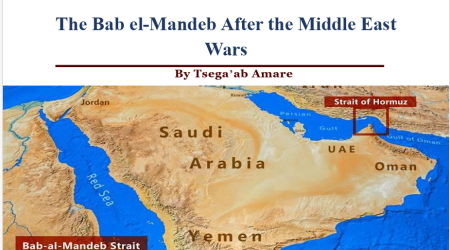
17
Jun
The Bab el-Mandeb After the Middle East Wars
The strait that connects the Red Sea to the Gulf...
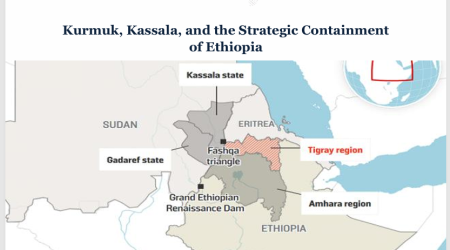
12
Jun
Kurmuk, Kassala, and the Strategic Containment of Ethiopia
What appears to be a battle for Kurmuk may in...
8
Jun
The Sahel’s Transformation and the Architecture of Perpetual Crisis: A Comprehensive Security Analysis
Comprehensive analysis on the Sahel by Horn Review's Rebecca Mulugeta:...
21
May
Sudan’s War and the Imperative of Ethiopia’s Re-engagement
A policy brief examining why Ethiopia can no longer afford...
19
May
Sudan War Report
A comprehensive mapping of Sudan’s war: factions, foreign influence, proxy...