The African Union’s appointment of a High Representative for the Horn of Africa and the Red Sea is more than a routine bureaucratic move. It reflects an important shift in how regional instability is understood and addressed, recognising that what were once treated as separate arenas are now increasingly interconnected. Although it may appear to be a standard administrative appointment, it is, in fact, a strategic move to align diplomatic efforts with an evolving geopolitical landscape.
The selection of Jakaya Kikwete, a former president of Tanzania, reflects a familiar AU practice of relying on senior political figures with continental stature to navigate sensitive political environments. Kikwete’s prior experience as an AU High Representative in Libya, combined with his authority as a former head of state, provides the diplomatic credibility necessary for engagement across multiple conflict theatres. His appointment signals that the AU now treats the Horn of Africa and the Red Sea as a single, interconnected strategic space rather than two separate zones.
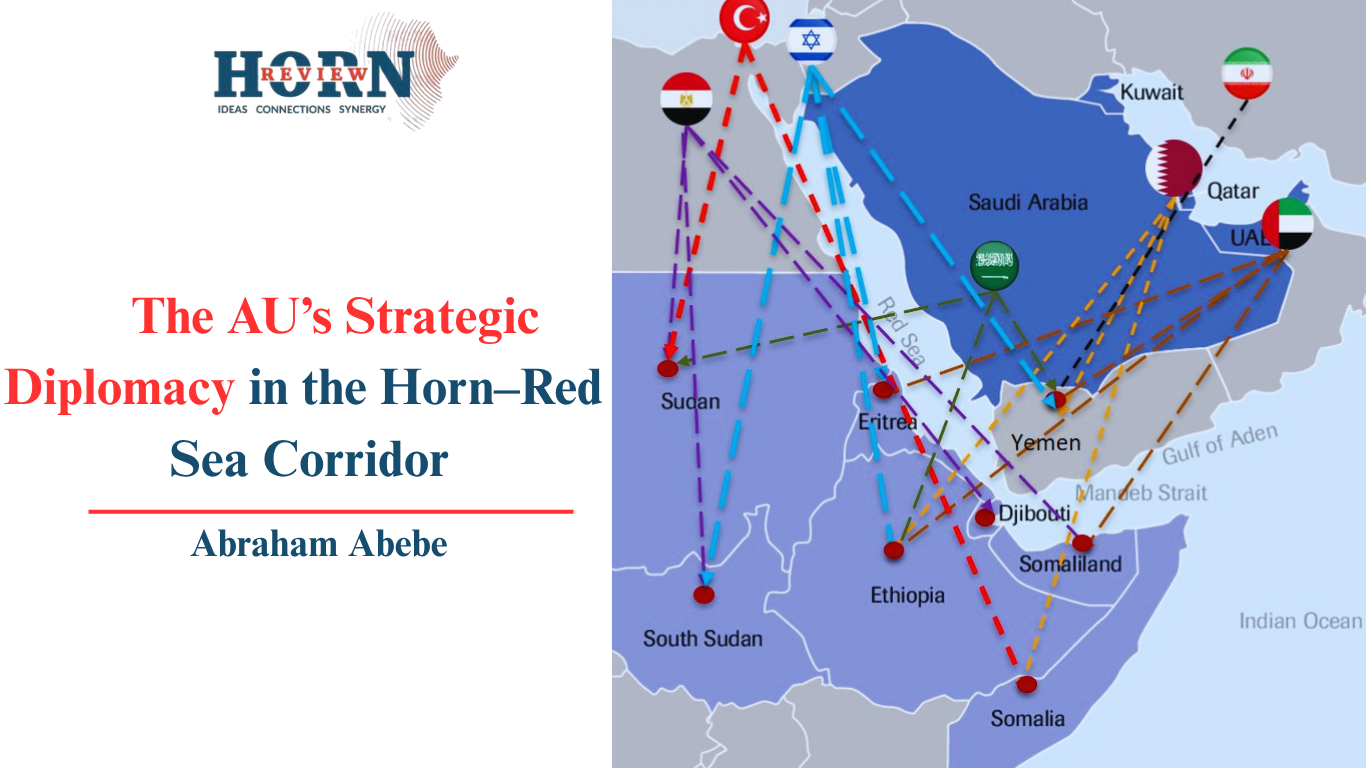
This convergence is driven by regional pressures, as inland conflicts increasingly intersect with maritime dynamics. The prolonged instability in Sudan, the chronic fragility of Somalia, and the authoritarian leadership and weak state structure of Eritrea extend far beyond their borders, overlapping with developments along the Red Sea, where competition over ports, trade routes, and military positioning has intensified. In this context, Ethiopia is increasingly prioritising secure and reliable maritime access as a central strategic objective, leveraging its evolving alliances and diplomatic influence to shape regional developments.
The Red Sea has re-emerged as a corridor of global consequence, due not only to its central role in international trade but also because of the growing concentration of military assets and strategic infrastructure along its shores. Regional actors, particularly those from the Gulf, have deepened their involvement through rapidly expanding economic investments and security arrangements, while major global powers continue to view the corridor as a critical node in their wider geopolitical competition. These external engagements actively shape the trajectory of conflicts and alliances within the region, adding a layer of complexity for any regional coordinating actor.
The cumulative effect is the formation of an integrated security environment in which cause and effect are no longer linear. Political developments in inland states, such as the conflict in Sudan, increasingly influence Red Sea port dynamics and external alignments; shifts in maritime security, in turn, reshape the strategic calculations of both landlocked and coastal states. This reciprocal influence has produced a level of interdependence that complicates traditional diplomatic approaches. Efforts that focus narrowly on individual conflicts risk overlooking the broader system within which those conflicts are embedded.
Such systemic complexity underpins the AU’s decision. By assigning a single envoy to engage with both the Horn of Africa and the Red Sea, the organisation is implicitly rejecting fragmented approaches to crisis management. The High Representative’s authority is derived from legitimacy, access, and the ability to facilitate dialogue rather than from enforcement mechanisms. In contexts where conflicts are deeply entrenched or where parties perceive negotiation as disadvantageous, these tools may have limited impact. Their effectiveness depends heavily on the capacity to build trust and navigate a highly fragmented political landscape.
Regional diplomacy in the Horn of Africa has historically been dispersed across multiple frameworks, with the Intergovernmental Authority on Development (IGAD) playing a central but not exclusive role. Parallel initiatives by the United Nations, individual states, and ad hoc coalitions have created a crowded and often uncoordinated diplomatic environment. In contrast, the Red Sea lacks a comparable multilateral structure, leaving a vacuum that external actors have partially filled through bilateral arrangements. The introduction of a High Representative can therefore be seen as an effort to bridge institutional gaps, with a mandate spanning preventive diplomacy, inclusive political dialogue, confidence-building, and the coordination of previously fragmented regional initiatives. By operating across these domains, the envoy can connect processes that have previously evolved in isolation. Coordination requires not only institutional alignment but also political willingness among states with divergent priorities and competing alliances.
At a deeper level, the appointment highlights a tension between short-term crisis response and long-term structural adaptation. While the creation of the role may have been prompted by immediate developments, escalating conflicts, rising tensions, and increased external involvement, the underlying drivers of convergence are unlikely to dissipate. Maritime routes will remain strategically vital, regional rivalries will persist, and external engagement will continue. This raises questions about whether existing diplomatic instruments are sufficiently flexible to address evolving patterns of interdependence.
What emerges from this analysis is a picture of an institution attempting to recalibrate its approach in response to shifting geopolitical conditions. The AU’s decision does not resolve the contradictions inherent in the Horn of Africa-Red Sea system, nor does it eliminate the constraints under which regional diplomacy operates. However, it does represent an effort to align institutional practice with structural reality, moving beyond compartmentalised thinking toward a more integrated understanding of regional security.
In reconceiving the Horn of Africa and the Red Sea as a unified strategic space, the AU signals a willingness to align institutional practice with evolving geopolitical realities. The effectiveness of this shift, however, will depend less on the symbolism of the appointment than on whether it can be translated into coherent and sustained regional diplomatic coordination.
By Abraham Abebe, Researcher, Horn Review