In 2020, former Malaysian Prime Minister Mahathir Mohamad, in discussing his country’s fleet of American-made F/A-18 Hornet fighter jets, revealed a constraint that most purchasing states accept but rarely articulate. Malaysia had been incapable of programming the aircraft for offensive operations without the involvement of the United States, and any military use required reverting to Washington. “We can’t program the planes for attacks against countries without getting the programming done by the United States,” he said. What Mahathir was describing is the gap between owning a weapons system and actually controlling it.
That gap defines the strategic reality of most militaries in the world today. As the international system shifts, alliance structures loosen, and new alignments take shape, the politics of that dependency is becoming a more consequential variable in how states calculate their security. For countries reliant on others for their air power, Ethiopia among them, the question of what strategic autonomy actually means is becoming harder to defer.
The production of military aircraft, particularly fighter jets, is monopolised by a handful of world powers. The United States, the historical giant in air power, still dominates the global market, a position sustained by a diverse ecosystem of manufacturers. Lockheed Martin, Boeing, Northrop Grumman and others together account for roughly half of global aerospace output. France occupies a distinct position, home to Dassault Aviation, the manufacturer behind the Rafale, and to Safran, one of the very few companies in the world capable of designing and producing military jet engines from scratch. Russia, through its Sukhoi and MiG design bureaus, and more recently China, complete the small club of states with genuine end-to-end production capability.
What distinguishes these countries is the technological depth and institutional architecture to continuously innovate. Private aerospace companies drive much of this. Highly capable aerospace companies operate within strategic frameworks set by their respective states, and the leverage they generate shapes the balance of power in the international system in ways that procurement-dependent states are constantly alert to. That leverage operates across two levels, what is made available on the market, and the conditions under which it can be used after it is sold.
Producer states retain access to the most advanced technologies for their own forces first, a logic is consistent across the major powers. China has developed two fifth-generation fighter platforms, the Chengdu J-20, reserved exclusively for the People’s Liberation Army Air Force, and the Shenyang J-35, made available to select partners on the export market. The United States follows the same calculus. The F-22 Raptor, widely regarded as the most capable air superiority fighter in the world, has never been offered for export and remains exclusive to the United States Air Force. The F-35A, the conventional take-off variant of its flagship multirole platform, is what Washington makes available to allies, and it is the aircraft of choice for most states operating fifth-generation jets, including Israel.
Alliance systems dictate availability further still. Washington shares technology with NATO members, Gulf partners and close bilateral allies; Moscow and Beijing apply their own preferences and restrictions. A state outside these alignments may find that the aircraft it seeks is unavailable, or available only with conditions attached that constrain its operational use before a single sortie is flown. Procurement decisions, in this environment, are exercises in alliance management as much as military planning. The financial weight of these decisions compounds the asymmetry. Modern combat jets are extraordinarily expensive to acquire, maintain and upgrade across a lifecycle typically measured in decades, and every spare part, software update and training contract keeps the buyer financially oriented toward the seller long after the initial purchase.
The deepest layer of this architecture, however, is the one Mahathir identified. End-Use Monitoring agreements, standard practice in American arms sales, bind the purchasing state to conditions governing how the equipment may be used. Pakistan’s F-16 fleet operates under strict constraints on the targets it may engage. Gulf states’ American-supplied aircraft are similarly conditioned, a reality that has surfaced during various regional conflicts of the past two decades. Beyond these legal agreements, the software dependency built into modern platforms extends the producing state’s authority further still. Mission systems, sensor fusion, weapons integration and electronic warfare capabilities all require updates that the original manufacturer or producing state must approve. An air force that cannot independently update its aircraft’s software is one whose operational edge depreciates at a rate set by someone else.
In this sense, the Ethiopian Air Force is perhaps approaching generational inflection, and the procurement choices now before Addis Ababa sit directly within the architecture described above. Its fleet has historically been built around Soviet and Russian-origin platforms. MiG and Sukhoi aircraft have formed the backbone of Ethiopian air power for decades, and the relationship between Addis Ababa and Moscow as a defence supplier has been long and, for the most part, reliable. That relationship reflects the broader pattern of a Russian military engagement with Africa defined by consistent supply, limited political conditions and a willingness to arm states that Western capitals would not.
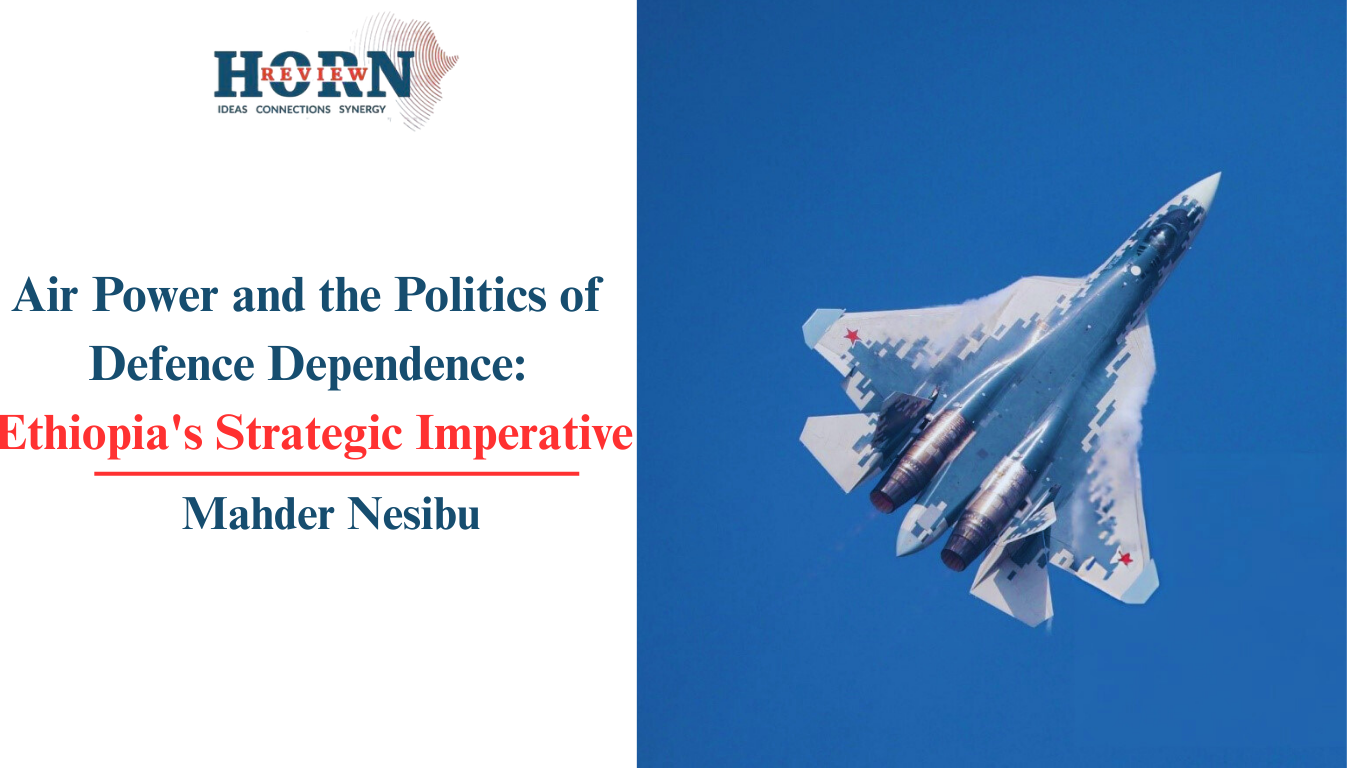
Prime Minister Abiy Ahmed has publicly stated Ethiopia’s intention to acquire fifth-generation combat jets. Given the country’s existing procurement relationships and a reportedly leaked document revealing so, the likely choice is Sukhoi Su-57, Russia’s fifth-generation offering. A purchase from Moscow would represent continuity in Ethiopia’s procurement logic, extending a relationship rooted in familiarity, existing maintenance infrastructure and compatible training pipelines. It would also, by the same token, deepen a single-supplier dependency at a moment when Russia’s own production capacity has come under significant pressure following its sustained losses in Ukraine, adding a layer of supply risk to a relationship that Addis Ababa has long treated as a reliable constant.
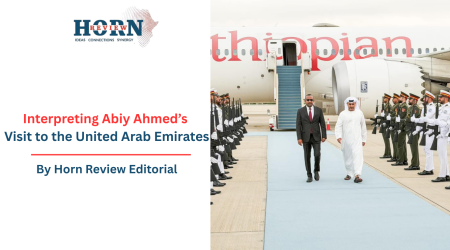
A second development may, however, alter that picture. The United Arab Emirates, Ethiopia’s most significant contemporary ally, is reportedly set to transfer a number of its Mirage 2000-9 aircraft to the Ethiopian Air Force. The Mirage is a French-built fourth-generation platform that has remained capable well into its fourth decade of service through successive upgrade cycles conducted in partnership with Dassault. That longevity is the product of a sustained technical relationship with its producer, the same structural dynamic that governs every high-end imported platform. For Abu Dhabi, the transfer is a concrete expression of the alignment with Addis Ababa that has developed over the past decade, one that now extends into the Air Force’s order of battle. For Ethiopia, the Mirages would mark the Air Force’s first European-origin platforms, opening a line of technical and maintenance relationships with the French defence industrial base that carries its own long-term implications. Whether that relationship develops further will depend considerably on the trajectory of the broader political relationship between Addis Ababa and Paris.
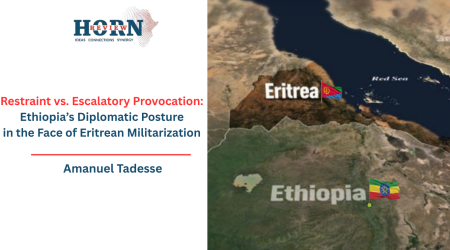
Regionally, the stakes of this modernisation are not abstract. Ethiopia operates in a neighbourhood defined by active fault lines. The unresolved tension with Eritrea, instability in Sudan, and the Nile dispute with Egypt, whose large and well-equipped Air Force represents a relevant point of reference. The Air Force Addis Ababa is upgrading is being built against a specific strategic backdrop, and the procurement choices being made now will shape its character and its constraints for a generation.
Independent fighter jet production capability remains beyond reach for Ethiopia, and for most states outside the major powers, for the foreseeable future. The industrial base, institutional depth and capital requirements place it outside any realistic planning horizon. In other dimensions of air power, the calculus is shifting in ways that carry genuine strategic opportunity.
The most consequential change in twenty-first century warfare has been the emergence of unmanned combat aerial vehicles as a primary instrument of conflict. The Russia-Ukraine war is demonstrating this at scale, showing that mass-produced drones can degrade expensive armoured formations and that the economics of air warfare are being disrupted in ways that conventional doctrine had not fully anticipated. Iran’s Shahed drone, deployed in Ukraine and across the broader confrontation with the United States and Israel, has come to represent a blurring that of the line between a drone, a cruise missile and a combat aircraft.
Unlike fighter jets, unmanned platforms are less complex, considerably cheaper to produce and far more abundant. Turkiye’s emergence as a leading producer through the Bayraktar, now operated by militaries across multiple continents, signals that states outside the traditional club of air power producers can achieve meaningful capability and export influence in this domain. The barriers to entry remain real, but they are dramatically lower than those governing conventional combat aviation.
Ethiopia has moved in this direction. The Ethiopian Air Force already operates the Bayraktar TB2 and China’s Wing Loong I, giving it operational experience with unmanned platforms across two distinct technical lineages. More significant is the domestic dimension. Two companies, SkyWin Aeronautics Industries and Aeroabay Plant, have been established with an explicit defence mandate, and the Ethiopian leadership has underlined their significance at various moments.
These efforts signal It attempt by Addis Ababa to position itself on the production side of the asymmetry that defines air power for most of the world. That asymmetry runs deeper than platform counts or generational capability. As the Mahathir exchange illustrates, the aircraft a state flies, who programs them, who maintains them, and who decides the conditions under which they can be used, these are the terms on which air power sovereignty is actually measured. For states like Ethiopia, navigating those terms with clarity, across both conventional procurement and the emerging domain of unmanned systems, is the defining challenge of building an air force fit for an international system that is shifting faster than most defence planners had assumed.
By Mahder Nesibu, Researcher, Horn Review