As tensions between Iran and several Middle Eastern states continue to escalate, most of the world’s attention has focused on missile exchanges, naval deployments, and the possibility of a wider regional war. Iranian drones have targeted infrastructure in the Gulf, maritime routes carrying a large portion of the world’s energy supply have been threatened, and Washington and its allies have rushed to strengthen defenses across the region. Yet while the strategic spotlight remains fixed on the Persian Gulf, another front of the crisis deserves equal attention. That front lies to the east of Iran, in the complicated geopolitical space surrounding Pakistan.
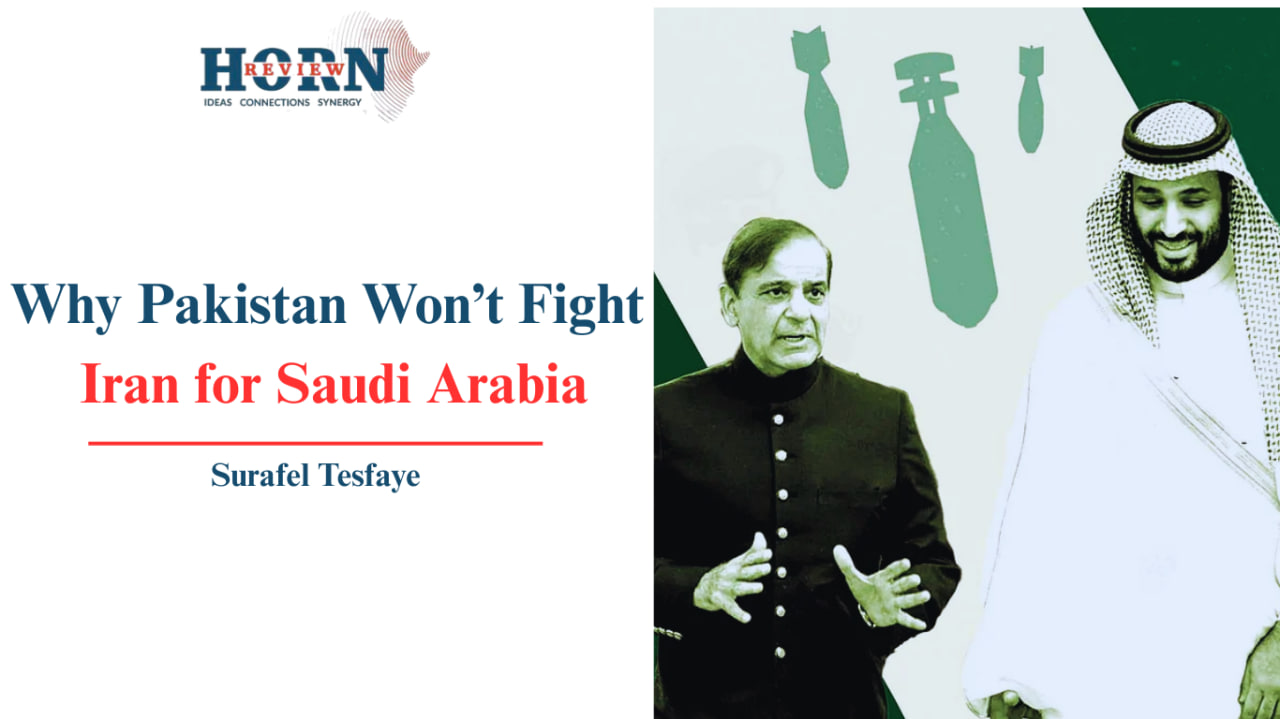
Pakistan’s position in the unfolding confrontation is unusually complex. The country is formally tied to Saudi Arabia through a Strategic Mutual Defense Agreement signed in September 2025, a pact that appeared to signal deeper military cooperation between the two long-standing partners. In theory, such an agreement suggests that Pakistan might assist Saudi Arabia if the kingdom were directly threatened by Iranian attacks. Yet the current crisis has revealed a striking gap between the symbolism of the agreement and the practical realities shaping Pakistan’s strategic choices.
Despite repeated Iranian drone and missile strikes targeting Saudi territory in recent weeks, there has been little evidence that Pakistan intends to play a direct military role in the confrontation. Pakistani leaders have publicly reiterated their support for Saudi Arabia while simultaneously emphasizing that their armed forces remain heavily committed to security operations closer to home. The explanation offered by Islamabad is straightforward: Pakistan cannot afford to divert military resources away from its own borders at a moment when the country faces growing instability along the frontier with Afghanistan.
The Pakistan–Afghanistan border has quietly become one of the most volatile security zones in the region. Pakistani forces have intensified military operations against militants associated with the Tehreek-e-Taliban Pakistan, a group responsible for hundreds of attacks inside Pakistan over the past decade. Since the return of the Afghan Taliban to power in Kabul in 2021, the TTP has dramatically expanded its operations, benefiting from safe havens across the frontier and exploiting the difficult terrain that has long complicated border security. Islamabad has responded with cross-border strikes and increasingly aggressive counterterrorism campaigns, a pattern that has pushed tensions between Pakistan and Afghanistan to one of their highest levels in years.
These developments have created a strategic dilemma for Pakistan’s military leadership. Opening another front against Iran would stretch the country’s security apparatus across multiple directions at once. Pakistan must already maintain a significant military presence along its eastern border with India while confronting insurgent activity in Balochistan and managing the persistent threat posed by militant networks operating near Afghanistan. Adding Iran to this already crowded security landscape would create the possibility of a multi-front confrontation that few states could sustain.
Domestic dynamics further complicate the picture. Pakistan is home to one of the largest Shia populations in the Muslim world outside Iran itself. Any military confrontation with Tehran would therefore carry the risk of inflaming sectarian tensions inside Pakistan’s own cities. Recent demonstrations following regional developments have already shown how quickly geopolitical events can reverberate within Pakistan’s internal political environment.
For the country’s leadership, a conflict with Iran would not simply be a foreign policy decision; it could trigger internal instability that undermines national cohesion.
There are also less visible factors shaping Pakistan’s calculations. Over the past decade Iran has recruited thousands of Pakistani Shia fighters into the Zaynabiyoun Brigade, a militia originally deployed in Syria to support Iranian-aligned forces during the civil war there. Many of these fighters possess battlefield experience and maintain strong ideological ties with Tehran. Pakistani security planners understand that if relations between the two countries deteriorated dramatically, these networks could become a destabilizing factor within Pakistan itself.
The geography of the Iran–Pakistan border presents another challenge. Much of the frontier runs through Balochistan, a region where insurgency has simmered for decades. Pakistan confronts separatist movements such as the Baloch Liberation Army, while Iran faces its own insurgent threats from groups like Jaish al-Adl. Both governments have repeatedly accused the other of tolerating militants along the border, yet neither has allowed these accusations to escalate into a full-scale confrontation. The reason is simple: a major war would risk strengthening separatist forces on both sides and destabilizing the region in ways neither government could easily control.
Historical experience reinforces this caution. When Iran and Pakistan exchanged missile strikes in early 2024, both sides carefully targeted militant camps rather than each other’s military infrastructure. The message was unmistakable. Each government wanted to demonstrate resolve without triggering a wider conflict that could spiral beyond their control.
Pakistan’s strategic calculations are also shaped by its long relationship with Saudi Arabia. Riyadh has provided financial assistance to Islamabad for decades and played an important role in supporting Pakistan’s economy during periods of crisis. Saudi backing during Pakistan’s 1998 nuclear tests remains a powerful symbol of that partnership. Yet even with this history, Pakistan has repeatedly signaled that its support for Saudi Arabia has limits. In 2015 the Pakistani parliament voted against joining the Saudi-led military intervention in Yemen, citing concerns about sectarian tensions and regional escalation.
The current situation echoes that earlier decision. Pakistan continues to express political solidarity with Saudi Arabia while carefully avoiding actions that could transform diplomatic support into direct military involvement.
External geopolitical pressures reinforce this restraint. China has become Pakistan’s most important economic partner through massive investments associated with the China-Pakistan Economic Corridor. At the same time, Beijing maintains its own long-term strategic relationship with Iran. A military confrontation between Pakistan and Iran would therefore threaten key infrastructure projects and disrupt trade routes that form part of China’s broader regional strategy. Given Pakistan’s growing economic dependence on Chinese investment and diplomatic support, Islamabad has strong incentives to avoid actions that could destabilize relations between Beijing’s two partners.
Seen together, these pressures help explain why Pakistan’s response to the current Iran crisis has been defined by caution. The defense agreement with Saudi Arabia carries political symbolism, but the realities of Pakistan’s strategic environment impose clear limits on how far that partnership can extend in practice.
For Pakistan’s leadership, the central challenge is not choosing between Saudi Arabia and Iran. It is avoiding a confrontation that could ignite sectarian tensions at home, strengthen insurgent movements along its borders, and stretch its military resources across multiple simultaneous conflicts.
In that sense, Pakistan’s behavior during the current crisis reflects a familiar strategic instinct. Islamabad rarely commits itself fully to regional rivalries. Instead, it seeks to preserve flexibility, maintain relationships with competing powers, and avoid becoming trapped in conflicts that do not directly serve its core security interests.
As the confrontation with Iran continues to unfold, this balancing act is likely to persist. Pakistan may offer diplomatic support, intelligence cooperation, or limited defensive assistance to Saudi Arabia. But the deeper logic of its strategic position suggests that Islamabad will continue to avoid the one step that could transform the current crisis into something far more dangerous: a direct war with Iran.
By Surafel Tesfaye, Researcher, Horn Review