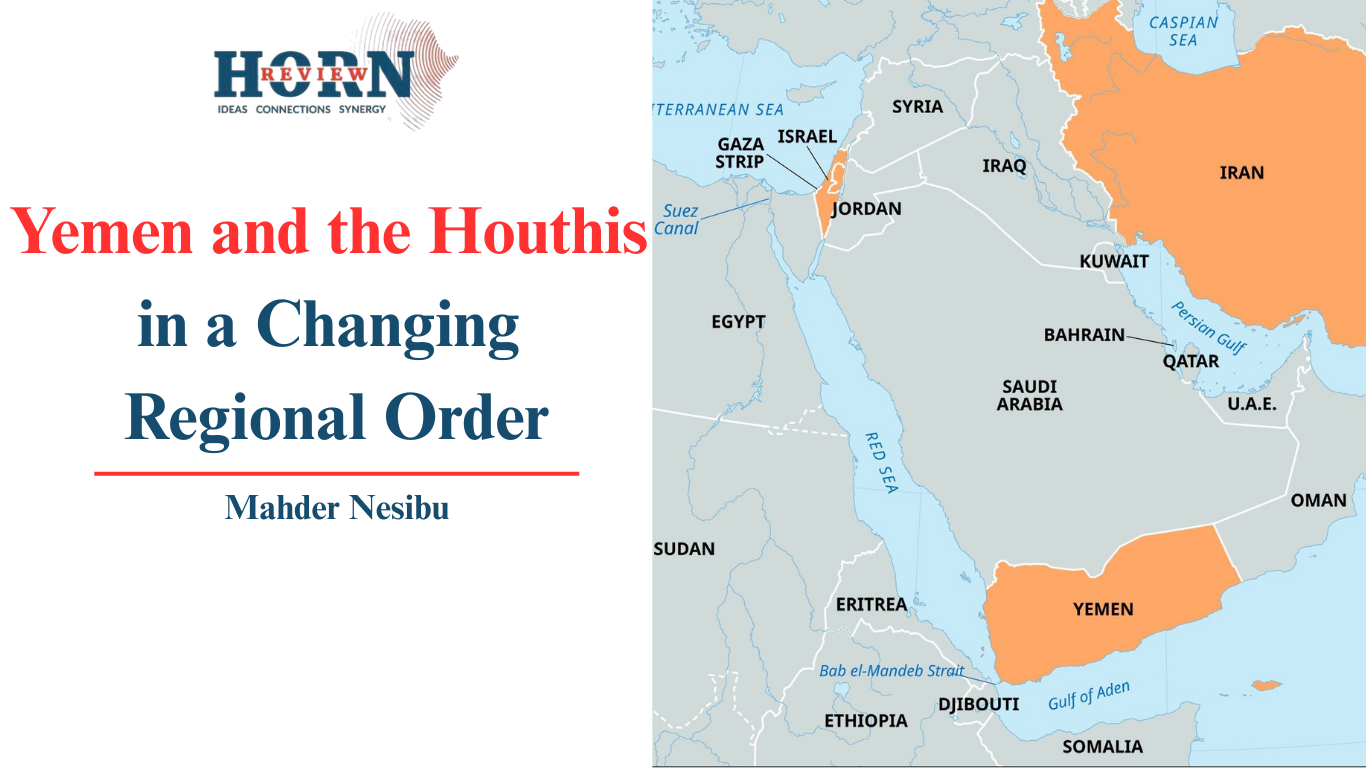
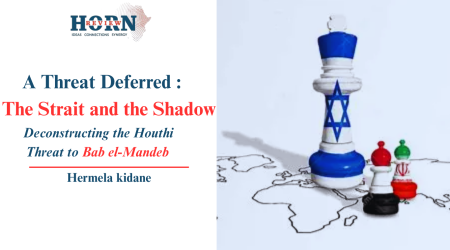
As the conflict between Israel, the United States and Iran deepens, attention has grown on a movement that has so far stayed largely on the side-lines: the Houthis. Their restraint has surprised many. Iran, the centre of the Axis of Resistance and the movement’s principal patron, is engaged in a war that its adversaries, Israel in particular, have framed in existential terms. Yet the Houthis have not moved in any meaningful military sense. That restraint is not without its own logic, and can be explained through both the broader regional campaign Israel has been prosecuting and the pressures forming around the movement from within Yemen itself.
Since 2023, Israel has pursued what its military and political leadership have described as a seven-front war, a campaign spanning the middle east across Gaza, Lebanon, Syria and Yemen, directed at the network of armed movements Tel Aviv considers adversaries. The fall of Bashar al-Assad was received as a strategic gain within that framework. The campaign in Gaza, the war against Hezbollah and the direct confrontation with Iran follow the same pattern: a sustained effort to dismantle the Axis of Resistance piece by piece. The war with Iran represents the furthest reach of that campaign. It is a confrontation Israeli Prime Minister Benjamin Netanyahu had long sought, and one that required drawing the United States in to prosecute, as the twelve-day war made clear. At present, Iran and Hezbollah constitute the two most active fronts.
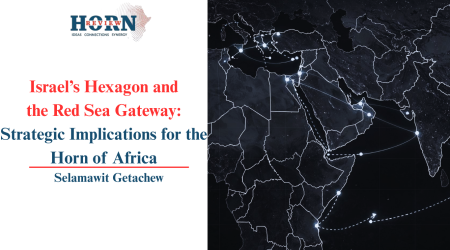
Israel has also been making moves along the Red Sea, even in the absence of an active Houthi campaign against Israeli shipping. The peak of that campaign ran from 2023 to 2025, during which the movement demonstrated a capacity to inflict real disruption on global shipping lanes. Though that pressure has since receded, Tel Aviv has not been static. In December last year, Israel became the first state to formally recognise Somaliland, the de facto independent territory in the Horn of Africa. Red Sea trader and Israeli national security appear to be the primary drivers. A presence in Somaliland would position Israel within hundreds of kilometres of Houthi-controlled territory across the strait. Israeli analyst Asher Lubotzky identified countering the Houthis as the foremost rationale for the recognition, with secondary considerations including the rivalry with Turkiye. Subsequent reporting has pointed to deepening Israeli engagement with Hargesia, one that might possibly lead to the emergence of an Israeli military presence on the other side of the shore.
For the Houthis, the trajectory of the war against Iran carries specific and serious implications. Iran and Hezbollah were instrumental in constructing the movement’s military capabilities, providing the rocket and missile systems that enabled strikes on Israel and disruption of Red Sea shipping alike. The ideological alignment is equally deep: the Houthis see themselves as confronting the same enemies as Tehran, and that shared identity has been as formative as the material support. Should Iran’s regional influence be severely reduced, or the Islamic Republic destabilised, the Houthis would emerge as the last significant actor of the Axis of Resistance still standing. Hezbollah, already drawn into open conflict with Israel, would be in no position to fill that vacuum. The proxy designation that has shaped the movement’s posture, however, also narrows its political and military room for manoeuvre, tying its calculus to the fate of a patron that may no longer be able to provide cover.
Whatever is happening at the regional level, the more immediate pressure on the Houthis is coming from inside Yemen. The country’s internal landscape has been significantly restructured. The Southern Transitional Council, backed by the United Arab Emirates and committed to the recreation of an independent South Yemen state, had launched a sweeping offensive last year that brought large portions of the south under its control. The move drew a response from Saudi Arabia and the Presidential Leadership Council, the internationally recognised government of Yemen, which Riyadh backs extensively. The significance of that response lies in what it signals about Saudi intentions. Since the failure of its prolonged military intervention to dislodge the Houthis from the mountainous terrain of the north, the kingdom had largely withdrawn from active involvement in Yemen, settling instead for border security and a posture of managed disengagement. Its decision to back the Presidential Leadership Council militarily against the Southern Transitional Council’s offensive resulted not only in the reversal of those territorial gains but in the effective collapse of the STC as a functioning military force. Riyadh, through the PLC, appears to have returned to the Yemeni theatre with apparent confidence and a renewed willingness to use force.
A more capable Presidential Leadership Council, operating with the active backing of a more assertive Saudi Arabia, constitutes the most immediate security challenge the Houthis face. The PLC has signalled that its objectives are either to uproot the movement by force or to compel a political settlement on its terms. For a movement that has spent years fighting a war against a broad coalition of domestic and foreign forces, the shifts now taking place in the south are difficult to ignore.
The Houthis’ response has been telling. Rather than conducting missile campaigns against Israel, the movement has turned inward, focusing on expanding its ground fighting capacity. Recent reporting suggests a significant ramp-up in troop numbers rather than missile stockpiles, a reorientation that most analysts have read as a direct response to the changing balance of forces in southern Yemen.
These pressures go a long way toward explaining the movement’s caution. Joining the fight alongside Iran, at a moment when the PLC is growing in confidence and Saudi Arabia has demonstrated a renewed willingness to intervene, would risk opening a second front the Houthis are poorly positioned to absorb. The rational conclusion, for now, is to hold. What the movement will ultimately have to reckon with is a considerably more hostile regional environment: a largely collapsed Axis of Resistance, a restructured Yemen in which the balance of forces is shifting against them, and an Israel that is quietly positioning itself along the Red Sea in their vicinity. The architecture that sustained the Houthis for over a decade is disappearing, and the challenges that remain are ones they will have to navigate largely on their own.
By Mahder Nesibu , Researcher, Horn Review