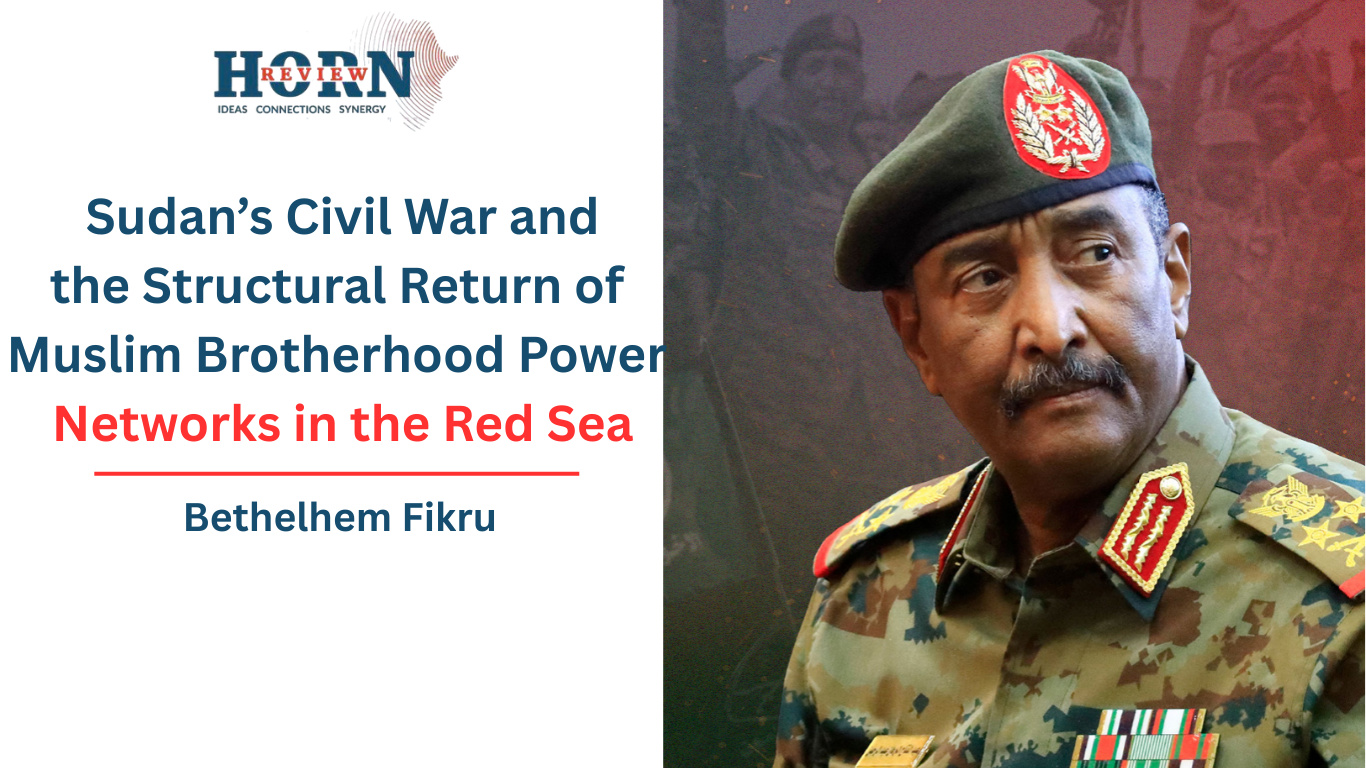
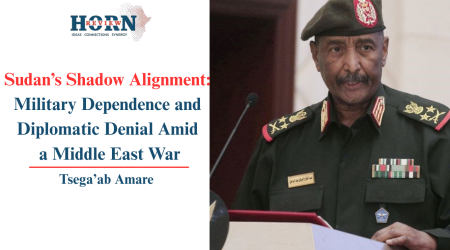
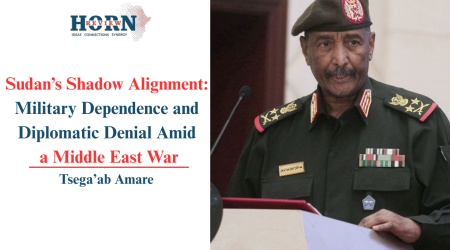
Sudan’s current foreign alignment reflects the structural imperatives imposed by civil war rather than the preferences of individual leaders. Although the formal political influence of Muslim Brotherhood–linked networks diminished after the collapse of the Islamist order in 2019, these structures were never fully dismantled. Iranian assistance provides weapons systems and technical support essential to battlefield endurance. This dependence deepens operational reliance and narrows policy autonomy over time. The persistence of internal Islamist networks facilitated the integration of this assistance, converting external supply into institutional capacity. Embedded within segments of the security apparatus, they re-emerged as the institutional environment shifted. When fighting erupted in April 2023 between the Sudanese Armed Forces (SAF) and the Rapid Support Forces (RSF), these surviving networks helped restore channels of cooperation that had previously connected Sudan to external partners.
Since the outbreak of war, the authorities operating from Khartoum have faced a dual strategic requirement: securing reliable military supply while maintaining diplomatic channels capable of limiting international isolation. Iranian assistance addresses the first requirement through weapons systems and technical support essential to battlefield endurance. At the same time, diplomatic engagement with regional actors preserves mediation frameworks and sustains Sudan’s limited access to external channels. The resulting arrangement, simultaneous engagement with Tehran and continued diplomatic interaction with Gulf states, reflects a deliberate survival technique: a strategy of calibrated balancing designed to secure military supply, preserve diplomatic flexibility, and prevent strategic isolation under conditions of civil war and institutional fragmentation.
Sudan and Iran forged a close strategic partnership after the 1989 Islamist coup, with Khartoum granting Tehran access to Red Sea logistical corridors in exchange for oil, military hardware, and support for Sudan’s domestic arms industry. The bond lasted until 2016, when Sudan severed ties, closed the Iranian cultural center in Khartoum, expelled diplomats, and aligned with Saudi Arabia, driven by financial incentives and the need to escape pariah status under Western sanctions. The shift was reinforced by Sudan’s 2020 normalization with Israel under the Abraham Accords. However, the Sudanese Islamic Movement’s institutional presence within the armed forces preserved latent channels and ideological continuity.
The 2023 civil war forced another reversal. Facing territorial losses and depleted stockpiles, the Sudanese Armed Forces reactivated cooperation with Iran. Iranian-supplied drones, including Mohajer-6 and Ababil-3 systems, and associated munitions delivered via Port Sudan improved performance in urban combat. Technical training and maintenance support consolidated this integration. By early 2026, the relationship had settled into routine military-technical collaboration centered on drone operations, logistics, and intelligence sharing, without requiring new high-level agreements, as the underlying infrastructure remained intact.
The durability of that infrastructure reflects the institutional role of the Sudanese Islamic Movement, the country’s historical branch of the Muslim Brotherhood. Over several decades this network embedded itself within segments of the armed forces, intelligence services, and auxiliary militias. Although the political order that formally empowered these groups collapsed in 2019, the organizational networks did not disappear. Their continued presence provides the internal mechanism through which Sudan gravitates toward cooperation with Iran during periods of strategic isolation.
This institutional reality explains the rapid restoration of ties after 2023. Procurement decisions, operational doctrine, and internal messaging within parts of the security apparatus remain shaped by actors whose origins lie in the Islamist state that governed Sudan for three decades. As a result, Iranian assistance is interpreted by some within these structures not only as battlefield support but as part of a broader ideological alignment.
Indicators of this dimension surfaced again during heightened tensions surrounding Iran in early 2026. Statements circulated from Sudanese officers expressing solidarity with Tehran and suggesting volunteer mobilization should external forces intervene directly against Iran. While such rhetoric does not represent official state policy, it illustrates the persistence of Islamist networks within the military environment. Sudan lacks the capacity to project forces abroad during civil war, yet internal messaging reflects how these structures frame external relationships within an ideological narrative.
Iran’s interest in sustaining engagement is grounded in geography and strategic depth. Sudan occupies a critical position along the Red Sea corridor linking the Middle East to East Africa. Limited logistical access, including drone supply chains, technical facilities, or maritime surveillance cooperation, can expand operational reach without permanent basing. The objective is gradual creation of a dependable logistical node within a wider regional network.
Saudi engagement is driven primarily by its own regional and maritime interests, particularly stability along the Red Sea corridor. While diplomatic initiatives exist, they have not translated into meaningful influence over Sudan’s internal conflict. Interaction with Khartoum therefore constitutes one element of a broader regional posture, rather than a determining factor in Sudan’s strategic decisions.
The roles of neighboring states add further complexity. Egypt, despite its strategic stake in Sudan through border security and Nile water politics, has largely responded defensively to the conflict. Cairo maintains ties with segments of the Sudanese military establishment but has shown limited capacity to shape the conflict’s trajectory. Its involvement focuses primarily on protecting its own security interests rather than constructing a comprehensive political settlement.
Eritrea introduces another destabilizing variable along the western Red Sea corridor. The country’s heavily militarized border policy and confrontational regional posture create conditions in which arms flows, militia movements, or refugee surges from Sudan could trigger localized confrontations. Rather than serving as a stabilizing buffer, Eritrea’s rigid security doctrine risks transforming border management into an additional fault line within an already volatile regional environment.
The cumulative effect of these dynamics is gradual regionalization of the conflict. Iranian logistical access expands, neighboring states adjust their security postures, and maritime actors monitor the corridor with increasing concern. Even incremental drone networks, training programs, or intelligence cooperation can transform Sudan into a strategic node within broader competition.
Escalation risk increases if informal cooperation evolves into a formal defense arrangement, transforming the conflict into a direct component of broader regional and international rivalries. Continued ambiguity does not eliminate this risk; it only postpones its consequences while sustaining dependency dynamics that constrain strategic autonomy. This posture reflects structural pressure rather than deliberate balance.
Stability efforts should therefore prioritize the regulation of external military flows, strengthened border monitoring, and a clear separation between ceasefire arrangements and any external security commitments. Security cooperation should remain transparent and subject to oversight, while formal defense agreements during active conflict should be avoided to reduce escalation risks and preserve diplomatic flexibility.
Ultimately, Sudan’s external alignment reflects the structural logic of a state operating under civil war conditions. Military supply, diplomatic access, and institutional continuity interact to produce hedging behavior. The presence of Muslim Brotherhood–linked networks within parts of the security apparatus ensures that these dynamics carry ideological implications beyond the battlefield. As long as the conflict persists, Sudan will remain positioned between competing external partners, and the Red Sea corridor will continue to absorb the strategic consequences.
By Bethelhem Fikru, Researcher, Horn Review