What Bashir built in 1989, what war preserved, and what Iran now could reclaim
The history of Iran Sudan relations offers a compelling case study in how isolation and necessity can forge ties that transcend sectarian differences. For nearly three decades from the 1989 coup that brought Omar al-Bashir to power until the regional realignments of the mid-2010s these two unlikely partners constructed a relationship that would fundamentally reshape the security of the Horn and provide Iran with its presence on the African continent. Understanding this illuminates patterns of behaviour that in the context of present instability suggest the potential for history to repeat itself.
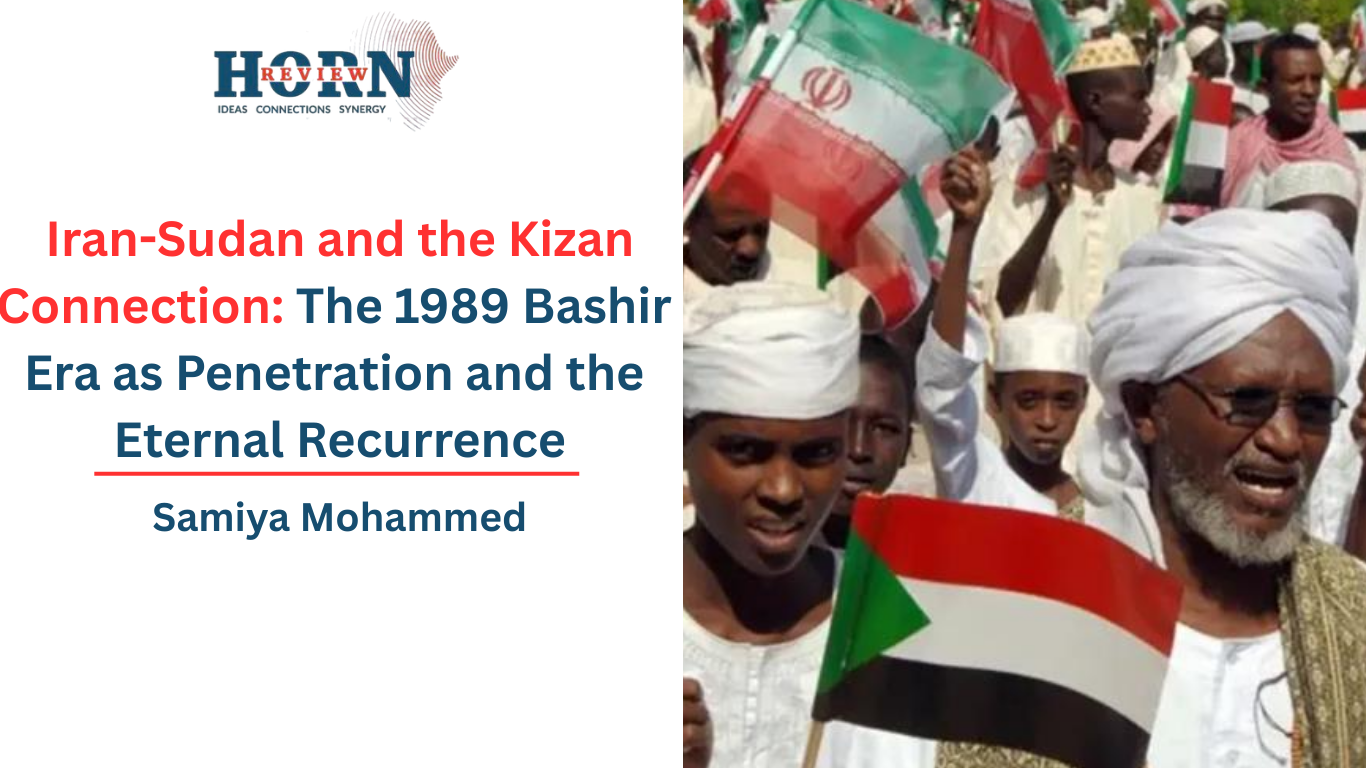
The seizure of power by Omar al-Bashir and the National Islamic Front in June 1989 presented far more than another military takeover in a region accustomed to them. Backed by a Islamist movement led by Hassan al-Turabi the new regime arrived in Khartoum with an ideological orientation that immediately set it apart from Sudan’s previous governments. Here was a Sunni Arab state declaring its intention to build an Islamist order precisely at the moment when Iran’s own Islamic Revolution was entering its second decade and searching for allies beyond its immediate Shia constituency.
Sudan’s international position in those early months was precarious. Western sanctions came to light as the new regime’s human rights record and regional ambitions attracted scrutiny. While Arab donors viewed the Islamist experiment with suspicion. Into this isolation walked Tehran. The logic was mutual and compelling with Iran coming from its eight year war with Iraq and isolated in the Arab world sought a gateway to Africa and the Red Sea. Sudan newly empowered and ideologically aligned needed patrons who would not impose Western style conditionalities on its behaviour.
The year 1991 pronounced the relationship’s substantive beginning. When Iranian President Akbar Hashemi Rafsanjani arrived in Khartoum with more than 150 officials, the visit showed Tehran’s serious intentions. The financial package announced $17 million in immediate aid coupled with $300 million to finance Chinese weapons purchases addressed Sudan’s most pressing need for military hardware following the cut off of American assistance.
However the most consequential dimension of this partnership was not visible in the publicized aid figures. Reports soon came to light that up to 2,000 members of the Islamic Revolutionary Guard Corps had arrived in Sudan tasked with mission training Sudan’s Defense Forces and more fundamentally helping model the Sudanese military establishment along the lines of Iran’s revolutionary security apparatus. Training camps were established at locations including Abu Rakim, Souyaa and Um Barbita facilities that would serve multiple purposes far of conventional military instruction.
This period also witnessed Sudan’s transformation into a place for a transnational Islamist network that transcended the Sunni-Shia divide. The Arab and Islamic Congress hosted by Khartoum in 1991 brought together an assemblage of figures like Osama bin Laden, Abu Nidal, Carlos the Jackal, alongside representatives of Hamas, Hezbollah, and the IRGC. For Tehran Sudan was becoming a magnet for a variety of militant extremist and jihadist individuals and groups with a forward operating base for projecting influence across the Middle East and Africa. As the decade progressed the relationship institutionalized far off initial personality driven connections. The IRGC presence while fluctuating in numbers maintained its core mission of training and advising. Intelligence cooperation deepened with Iranian experts working alongside Sudanese counterparts in building what would become one of Africa’s most capable and opaque security services.
Sudanese officers travelled to Iran for training, returning with exposure to IRGC doctrine and operational methodologies. The Sudanese army’s Defense Forces were consciously modelled on Iran’s Basij reflecting a shared conception of revolutionary armies that combined conventional military functions with ideological mobilization. By 1993 the United States had added Sudan to its list of state sponsors of terrorism a designation Iran had carried since 1984. The two countries now shared not only interests but pariah status in Washington’s eyes.
The relationship reached its zenith during the 2000s when the logic on both sides achieved maximum intensity. For Sudan these were years of acute military pressure with the civil war with the south continued until the 2005 Comprehensive Peace Agreement and from 2003 onward the Darfur insurgency demanded new capabilities to counter multiple fronts of rebellion. Iran meanwhile was consolidating its regional position following the 2003 Iraq War which eliminated its primary enemy Saddam Hussein and opened new avenues for influence.
The material dimensions of Iranian support during this period were substantial. Tehran reportedly supplied up to one million tons of oil annually, free of charge which is a critical lifeline for Sudan’s energy dependent economy and war effort. Arms transfers accelerated encompassing heavy artillery, radar systems, armored vehicles and increasingly sophisticated weaponry. When Western imposed arms embargoes limited Sudan’s access to European suppliers, Iranian logistics networks provided alternatives. A formal military cooperation agreement signed in 2008 codified what had become an extensive relationship. Iranian engineers and IRGC personnel constructed air bases at Kenana and Jebel Awliya, facilities that would serve dual purposes for both Sudanese operations and according to some accounts as transit points for Iranian weapons destined for Hamas in Gaza. The interception and spying facilities installed by Iranian technicians enhanced Sudan’s domestic surveillance capabilities while potentially serving Tehran’s wider regional intelligence gathering.
Both regimes shared what might be called revolutionary Islamist legitimacy the claim to present authentic Islamic governance against Western dominated international order. Both confronted internal and external enemies they defined in similar terms. Both experienced isolation and sanctions from the United States creating a common front. The ideological framework that made this possible was articulated by Hassan al-Turabi the intellectual architect of Sudan’s Islamist project who argued for Sunni-Shia solidarity against common enemies. This vision of Islamic unity transcending sectarian divisions resonated with the revolutionary enthusiasm of Iran’s own Islamists for whom the Sunni-Shia distinction was secondary to the primary division between believers and unbelievers revolutionaries and reactionaries.
The shared status as designated state sponsors of terrorism reinforced this bond. Both found themselves subjects of UN sanctions, both faced periodic Israeli military actions notably the 2012 Israeli strike on Sudan’s Yarmouk military complex and both cultivated relationships with non-state actors that conventional Arab states avoided. One of the most durable legacies of this three decade partnership was the creation and consolidation of what Sudanese call the Kizan a network of Islamist cadres deeply embedded in the security services, military and state institutions. Trained alongside Iranian counterparts, exposed to IRGC methodologies and ideologically committed to the revolutionary Islamist project these networks survived periods of formal estrangement between Khartoum and Tehran.
When Sudan expelled Iranian diplomats and closed cultural centers in 2016 a decision driven by solidarity with Saudi Arabia following the attack on its Tehran embassy the underlying security and military cooperation did not entirely cease. Military industrialization projects continued, intelligence relationships persisted at working levels and the cadres who had spent decades building connections maintained them through informal channels. When Sudan’s 2019 revolution removed al-Bashir and the transitional authorities sought to reorient foreign policy, they discovered that the Islamist networks within the state remained receptive to renewed Iranian engagement.
The arc of Iran and Sudan relations reveals consistent patterns that speak to the present moment. The contraction is never complete. Networks persist. Military relationships leave institutional residue. Intelligence cooperation builds habits that outlast formal diplomatic breaks. And when new crises emerge, the infrastructure for renewed partnership remains available. The history of Iran’s engagement with Sudan offers both warning and instruction. It demonstrates how ideological affinity, isolation and necessity can forge alliances that appear improbable on the surface yet prove durable beneath it. It shows that such relationships leave institutional and human residue that outlasts formal diplomatic breaks. And it suggests that in moments of crisis precisely the conditions that characterize Sudan today the patterns of the past become templates for the present.
The lesson in this is that vigilance cannot be episodic. Influence does not vanish when embassies close it just retreats into the shadows of networks and relationships cultivated over decades patiently waiting the next moment of crisis to resurface. Today as Iran confronts intensifying pressure and seeks depth beyond its immediate borders the question is not whether it will look toward familiar grounds where old friendships and military infrastructure lie dormant. The question is whether those sleeping assets remain truly asleep or whether they are already stirring in anticipation of what comes next.
By Samiya Mohammed, Researcher, Horn Review