
9
Mar
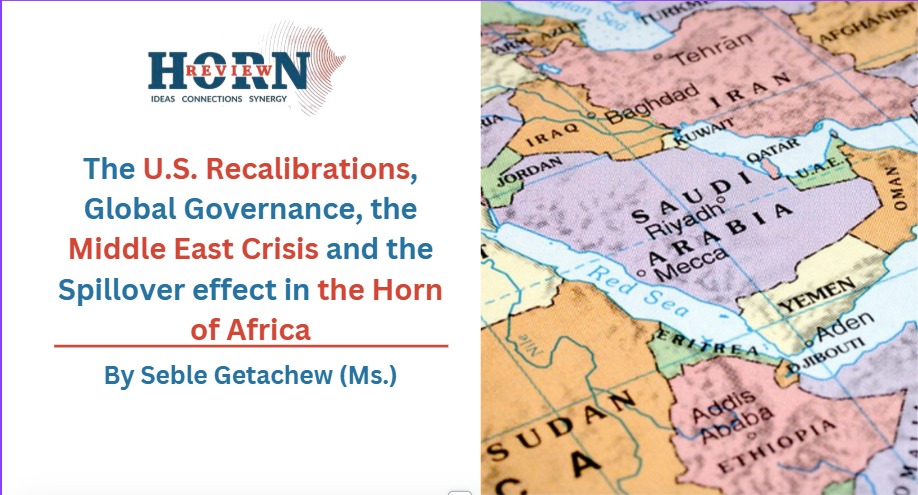
The U.S. Recalibrations, Global Governance, the Middle East Crisis and the Spillover effect in the Horn of Africa
Background
The Middle East crisis of 2026 ignited by U.S.-Israeli strikes on Iran and Iran’s retaliatory bombings across the Gulf and into Azerbaijan and Iraq simply tells the fragility of global governance. What began as a confrontation between Washington and Tehran quickly drew in Russia, China, Turkey, and the European Union. Each power reshaped the trajectory of the conflict, and each left profound human consequences in its wake. Trump’s return to office has brought a decisive recalibration toward unilateralism. The strikes on Iran bypassed multilateral frameworks, while Iran’s retaliatory bombings destabilized the global economy. The Strait of Hormuz, through which 13 million barrels of oil pass daily, became a flashpoint. The world remembers how its brief closure in 2025 triggered a 6% spike in oil prices; now, speculation about deeper disruptions looms large.
Meanwhile, the UN is paralyzed by veto politics, unable to enforce ceasefires or open humanitarian corridors. Analysts argue this crisis is not isolated but part of a recurring pattern: U.S. interventions remake the Middle East while weakening global governance structures (Al Jazeera, 2026). From a realist perspective, the Iran war illustrates the enduring logic of power politics: states act unilaterally to secure interests, sidelining institutions when great powers dominate (Latoon, 2025; Rom, Hidaka, & Walker, 2022). Constructivist analysis highlights how norms of multilateralism and humanitarian protection are repeatedly undermined, eroding trust in collective security frameworks (Wendt, 1999; McCourt, 2022).
Feminist critiques underscore the persistent exclusion of women from peacebuilding, despite UNSCR 1325’s commitments, reminding us that governance failures are lived most acutely by marginalized populations (Sylvester, 1994; Shepherd, 2008; Enloe, 2014). Taken together, these perspectives show that the crisis is not only about institutional fragility but about the human consequences of global governance failures (Barnett & Finnemore, 2004; Tickner, 2001).
Fragility of Global Governance and Crisis of Legitmacy
Scholars have called “Operation Epic Fury” a war without strategy and a campaign launched without a coherent plan for what comes next. Russia condemned the strikes but now actively supports Tehran with advanced defense systems and intelligence, echoing its role in Syria. In hindsight, this mirrors Russia’s earlier defiance during the Iraq War in 2003, when it opposed U.S. unilateralism but lacked the capacity to prevent it. The UN was sidelined when the U.S. acted without Security Council authorization, raising questions about its legitimacy.
Scholars such as Richard Falk have argued that the Iraq War represented a “crisis of legitimacy” for the UN, as unilateralism undermined collective security (Falk, R. 2004). China, meanwhile, adopts a dual posture, urging restraint while quietly securing energy deals with Gulf states and Iran (Fattah, 2026; Marks, 2025; Ulrichsen et al., 2024). Furthermore, this dual posture underscores China’s long-term strategy of presenting itself as a broker while pursuing material gains (Ulrichsen et al., 2024).
China’s cautious but strategic involvement recalls its posture during Libya in 2011, when Beijing abstained from the UN Security Council vote authorizing intervention but later criticized NATO’s overreach. Nonetheless, NATO invoked the Responsibility to Protect (R2P), initially approved by the UN Security Council Resolution 1973, which authorized “all necessary measures” to prevent mass atrocities or protect civilians during the war in Libya. Exceeding the mandate, however, the mission expanded into regime change as civilians were targeted, undermining trust in multilateralism.
Libya as a nation in Africa, it was astonishing to learn that the African Union’s mediation efforts were marginalized, which is a clear indicator of how regional voices can be sidelined when global powers dominate. Alex J. Bellamy in his analysis puts it that Libya became a turning point for R2P as its misuse eroded trust in humanitarian intervention (Bellamy, A.J. 2011). Most notably, women were excluded from reconstruction processes and instability deepened, leaving Libya destabilized and the AU’s effort visibly weakened.
The Recurring Cycle of unilateral interventions
Similar to Chines stance, the dual posture is present in Turkey’s balancing act in 2026 that resonates with its ambivalence during the Iraq War. Then, Ankara resisted U.S. troop deployments but later sought influence in northern Iraq, indicator of similar dual posture.
Today, it condemns unilateral strikes yet maneuvers to consolidate power in Iraq and Syria, framing itself as a protector of stability. For displaced Kurdish families, these maneuvers translate into renewed insecurity, as their territories become bargaining chips in wider geopolitical rivalries. This duality reveals the contradictions of middle powers as caught between alliance commitments and regional ambitions As political postures evolve at the global level, the European Union show fractured response to the 2026 Iran crisis and that mirrors its divisions during the Iraq War in 2023.
The European Union’s response mirrors its divisions during the Iraq War. In both moments, member states failed to reach consensus. Some aligned with U.S. policy, others resisted involvement (Al Jazeera, 2026). In 2003, the UK, Spain, and Italy supported the invasion, while France and Germany opposed it, exposing the EU’s structural weakness in forging a common foreign policy (Kaelberer, 2004; Kagan, 2003). In 2026, Spain openly condemned the strikes while others adopted cautious diplomacy, highlighting once again the fragility of the Common Foreign and Security Policy (EUISS, 2026). The crisis cannot be understood in isolation. It belongs to a longer trajectory of unilateral interventions that reshaped governance and left civilians vulnerable. In Iraq in 2003, the U.S.
invasion fractured global consensus and sidelined the UN. In Libya in 2011, NATO’s intervention under the Responsibility to Protect (R2P) exceeded its mandate, eroding trust in humanitarian norms. The African Union’s mediation efforts were marginalized and the UN Security Council, undermining regional ownership of peace processes (Apuuli, 2017; Nenungwi, 2021), which deepened instability and perpetuated gendered insecurity (Omar, Al-Mansouri, El-Houni, & Smith, 2022). Here, the paralysis of collective security is clear as veto politics block UN action at the same time NATO struggles to balance deterrence with diplomacy. It is no different that a unilateral strikes bypass multilateral frameworks and the retaliatory bombings widen the conflict.
Regional Reverberations in the Horn of Africa
Today, the Horn of Africa feels the spillover effects of the Iran war and U.S. recalibrations in many directions, touching both national politics and regional bodies such as the AU and IGAD. What may look like distant airstrikes in Tehran or gulf countries, quickly ripple into the Red Sea and the Horn unsettling fragile balances. Ethiopia’s maritime deal with Somaliland strains relations with Somalia, reopening wounds of sovereignty and identity.
Eritrea’s alignment with Egypt entangles it in Middle Eastern rivalries, positioning it as a proxy actor in conflicts that ordinary Eritrean families neither chose nor control. Along the Red Sea, militarization transforms trade routes into contested corridors, leaving fishermen, traders, and coastal communities anxious about their livelihoods. Regional institutions are tested but constrained by limited enforcement capacity. IGAD struggles to move beyond symbolic declarations, while the AU’s mediation structures seemingly remain underutilized like African Peace and Security Architecture (APSA) and FemWise-Africa, remain largely symbolic unless transformed into binding commitments that guarantee inclusion and protection (African Union, Gender Strategy 2022–2032). For women in Mogadishu or Asmara, exclusion from negotiations means their voices are silenced even as they continue to bear the costs of displacement, food insecurity, and violence.
The Horn of Africa thus illustrates how global crises reverberate locally; external interventions destabilize regional balances; while weak institutional responses leave societies exposed to insecurity and fragmentation. The human cost is visible in anxious farmers, displaced families, and women struggling to be heard in peace processes that decide their futures. The foregoing informs that the Iran war of 2026 is not only a geopolitical crisis but the continuum of limits of global governance as evidenced by the unilateral act of U.S., UN paralysis, regional marginalization, and gender exclusion. Across recalibrations, the cries of displaced families in Tehran, the anxieties of Ukrainian farmers watching energy markets collapse, the struggles of women excluded from negotiations, and the fears of Kurdish children caught between ambitions stand out to inform that global governance is not a distant system but it is a matter of survival. Each exposed the UN’s inability to restrain unilateral power and the trend shows that regional institutions were marginalized when global powers dominated.
Recommendation
The current Middle East crisis carries urgent policy implications and must be understood as part of a longer history of U.S. recalibrations that have repeatedly tested the foundations of global governance. At stake are the UN’s legitimacy, the relevance of regional institutions, and the meaningful inclusion of women in peacebuilding processes. Trump’s return underscores not only the fragility of multilateralism but also the pressing need for solidarity across nations and communities.
The spillover effects are already visible in the Horn of Africa, where Ethiopia’s maritime deal with Somaliland, Eritrea’s alignment with Egypt, and the militarization of the Red Sea reveal how regional vulnerabilities are entangled with Middle Eastern rivalries. For IGAD and the African Union, this moment demands more than symbolic commitments: it requires binding mechanisms that guarantee women’s inclusion, strengthen gender-sensitive early warning systems, and reinforce regional resilience. Philosophies of unity such as Ethiopia’s Medemer offer valuable counterweights to fragmentation, reminding us that inclusive, locally rooted approaches can help the Horn of Africa withstand external shocks while contributing to a more dignified and cooperative global order.
By Seble Getachew (Ms.)
References
- African Union. (2022). AU Gender Strategy 2022–2032. Addis Ababa.
- Al Jazeera. (2026). Trump’s Iran Strike and Global Fallout. World reacts to US, Israel attack
on Iran, Tehran retaliation | News | Al Jazeera - APSA: The African Peace and Security Architecture (APSA)-African Union
- Apuuli, K. P. (2017). The African Union’s mediation mandate and the Libyan conflict (2011).
https://doi.org/10.1080/19392206.2017.1360095 - Barnett, M., & Finnemore, M. (2004). Rules for the World: International Organizations in Global
Politics. Ithaca: Cornell University Press. Seminal book on institutional fragility and
bureaucratic politics. - Bellamy, A. J. (2011). Libya and the Responsibility to Protect: The Exception and the Norm.
Global Responsibility to Protect, Vol. 3(1). (American - Falk, R. (2004). The Iraq War and the Future of International Law. Proceedings of the Annual
Meeting Society http://www.jstor.org/stable/25659933 of International - Fem Wise-Africa. FemWise-Africa – GLOBAL WOMEN MEDIATORS Law), 98, 263–266.
- Fattah, A. (2026). “China’s Strategic Approach to the Persian Gulf: Balancing Relations
between Iran and Saudi Arabia.” International Politics. Springer Nature. - Hendricks, C. (2017). Gender and security in Africa: An overview. African Security Review,
26(2), 128–145. https://doi.org/10.1080/10246029.2017.1302706 - Latoon, F. U. (2025). War in international politics: Competing explanations from realism,
liberalism, and constructivism. International Journal of Multidisciplinary Research and Growth
Evaluation. - Marks, J. (2025). China’s Strategic Facilitation in the Persian Gulf Security Crisis. Stimson
Center Report. Policy analysis of China’s stabilizer posture in Gulf crises. - McCourt, D. M. (2022). The new constructivism in international relations theory. Bristol
University Press. in - Murithi, T. (2009). The African Union’s evolving role in peace operations: The African Union
Mission Sudan. African Security https://doi.org/10.1080/10246029.2009.9627540 Review, 18(1), 70–82. - Nenungwi, A. (2021). A critical analysis of the African Union’s response to the 2011 Libyan
crisis. Master’s thesis, University of Johannesburg. - Omar, M. B. K., Al-Mansouri, F., El-Houni, K., & Smith, C. (2022). A contemporary review: Key
issues in African women’s studies in Libya. https://doi.org/10.5281/zenodo.183595504 (doi.org
in Bing) - Rom, M., Hidaka, M., & Walker, R. B. (2022). Introduction to Political Science, the Open
Textbook Library. - Shepherd, L. J. (2008). Gender, Violence and Security: Discourse as Practice. London: Zed
Books. Post-structural feminist critique of UNSCR 1325 and gender/security discourses. - Wendt, A. (1999). Social Theory of International Politics. Cambridge: Cambridge University
Press. Foundational constructivist text in IR theory.

RELATED
Posts
2
Apr
The New Security Reality of the Horn of Africa and Middle East
For a long time, political analysis treated the Middle East...
2
Apr
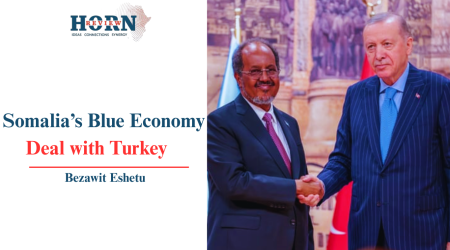
Somalia’s Blue Economy Deal with Turkey
The 2026 launch of SOMTURK marks a significant shift...
2
Apr
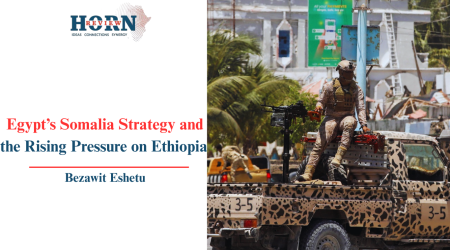
Egypt’s Somalia Strategy and the Rising Pressure on Ethiopia
As federal Somali National Army units, equipped with armor and...
2
Apr
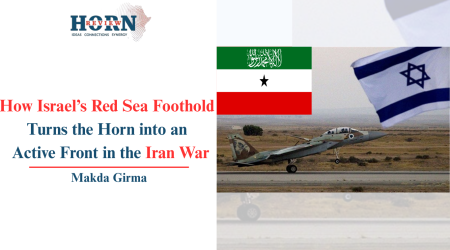
How Israel’s Red Sea Foothold Turns the Horn into an Active Front in the Iran War
Two weeks on from the joint U.S.-Israeli strikes that hit...
30
Mar
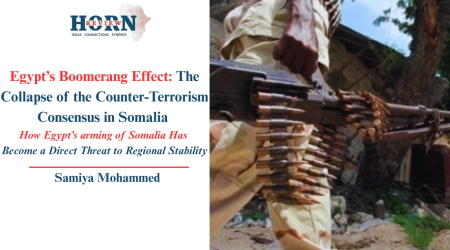
Egypt’s Boomerang Effect: The Collapse of the Counter-Terrorism Consensus in Somalia
How Egypt’s arming of Somalia Has Become a Direct...
30
Mar
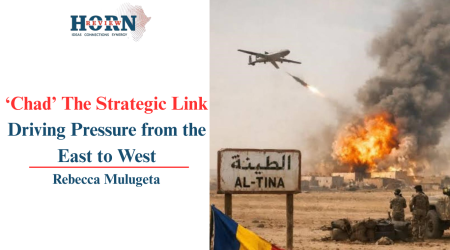
‘Chad’ The Strategic Link Driving Pressure from the East to West
There is a tendency to read Africa’s conflicts as if...
30
Mar
Sudan’s Shadow Alignment: Military Dependence and Diplomatic Denial Amid a Middle East War
The geopolitical orientation of the Sudanese Armed Forces (SAF), under...
30
Mar
Kenya’s Coast and the Future of Land Reform
President William Ruto’s plan to formalize unused coastal land is...
26
Mar
Sudan’s Shadow Alignment: Military Dependence and Diplomatic Denial Amid a Middle East War
The geopolitical orientation of the Sudanese Armed Forces (SAF), under...