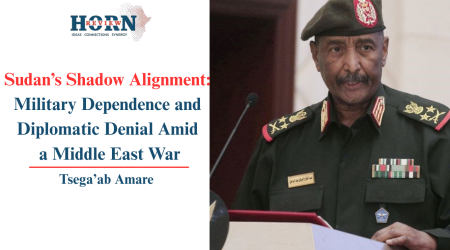
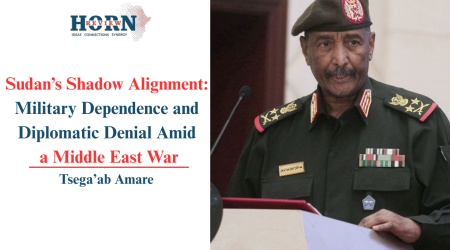
Sudan’s unraveling reveals a deeper truth than any body count or map of front lines can convey: this is a conflict deliberately prolonged by the very powers professing to end it. What began as a raw contest for control between two former allies has metastasized into a proxy arena. Regional patrons treat Sudanese territory as an extension of their own rivalries, turning ceasefires into theater and humanitarian appeals into bargaining chips. The result is not chaos born of accident, but a system optimized for endurance: arms flow freely, atrocities serve strategic ends, and every mediation effort collapses under the weight of its participants’ conflicting agendas.
Both factions have systematically targeted civilians in patterns that UN investigators have repeatedly classified as war crimes, with the RSF’s campaign in Darfur carrying the clearest hallmarks of genocidal intent. The UN Independent International Fact-Finding Mission for Sudan, in its February 2026 report on El Fasher and its September 2025 annex “A War of Atrocities,” documented deliberate ethnic targeting of non-Arab communities (Fur, Zaghawa, Masalit, Berti, Tunjur). This included mass killings, widespread rape and sexual slavery often tied to ethnicity, an 18-month siege that weaponized starvation, and public rhetoric from RSF elements calling for the elimination of “anything black” or “all Zaghawa.” Chair Mohamed Chande Othman captured the calculated nature: “The scale, coordination, and public endorsement… demonstrate that the crimes… were not random excesses of war.”
Specific horrors, the April 2025 Zamzam camp massacre (300–1,500 civilians, mostly women and children), post-capture executions and sexual violence in El Fasher in October 2025, and systematic obstruction of aid, fit a pattern of persecution and extermination that the Mission found reasonable grounds to link to crimes against humanity, with genocidal intent inferable from the ethnic focus and leadership statements.
The SAF and its allies have inflicted their own deliberate toll, concentrated in central and eastern Sudan. Indiscriminate airstrikes and artillery on markets, residential areas, and displacement sites in Khartoum and Gezira have produced mass civilian casualties. In recaptured zones, reprisals have included summary executions, such as dozens killed in the Kanabi community in Gezira after SAF regained control in January 2025, and sexualized torture in detention. Islamist militias aligned with the SAF, notably the Al-Baraa Ibn Malik Brigade, have mirrored RSF tactics through ethnically tinged reprisals, systematic looting (including food stocks), house burnings, and targeted killings of communities suspected of RSF sympathy in Gezira (January 2025) and Kordofan (February 2026). Early patterns noted by Amnesty International persist: SAF-linked violence leans toward indiscriminate firepower and infrastructure destruction, while RSF actions in Darfur emphasize ethnic erasure and sexual terror.
These horrors are not symmetrical in intent or geography, yet both sides share responsibility for the world’s largest displacement crisis, 13.6 million uprooted, over 4 million as refugees in Chad, Ethiopia, and South Sudan, and a hunger emergency verging on biblical scale, with confirmed famine in Zamzam and warnings of catastrophe for millions more. Both obstruct aid: the RSF through sieges and looting, the SAF through bureaucratic weaponization via its Humanitarian Aid Commission (HAC), which uses “sovereignty” as a weapon by denying visas and blocking cross-border aid from Chad, essentially implementing a “Bureaucratic Famine” that is just as lethal as the RSF’s physical sieges, and attacks that have killed over 130 aid workers. The conflict’s true engine lies outside Sudan.
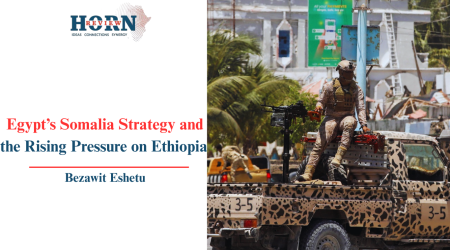
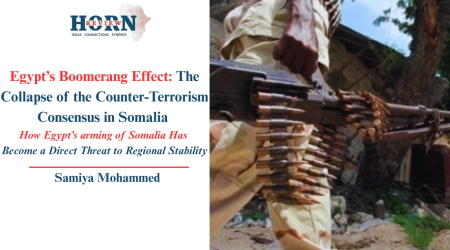
External patrons have turned a domestic power struggle into a regional chessboard. Egypt provides political cover, logistical support, and, most consequentially, drone operations from a secret western desert base using Turkish-made aircraft to strike RSF positions and supply lines, actions that Sudanese Republican Party voices argue violate sovereignty and hit civilian areas. Saudi Arabia has tilted toward the SAF while facilitating arms pathways, including potential major packages. On the other side, the UAE stands accused by Sudan (with submitted evidence of serial numbers, flight logs, seized weapons, and passports) of supplying advanced Chinese systems, Wing Loong II drones, GB50A bombs, AH-4 howitzers, routed through third countries, in violation of the UN arms embargo. These have enabled RSF strikes with documented civilian deaths. The United States sanctions leaders on both sides (including for El Fasher atrocities) but remains entangled in the broader diplomatic web.
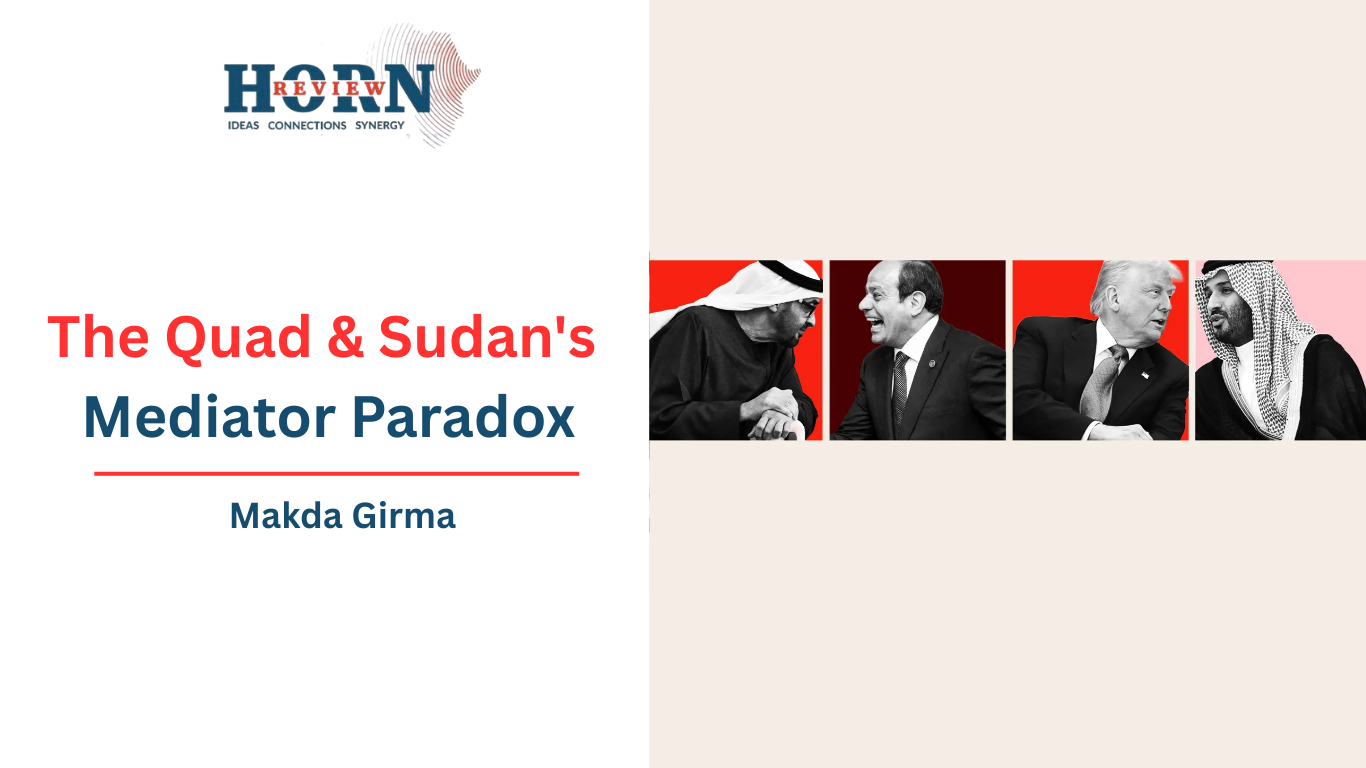
This brings us to the Quad; the United States, Saudi Arabia, Egypt, and the UAE. The mechanism explicitly designed to break the deadlock. Launched in 2025, it produced in September a seemingly pragmatic roadmap: a three-month humanitarian truce followed by a nine-month civilian-led transition to a new government. On paper, it was the most coherent international push yet. In practice, it functions as a proxy stalemate rather than a mediator, serving as a microcosm of the war itself; when the UAE (backing RSF) and Egypt (backing SAF) sit at the same table to discuss a “truce,” they aren’t mediating a third-party conflict; they are negotiating the terms of their own proxy battle.
The Quad’s proposal for a “civilian-led transition” is undermined by the fact that its members continue to prioritize military-to-military alliances; Egypt, in particular, has a vested interest in a military-led Sudan to protect its Nile water interests, making its “commitment” to a civilian-led process in the Quad appear performative. Al-Burhan has rejected the framework outright, demanding RSF withdrawal and recognition of SAF legitimacy before any talks. Recent U.S.-led humanitarian truces and donor conferences in early 2026 have kept channels open but produced no breakthrough.
Parallel efforts by IGAD and the African Union have fared no better, hampered by accusations of bias and overlapping mandates. The February 2026 AU summit in Addis Ababa offered a moment for unified African leadership, civilian-centered protections, consolidated mediation, but institutional fractures remain. At the UN Security Council, the pattern repeats in stark exchanges: Sudan’s representative, Ambassador Al-Harith Idriss, presents photos, videos, and serial-numbered evidence of UAE-supplied weaponry, labeling the RSF a proxy and the UAE complicit; the UAE dismisses it all as “baseless” and counters with accusations against the SAF. The result is paralysis. No unified pressure halts the arms flow because the suppliers sit on opposing sides of the Quad.
Analysis of the past three years shows that condemnation alone changes nothing. Lasting resolution requires dismantling the incentives that make war profitable: disrupting gold-smuggling networks and war economies, enforcing a comprehensive arms embargo with real monitoring, and creating a mediation architecture insulated from the backers’ rivalries. The Quad could still serve as a platform, but only if its members are compelled to prioritize Sudanese sovereignty over their own strategic footholds. Otherwise, the “humanitarian truce” proposals will remain what they have always been: pauses for rearmament while famine, rape, and displacement grind on.
Sudan does not lack plans or principles. It lacks leverage against the external architecture that keeps its generals in business. Until that architecture is confronted head-on, by naming enablers, sanctioning violators, and centering Sudanese civilian voices in any transition, the world’s largest humanitarian catastrophe will continue not as tragedy , but as policy.
By Makda Girma, Researcher, Horn Review