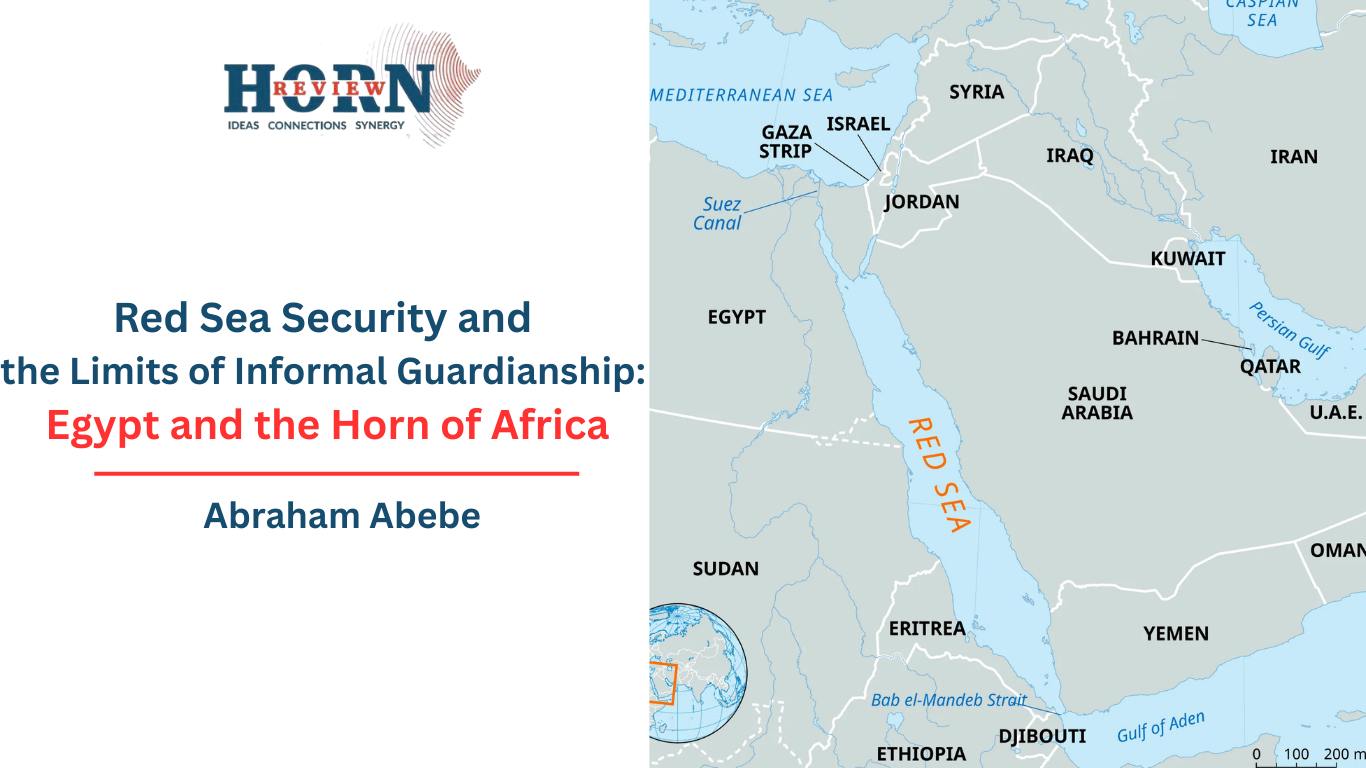
From a legal perspective, Egypt’s claim to a guardianship role over the Red Sea lacks a clear foundation in international maritime law. The Red Sea constitutes an international maritime space governed by the United Nations Convention on the Law of the Sea (UNCLOS), under which coastal states exercise defined and limited rights within their territorial seas and exclusive economic zones. The Bab el-Mandeb Strait, connecting the Red Sea to the Gulf of Aden, is an international strait used for international navigation. Under UNCLOS Article 38, all states enjoy the right of transit passage through such straits, a right that may not be suspended. While coastal states may adopt certain non-discriminatory regulations relating to safety or environmental protection, Article 44 obliges them not to hamper transit passage. Egypt does not border the Bab el-Mandeb Strait and therefore lacks jurisdictional authority over access to the southern Red Sea or the Horn of Africa coastline. International maritime law does not recognize claims of informal stewardship or guardianship based on strategic influence or historical narrative.
Egypt’s authority over the Suez Canal, frequently invoked to justify a broader Red Sea security role, is itself narrowly circumscribed. Under the 1888 Constantinople Convention, the Canal is subject to an international regime guaranteeing freedom of navigation, while Egypt’s responsibilities are limited to administration and the maintenance of security necessary for the Canal’s operation. These treaty-based rights do not extend to intervention, coordination, or exclusionary practices in the wider Red Sea or along the Horn of Africa coastline. From this perspective, claims to Red Sea guardianship reflect a strategic posture rather than an entitlement grounded in international law.
The absence of a clearly defined legal mandate has not constrained Egyptian activism. Instead, it has coincided with a gradual expansion of diplomatic and security engagement across the Red Sea basin. Cairo has initiated advanced initiatives aimed at aligning Red Sea littoral states around shared security narratives, particularly by framing threats to maritime commerce and regional stability as collective concerns that require coordinated responses. Egypt’s expanding coordination with Saudi Arabia reflects converging interests in safeguarding maritime routes and mitigating the spillover effects of regional conflicts. These initiatives have contributed to a security framework in which Red Sea governance is increasingly shaped by Red Sea and Gulf actors, with more limited inclusion of core Horn of Africa states whose economic and security interests are deeply affected by Red Sea dynamics, most notably Ethiopia.
Egypt’s expanding security dialogue with Eritrea, including high-level defense consultations and joint security engagements, underscores Cairo’s increasingly active role in security discussions adjacent to Ethiopia’s borders. Similarly, Egypt’s security cooperation agreement with Djibouti formalizes defense coordination along key maritime and transit corridors in the region. Taken together, these developments suggest that Egypt increasingly views the Horn of Africa as a strategically significant extension of its security environment, despite not being a Horn state.
The Grand Ethiopian Renaissance Dam (GERD) represents a significant shift in Nile Basin power relations, challenging Egypt’s long-standing position in downstream water governance. As Ethiopia’s energy capacity, economic weight, and diplomatic reach have expanded, Egypt has increasingly viewed Ethiopia not only as an upstream riparian state but also as an emerging regional actor. As direct leverage in GERD negotiations proved limited, Cairo appears to have explored indirect avenues to shape Ethiopia’s broader strategic environment. In this context, Egypt’s securitization of the Red Sea and engagement in the Horn of Africa are increasingly interpreted as extensions of its broader Nile policy.
Ethiopia’s pursuit of reliable access to the Red Sea has emerged as a growing point of concern in Cairo. For a landlocked state with a rapidly expanding population and economy, maritime access constitutes a widely recognized development objective. International legal frameworks generally acknowledge the right of landlocked states to seek access to the sea. From this perspective, Ethiopia’s aspirations are not inherently revisionist or destabilizing. At the same time, Ethiopia’s maritime ambitions raise legitimate questions regarding governance, coordination, and regional confidence-building. These concerns, shared by some neighboring states, highlight the importance of transparency, negotiated frameworks, and institutionalized cooperation to ensure that maritime access arrangements contribute to stability rather than competition.
Egyptian concerns appear to focus less on the legal dimensions of Ethiopia’s maritime ambitions than on their broader structural implications. An Ethiopia that combines hydropower sovereignty with sustained maritime connectivity could alter regional power balances, potentially reducing Egypt’s long-standing leverage over African trade corridors and its ability to project influence through both Nile governance and maritime chokepoints. Viewed in this light, resistance to Ethiopia’s pursuit of maritime access reflects anxieties surrounding changes in the regional balance of power rather than immediate stability considerations.
Egypt’s approach to surrounding Ethiopia frequently warns that these dynamics risk deepening mistrust, polarization, and the securitization of political relationships in the Horn of Africa. As external rivalries associated with Nile politics increasingly spill into the region, mechanisms for conflict management and collective problem-solving may weaken. Rather than fostering cooperative security, these patterns could encourage zero-sum alignments and counter-balancing behavior by Ethiopia and potentially extra-regional actors, raising the risk of escalation and miscalculation along one of the world’s most strategically sensitive maritime corridors.
Egypt’s opposition to third-party engagement with Somaliland further illustrates these tensions. International law does not prohibit diplomatic engagement or recognition, both of which remain matters of sovereign discretion. By framing such engagement as a regional security violation, Egypt implicitly advances a claim to influence or constrain the diplomatic choices of Horn of Africa actors. This posture risks politicizing unresolved status questions, limiting local agency, and complicating the emergence of regionally driven solutions.
A balanced assessment must recognize that Ethiopia is not an external actor in the Horn of Africa but a core regional state, embedded through longstanding historical, economic, cultural, and security ties with its neighbors. The stability and economic advancement of Ethiopia yield significant benefits for Somalia, Djibouti, Sudan, and Eritrea—most notably in the expansion of trade corridors, increased energy interdependence, strengthened infrastructure connectivity, and more effective security cooperation. While Ethiopia’s regional rise introduces governance, coordination, and perception challenges, it simultaneously creates opportunities for cooperative development, deeper regional integration, and more inclusive security frameworks grounded in geographic proximity and shared interests. Excluding Ethiopia from Red Sea governance discussions, particularly while privileging extra-regional actors, risks undermining regional ownership and entrenching political and security fragmentation.
Ultimately, Egypt’s expanding presence in the Red Sea and the Horn of Africa reflects a strategic response to shifting regional power balances rather than a legally grounded custodial mandate. While Egypt has legitimate interests in maritime security and freedom of navigation, these interests should not be interpreted as conferring authority to act as a guardian of the Red Sea or to pursue containment strategies that marginalize core regional stakeholders. Sustainable stability in the Red Sea corridor depends on moving beyond unilateral security doctrines and toward cooperative frameworks rooted in international law, sovereign equality, and genuine regional ownership. In this context, acknowledging Ethiopia’s legitimate pursuit of maritime access and formally integrating it into inclusive Red Sea governance mechanisms would help reduce zero-sum competition and strengthen collective security in one of the world’s most strategically vital maritime corridors.
By Abraham Abebe, Researcher, Horn Review