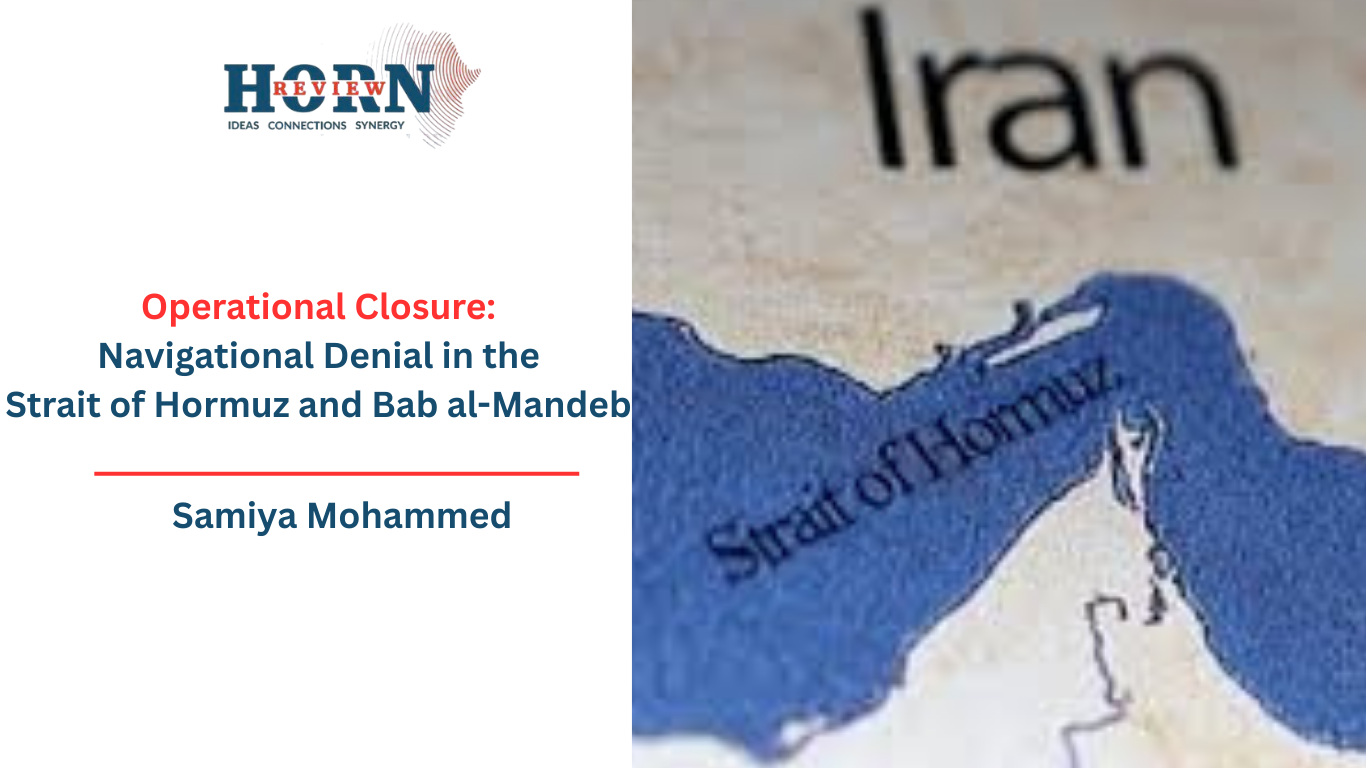
On 28 February 2026 the naval arm of Iran’s Islamic Revolutionary Guard Corps (IRGC) implemented measures effectively suspending commercial navigation through the Strait of Hormuz. Maritime VHF broadcasts directed at vessels transiting or approaching the waterway conveyed explicit instructions that passage was prohibited. These transmissions were acknowledged by the European Union’s Aspides maritime mission and the United Kingdom Maritime Trade Operations authority marking a rare transition from declaratory posture to applied maritime enforcement within one of the world’s most indispensable energy corridors.
The action followed coordinated United States and Israeli air operations targeting Iranian leadership compounds, military infrastructure and nuclear associated facilities across multiple provinces. In response Iranian forces reportedly initiated missile and unmanned aerial vehicle strikes directed at Israeli territory and United States military installations in Bahrain, Kuwait, Qatar and the United Arab Emirates including the Fifth Fleet headquarters in Manama and Al Udeid Air Base. At the same time, Yemen’s Iran aligned Houthi movement announced its intention to recommence operations against maritime traffic in the Bab al-Mandeb Strait indicating that vessels perceived to be affiliated with U.S. or Israeli interests could face imminent targeting.
The convergence of pressure on the Strait of Hormuz and the Bab al-Mandeb Strait introduces the possibility of simultaneous constraint at two Maritime’s central to global commerce, energy distribution and supply continuity. The sequence of developments uncoiled rapidly. In the early hours of 28 February coordinated airstrikes struck multiple sites within Iran described by officials as an expansive and continuing operation designed to degrade military command capabilities and nuclear-related infrastructure. Public statements issued in parallel extended immediate military objectives, signalling broader political intent.
Within hours Iran’s Supreme National Security Council declared that a resolute response would follow. The IRGC Navy activated contingency directives prepared in advance, transmitting formal navigation warnings across maritime communication channels declaring closure of the Strait of Hormuz to all vessel traffic. Masters of commercial ships operating in the Gulf received these instructions directly producing immediate operational uncertainty among shipping companies with assets inside or nearing the waterway.
The Houthi movement exercising control over territory adjacent to the Bab al-Mandeb corridor issued coordinated statements expressing alignment with Tehran and indicating readiness to renew asymmetric maritime operations previously observed in 2023 and 2024. Leadership communications suggested that missile and drone operations against designated vessels could commence without delay.
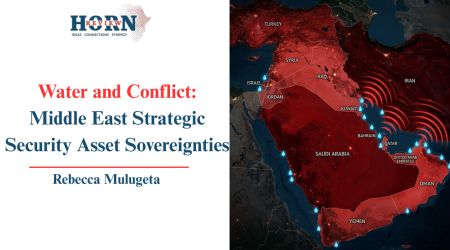
Geographically the Strait of Hormuz links the Persian Gulf to the Gulf of Oman and the broader Indian Ocean. At its narrowest point it measures approximately fifty kilo meters with shipping lanes constrained by territorial demarcations and shallow bathymetry that heighten navigational sensitivity. Roughly twenty million barrels of crude oil representing close to one fifth of global daily consumption transit the passage in addition to a substantial share of global liquefied natural gas exports primarily originating from Qatar.
Operationally, the environment remains complex.While categorical warnings have been issued, no comprehensive physical interdiction such as confirmed mining or systematic vessel seizure has been publicly documented. The United States has maintained that international maritime law does not permit unilateral closure of transit straits and has positioned naval assets accordingly. Commercial responses have diverged. Numerous tankers have paused voyages, altered course or reduced speed. Major shipping firms have instructed fleets to avoid the corridor pending clarity. Several liquefied natural gas carriers servicing Qatari exports have suspended transit, disrupting one of the world’s principal LNG supply streams. Meanwhile, certain vessels have continued passage suggesting that enforcement currently relies upon declared threat rather than universal physical obstruction.
However Attention has to be simultaneously shifted to the Bab al-Mandeb Strait a southern gateway connecting the Red Sea to global markets via the Suez Canal. Approximately 10 to 12 percent of global trade volume including hydrocarbons and containerized freight transits this route. Renewed Houthi activity could replicate a deterrent based maritime environment in which missile capabilities, unmanned systems and declared intent discourage commercial navigation absent full blockade measures.
Should concurrent disruption materialize at both points vessels may be compelled to reroute around the Cape of Good Hope extending voyages by ten to fourteen days and materially increasing fuel expenditure, insurance premiums and charter costs. Such diversions would compound existing supply chain fragilities, elevate commodity prices and intensify inflationary transmission across manufacturing and consumer sectors.
Energy markets have already reflected acute sensitivity, with benchmark crude prices registering pronounced upward movement. Sustained restriction of Gulf exports could propel prices into substantially higher ranges, with attendant macroeconomic consequences for importing regions. Naval deployments across the Gulf, Arabian Sea, and Red Sea have entered elevated readiness. The United States Fifth Fleet retains responsibility for maritime security across the region, while European maritime protection missions confront an expanded threat perimeter.
Private maritime risk consultancies have issued advisories citing potential vessel harassment, electronic interference affecting navigation systems, remote strike capabilities, and possible mine deployment.
The implications extend to African economies dependent upon Suez Canal throughput and imported energy supplies. Increased transit times and insurance surcharges will affect export competitiveness and import pricing across multiple sectors. Multiple trajectories remain plausible. A restoration of navigational confidence through calibrated naval escort operations could stabilize conditions under heightened risk parameters. Alternatively, progression from declaratory prohibition to enforced interdiction would produce a more restrictive maritime environment with broader strategic consequences.
Strategic calculations however will determine the extent and immediacy of such engagement. This episode illustrates the structural exposure inherent in concentrating global trade and energy flows within a limited number of maritime corridors. The Strait of Hormuz and the Bab al-Mandeb Strait function as main nodes within the international economy where localized confrontation can generate systemic repercussions. As commercial vessels accumulate outside restricted waters and operators weigh the risks of transit against indefinite delay, the durability of global supply networks and the capacity of diplomatic mechanisms to contain maritime tension will be tested in real time.
By Samiya Mohammed, Researcher, Horn Review