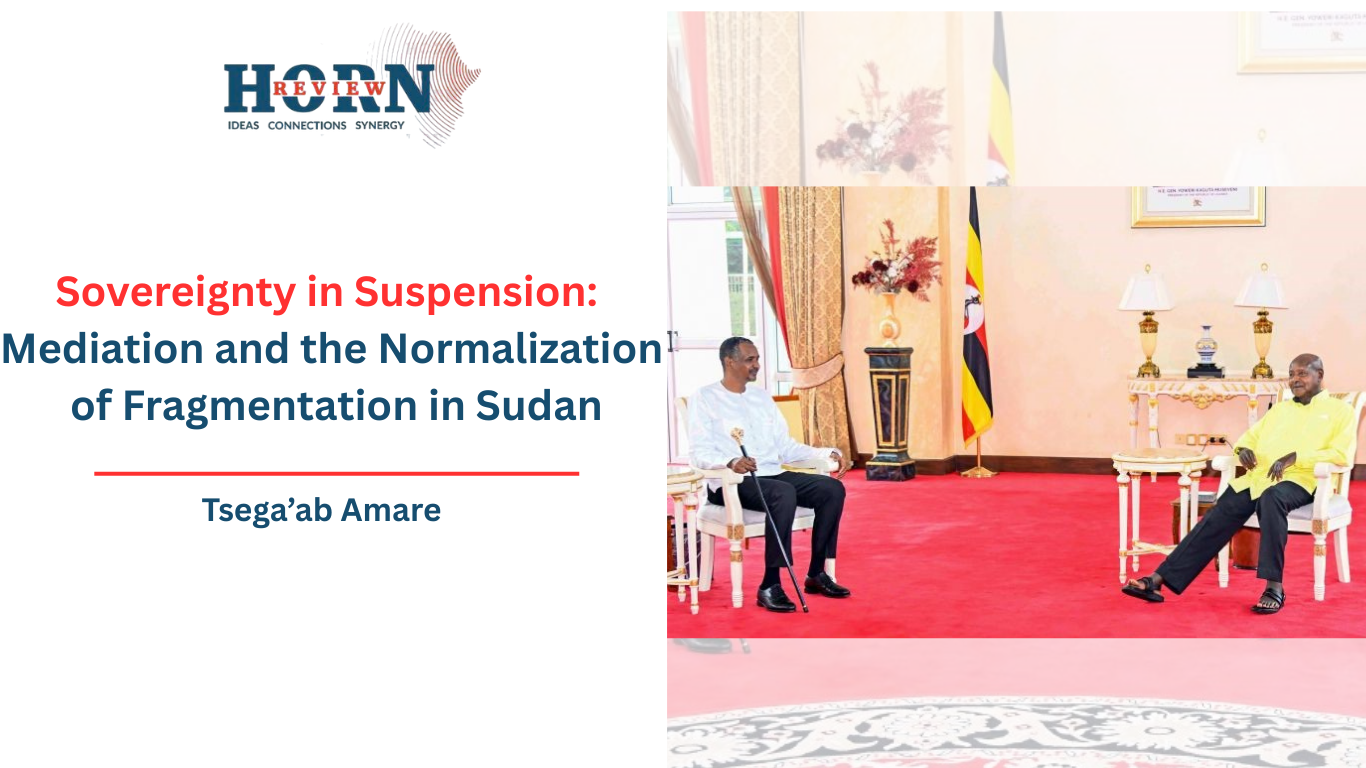
Uganda’s decision to host Mohamed Hamdan Dagalo at State House Entebbe represents a qualitative change in the political economy of Sudan’s conflict. Although Kampala seeks to portray this engagement as part of an African Union-led mediation process, for the de facto government, headed by General Al-Burhan, this represents the political normalization of a paramilitary group accused of grave international crimes.
The Entebbe meeting represents an accelerated pace towards Sudan’s transition to a state of normalized fragmentation, whereby an armed non-state actor seeks and attains not only territorial control but also diplomatic recognition. This conflict represents an important case study on the weakening notion of sovereign exclusivity, mediation, and the emergence of parallel sovereignty within the Horn of Africa.
The Sudan conflict has evolved into an ideological contest for legitimacy as a strategic asset. Unlike before, when territorial control was seen as an important asset, regional standing is increasingly playing an important role in determining conflict dynamics. This is especially true within fragmented states, where conflict mediation represents an extension of conflict by other means.
In civil wars, legitimacy represents an important convertible asset, whereby Recognition by regional powers translates into leverage in negotiations, access to logistical networks, and protection from international isolation. On the other hand, the RSF’s diplomatic outreach represents an important development in the attempt to establish parallel sovereign identity, whereby armed group control is sustained on one level, while regional state recognition is established on another. This produces what has been conceptualized as a “Zombie State,” which is a state that retains international legal personality but loses monopoly over both coercion and diplomacy. From this perspective, the Entebbe meeting was not merely a venue for dialogue but an important form of symbolic statecraft, whereby sovereignty was attempted to be ceded to some level.
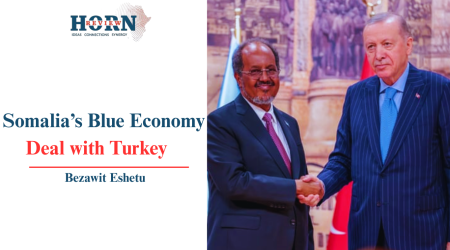
Yoweri Museveni’s reception of Hemedti at the presidential retreat in Entebbe represents a status enhancement ritual. The reception, rather than in a technical setting, represents a form of recognition even when it is denied in rhetoric. For the Sudanese Armed Forces-aligned Defacto government in Port Sudan, the symbolism was unambiguous. The RSF was received as a co-equal political principal rather than a subordinate armed wing. The traditional role of Uganda as the AU mediator had thus morphed into a form of legitimization of the fragmented nature of the Sudanese insurgent landscape. This represents a form of what may be termed the mediation-legitimization paradox: the act of mediating represents the act of engaging. The act of engaging represents the act of promoting insurgents to the status of quasi-state actors in the regional diplomatic imagination.
However, the RSF’s involvement in regional diplomacy is not just reactive but rather doctrinal in nature. By attending the meeting in Uganda, flanked by figures affiliated with the Sudan Founding Alliance (Tasis), Hemedti sought to rebrand the RSF as a proto-governing entity rather than a mere mercenaries’ organization. There are three key strategic objectives in this move by the RSF. Firstly, the RSF is attempting to secure international status for itself, transitioning from a militarily relevant organization to a diplomatically indispensable one. Secondly, these diplomatic engagements contribute to the weakening of the sovereign position of the Sudanese Armed Forces (SAF), as each meeting undermines the exclusive representational claim to sovereignty in Port Sudan. Finally, the group is working toward the normalization of dual authority.
The RSF discourse on unity is matched only by its practice in governing rival territories, particularly in Darfur. However, this is not a contradictory position but rather a pragmatic one, in which unity discourse is used to justify fragmentation in practice. This meeting in Entebbe marks a step towards the RSF transitioning from a militarily relevant organization to a regionally relevant political organization embedded in interstate relations.
Uganda projects two divergent foreign policy logics in its approach to Sudan: the first is the Museveni Track, in which Yoweri Museveni adopts an African-centered mediation policy that includes embracing AU-led mediation, “African solutions,” and inclusive dialogue. As an AU-appointed mediator for direct negotiations between Sudan’s warring parties, this track prioritizes the role of elder statesmen over military victory.
The second is a more transactional and militarized regional imaginary led by Gen. Muhoozi Kainerugaba, projected through frequent, unfiltered public statements and social media interventions that signal coercive options and partisan positioning. In the immediate aftermath of the Entebbe meeting, Muhoozi publicly denounced Hemedti and the RSF in stark moral terms, threatened coordinated action with regional allies, and framed the RSF as a transnational menace. Even when officially disavowed or framed as personal opinion, such signals shape how Uganda’s intentions are read in Khartoum and across the region.
For SAF-aligned actors, this duality is not benign pluralism but strategic ambiguity. The Museveni Track opens diplomatic space and preserves mediation credentials; the Muhoozi Track sustains leverage through coercive signaling and hedging. This good-cop/bad-cop dynamic undercuts Kampala’s credibility as a neutral broker while maximizing maneuvering room. In Sudanese eyes, Entebbe still registers as de facto recognition or facilitation tilted toward the RSF, even as Muhoozi’s bellicosity muddies the narrative and blunts unified condemnation of Kampala’s role.
Normalizing RSF diplomacy has far-reaching ripple effects in light of the ongoing crisis in Sudan and its implications for Nile Basin geopolitics. Moreover, for the Horn of African states, the precedent set by the RSF’s inclusion in a presidential reception poses a problem for regional stability. If paramilitary forces can sit in a presidential reception, then secession might just become a new route to regional influence. This undermines African Union principles, which forbid unconstitutional changes in government. In this sense, the Entebbe meeting sets a precedent in regional relations and their influence on power relations in the region.
From a peace-brokering perspective, the Entebbe meeting locked in a form of sovereignty for a non-state armed group. From the perspective of Yoweri Museveni, the handshake signified a form of continental relevance, while for Hemedti, it opened doors to a new form of political leadership in Sudan. For Sudan, it marked another step toward a zombie-state condition—internationally recognized yet domestically hollowed out. The costs of this symbolic diplomacy are borne not by negotiators, but by Sudanese civilians whose state is being disaggregated on the battlefield.
By Tsega’ab Amare, Researcher, Horn Review