
25
Feb
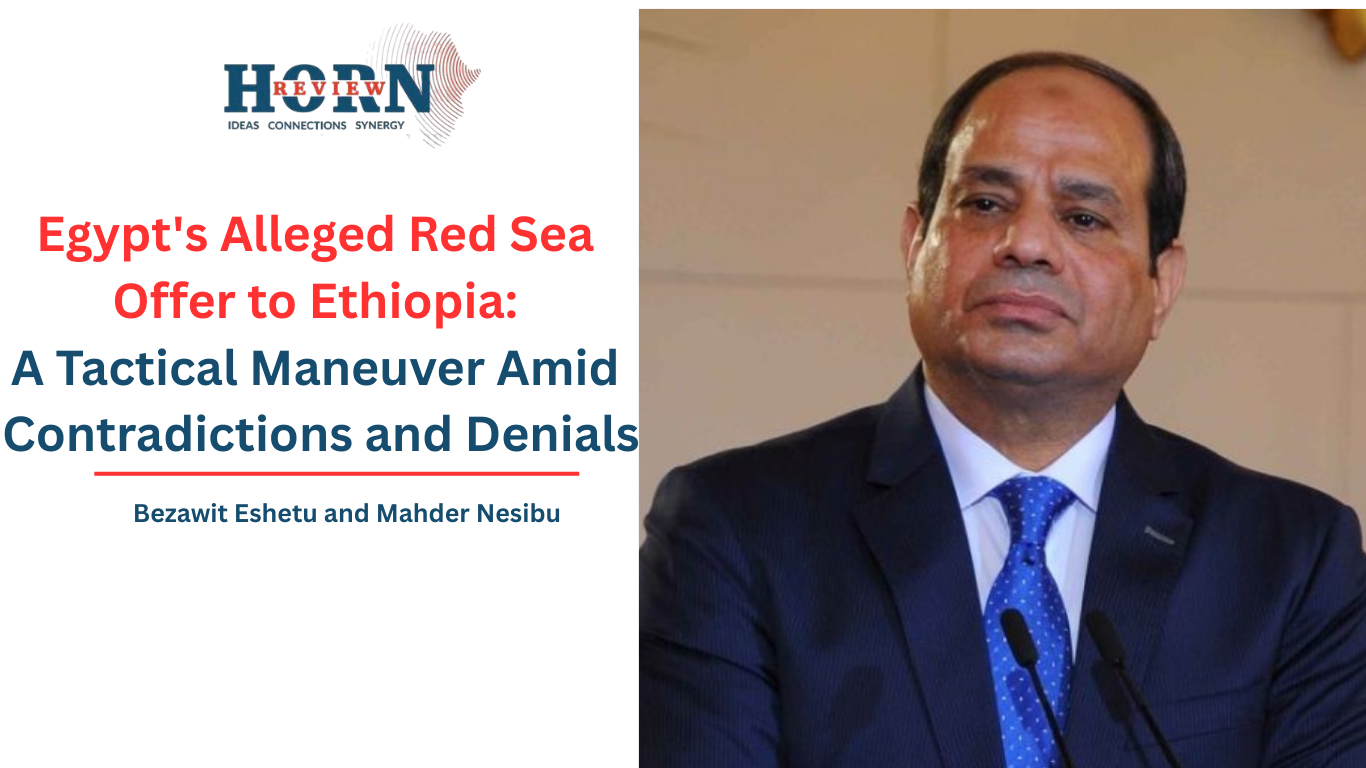
Egypt’s Alleged Red Sea Offer to Ethiopia: A Tactical Maneuver Amid Contradictions and Denials
Egypt has reportedly proposed granting Ethiopia access to the Red Sea in exchange for concessions on the Grand Ethiopian Renaissance Dam (GERD). According to sources in Cairo cited by The National on February 23, this idea was presented to Ethiopian Prime Minister Abiy Ahmed in mid-February and relayed to U.S. mediators under President Donald Trump.
The deal would demand Ethiopia demonstrate “flexibility” in Nile negotiations, including agreeing to binding rules on dam filling and water releases during droughts, while abandoning any ambitions for a coastal military base. In return, Egypt would leverage its relationships with Sudan, Somalia, and Djibouti to facilitate this access. However, the proposal carries an implicit threat: if Ethiopia refuses, Cairo could use its military influence in these countries to obstruct such access.
Just one day later, on February 24, 2026, Egyptian officials categorically denied the reports, labeling them “entirely unfounded” and emphasizing their “commitment to water security”. This swift retraction aligns with Egypt’s pattern of strategic ambiguity, where ideas are floated to appear cooperative especially during U.S.-led talks only to be withdrawn when scrutiny intensifies. Rather than a genuine olive branch, the alleged offer seems like a bid for leverage, eroding trust in the process.
Such tactics highlight Cairo’s opportunistic approach, using denials to reshape narratives while clinging to control over shared resources like the Nile. This not only muddles negotiations but also reveals how Egypt navigates international pressures alongside its domestic agenda, often prioritizing image over substantive progress.
What makes this purported proposal particularly striking is its stark contrast with Egypt’s inflammatory rhetoric just months earlier. In November 2025, Foreign Minister Badr Abdelatty issued unequivocal statements dismissing Ethiopia’s Red Sea aspirations. During an Al Arabiya interview on October 31, 2025, he asserted that Red Sea governance “exclusively concerns riparian states,” explicitly excluding landlocked Ethiopia by adding, “I am referring to the landlocked countries in Africa, specifically Ethiopia.” He escalated this on November 1, 2025, declaring, “Geography is a divine decree no human can alter, and Ethiopia will remain a land-locked nation until Judgment Day, with no role whatsoever in the Red Sea.”
In a News24 op-ed on November 10, 2025, Abdelatty further described Ethiopia’s coastal ambitions as “destabilizing,” tying them to threats against regional order and portraying Egypt as a stabilizing force against Ethiopia’s “old doctrine of scarring” neighbors. These remarks, infused with religious undertones and exclusionary language, frame Ethiopia as an aggressive outsider, rallying domestic nationalism but isolating Cairo internationally which entirely contradicts with what Ethiopia is doing. The February 2026 offer, even if denied, feigns generosity by conditioning Ethiopia’s critical need for sea access on Nile concessions, disregarding Addis Ababa’s fundamental interests and underscoring Egypt’s tactical shifts under Trump’s mediation efforts.
This inconsistency extends to President Abdel Fattah el-Sisi’s own pronouncements on the GERD, which oscillate between veiled threats and conciliatory denials. On October 12, 2025, Sisi warned that Egypt “will not stand idly by” in the face of Ethiopia’s “irresponsible” management of the dam, pledging “necessary measures” to prevent harm. This aggressive posture persisted into December, with Abdelatty on December 7, 2025, branding the GERD as “illegitimate and illegal,” declaring negotiations a “dead end” after 13 unproductive years, and accusing Ethiopia of unilateral violations of international law.
Yet, Sisi reversed course on December 22, 2025, insisting that “Despite differences with Ethiopia, Egypt has never issued threats, believing that disputes must be resolved through dialogue and political solutions.” He echoed this on December 21, 2025, claiming Egypt has “no problem” with Ethiopia and simply seeks a binding agreement. These contradictions clash with Abdelatty’s hardline positions and mirror historical patterns, such as Sisi’s 2021 threat implying chaos if Egypt lost “one drop” of Nile water a stance now downplayed. Overall, Cairo’s rhetoric serves as a negotiating tool rather than a bridge to resolution, diminishing confidence in potential agreements and reducing denials to mere reputational repairs.
Egypt’s diplomatic flurry in late 2025 further aimed to assert dominance over Ethiopia, through a series of visits and agreements with Red Sea nations, though a deeper examination exposes the strategy’s limitations in a web of complex regional dynamics. In October 2025, Sisi hosted Eritrean President Isaias Afwerki for a five-day visit beginning October 30, culminating in discreet port agreements by December 24, 2025, that enhanced facilities at Eritrea’s Assab and Djibouti’s Doraleh for Egyptian warships and troops. This built on the October 2024 tripartite summit in Cairo involving Eritrea and Somalia, where Egypt committed to military support for Somalia.
Somali President Hassan Sheikh Mohamud visited Egypt in January 2025, elevating relations to a strategic partnership, while Egypt courted Kenya, leading to President William Ruto’s January 2025 visit and a joint declaration for deepened ties. Sudan and Djibouti also received focus, with Egypt hosting their foreign ministers on February 10, 2025, to strengthen bonds, following Sisi’s April 2025 trip to Djibouti that emphasized coastal exclusivity
These initiatives, intensifying in October-November 2025 and extending into 2026, project an encirclement of Ethiopia, with Cairo providing arms to allies like Somalia (including troops for AUSSOM since January 2025) and Sudan (drones and jets to the Sudanese Armed Forces) to marginalize Addis Ababa. However, this approach overestimates Egypt’s influence, as Ethiopia’s “two waters” doctrine linking GERD sovereignty and Red Sea access as essential for the prosperity of its 130 million people reduces isolation challenging, transforming the strategy into more spectacle than effective containment.
Indeed, Egypt’s presumed leverage falters when scrutinizing the motivations of key actors, which often diverge from Cairo’s containment objectives. Eritrean President Isaias Afewerki’s authoritarian governance, forged in decades of isolation and deep-seated distrust toward Ethiopia since Eritrea’s 1993 secession, makes concessions like Assab port deals improbable diminishing the need for Egyptian “assistance.”
Djibouti’s economy, reliant on ports for 70-95% of GDP and handling 95% of Ethiopian trade (generating $1.5-2 billion annually), cannot afford to alienate its primary client; the economic fallout would eclipse any benefits from Cairo’s overtures. Somaliland, bolstered by Israel’s December 2025 recognition and its 2024 Memorandum of Understanding (MoU) granting Ethiopia a 20km naval base in exchange for potential recognition, remains resolute. Somalia’s objections lack enforcement power, and Egyptian pressure is unlikely to deter a region pursuing diverse partnerships.
Beyond rhetoric, Egypt’s duplicity manifests in actions that contradict its advocacy for dialogue, such as supporting proxies that destabilize Ethiopia. At UN forums, Cairo advocates for international pressure on the GERD, yet reports from Security in Context allege Egyptian arms shipments to Ethiopian factions like Fano in Amhara and the TPLF that is now escalating the internal conflict. This involvement undermines Abdelatty’s December 2025 calls for stability.
Egyptian activist Khalid Mahmoud highlighted this hypocrisy in a 2025 post, portraying U.S. mediation as Egypt’s “last diplomatic path” before resorting to “necessary options,” while criticizing Ethiopia for 14 years of “useless” talks and ignoring Addis Ababa’s upstream rights. These inconsistencies threats issued then denied, exclusions reframed as conditional offers only to be retracted cement Egypt’s reputation as an unreliable negotiator, where denials conceal retreats from overambitious power plays.
From Ethiopia’s viewpoint, the “two waters” strategy positions the GERD which has been operational since September 2025, supplying power to 60 million without irrigation diversion as a matter of equitable upstream rights, while Red Sea access addresses the “geographic imprisonment” imposed by Eritrea’s secession. By intertwining these priorities, Ethiopia strengthens its stance, rejecting any trade-offs as existential threats to its population’s future.
Delving deeper, the alleged proposal, rapidly disavowed, likely sought to project openness to dialogue while mitigating backlash from earlier provocative statements. However, it appears targeted at Somaliland a secessionist entity Cairo opposes given barriers in other areas. Djibouti cannot jeopardize its economy by barring Ethiopia, rendering Egyptian interference ineffective there. Eritrea’s isolationism and historical animosities with Ethiopia make Assab exchanges unfeasible, exposing the offer’s inherent weaknesses. Thus, it subtly aimed to endorse or condition Ethiopia’s 2024 Somaliland MoU, supported by Israel’s recognition.
Yet this contradicts Egypt’s alliances with Saudi Arabia and Turkey to thwart Somaliland’s independence, maintaining coastal exclusivity through bodies like the Council of Arab and African Coastal States and preserving Somalia’s territorial integrity. Egypt has vocally opposed Israel’s recognition through joint declarations and diplomatic campaigns, and cannot afford to alienate Riyadh or Ankara crucial for countering UAE influence in the Horn and securing economic aid amid Cairo’s financial strains by appearing to sanction Ethiopian bases that fragment Somalia and invite further Israeli or Emirati involvement.
This ill-considered proposal, floated without adequate risk evaluation, risks alienating Egypt in a region where alliances are vital, prompting the hasty denial as damage control for a blunder that undermines partner confidence. The November 2025 exclusions and December contradictions frame it as propaganda masking hegemonic ambitions, with the quick rebuttal revealing Cairo’s vulnerability to overreach. Saudi influence likely reinforces this position, as Riyadh collaborates with Egypt on Red Sea dominance against UAE-Ethiopian objectives, though direct evidence of prompting the denial remains circumstantial. Consequently, Cairo’s maneuvers could repel allies dependent on Saudi-Egyptian coordination for support and security, illustrating how denials expose underlying frailties in a multipolar Red Sea landscape.
Thus, Egypt’s tactics encompassing rhetorical reversals, orchestrated diplomacy, and retracted proposals rationalize inflexible positions on the GERD, simulating cooperation without yielding ground. Genuine resolutions require acknowledging mutual rights, not illusory blockades or transient offers. Absent this, the Horn of Africa risks prolonged instability, with Cairo’s strategies yielding neither water security nor equity, but instead amplifying distrust that mere denials only exacerbate.
By Bezawit Eshetu and Mahder Nesibu, Researchers, Horn Review

RELATED
Posts
10
Apr
The Hostage Waters: Rewiring Diplomacy and Security in the Horn and Gulf Region
Overview
The unfolding Gulf crisis has become a defining moment in...
9
Apr
The AU’s Strategic Diplomacy in the Horn–Red Sea Corridor
The African Union’s appointment of a High Representative for...
9
Apr
How Deep Is Egypt in Sudan’s War? The Shift from Support to Battlefield Involvement
Egypt’s military role in Sudan has steadily moved from discreet...
8
Apr
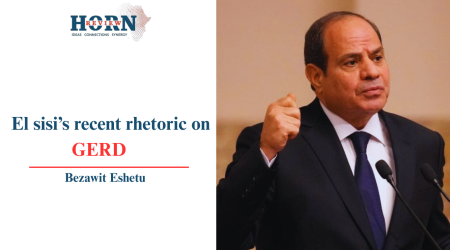
El sisi’s recent rhetoric on GERD
On April 4, 2026, Egyptian President Abdel Fattah el-Sisi used...
2
Apr
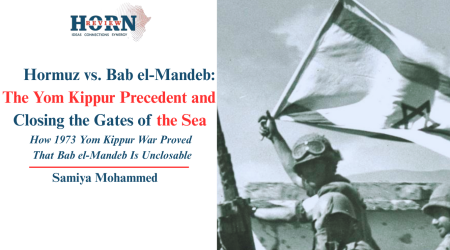
Hormuz vs. Bab el-Mandeb: The Yom Kippur Precedent and Closing the Gates of the Sea
How 1973 Yom Kippur War Proved That Bab el-Mandeb...

2
Apr
The New Security Reality of the Horn of Africa and Middle East
For a long time, political analysis treated the Middle East...
2
Apr
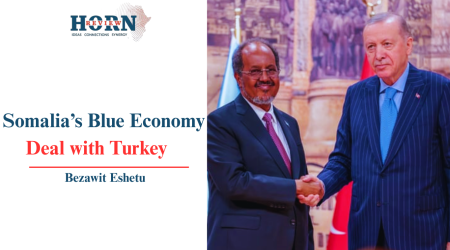
Somalia’s Blue Economy Deal with Turkey
The 2026 launch of SOMTURK marks a significant shift...
2
Apr
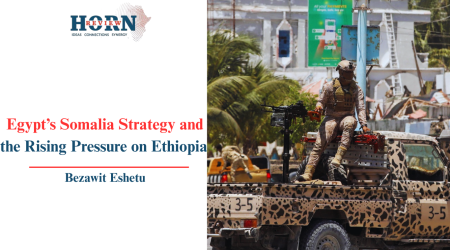
Egypt’s Somalia Strategy and the Rising Pressure on Ethiopia
As federal Somali National Army units, equipped with armor and...
2
Apr
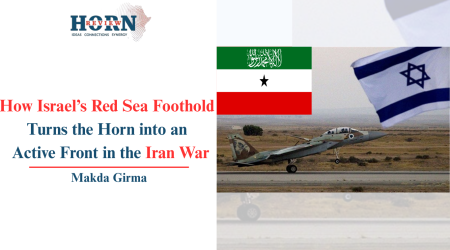
How Israel’s Red Sea Foothold Turns the Horn into an Active Front in the Iran War
Two weeks on from the joint U.S.-Israeli strikes that hit...
30
Mar