
24
Feb
The DESSU Corridor Authority: Reshaping Trade and Integration in the Horn of Africa
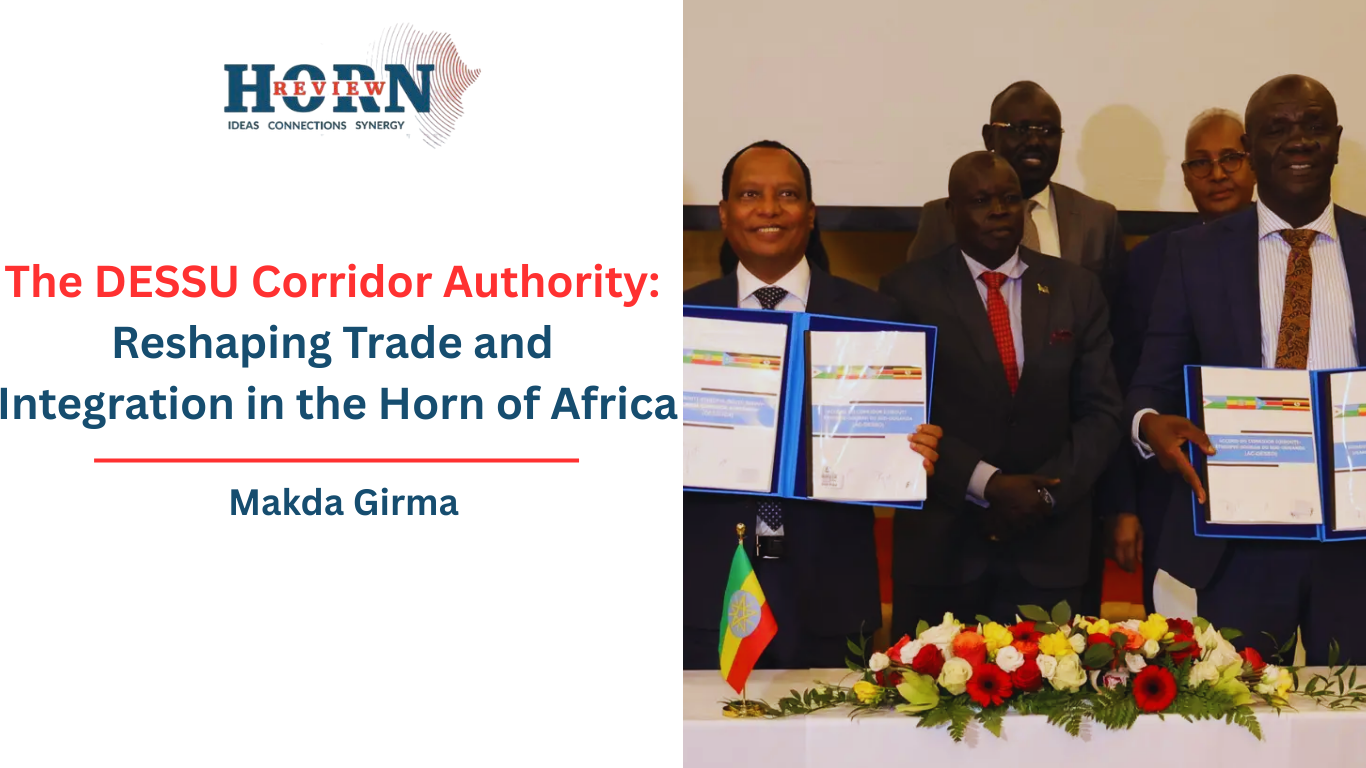
The establishment of the Djibouti-Ethiopia-South Sudan-Uganda (DESSU) Corridor Authority stands as a game-changer in the Horn of Africa’s push for connectivity, signed into being on February 15, 2026, in Djibouti amid high-stakes talks that underscore the region’s hunger for seamless trade routes. This multilateral setup isn’t just about laying tracks or paving roads, it’s a calculated move to bind four nations into a multimodal network, channeling goods from Djibouti’s bustling port through Ethiopia and into the landlocked interiors of South Sudan and Uganda, all while eyeing broader economic uplift and strategic ties. In a neighborhood where borders often spell bottlenecks and rivalries run deep, DESSU emerges as a bold bid to turn infrastructure into a shared stake, aligning with the African Union’s grander dreams of continental trade integration.
Yet, as with any such venture in the volatile Horn, the real story lies in how it upends power plays, streamlines economies, and grapples with on-the-ground hurdles. Geopolitically, DESSU slots into what could be dubbed the “race for the interior,” where coastal gateways vie for sway over resource-laden hinterlands.
For Ethiopia, long hemmed in by its 95% dependence on Djibouti for seaborne trade, this authority flips a longstanding vulnerability into a collective strength. What was once a bilateral choke point, prone to fee hikes, capacity crunches, or diplomatic spats, now morphs into a regional lifeline involving Uganda and South Sudan, spreading the risks and rewards. Ethiopia positions itself as the pivotal transit node, gaining bargaining power, while its partners lock in reliable ocean access, fostering a web of interdependencies that could buffer against flare-ups or outside meddling. This setup dilutes Djibouti’s hold, nudging all involved toward joint funding for upgrades, and in doing so, it recalibrates the balance, making the corridor less a point of leverage for one and more a mutual asset that demands cooperation to thrive.
Adding a layer of big-picture analysis, the “China-West” proxy angle looms large here. Djibouti’s infrastructure, including key ports and rail lines, has been heavily funded by Chinese loans and investments, creating a web of bilateral debt that Ethiopia has shouldered for years. DESSU could serve as a clever mechanism for Ethiopia and its partners to “multilateralize” this burden, shifting it from a direct Beijing-Addis relationship to a shared regional framework. By pooling resources and attracting Western-backed financiers like the AfDB and EU, the corridor dilutes China’s exclusive influence, potentially easing debt terms while inviting a geopolitical tug-of-war between Eastern and Western powers vying for sway in the Horn.
For Uganda, DESSU marks a savvy diversification from its traditional ties to the Northern Corridor via Mombasa and the Central Corridor through Dar es Salaam, signaling to Kenya and Tanzania that Kampala won’t remain a locked-in client. This shift hands Uganda fresh leverage in freight rate talks with its southern neighbors, broadening options in a region where single-route reliance can spell economic fragility.
Stack this against Kenya’s Lamu Port-South Sudan-Ethiopia Transport (LAPSSET) Corridor, a decade-old ambition to funnel traffic from Lamu through highways, rails, and pipelines to Ethiopia and South Sudan. LAPSSET has notched some wins, like operational berths at Lamu and partial roads, but it’s bogged down by cash shortages, land disputes, and shaky coordination.
DESSU, riding on the proven Djibouti-Addis rail, steps in as a quicker fix, potentially siphoning off volumes and sparking talk of it being a “LAPSSET killer.” But in a region starved for reliable links, this isn’t necessarily zero-sum, DESSU could offer vital backup, hedging against disruptions from politics or weather.
Ethiopia’s lean toward Djibouti highlights the rivalry, yet smarter regional syncing, perhaps via IGAD, might turn these into complementary arteries, bolstering resilience across the board.
On core infrastructure, DESSU builds on existing Djibouti-Addis Ababa rail and road segments with extensions to South Sudan, such as the Paloich-Pagak link, and Uganda underway, while LAPSSET involves new builds from Lamu Port with partial roads and berths complete but rail and pipeline segments stalled.
Funding and progress favor DESSU with its AfDB-backed Phase II at $214 million approved in late 2025 for faster rollout leveraging operational segments, contrasting LAPSSET’s multi-billion estimates hampered by delays from funding gaps and disputes leading to slower momentum.
Strategically, DESSU neutralizes Ethiopia’s port dependency, diversifies routes for Uganda and South Sudan, and hits the market quicker, whereas LAPSSET aims for southern Horn access with potential for an oil pipeline but remains vulnerable to regional tensions.
Economically, DESSU reduces logistics costs by 10-40% and boosts oil exports via alternative paths, promising trade diversification like LAPSSET but with current bottlenecks limiting immediate gains for the latter.
Risks include security in South Sudan extensions and geological hurdles for DESSU’s full integration, alongside land acquisition issues and competition from DESSU eroding traffic projections for LAPSSET.
At its core, though, DESSU demands a tough trade-off: sovereignty for synergy. Binding nations to a central authority means handing over slices of control on customs, tariffs, and standards, a big ask in a corner of Africa where protectionism often trumps partnerships. The governance structure underscores this test, with an Interstate Council of Ministers as the top decision-maker, flanked by Joint Steering and Technical Committees to drive implementation. Echoing IGAD and COMESA aims, it’s a trial of whether the Horn can move beyond border bickering, like the shadows of Tigray or South Sudan’s strife, toward genuine integration. Success could blueprint deeper bonds; stumbles might entrench silos, underscoring that in this protectionist playground, trust is the scarcest commodity.
Economically, DESSU digs deeper than concrete and steel, zeroing in on the “soft” scaffolding that turns paths into profits. The real grind here isn’t with bulldozers but bureaucracy, where the authority’s push for a Single Customs Territory aims to sync digital systems and slice through the 10-40% “logistics tax” that drags down African exchanges with endless forms and checks. Borrowing from EAC and COMESA playbooks, tools like electronic tracking could shrink border delays from days to hours, juicing competitiveness and luring investors. In the Horn’s fragmented setup, this harmonization spells real relief, aligning with continent-wide bids to grease trade wheels. A key enforcer here is the planned Transport Observatory, backed by TradeMark Africa, which will track real-time truck movements and “name and shame” sluggish border posts to hammer down those costs.
Then there’s South Sudan’s oil angle, a wildcard in this mix. With Sudan’s chaos making the Port Sudan route a non-starter, DESSU throws a rope by rerouting exports via Ethiopia to Djibouti. But grand visions of a pipeline through Ethiopia’s rugged highlands face steep geological and financial climbs, so the focus tilts to trucking refined products, “river-to-road” hybrids, and recent deals for dry ports along the White Nile to tie into the corridor network. The Paloich-Pagak road emerges as a critical “missing link,” channeling oil from northern fields into the system. For Juba, where oil fuels over 90% of earnings, this pivot could steady the ship, ramping up shipments and drawing upstream cash. Regionally, it scatters energy paths, cuts reliance on Sudanese whims, and weaves South Sudan tighter into the Horn fabric, dishing out transit bucks for Ethiopia and port fees for Djibouti.
A standout twist in DESSU’s playbook is its maritime cabotage push, prioritizing African-flagged vessels for regional cargo hauls to claw back the “logistics dollar” from global behemoths like Maersk or MSC. Backed by the Port Management Association of Eastern and Southern Africa, this angle keeps more revenue cycling within the Horn, bolstering local fleets and trimming foreign dependencies.
Framed wider, DESSU mirrors the African Continental Free Trade Area (AfCFTA) in miniature, probing if these four can crack corridor code amid politicking and build gaps. Nailing it, with tariff dips, standard nods, and slick links, might prove AfCFTA’s punch, sparking ripple effects. Botching it flags bigger continental snags, stressing that political buy-in and funding are make-or-break.
The human element adds another dimension: who wins and who loses in this reshaping? The Authority itself emerges as a clear victor, centralizing power and efficiency gains. Governments stand to benefit from boosted trade volumes and diversified revenues. Businesses, especially exporters and importers, could see slashed costs and faster turnaround times. Yet, local truckers might feel the pinch, if the Single Customs Territory eliminates those infamous border delays, they lose out on “waiting time” fees that currently pad their invoices, potentially squeezing margins in an already competitive field. Informal traders and small-scale operators could face barriers from stricter standards, while communities along the route might gain jobs but grapple with displacement or environmental shifts.
Logistically, DESSU’s multimodal pitch demands a hard look at realities, where visions clash with voids. The Djibouti-Addis Ababa spine, with its rail and roads, handles Ethiopia’s heft capably.
But tentacles into South Sudan and Uganda? Mostly sketches, with stretches like Nimule to Gulu starved for funds and shadowed by unrest.
To ground the “multimodal” claim, the route maps out clearly: Port of Djibouti to Addis Ababa, then Jimma, Boma, Kapoeta, Nimule, Gulu, and on to Kampala.
The African Development Bank’s Phase II injection, $214.47 million approved in late 2025, prioritizes the lions’ share for Ethiopia ($181.5 million) to plug gaps like the 67-km Melka Jilo-Awash expressway.
Djibouti gets $29.71 million for road upgrades, while South Sudan receives a modest $1.96 million plus $1.3 million for fragile-state needs, mirroring high risks and limited capacity there. Without patching via public-private deals, DESSU stays stunted, capping its reach and postponing payoffs like faster hauls.
Crucially, the “digital corridor” backbone, GPS tags, paperless passes, targets those infamous three-day border sits. Backed by TradeMark Africa and EU, single windows and synced customs promise fluid flows, curbing graft. Still, rolling it out calls for digital upskilling and cyber shields, especially in spots like South Sudan, to hit full stride.
The climate resilience factor can’t be overlooked in a region battered by extremes, floods ravaging South Sudan and droughts parching Ethiopia. DESSU’s design incorporates “climate-resilient” standards, a priority for funders like the AfDB and EU, who insist on elevated roads, reinforced bridges, and sustainable materials to withstand rising weather threats. This forward-thinking approach aims to future-proof the corridor, ensuring it doesn’t crumble under environmental pressures that have derailed past projects.
Ultimately, DESSU dangles transformation for the Horn, but delivery rides on navigating rivalries, economic kinks, and logistical truths. By knitting fates, it could defang weaknesses and sketch a template for Africa’s links tomorrow. Its success stands as the ultimate litmus test for the AfCFTA, if four nations with such deep historical rivalries can synchronize their digital customs and share a “sovereign” authority, it provides the blueprint for the rest of the continent.
By Makda Girma, Researcher, Horn Review

RELATED
Posts


2
Apr
The New Security Reality of the Horn of Africa and Middle East
For a long time, political analysis treated the Middle East...
2
Apr
Somalia’s Blue Economy Deal with Turkey
The 2026 launch of SOMTURK marks a significant shift...
2
Apr
Egypt’s Somalia Strategy and the Rising Pressure on Ethiopia
As federal Somali National Army units, equipped with armor and...
2
Apr
How Israel’s Red Sea Foothold Turns the Horn into an Active Front in the Iran War
Two weeks on from the joint U.S.-Israeli strikes that hit...
30
Mar
Egypt’s Boomerang Effect: The Collapse of the Counter-Terrorism Consensus in Somalia
How Egypt’s arming of Somalia Has Become a Direct...
30
Mar
‘Chad’ The Strategic Link Driving Pressure from the East to West
There is a tendency to read Africa’s conflicts as if...
30
Mar
Sudan’s Shadow Alignment: Military Dependence and Diplomatic Denial Amid a Middle East War
The geopolitical orientation of the Sudanese Armed Forces (SAF), under...

30
Mar
Kenya’s Coast and the Future of Land Reform
President William Ruto’s plan to formalize unused coastal land is...
26
Mar
Sudan’s Shadow Alignment: Military Dependence and Diplomatic Denial Amid a Middle East War
The geopolitical orientation of the Sudanese Armed Forces (SAF), under...