
24
Feb
How Eritrea’s Re-Union with Ethiopia Spared it from Great Britain’s Partition Scheme
In the aftermath of World War II, Eritrea found itself at the crossroads of colonial ambitions in the Horn of Africa, with Britain wielding considerable influence over its destiny to advance strategic imperatives that often-undermined local unity. Following the ousting of Italian forces from East Africa in 1941, Eritrea came under the British Military Administration (BMA) as occupied territory until 1952, a timeframe during which Britain actively engineered policies to exploit ethnic divisions and economic vulnerabilities for imperial gain.
This era underscored Eritrea’s position as a buffer zone in geopolitical rivalries, particularly those centered on controlling the Red Sea and the Nile River basin. Ultimately, the 1952 federation with Ethiopia, enacted through UN Resolution 390 A (V), benefited Eritrea far more than Ethiopia, as the latter was already assured sea access regardless of Eritrea’s status, shielding the territory from foreign exploitation while fostering stability and development under Emperor Haile Selassie.
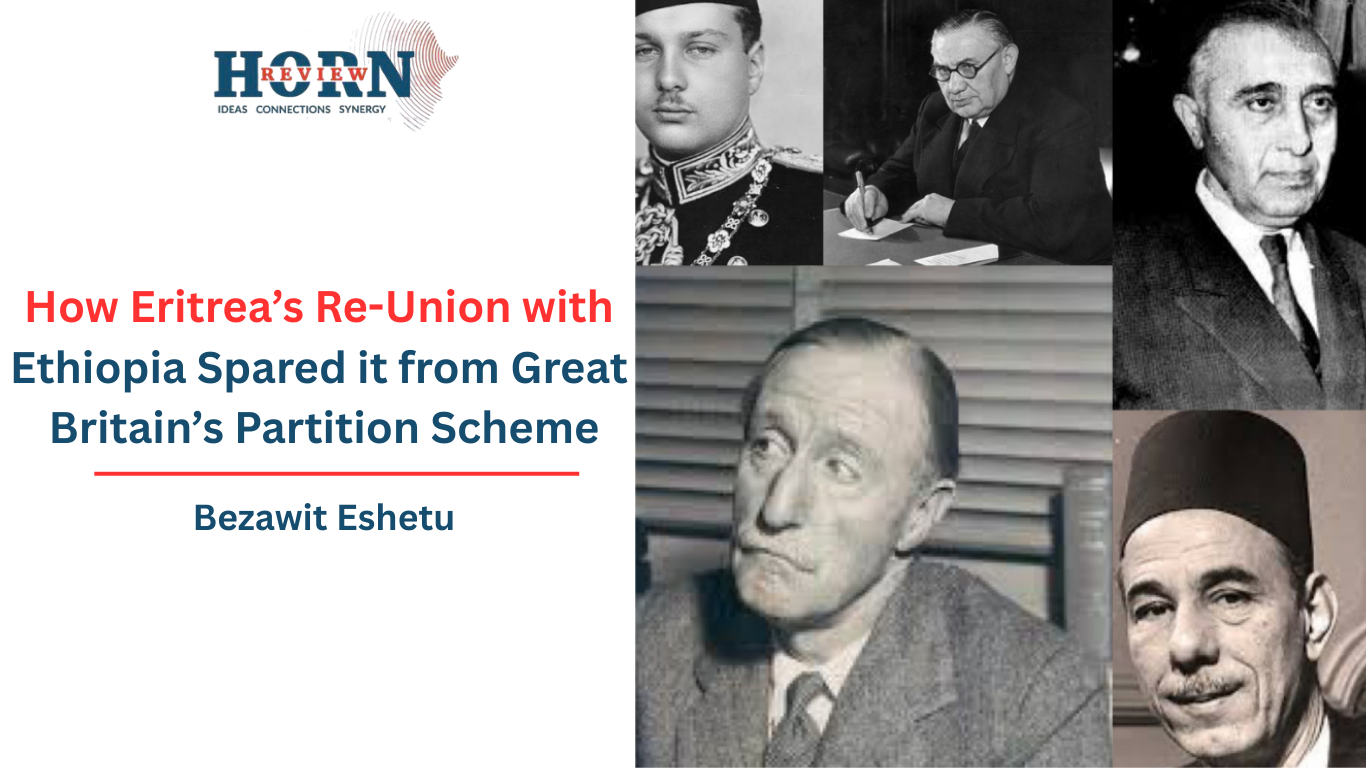
Behind these policies were officials and colonial strategists from Britain and Egypt, seeking to secure naval and Nile interests, coordinated administrative tactics intended to exploit local divisions and shape Eritrea’s future. Brigadier Stephen Longrigg, appointed Chief Administrator from 1942 to 1944, embodied Britain’s exploitative stance toward Eritrea. Leveraging his prior colonial roles in the Middle East, Longrigg regarded Eritrea as an artificial product of Italian rule, fractured by religious and ethnic lines between Muslim lowlanders and Christian Tigrinya highlanders. His administration exercised sweeping authority over governance, economics, media, and political emergence, using this power to propose a partition that served British ends.
The plan entailed annexing the western and northern lowlands, areas with Muslim populations linked to the Nile Valley, to the Anglo-Egyptian Sudan, thereby expanding British influence and establishing a protective barrier. The central highlands would integrate with Ethiopia’s Tigray to create a “Greater Tigray” under Ethiopian sovereignty but with British trusteeship for up to two decades, while the Danakil coast, including Assab, would transfer directly to Ethiopia. This blueprint aimed not at Eritrean welfare but at containing Emperor Haile Selassie’s historical claims to the territory, while capitalizing on Tigrayan dissent, such as the 1943 Woyane Rebellion, to perpetuate British oversight.
Longrigg’s initiatives were inextricably tied to Britain’s wider objectives in the region, including dominance over Red Sea shipping lanes and Nile hydrology. The semi-autonomous Greater Tigray concept was designed as a mechanism to dilute Ethiopian power, preventing it from achieving regional dominance. To bolster this agenda, Longrigg orchestrated propaganda via the BMA’s Eritrean Weekly News, authoring anonymous pieces that posed as local opinions, decrying Eritrean cohesion and advocating partition for purported stability.
These efforts deepened societal rifts, cultivating pro-Ethiopian Unionists among highland Christians and pro-independence or partition advocates among Muslim lowlanders and Italian sympathizers. His 1945 book, A Short History of Eritrea, perpetuated this exploitation by depicting the territory as inherently unviable, both economically and ethnically, thereby priming international audiences for British-favored dismemberment and justifying ongoing manipulation.
Eritrea’s economic predicaments in the 1940s offered Britain a convenient rationale for such predatory policies, masking exploitation under the guise of administrative necessity. Italian colonialism had endowed Eritrea with comparatively sophisticated infrastructure such as railways, ports, and factories but the BMA systematically plundered these as wartime spoils, dismantling and exporting industrial assets to Britain and elsewhere. This orchestrated deindustrialization precipitated extensive unemployment, chronic trade imbalances where exports satisfied merely half of imports, and widespread economic inertia.
Eritrea’s modest scale, heterogeneous populace, and heavy reliance on subsistence farming and scant minerals amplified perceptions of fragility, yet these issues were aggravated by British actions rather than innate flaws. Longrigg’s official reports played up Eritrea’s problems on purpose. He used them to push back against the idea of Eritrea becoming independent, painting it as an easy target for outsiders to split apart and take advantage of—basically, dividing up its land, resources, and people among foreign powers or allies, which would make it impossible for Eritrea to stand on its own and grow economically.
As Eritrea’s future ascended to United Nations scrutiny in the late 1940s, Britain’s exploitative maneuvers adapted but retained their core intent of regional containment. The 1947 Paris Peace Treaty relegated decisions on Italian colonies to the UN, where impasse spawned the 1949 Bevin-Sforza Plan, a collaboration between British Foreign Secretary Ernest Bevin and Italian counterpart Carlo Sforza that replicated Longrigg’s division: lowlands to Sudan, highlands and ports like Massawa and Assab to Ethiopia, with safeguards for Italian interests.
Bevin promoted this to strengthen British influence over the Nile and reduce Soviet threats in the Red Sea during the early Cold War. The proposal’s defeat in the UN General Assembly by a slim margin, driven by anti-colonial sentiments highlighted by Haiti’s crucial vote, marked a shift toward decolonization ideals. It also revealed Britain’s intention to treat Eritrea as a divisible asset instead of a unified entity.
In 1950, the UN Commission for Eritrea was sent to address a society damaged by British-created divisions. Unionists advocated for Ethiopian union, while the Independence Bloc called for sovereignty. Discussions highlighted Eritrea’s economic dependencies and ethnic divides, leading to various proposals: full union, independence, or trusteeship. The Commission recognized Ethiopia’s need for sea access and stated that even if Eritrea were to gain independence, arrangements would ensure Ethiopian transit rights or possible territorial adjustments related to ports. This reflected a global agreement on protecting the maritime rights of landlocked nations. This context shaped the compromise of Resolution 390 A (V) in December 1950, which established Eritrea as an autonomous region under the Ethiopian Crown. Eritrea would maintain its constitution, assembly, and flag while becoming part of Ethiopia both economically and defensively.
This federation arrangement greatly benefited Eritrea under Haile Selassie since Ethiopia’s access to sea routes was already guaranteed, regardless of formal annexation. It made the union a safeguard against external exploitation of the former Italian colony. Historical examples, including pre-colonial Ethiopian maritime claims disrupted by Italian expansion in 1890, and UN discussions confirmed Ethiopia’s rights to ports like Massawa through transit guarantees or possible demarcations, even if Eritrea became fully independent.
For Eritrea, federation meant access to Ethiopia’s large markets, resources, and Selassie’s modernization efforts, such as infrastructure improvements and educational expansions that eased economic struggles. This integration protected Eritrea from the division schemes aimed at capitalizing on its strategic ports, creating instead a plan for growth within a larger, stronger framework.
Eritrea’s benefits also spread into political and social aspects, as federation lessened the risks linked with British interests. By joining with Ethiopia, Eritrea avoided the fragmentation that would have split its Muslim lowlands towards Sudan, under British-Egyptian control, and its highlands towards a trusteeship in Tigray. This preserved a level of autonomy while gaining from Ethiopian stability.
Selassie’s centralized leadership directed investments into Eritrean sectors, countering the stagnation caused by the British Military Administration and promoting shared prosperity. This outweighed the minor concessions Ethiopia made, given its already assured access to the sea. This situation countered the narrative of Ethiopian dominance, showing how federation acted as a protective barrier against imperial interests.
These resolutions were deeply influenced by Britain and Egypt’s strategies to contain Ethiopia, especially regarding Red Sea access and Nile waters. Their actions revealed their intent to use Eritrea as leverage. Britain feared that unrestricted Ethiopian control of the coast would enable large upstream dams on the Blue Nile, which provides over 85% of Egypt’s water, thereby disrupting the downstream rights established in colonial treaties like the 1929 Anglo-Egyptian agreement, which overlooked Ethiopian rights.
King Farouk I, reigning from 1936 to 1952, championed the “Unity of the Nile Valley” to assert Egyptian-Sudanese cohesion, endorsing Eritrean partition to incorporate Muslim lowlands into Sudan via ethnic affinities with groups like the Beja and Beni Amer, thereby extending Cairo’s influence and thwarting Ethiopian gains. Farouk’s role as a self-proclaimed Islamic protector involved bolstering the Eritrean Muslim League through educational aid and diplomatic support, polarizing Eritrean politics to favor division and deny Ethiopia sovereign ports, all while preserving Egypt’s hydrological supremacy.
Abdul Rahman Azzam Pasha, Arab League Secretary-General from 1945 to 1952, amplified this by envisioning the Red Sea as an “Arab lake,” lobbying for Eritrean independence or partition to avert perceived Christian Ethiopian hegemony over Muslim territories, thus exploiting communal tensions for Pan-Arab ends.
Mohamed Salah el-Din Bey, Egypt’s Foreign Minister from 1950 to 1952, played a pivotal role in advancing these objectives during the UN debates on Eritrea. Leading the Egyptian delegation, he strongly opposed British control over Sudan and was credited with obstructing the Bevin-Sforza partition plan, making it impossible for the UN to agree to cede Western Eritrea to a British-run Sudan. His strategic interests were deeply rooted in eliminating British influence in the region, asserting Egyptian dominance over Sudan, and promoting broader Egyptian interests, particularly in safeguarding the Nile’s hydrological balance against upstream Ethiopian developments.
In his April 1950 address to the UN Commission for Eritrea, he advocated for Eritrean independence or the cession of its lowlands to Sudan to protect vital Nile linkages, clashing with Ethiopian envoy Aklilu Habte-Wold’s unification arguments and framing Ethiopian claims as imperial overreach. This diplomatic stance not only echoed the broader Egyptian agenda but also highlighted how Egypt leveraged international forums to maintain downstream water security and regional leverage.
Britain and Egypt’s alliance prioritized controlling potential Nile dams, ensuring such projects aligned with their interests rather than Ethiopia’s, as upstream developments threatened established allocations. The 1929 and 1959 accords, favoring downstream states, exemplified this exploitation, binding Ethiopia indirectly while Britain and Egypt maneuvered to keep Eritrea divisible, extracting strategic value from its ports and divisions. Yet, the federation outcome subverted these plans, benefiting Eritrea by integrating it into a protective union that forestalled outright exploitation.
The British-Egyptian actions in Eritrea reveal ongoing patterns in global issues: colonial histories causing lasting conflicts, the use of ethnic divisions for power, and control over resources overshadowing people’s rights to self-determination. The end of the federation in 1962 led to Eritrea’s fight for independence, but this period allowed Eritrea some development and protection from exploitation, showing how unity with Ethiopia helped counter colonial division.
By Bezawit Eshetu, Researcher, Horn Review

RELATED
Posts
8
Apr
Who Remains Turkiye’s Reliable Strategic Gateway to a Complicated Horn of Africa?
Turkiye, much like the financially powerful Gulf states and the...
26
Mar
Meles Zenawi’s Prescience: The Case for SWS, Puntland and Jubaland and the Domino Effect
Revisiting Meles Zenawi’s Case for Semi-Recognition
On March 17, 2026...
26
Mar
Ethiopia’s “Horn First” Doctrine in the Face of Externally Conditioned Sovereignties
The geopolitical landscape of the Horn of Africa is shifting...
23
Mar
Why Ethiopia Should Treat the Sahel as an Immediate Neighbor
Ethiopia’s foreign policy has long been guided by a map...
19
Mar
Pre-War Equilibrium: Why Ethiopia Holds Time and Eritrea Is Racing Against It
The contemporary dynamics of interstate relations between Ethiopia and Eritrea...
18
Mar
Air Power and the Politics of Defence Dependence: Ethiopia's Strategic Imperative
In 2020, former Malaysian Prime Minister Mahathir Mohamad, in discussing...

13
Mar
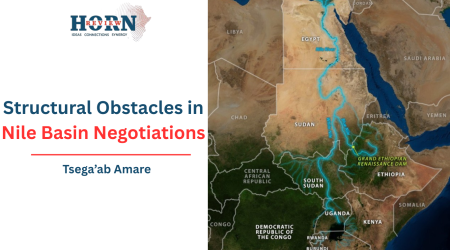
Structural Obstacles in Nile Basin Negotiations
The hydropolitics of the Nile Basin have long represented an...
13
Mar
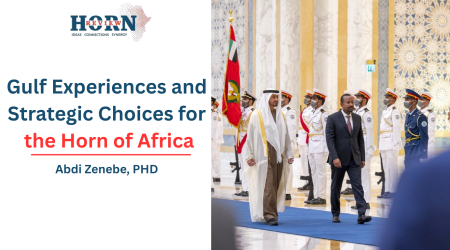
Gulf Experiences and Strategic Choices for the Horn of Africa
Within the volatile architecture of modern international relations, few...
12
Mar
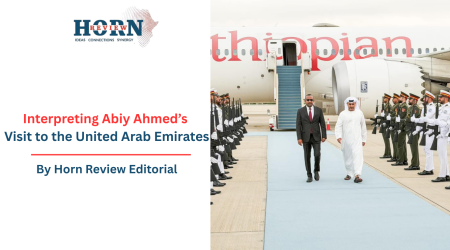
Interpreting Abiy Ahmed’s Visit to the United Arab Emirates
The visit by Abiy Ahmed to the United Arab Emirates...