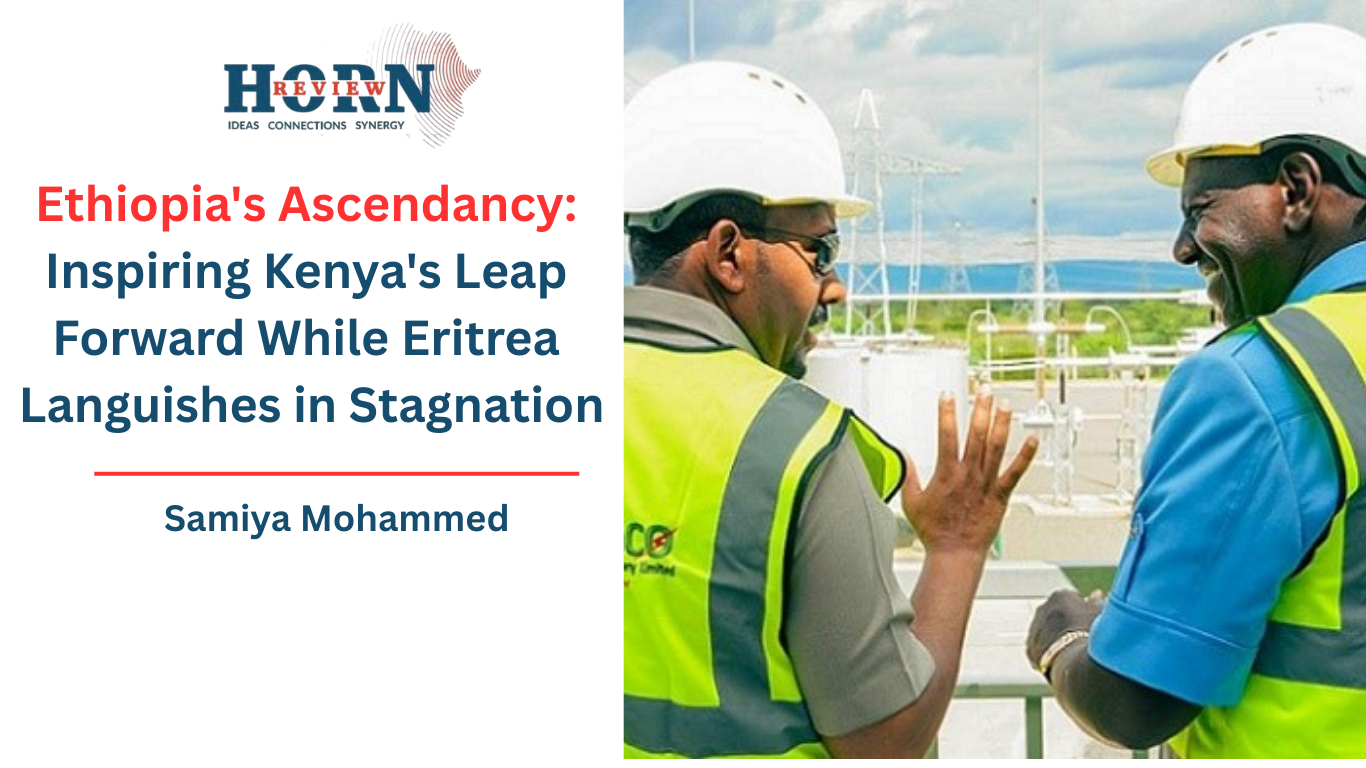
In a policy address focused on East Africa’s development priorities William Ruto placed infrastructure at the vanguard of his administration’s long term agenda. He affirmed that construction of a new world class airport in Nairobi is scheduled to commence within the coming months accentuating the government’s commitment to expanding national capacity and competitiveness. The proposed project is intended to alleviate mounting pressure on Jomo Kenyatta International Airport, which was designed to handle 7.5 million passengers annually. The President’s remarks conveyed a clear sense of direction regarding the country’s economic future. He laid stress on the need to elevate national standards and decisively move what he described as an acceptance of mediocrity.
To contextualize the urgency behind Kenya’s new infrastructure agenda attention must turn to developments in Ethiopia. In recent weeks Ethiopia has reinforced its position as the region’s principal driver of economic and logistical advancement. The Bishoftu International Airport located approximately 45 kilometres from Addis Ababa epitomizes a desire that surpasses regional norms. Planned to ultimately handle 110 million passengers annually and integrated with a dedicated high speed rail line and multilane highway the facility is set to become Africa’s largest aviation center. This project recalibrates regional expectations allowing Ethiopian Airlines to solidify its status as the continent’s most profitable and extensive carrier in which a benchmark that implicitly challenges neighbouring countries to match its scale and sophistication.
Ethiopia’s reach now augment aviation bespeak a level of coordination and ambition that neighbouring states can scarcely match. Over the past month alone the Aysha-II Wind Power Project and a $400 million agreement with the UK’s Grid works to establish the country’s first privately financed transmission lines show an effort to stabilize the energy grid, connect industrial zones and bring electricity to the population. At the same time initiatives such as the Shabeely Resort and Denbi Eco Lodge under the Dine for Generations programme reflect an intentional diversification of the economy, leveraging natural and cultural assets to attract international visitors. The cumulative effect is a nation executing a comprehensive, multi sectorial strategy with precision subtly showing the gap between its pace and that of the neighbours where similar ambitions remain fragmented or unrealized.
It is within this context that Kenya’s airport announcement gains its full meaning. In the interconnected geography of the Horn where borders are porous to ideas as much as to people, Ethiopia’s rapid ascent acts as a powerful stimulant. Nairobi’s determination to build a world class airport reads as a direct response to the gauntlet thrown down by Ethiopia’s construction cranes. The Kenyan leadership’s rejection of mediocrity is implicitly a rejection of being left behind. Nairobi’s action is not simply about easing congestion however it is about maintaining relevance in a league where the standards are being raised by a neighbour.
While its neighbours in the Horn aggressively court international investment and build the ports, railways and energy grids necessary for a connected economic future Eritrea remains locked in a state of stasis. The nation’s policy environment is not just cautious however deliberately engineered to breed opacity and maintain rigid state control while effectively isolating the country from the global economic currents that are transforming the region.
At the middle of this stagnation is an economy dominated by a network of entities tied to the ruling party. These companies which operate in sectors ranging from construction and trade to mining and hospitality function with virtually no public oversight. They evade independent audit, their finances are state secrets and their monopolistic or highly preferential position in the market creates an unlevelled playing field that systematically repels foreign direct investment. This structure ensures that economic power remains centralized and any potential profits are channelled back to the party rather than being broadly reinvested into the public economy.
For outsiders the barriers to entry are formidable and explicitly designed to discourage foreign ownership and influence. In an unusual policy for a nation seeking development foreigners are prohibited from owning property or land. This single regulation eliminates the most common form of collateral for loans and undermines the incentive for long term, capital intensive investment. There is no formal, published incentive framework, no duty free imports for capital goods, no guarantees of profit repatriation that an investor can study and rely upon. The rules of engagement are deliberately left ambiguous.
Potential partners whether individual investors or international firms do not navigate a transparent legal process but instead endure opaque and protracted negotiations with a small circle of officials. Deals are made not on economic merit but on political connections and agreements are subject to change at the whim of the state. This unpredictable and secretive negotiation process, combined with the lack of property rights and a level playing field ensures that for most of the world, Eritrea is not a destination for investment but a closed off anomaly in a rapidly integrating region.
These choices deter outsiders and they stifle growth. The nation’s asset its human capital suffers under indefinite national service widely condemned by international observers. This system drains talent and ambition and Infrastructure languishes. Asmara’s facilities decay while neighbours modernize airports and terminals to draw tourists and business. Eritrea restricts travel beyond the capital. It fails to capitalize on its architectural heritage as a draw for visitors. Eritrea drifts further out of step with its neighbourhood.
Regional efforts push economic integration and prosperity however domestic restrictions block full participation. This is not just lag in pace. It reflects a different prototype one that elevates control and self reliance to the brink of isolation. The region sorts nations not by natural endowments but by policy choices. Some embrace institutional reform, infrastructure and economic opening. Others cling to out dated scripts while the neighbourhood advances. Reject mediocrity for connection and reform.
By Samiya Mohammed, Researcher, Horn Review