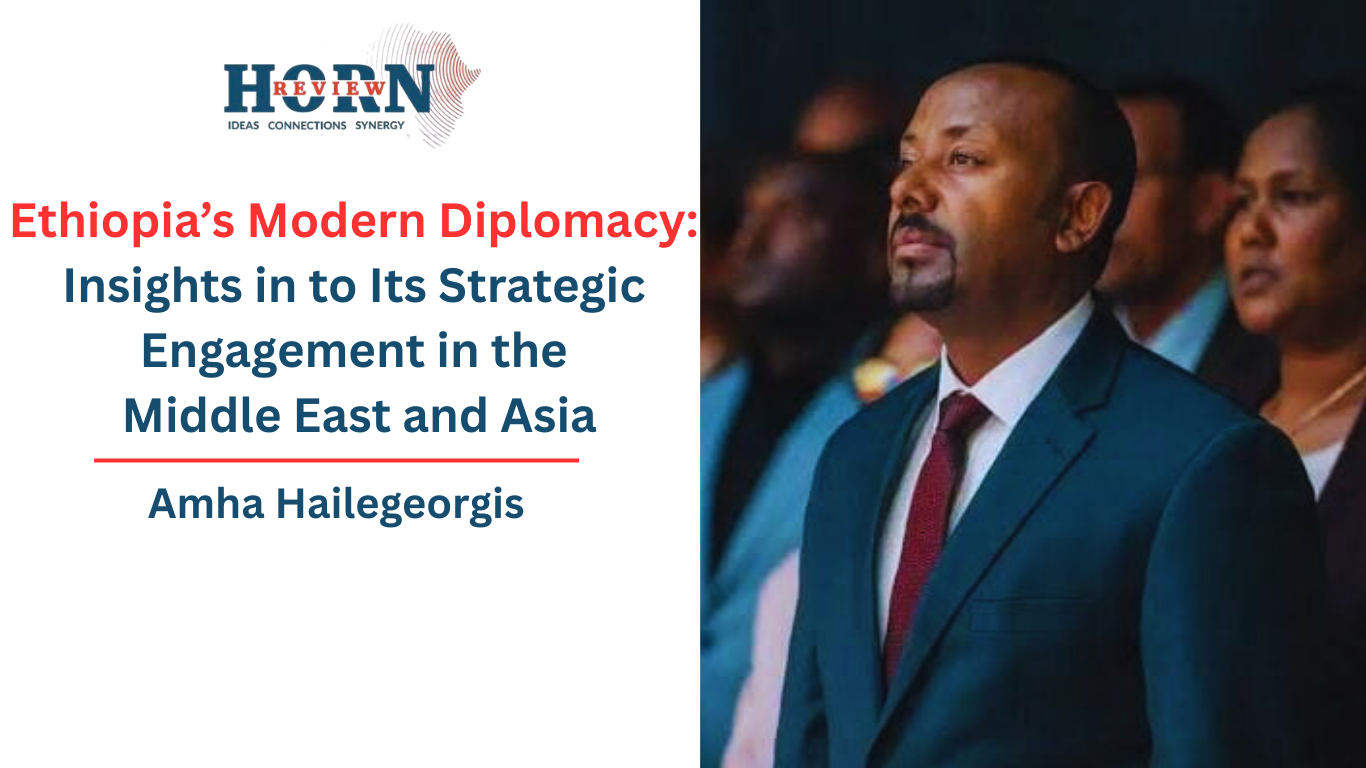
Over the past eight years, Ethiopia has fundamentally reoriented its foreign policy, transitioning from reactive statecraft to a proactive, outcomes-driven, and synergy-focused approach grounded in the philosophy of Medemer. This shift reflects an understanding that domestic development and international engagement are mutually reinforcing, with national reforms enhancing diplomatic credibility and global partnerships facilitating economic growth. Between mid-2025 and early 2026, Ethiopia undertook a series of high-level diplomatic initiatives across the Middle East and Asia, consolidating its role as a consequential regional actor and demonstrating a deliberate strategy to align domestic priorities with international ambitions. These developments underscore how strategic foresight, institutional modernization, and targeted engagement can elevate a mid-sized state’s influence in a complex geopolitical environment.
At the core of Ethiopia’s contemporary foreign policy are two mutually reinforcing pillars: modernity and effectiveness. Modernity entails the systematic integration of digital infrastructure, data-driven decision-making, and the modernization of consular and diplomatic services, allowing the state to engage global partners with efficiency and precision. The December 2025 visit of Indian Prime Minister Narendra Modi exemplifies this approach, culminating in a Memorandum of Understanding to establish a Data Centre at the Ministry of Foreign Affairs. Beyond its immediate institutional impact, this initiative signals Ethiopia’s broader commitment to innovation in governance and global engagement, reflecting a sophisticated understanding of how technology and diplomacy intersect in the 21st century. Effectiveness, on the other hand, emphasizes tangible outcomes, economic cooperation, and proactive engagement on regional and global priorities. By linking domestic reforms and infrastructure development with foreign policy credibility—illustrated through the operationalization of the Grand Ethiopian Renaissance Dam, the development of urban corridors in Addis Ababa and other major cities, and the inauguration of tourism projects—Ethiopia demonstrates that domestic capacity serves as the foundation for sustained international influence. Anchoring diplomacy in visible developmental achievements not only projects competence but also fosters reliability and trust among international partners, reinforcing Ethiopia’s strategic leverage.
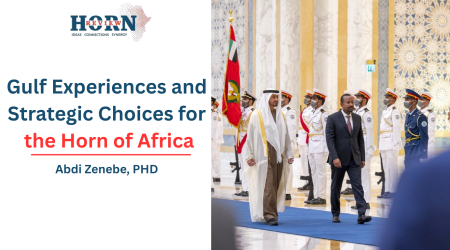
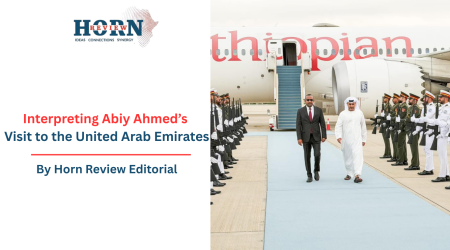
The Middle East occupies a central place in Ethiopia’s foreign policy, reflecting historical ties, economic interdependence, and diaspora considerations. Relations with Saudi Arabia advanced significantly during reciprocal high-level visits in February 2026 between Foreign Minister Gedion Timothewos and Saudi Foreign Minister Prince Faisal bin Farhan, with discussions emphasizing regional security in the Horn of Africa and Arabian Peninsula, migration frameworks, and trade and investment facilitation. Saudi Arabia’s role as a leading export destination for Ethiopia, coupled with the presence of over 200 Saudi companies within the country, underscores the economic dimension of this strategic partnership. Parallel to this, relations with the United Arab Emirates have deepened under a comprehensive framework, with high-level meetings in January 2026 focusing on climate cooperation aligned with COP processes, humanitarian coordination in response to the Sudan crisis, and sustainable development objectives. Ethiopia’s hosting of the 2026 UN Water Conference further reinforced the UAE’s recognition of Ethiopia’s emerging regional leadership. These engagements are indicative of a diplomatic strategy that not only strengthens bilateral relations but also positions Ethiopia as a hub for multilateral coordination in critical regional domains. Complementing these partnerships, Ethiopia has proactively engaged other Gulf states, including Israel, Kuwait, and Oman, addressing technology transfer, petroleum supply chain management, security coordination, and development cooperation. Participation in the TICAD 9 Summit in August 2025, alongside the January 2026 visit of a Japanese delegation comprising 48 business representatives, further reflects Ethiopia’s growing integration into East Asian economic networks, illustrating the interplay between economic diplomacy and strategic geopolitical positioning.
Asia constitutes a key pillar of Ethiopia’s broader economic diplomacy and South–South cooperation strategy, providing both investment inflows and developmental know-how. The elevation of Ethiopia–India relations to a Strategic Partnership during Prime Minister Modi’s December 2025 visit marks a diplomatic milestone, producing agreements spanning UN Peacekeeping training, customs management, and the establishment of a Data Centre at the Ministry of Foreign Affairs. India’s investments, exceeding $5 billion and generating approximately 75,000 jobs, underscore the significance of this partnership for Ethiopia’s development agenda. Ethiopia’s engagement with China was reinforced through high-level visits by Foreign Minister Wang Yi in January 2026, followed by finance-level agreements in February that secured a 200 million RMB (29 million USD) grant to support infrastructure and development projects, including the new international airport, the AI Sovereign Model and Application Project, and enhancements to the Ethio-Djibouti Railway. These engagements highlight Ethiopia’s capacity to leverage external partnerships to complement domestic priorities. Furthermore, Ethiopia’s hosting of the 5th Pakistan–Africa Trade Development Conference in October 2025 exemplifies the country’s role as a continental gateway for Asian business, attracting over 115 Pakistani companies and more than 300 investors in pharmaceuticals, textiles, and agriculture. Engagements with Southeast Asian partners, including Singapore and Malaysia, have expanded Ethiopia’s economic and diplomatic portfolio, resulting in agreements on skills development, carbon market cooperation, tourism, air services, and health, thereby enhancing the country’s versatility in global engagement and signaling a nuanced, multi-vector approach to foreign policy.
The successes of Ethiopia’s foreign policy are underpinned by a coherent strategic framework informed by the philosophy of Medemer, which emphasizes synergy between domestic initiatives and international engagement. By transitioning from reactive diplomacy to proactive, targeted engagement, Ethiopia has been able to identify regions and sectors for intensive partnership cultivation, ensuring that political dialogue translates into measurable outcomes. This economic-centered approach reinforces domestic credibility while enhancing Ethiopia’s negotiating position internationally. Aligning infrastructure development, domestic reform, and foreign partnerships allows Ethiopia to project both competence and reliability, generating trust and influence in multilateral and bilateral forums.
The consolidation of partnerships in the Middle East and Asia positions Ethiopia to leverage South–South cooperation, diversify its diplomatic alliances, and enhance regional influence. Sustaining these gains requires diligent implementation of agreements, continued domestic reforms, macroeconomic stability, and careful management of regional security risks. Ethiopia’s trajectory demonstrates that strategic, proactive, and development-oriented diplomacy serves as a potent instrument for national advancement, providing a model for mid-sized states seeking to maximize influence in the global system. Between mid-2025 and early 2026, Ethiopia operationalized a vision of modern, effective, and outcomes-oriented diplomacy. Through high-level engagement, strategic partnerships, infrastructure-linked initiatives, and the systematic integration of digital and institutional modernization, the country has elevated its regional and global profile. The Medemer-inspired framework ensures coherence between domestic development and foreign policy execution, enabling Ethiopia to project both capacity and credibility on the international stage. As Ethiopia consolidates reforms and leverages strategic partnerships, its diplomacy remains a central instrument for national advancement and regional prosperity.
By Amha Hailegeorgis, Deputy Director General for Middle East, Asia and Pacific affairs
FDRE Ministry of Foreign Affairs