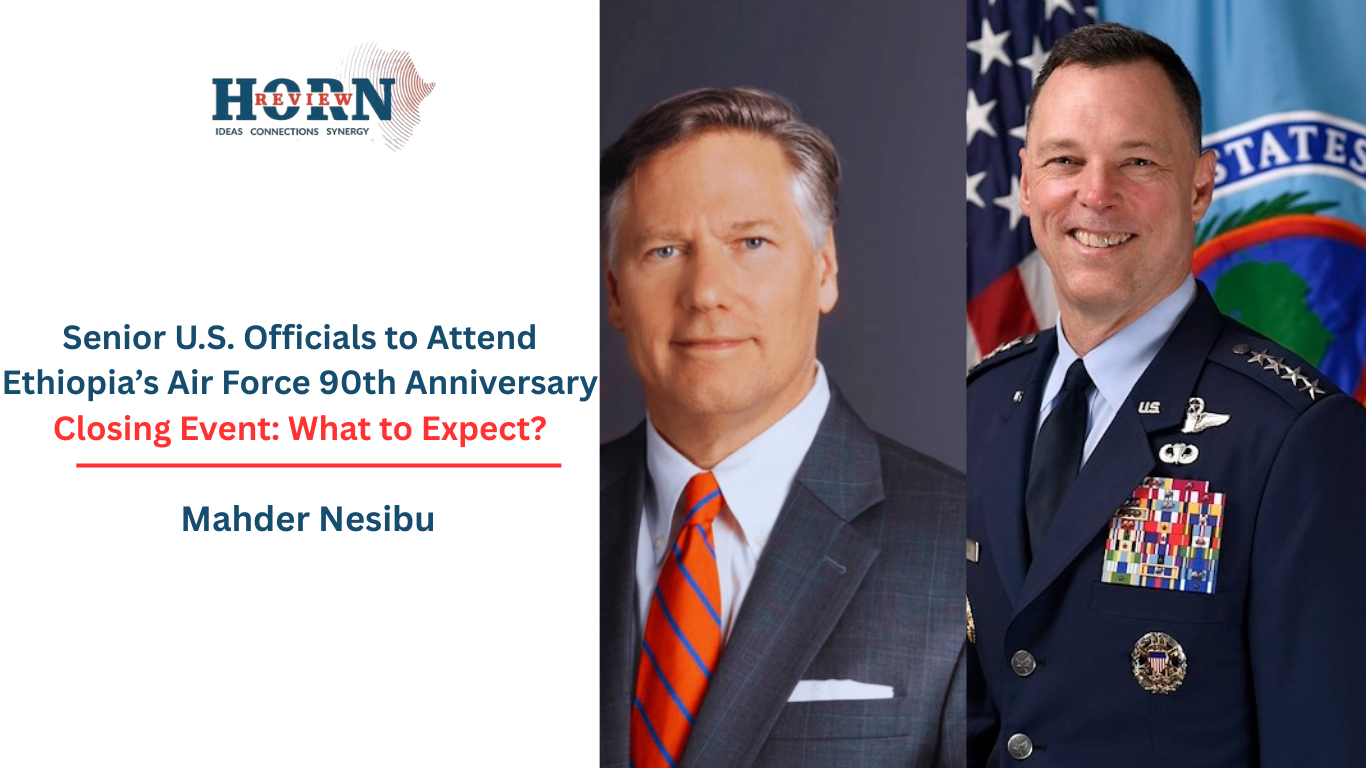
Next week, as part of a broader regional tour, United States Deputy Secretary of State Christopher Landau is expected to visit Ethiopia, where he is scheduled to hold talks with Prime Minister Abiy Ahmed. In addition to these high-level political engagements, Landau is also expected to attend and deliver remarks at the closing ceremony marking the 90th anniversary of the Ethiopian Air Force. He is anticipated to be joined in his visit by Dagvin Anderson, a U.S. Air Force General and the Commander of the United States Africa Command (AFRICOM).
The timing, symbolism, and composition of this visit are significant. Taking place amid a convergence of regional security, diplomatic, and geopolitical developments, the Deputy Secretary’s presence in Addis Ababa, particularly his participation in a major military commemoration, is likely to offer important signals regarding the evolving scope and direction of U.S. engagement in the Horn of Africa. The fact that both the diplomatic and military leadership of the United States are expected to feature prominently in the visit suggests that Washington may be reassessing the strategic weight it assigns to Ethiopia and its surrounding region.
This reassessment comes against the backdrop of a broader recalibration of U.S. foreign policy priorities. Under the Trump administration, and as reflected in recent policy documents issued by Washington, the African continent has generally been downgraded within the hierarchy of U.S. global strategic concerns. Both the National Security Strategy released by the White House and the National Defence Strategy issued by the Pentagon have narrowed U.S. engagement in Africa to a limited set of objectives, principally counterterrorism and selective conflict management, rather than sustained political or developmental involvement.
Nevertheless, recent signals suggest that this posture may be evolving. The Trump administration has, in recent months, adopted a noticeably more proactive foreign policy approach across several regions. Within this context, the Horn of Africa, given its proximity to the Red Sea, the Middle East, and key maritime trade routes, may once again attract increased attention from Washington.
Indicative of this shift was General Dagvin Anderson’s visit to Ethiopia in November of last year, during which he held discussions with senior Ethiopian military officials, including Field Marshal Birhanu Jula, the Chief of Staff of the Ethiopian National Defence Forces. That visit, now followed by the Deputy Secretary’s trip, suggests a pattern of renewed engagement focused on security cooperation and regional stability.
The agenda surrounding Landau’s visit is expected to be shaped by several interlocking regional challenges, each of which intersects with U.S. strategic interests and Ethiopia’s regional role.
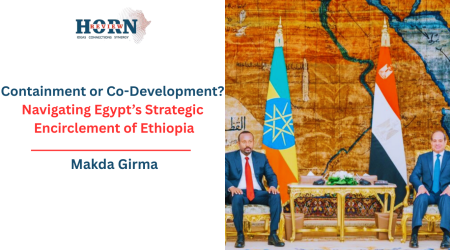
Foremost among these is the long-standing dispute between Ethiopia and Egypt over the Nile River, particularly concerning the Grand Ethiopian Renaissance Dam (GERD). The issue has recently resurfaced at the highest levels of U.S. political attention. Following an official statement offering to mediate, President Donald Trump met with Egyptian President Abdel Fattah Al-Sisi at Davos, during which he made several inaccurate and controversial public remarks regarding the GERD and its implications.
With Deputy Secretary Landau also scheduled to visit Cairo as part of his regional tour, discussions in Addis Ababa are likely to touch on Washington’s current thinking regarding the dispute and the contours of any potential U.S. mediation role. For Ethiopia, clarity on the Trump administration’s approach, particularly given past U.S involvement in GERD negotiations, will be a central concern.
Counterterrorism remains the primary pillar of U.S. engagement in Africa and lies at the core of AFRICOM’s mandate. Accordingly, the security environment in the Horn of Africa, particularly in Somalia, is expected to feature prominently in discussions.
Ethiopia has historically been a key U.S. partner in counterterrorism efforts. For many years, the Ethiopian military constituted the largest and most capable force confronting Al-Shabab, playing a decisive role in containing the group’s territorial ambitions. In recent years, however, Ethiopia’s role has diminished, and Al-Shabab has regained momentum, while the Somali federal government and its security forces have struggled to sustain a meaningful challenge against the insurgency.
Within this context, Washington is likely to push for a revitalized Ethiopian role in regional counterterrorism efforts. Enhanced U.S.–Ethiopia security cooperation may be one of the tangible outcomes of the visit.
Another issue increasingly shaping U.S. strategic calculations in the region is the growing importance of Somaliland, particularly in relation to Red Sea security. Somaliland, which has recently received recognition from Israel, has attracted heightened attention from Washington, especially under the Trump administration.
Although Deputy Secretary Landau’s itinerary does not include a stop in Somaliland or Somalia, Hargeisa has featured prominently in recent U.S. security engagements. General Anderson’s visit to Somaliland in December underscored the territory’s emerging relevance, not primarily in counter-Al-Shabab operations, but as a strategic node in efforts to deter and confront the Houthis and to maintain U.S. and Israeli interests along the Red Sea corridor.
The conflict in Sudan is another critical file likely to be discussed. The United States Special Envoy, Massad Boulos, has led Washington’s engagement thus far, representing the U.S. in the Quad framework, which brings together key Middle Eastern states with direct stakes in the war. However, the broader regional environment, widely viewed as essential to any durable resolution, remains fragile.
Ethiopia initially sought to position itself as a mediator between the warring Sudanese factions but has since scaled back those efforts. During his visit, the Deputy Secretary may encourage Addis Ababa to assume a more active role, leveraging its geographic proximity and diplomatic standing to contribute to de-escalation.
Beyond these specific issue areas, the visit itself carries symbolic and political weight. U.S.–Ethiopia relations, historically close, were strained during the Tigray conflict and further affected by Washington’s broader retrenchment from global engagement. In recent months, however, signs of recalibration have emerged.
U.S. Ambassador to Ethiopia Ervin Massinga has been particularly active in articulating Washington’s interests. In June of last year, he stated that Ethiopia “will be a centre point of what the United States is going to be doing in the Horn of Africa.” In December, the United States also signed a health cooperation agreement with Ethiopia valued at approximately USD 1.5 billion, signalling a parallel track of economic re-engagement alongside security cooperation.
The Deputy Secretary’s anticipated address at the Ethiopian Air Force anniversary, unprecedented in this context, could set the tone for a more cooperative and forward-leaning bilateral relationship. The celebrations themselves, occurring amid Ethiopia’s ongoing effort to strengthen and modernize its defence capabilities, underscore Addis Ababa’s aspiration to reassert its role as a key regional security actor.
Finally, the question of the Red Sea and Ethiopia’s long-standing ambition to regain access is also likely to feature in discussions. Having designated Red Sea access as a major national interest, Ethiopia may seek tacit U.S. understanding or support for its position. Should Washington integrate Ethiopia more fully into its broader regional security architecture, this could implicitly reinforce Addis Ababa’s push and contribute to Ethiopia’s re-emergence as an anchor state within U.S. policy toward the Horn of Africa.
By Mahder Nesibu, Researcher, Horn Review