
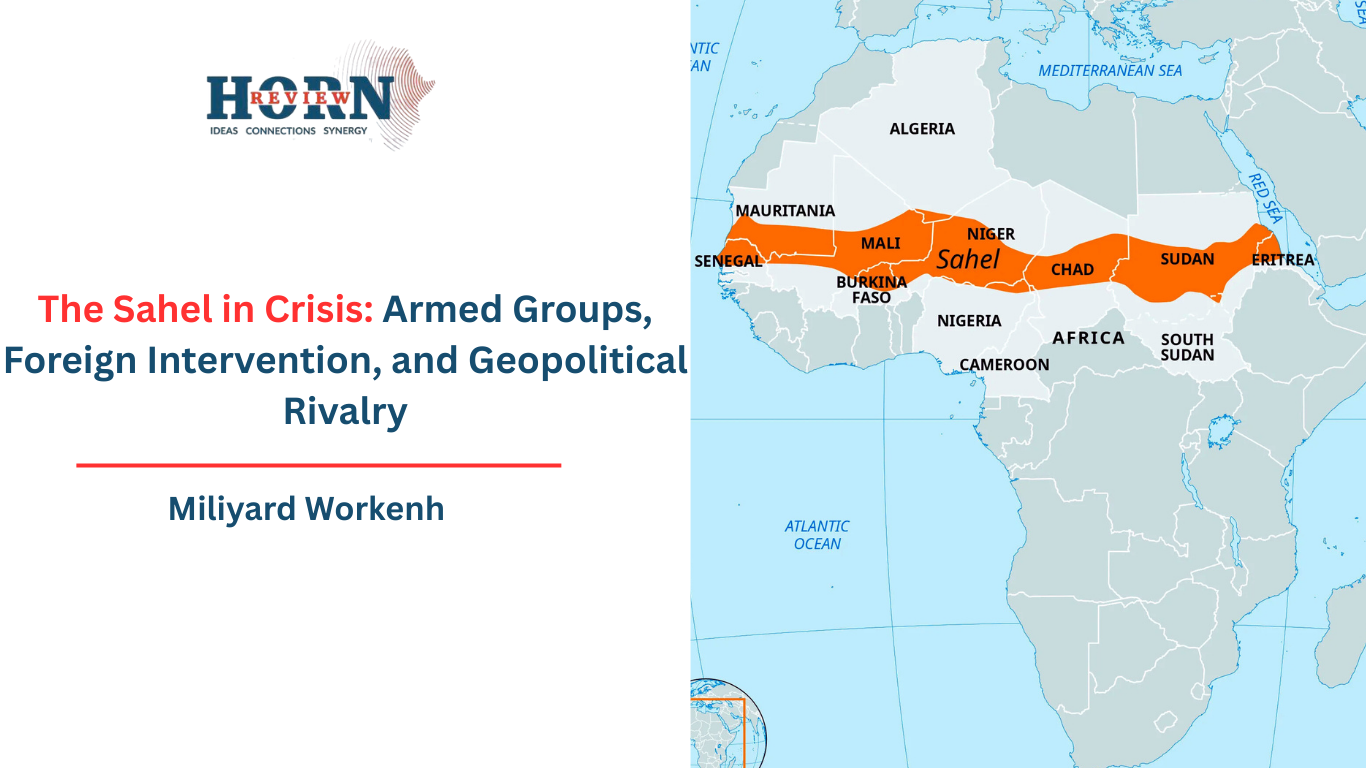
The Sahel in Crisis: Armed Groups, Foreign Intervention, and Geopolitical Rivalry
Stretching from Senegal to Eritrea the Sahel sits between the arid Sahara and the savanna. Once viewed as remote region has now become a complex geopolitical arena, where military juntas, non‑state armed actors and competing global powers intersect. Entire territories now exist beyond the reach of government authority, making the region a critical frontier of insecurity and influence. The Sahel region due to its strategic position, is an area that influences both regional and global dynamics. Geographically, the region is highly significant connecting the northern part of Africa to the rest of the continent and serving as an important space for security and trade. Its location makes it a natural corridor for migration and trade routes as well as for natural resources including uranium, gold, petroleum, iron ore, lithium, livestock, and water (IDSA, 2024).
However, due to several factors such as the colonial legacy and the nomadic way of life, the borders in the Sahel are weak and poorly enforced allowing the movement of armed groups, goods, and people. Instability in the Sahel does not remain confined to the region it extends beyond it affecting Africa and the global arena. The region has serious consequences for global security, migration, and great‑power engagement (Crisis Group, 2023; CFR, 2025).
The Sahel region has become a ground for armed non‑state actors, military juntas, and great powers alongside drug smugglers and human‑trafficking networks that form routes toward Europe (IDSA, 2024; ACLED, 2023). This poses a significant threat to Europe and the United States due to the spillover of violence and the expansion of organized crime (Euro Prospects, 2025). Another major consequence is large‑scale migration and displacement, which has had a strong impact on foreign policies, particularly regarding border enforcement. The region also has a critical economic dimension. It is rich in strategically significant minerals and gas, especially uranium, which is essential for nuclear energy (IDSA, 2024). As a result, instability in the Sahel has impacts that extend beyond Africa and into global markets.
The major non‑state armed actors in the Sahel region include groups like Jama’at Nusrat al‑Islam wal‑Muslimin (JNIM), the Islamic State in the Sahel Province, separatist and rebel groups mainly in northern Mali, and private military companies such as the Wagner Group/Africa Corps (Crisis Group, 2023; CFR, 2025).
Jama’at Nusrat al‑Islam wal‑Muslimin, which is a branch of al‑Qaeda in the Sahel, with origins tracing back to the 1990s Algerian civil war. This group has a top‑down hierarchy of command, consisting of central leadership, regional commanders, and local area commanders. Its fighting strategy includes guerrilla warfare, the strategic use of violence, and media and propaganda. The group is actively involved in the Sahel and in northern areas of Benin, Ghana, Ivory Coast, as well as parts of Niger and Togo (United Nation security council,2018)
The Islamic State Sahel Province is also one of the armed groups in the region. Its origins go back decades, and it is the successor of the Movement for Oneness and Jihad in West Africa (MUJAO), which was formed in 2011. The group’s main objective is to use violence to replace existing governments with rule based on its interpretation of Islamic law. The group uses tactics such as armed assaults, ambushes, and kidnapping. Since 2019, this group has been competing for territory and resources with Jama’at Nusrat al‑Islam wal‑Muslimin (ACLED, 2023).
Another non state armed groups in the region are the Self‑defense militias they are primarily local, ethnically aligned armed groups. They originally formed to protect communities from jihadist attacks and crime activities but have become complex actors, often deeply interconnected with state politics and contributing to ethnic violence (CFR, 2025).
The other armed groups in the Sahel include private security actors like the Wagner Group which is reorganized into a new structure called the Africa corps. The Russian private military company is a state‑funded paramilitary organization that has established a significant presence in the Sahel region. Its core activities involve providing security services and military support to the military juntas in Mali, Burkina Faso, and Niger, often in exchange for privileged access to natural resources like gold mines. Analysts report that these groups objectives are to secure financial gains for Russia, advance its geopolitical influence and support allied regimes through “regime survival packages.” Its operations have been widely accused of severe human rights abuses (Counter Extremism Project, 2025; CIRIS, 2025). Following internal changes, Wagner’s operations in Africa have been largely reorganized under a new structure called the “Africa Corps,” which is under the control of Russia’s Ministry of Defense (AP News, 2025).
The interests of these non‑state armed actors differ in their Architectures, objectives and operational strategies. While some groups prioritize territorial and population control, others focus on economic exploitation through smuggling networks, resource extraction, and illegal trade. At the same time, jihadist organizations pursue a distinct ideological project aimed at reshaping political authority through the imposition of their interpretation of religious law (Crisis Group, 2023).
Resources and prolonged instability, rooted partly in colonial legacies, have not only drawn armed non‑state actors into the Sahel, they have also invited sustained interest and intervention by major state actors. External powers see the region as strategically important for security, economic, and diplomatic reasons, with each power pursuing distinct interests at a time when fragile governments and military juntas seek allies (CFR, 2025).
Russia has become one of the key state actors in the Sahel region, expanding its strategic influence by strengthening its relations with the Alliance of Sahel States, which includes Mali, Niger, and Burkina Faso. Russia has promised comprehensive assistance to stabilize the region and counter Western influence (Reuters, 2025). Russia’s presence also allows access to valuable resources such as uranium from Niger and gold from Mali and Burkina Faso (Euro Prospects, 2025).
The United States has historically been a key security partner in the Sahel through counterterrorism initiatives and military cooperation. Washington invested in strategic infrastructure like Niger Air Base 201, which housed U.S. drone operations aimed at surveillance and strikes against jihadist groups, though these bases were returned to Nigerien control after the military cooperation agreement ended in 2024 (CFR, 2025). U.S. engagement remains focused on countering extremist
France’s role in the Sahel was long defined by its military leadership in counterterrorism operations, most notably Operation Barkhane, which deployed thousands of troops across Mali, Burkina Faso, and Niger to combat Islamist insurgencies. However, rising anti‑French sentiment, coupled with successive coups and demands for sovereignty by local governments, led to a major military withdrawal completed by early 2025, including the handover of the French base in Chad its last major facility in the region. Paris now seeks to transition from a heavy military footprint to other forms of cooperation, including education, climate, and health initiatives, while maintaining diplomatic ties where possible. This shift reflects a broader reassessment of France’s Africa policy in the face of declining influence and changing regional priorities.
Turkey
Turkey’s engagement in the Sahel has grown more economic and defense‑oriented over recent years, building on Ankara’s broader African strategy. Turkish companies have pursued infrastructure projects from airport terminals to hospitals and Ankara has expanded defense cooperation, including the sale of drones and training for local armies in Sahel states following Western military withdrawals. These moves are part of Turkey’s effort to establish itself as a reliable partner with fewer political conditions, leveraging both hard power (military hardware and training) and soft power (trade linkages, aviation routes, and visa facilitation) to deepen ties with nations like Mali, Niger, and Burkina Faso. Turkey also positions itself as a Muslim majority‑world partner with shared cultural affinities, which can enhance its strategic footprint beyond traditional Western influence.
China
China’s strategy in the Sahel is largely economic and infrastructural, built around securing access to natural resources and expanding trade under initiatives like the Belt and Road Initiative (BRI). Chinese state‑owned firms are active in mining and energy sectors throughout the region, focusing on resources such as uranium, oil, gold, and potentially lithium, and Chinese infrastructure investment often comes with financing and construction of key development projects. Beijing also provides military equipment, engages in training programs, and has increased arms sales to African partners. China frames its engagement around non‑interference and respect for sovereignty, which appeals to Sahel governments seeking alternatives to Western conditionality, while its investments strengthen economic linkages and regional influence.
The presence of armed groups, repetitive military coups and growing external power involvement has trapped the Sahel region in a vicious cycle of instability. Although the region is rich in minerals and natural resources, this wealth has not translated into development or peace instead, it has intensified internal struggles and foreign competition. The repeated rise of leaders through coups in countries such as Mali, Burkina Faso, and Niger has reinforced the perception that political authority is achieved through force rather than democratic legitimacy, further weakening already fragile state institutions.
This militarization of politics, combined with the spread of extremist ideologies and armed insurgencies, has normalized violence as a means of gaining and maintaining power. Over time, this has eroded public trust, weakened out civilian institutions, and reduced the capacity of states to provide security, justice and basic services. As a result, the Sahel has become one of the world’s most complex humanitarian crisis regions, characterized by mass displacement, widespread insecurity, and the breakdown of social and political order.
At the international level, foreign powers initially justified their involvement in the region as efforts to stabilize the Sahel and fight terrorism. However, the reality on the ground has often contradicted these stated goals. Rather than producing sustainable security, external interventions have largely failed to defeat insurgent groups and, in some cases, have worsened existing conflicts and humanitarian crises. Consequently, the Sahel has increasingly become an arena of geopolitical competition, where rival external actors pursue strategic and economic interests, making the region a stage for competing power.
Taken together, these dynamics show that instability in the Sahel is not accidental but structurally reproduced through the interaction of militarized politics, armed extremism, weak governance, and geopolitical rivalry. This makes short-term security responses insufficient and underscores the need for long-term political solutions centered on legitimate governance, institutional rebuilding, and regional cooperation.
References
African Conflict and Location Event Data Project. (2023). Conflict Watchlist: The Sahel. https://acleddata.com/report/conflict-watchlist-2023-sahel
Center for Strategic and International Studies. (2025). Violent Extremism in the Sahel. Council on Foreign Relations. https://www.cfr.org/global-conflict-tracker/conflict/violent-extremism-sahel
Center for International Relations and International Security. (2025). Security illusions: Russia in the Sahel. https://www.ciris.info/articles/security-illusions-russia-in-the-sahel
Counter Extremism Project. (2025). The Wagner Group in the Central Sahel. https://www.counterextremism.com/wagner-group-sahel
Euro Prospects. (2025). Terrorism in the Sahel: A growing challenge for EU security and migration policies. https://europrospects.eu/terrorism-in-the-sahel-a-growing-challenge-for-eu-security-and-migration-policies/
Global Fight Against Terrorism Funding. (2025). Counterterrorism and rising state fragility in the Post‑Coup Sahel region. https://www.gfatf.org/archives/counterterrorism-and-rising-state-fragility-in-the-post-coup-sahel-region/
India Foundation for Defence Studies and Analyses. (2024). The Libyan Crisis and the Western Sahel: Emerging security issues. https://www.idsa.in/publisher/backgrounder/the-libyan-crisis-and-the-western-sahel-emerging-security-issues
United Nations Security Council. (2018, October 4). Narrative summary for listing: Jama’a Nusrat ul-Islam wa al-Muslimin (JNIM). United Nations. https://main.un.org/securitycouncil/en/content/jamaa-nusrat-ul-islam-wa-al-muslimin-jnim
Reuters. (2025, April 4). Russia vows military backing for Sahel juntas’ joint force. https://www.reuters.com/world/africa/russia-vows-military-backing-sahel-juntas-joint-force-2025-04-04/
by Miliyard Workenh, Researcher, Horn Review

RELATED
Posts
12
Oct
The Recurring Script of Eritrea’s Invasion-Victim Cycle
In the Horn of Africa, history under Isaias Afwerki does...
12
Oct
Under the Banner of Red Sea Security, Egypt Encircles Ethiopia
Reports of Egyptian naval movements toward the southern Red...
12
Oct
Egypt's Attack on Sudan's Gold Mines and the Long Road That Led to It
The airstrikes that tore through the artisanal gold mining...
9
Oct
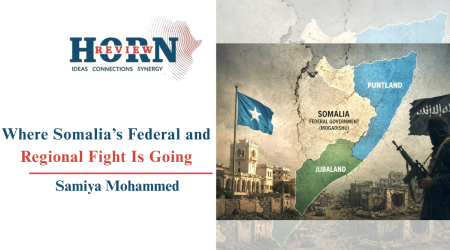
Where Somalia’s Federal and Regional Fight Is Going
The 2012 federal settlement was less a constitutional order...
9
Oct
Eritrea’s Post-Pretoria Strategy and the Escalation in Ethiopia
Our latest report examines Eritrea’s post-Pretoria trajectory and how selective...
8
Oct
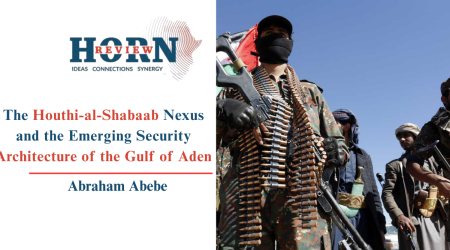
The Houthi-al-Shabaab Nexus and the Emerging Security Architecture of the Gulf of Aden
The growing relationship between Yemen’s Houthi movement and Somalia’s al-Shabaab...
7
Oct
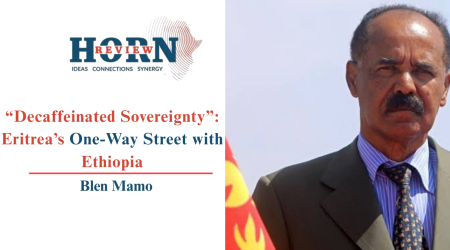
“Decaffeinated Sovereignty”: Eritrea’s One-Way Street with Ethiopia
There is a peculiar contradiction at the heart of Eritrea’s...
7
Oct
Leaked Documents Allege Sudanese Army Weapons Pipeline to TPLF-Aligned Forces as Tigray War Reignites
Leaked documents alleging a Sudanese army weapons pipeline to TPLF-aligned...
7
Oct
Eritrea Has Officially Invaded Ethiopia, Says Government Communication
Ethiopian Government Formally Condemns Eritrean Territorial Incursion as Its Forces...
7
Oct
Turkey, Somalia and the Transactional Reading of Alamein
The Alamein Declaration functions less as a coherent framework...