By Nolawi M. Engdayehu
Recent counter-terrorism operations in Puntland have, without widespread notice, introduced a policy question Addis Ababa can no longer postpone: how to expand its transnational security framework without destabilizing existing partnerships. The capture of ISIS fighters in the Cal Miskaad ranges of Bari, including foreign recruits and individuals linked to cross-border facilitation networks, represents a strategic milestone rather than a purely tactical win. Combined with Ethiopia’s own arrests of ISIS-linked suspects last year and renewed U.S. AFRICOM engagement calling for closer cooperation, these events highlight a reality that bilateral security arrangements alone no longer address the Horn’s evolving threat environment, regardless of how effective they may be.
Puntland rarely commands sustained international attention in the Horn of Africa. Yet its recent operations have demonstrated both persistent vulnerability and demonstrated capacity: the endurance of transnational extremist recruitment pipelines on one hand, and ability of a sub-national administration to convert law-enforcement cooperation into real operational results on the other. For Ethiopia, this duality is instructive. The region’s security landscape is increasingly adaptive and border-agnostic, exploiting political ambiguity and economic fragility while operating below conventional state thresholds. Puntland’s actions therefore matter as indicators of where practical partnerships can most effectively reinforce Horn-wide containment efforts. The regularity of operations against terror infrastructure has revealed both the proximity of threats and the availability of credible partners capable of sharing the burden of prevention and response.
The lessons from the successive campaigns are clear. First, extremist recruitment and facilitation networks do not respect jurisdictional lines. Reports of Ethiopian nationals and individuals from neighboring states appearing in Puntland’s counter-terrorism sweeps illustrate how militant groups perceive the Horn as a contiguous operational theater rather than isolated jurisdictions. Second, Puntland authorities have shown an ability to turn external cooperation into ground-level results. In that context, cross-border threat vectors combined with proven local capacity create a strong case for a more structured participation of Puntland within Ethiopia’s broader security calculus.
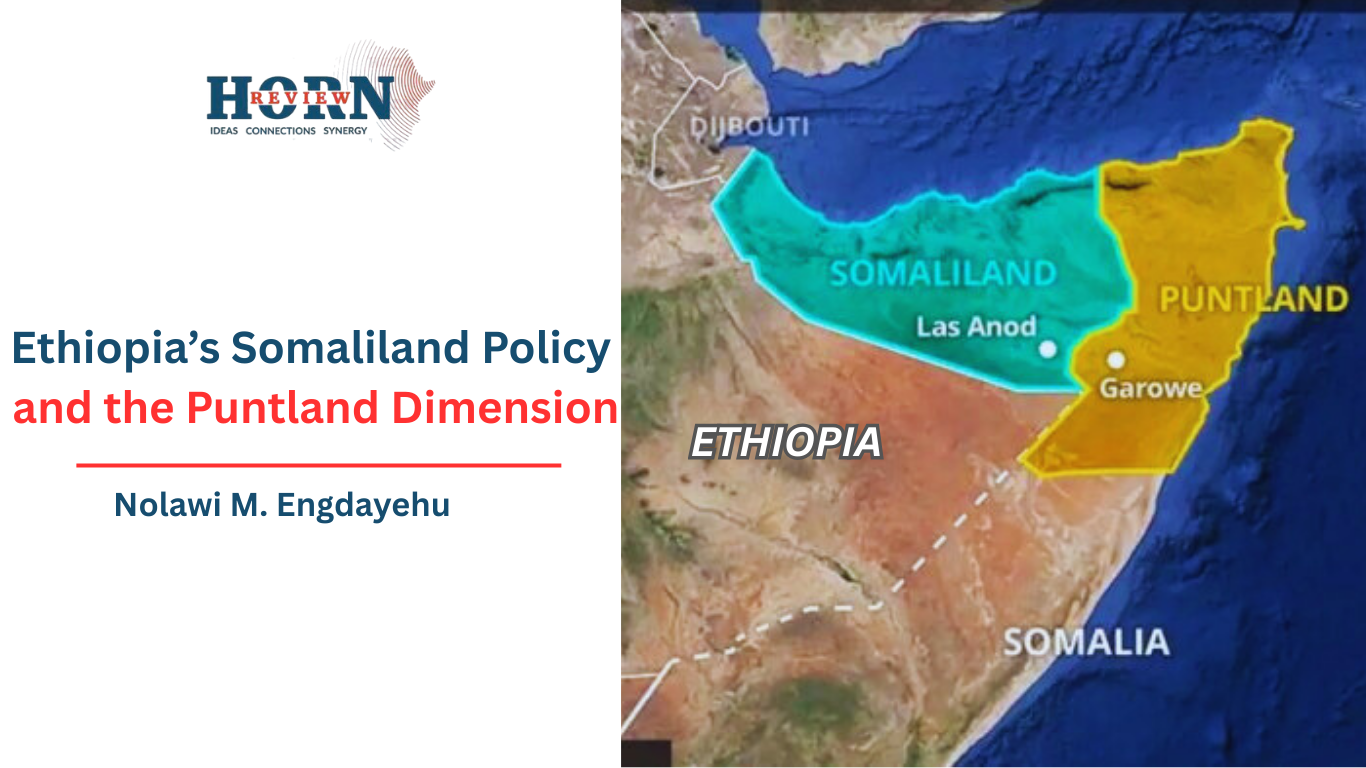
This adjustment in scope does not require a pivot away from Somaliland, nor does it imply political endorsement of internal Somali dynamics. Ethiopia’s strengthening engagement with Hargeisa reflects legitimate economic and geopolitical interests, trade corridors, port access, and maritime security among them. What acknowledging Puntland’s role calls for is a cautious consolidation of the risk environment. A layered security approach that recognizes Puntland as a complementary node within the region strengthens Ethiopia’s and the Gulf’s early-warning capabilities without diluting existing partnerships. The objective is practical complementarity in deterring and managing threats that are cross-border in scope.
Puntland’s geographic position along the Gulf of Aden already grants it strategic weight in maritime security, and its demonstrated willingness to confront extremist cells enhances that relevance, making it a logical partner in preventive and when necessary, reactive measures. Practical mechanisms such as coordinated border surveillance, joint monitoring, and joint operations can coexist with Somaliland engagement within an arrangement of technical cooperation. Such positioning also preserves diplomatic balance while extending the practical reach of Ethiopia’s security ecosystem. That ecosystem could also be reinforced by allies, notably the UAE and Israel, whose interests could be credibly threatened by terror groups seeking safe havens in the ranges of Puntland.
The challenge lies in the existence, or lack, of clear political communication. Somaliland’s legitimate security sensitivities and political posture cannot be disregarded, as perceptions of preferential alignment or strategic dilution create friction that extremist networks readily exploit. Ethiopia’s approach must therefore be articulated as a multi-track mechanism focused on shared counter-terrorism objectives and wider economic integration rather than a shift of alignment. Transparency of intent and parallel cooperation channels can mitigate suspicion and reinforce collective interests to deny operational space to non-state armed actors.
Beyond immediate security dividends, integrating Puntland into Ethiopia’s regional trajectory carries longer-term strategic value. Security cooperation endures when paired with economic and infrastructural linkages that Addis Ababa can help finance and facilitate, addressing some of the socioeconomic drivers of radicalization. Regulated trade corridors, cross-border transport connectivity, and labor mobility arrangements reduce the appeal of illicit networks, thereby strengthening legitimate interdependence. Puntland’s role in this equation, instead of being solely a counter-terrorism measure, is most effective when treated as an investment in embedding stability within a regional cohesion agenda.
For Ethiopia, the central lesson is not just the nearness of extremism, but the availability of partners able to act. Ignoring Puntland at this critical juncture would create a strategic blind spot. A carefully communicated broadening of Ethiopia’s security and cooperation mechanism, one that incorporates Puntland while maintaining clarity of purpose with Somaliland, offers a credible path toward sustainable stability in a region prone to cycles of fragmentation, where functional cooperation may prove the most effective constraint on extremist mobility.
About the Author
Nolawi M. Engdayehu is a senior policy analyst focusing on the Horn of Africa. He has worked with international organizations, governments, NGOs, think tanks, and diplomatic missions on regional peace and security, advocacy, governance, disaster risk management, and related cross-cutting policy areas.