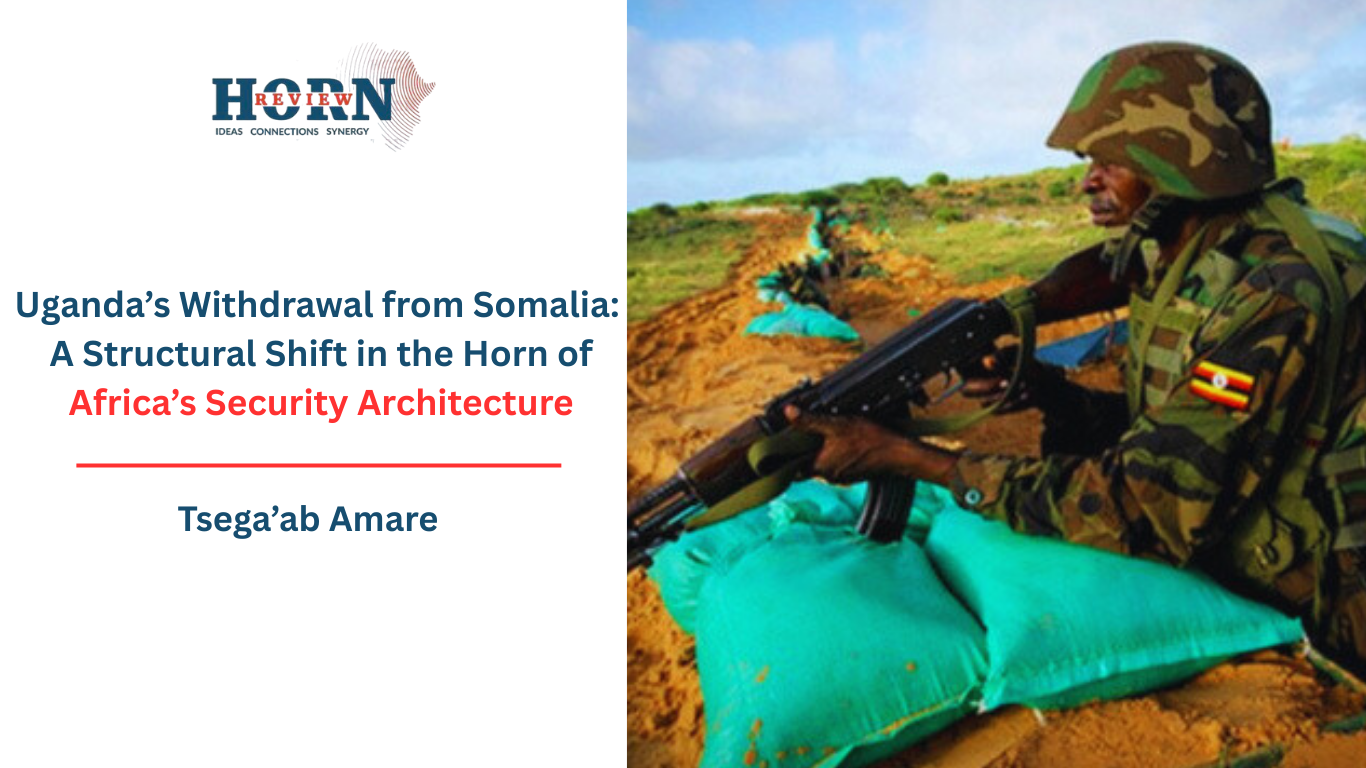
The announcement on January 26, 2026, by General Muhoozi Kainerugaba, Uganda’s Chief of Defence Forces, indicating the plan for full withdrawal of Ugandan troops from Somalia, marks the end of a two-decade security era. This development represents not a tactical adjustment but a structural shift in the Horn of Africa’s security architecture.
Since 2007, Uganda has served as the foundational pillar of the African Union’s military presence in Somalia, pioneering the African Union Mission in Somalia (AMISOM) and a foundational partner in its successor, the African Union Support and Stabilization Mission (AUSSOM). Throughout periods of extreme volatility, Ugandan troops have been instrumental in securing Mogadishu’s critical infrastructure and maintaining the operational integrity of the state.
The announcement of the withdrawal reflects the unconventional and highly personalized nature of modern Ugandan military diplomacy. General Kainerugaba utilized the social media platform X to declare that the military mission had effectively ended, stating that Uganda intends to “completely withdraw” very soon. This proclamation, while consistent with previous threats made by President Museveni regarding the persistence of Somali political infighting, bypasses traditional diplomatic channels and creates a state of immediate uncertainty.
The convergence of chronic international funding shortfalls, Uganda’s post-election focus on domestic consolidation following the January 2026 general elections, and the emergence of a fragmented regional order has rendered the mission increasingly unsustainable for Kampala. The withdrawal places the Federal Government of Somalia under acute strain, exposes Ethiopia to heightened border insecurity, and accelerates Somalia’s transformation into a contested arena for regional proxy competition.
For nineteen years, Uganda functioned as the mission’s shock absorber. When other troop-contributing countries hesitated to operate in high-intensity urban environments, Ugandan forces spearheaded offensive operations that culminated in Al-Shabaab’s removal from Mogadishu in 2011. The Uganda People’s Defence Forces have maintained the largest and most operationally demanding sectors, including Lower Shabelle, Aden Adde International Airport, the Port of Mogadishu, and Villa Somalia. This commitment came at a substantial human cost. Of the estimated 4,000 peacekeeper casualties recorded since 2007, Uganda and Burundi have borne the heaviest burden.
The anticipated withdrawal, therefore, removes not only manpower but also the mission’s logistical coherence and psychological deterrence.
The Triple Crisis Triggered by Uganda’s Exit
For Somalia, Uganda’s withdrawal constitutes a severe threat to the current federal security arrangement. Ugandan forces have been the primary guarantor of stability in Mogadishu. Their departure risks renewed pressure on the capital from Al-Shabaab, which has already expanded operations in Middle and Lower Shabelle.
The Somali National Army, although improved, remains fragmented, with a bit more than 20,000 reliably deployable personnel who depend heavily on external logistical support, intelligence, and air capabilities. Without Ugandan rapid-response units and counter-IED expertise, the Federal Government may increasingly rely on clan-based Ma’awisley militias, which are often deployed for localized defense. While effective in short-term offensives, these groups are prone to decentralized warlordism, which Al-Shabaab has historically exploited through clan mediation.
Uganda’s withdrawal significantly increases the urgency and strategic rationale for the full activation of Egypt’s troop agreement with Somalia. The existing security arrangements between Mogadishu and Cairo allow for the potential deployment of up to 10,000 Egyptian personnel through a combination of AUSSOM allocations and bilateral frameworks, which may now be operationalized in full.
A full-scale Egyptian activation of its security agreement would represent the most geopolitically consequential development, potentially transforming Somalia from a counterinsurgency theatre into an arena of interstate strategic competition over Nile Basin politics and the GERD. By positioning special forces in central provinces and border zones, Egypt aims to constrain Ethiopia’s regional maneuverability, further militarizing Somalia’s internal security environment.
For Ethiopia, Uganda’s withdrawal removes a critical stabilizing buffer along its eastern and southeastern corridors. This exposure is exacerbated by the politically driven reduction of Ethiopia’s troop quota under AUSSOM to approximately 2,500 personnel, following Addis Ababa’s diplomatic engagement with Somaliland. Ethiopia now faces a strategic dilemma. It must either undertake a costly unilateral surge to secure its borders, risking Somali nationalist backlash and operational overstretch, or accept a degraded security environment in which Al-Shabaab can project force into Ethiopia’s Somali Regional State.
More risk arises from Mogadishu’s past efforts to redeploy Ethiopian contingents away from border zones into central Somalia, further undermining the security of its soldiers. This move strips Ethiopian peacekeepers of their established intelligence networks and tactical familiarity, leaving them isolated and more vulnerable to insurgent ambushes.
Uganda’s withdrawal reflects a broader shift in the Horn of Africa in which national interests increasingly outweigh collective stabilization frameworks. The potential influx of Egyptian forces into central Somalia risks transforming counter-terrorism operations into secondary theaters of Nile Basin and Red Sea competition. This fragmentation heightens the risk of proxy confrontation, as external actors empower rival political and clan networks to advance strategic objectives. These cascading risks are not incidental but stem from deeper structural pressures shaping Kampala’s decision-making.
Structural Drivers Behind Uganda’s Withdrawal
Uganda’s decision is shaped by three structural factors.
First, the AUSSOM funding crisis has left the successor mission severely under-resourced. AUSSOM requires approximately 196 million dollars for 2025, yet pledged contributions amount to less than 50 million dollars. This shortfall has been compounded by reductions in logistical support through UNSOS. Uganda’s withdrawal marks not only a military shift but an institutional rupture. The AU’s capacity to sustain long-duration peace enforcement without predictable and autonomous financing is now in question, eroding the credibility of continental collective security mechanisms and lowering the political threshold for future troop-contributing countries to disengage.
Second, following the January 15, 2026, general elections, where President Museveni secured victory amid an internet shutdown, the National Resistance Movement regime is focused on domestic stability. Bringing home battle-hardened troops provides a surge of loyalist security personnel to manage post-electoral tensions and address instability along the Democratic Republic of Congo border.
Third, prolonged strategic stagnation has eroded political commitment to the mission. After nineteen years, there is a pervasive sense in Kampala that the mission is stagnant. President Museveni has frequently criticized Somali leadership for political infighting and the persistent political fragmentation that undermines military gains. Uganda is exiting not from victory, but from a mission that lacks a clear political endgame.
Uganda’s exit sets a structural precedent for other Troop Contributing Countries. As the largest and longest-serving contributor, its withdrawal lowers the political threshold for others to reassess participation. Long-term peace enforcement is no longer sacrosanct, and national priorities increasingly outweigh collective stabilization objectives. This dynamic could accelerate troop reductions, mission compression, and a shift toward hybrid security models relying on Somali forces augmented by selective bilateral arrangements.
Conclusion
Uganda’s planned withdrawal represents a decisive structural inflection in the Horn of Africa’s security architecture. With immediate risks including erosion of capital security, decentralization of force, and potential resurgence of Al-Shabaab, the withdrawal exposes the fragility of externally sustained stabilization, externalizes risk toward Somalia’s neighbors, particularly Ethiopia, and accelerates the transition toward a more fragmented, interest-driven regional order.
Absent predictable international financing and substantive political reconciliation within Somalia, the vacuum left by Uganda is unlikely to remain unfilled. Instead, it risks being occupied by insurgent resurgence, intensified proxy competition, and further fragmentation of the Horn of Africa’s security landscape.
The Somalia mission is no longer a peace operation sustained by multilateral legitimacy; it is evolving into a security marketplace shaped by bilateral power politics.
By Tsega’ab Amare , Researcher, Horn Review