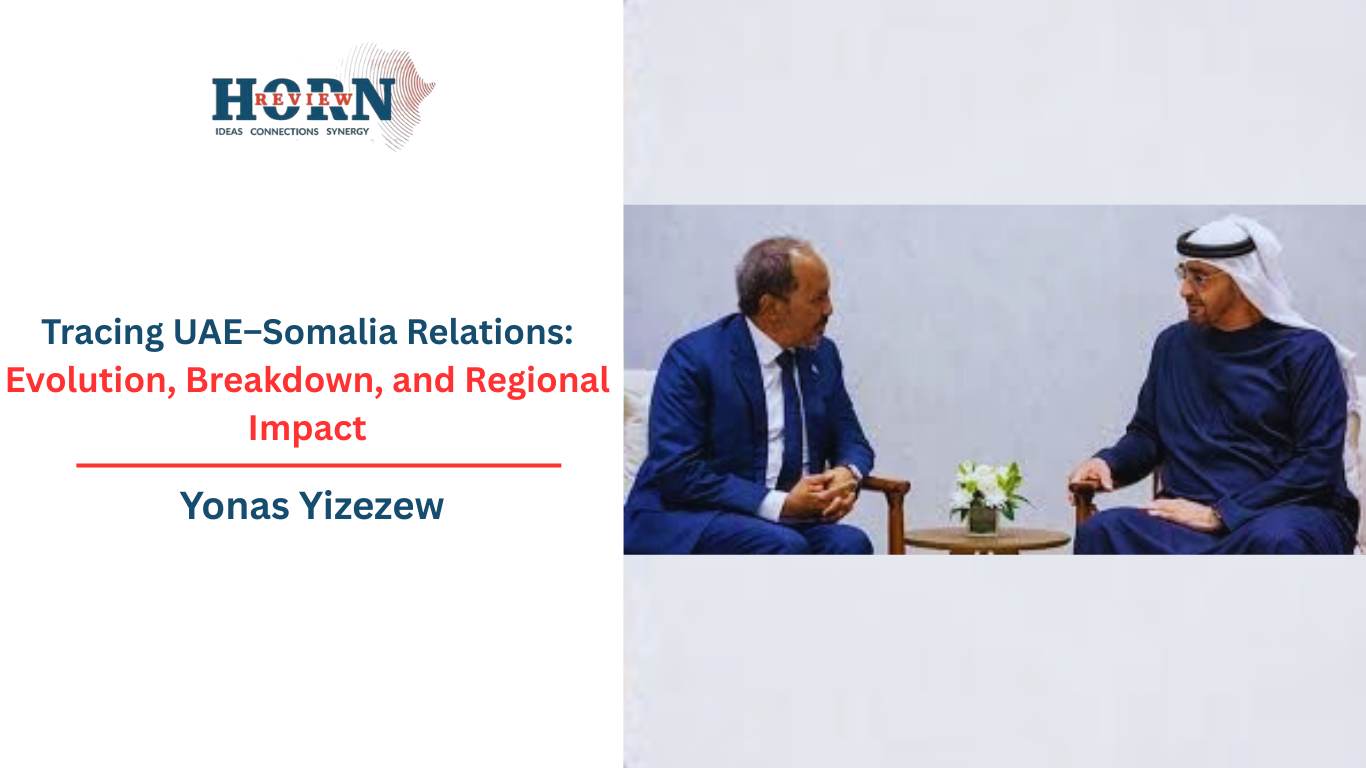
Relations between the United Arab Emirates and Somalia began gaining momentum around 2012, following the formation of Somalia’s Federal Government under Hassan Sheikh Mohamud, at a time when the Arab Spring was reshaping political dynamics across the region. This context prompted Abu Dhabi to adopt a more assertive foreign policy aimed at countering political Islam, securing strategic maritime routes, and establishing influence beyond the Gulf. Somalia, emerging from decades of civil war and contending with persistent Al-Shabaab insurgency and piracy threatening Gulf-bound shipping, naturally became a focal point for Emirati engagement. Emirati authorities extended diplomatic recognition and humanitarian assistance to address Al Shabaab insurgencies and Gulf of Aden piracy threats that disrupted global shipping lanes critical for Emirati oil exports and trade. This alignment reflected Abu Dhabi’s broader strategy to secure maritime chokepoints amid rising Iranian naval activities in the Arabian Sea.
By March 2013, the two sides concluded a memorandum of understanding in Abu Dhabi encompassing security pacts and economic cooperation while planning the reopening of the Emirati embassy in Mogadishu to facilitate intelligence sharing against maritime threats. Relations deepened through 2014 and 2015 with high level exchanges including Somali prime ministerial visits to Abu Dhabi that secured Emirati commitments to fund the Puntland Maritime Police Force and salaries for Somali troops integrated into counterterrorism operations.
These arrangements aligned with the UAE’s post Arab Spring push to counter Muslim Brotherhood linked influences perceived in Turkish and Qatari engagements in the Horn. The election of President Mohamed Abdullahi Farmajo in February 2017 shifted dynamics as the Gulf Cooperation Council crisis erupted in June 2017 when Saudi Arabia and the Emirates blockaded Qatar demanding severance of ties with groups viewed as destabilizing. Farmajo’s administration adopted official neutrality but tilted toward Qatar and Turkey for financial support and reconstruction aid which Abu Dhabi interpreted as unreliability prompting a pivot toward regional Somali administrations for strategic access.
In May 2016, DP World secured a 30 year concession for Berbera port in Somaliland committing over 400 million dollars granting DP World 51 percent stake, Somaliland 30 percent and Ethiopia 19 percent by 2019. February 2017 marked Somaliland’s parliamentary approval of a 25-year lease granting the UAE a military presence near the port, while in April 2017 a separate agreement extended Emirati management of the port of Bosaso in Puntland. These deals positioned the Emirates to control key Gulf of Aden logistics amid Houthi missile threats emerging from Yemen and served as hedges against potential disruptions to the Bab el Mandeb strait. The port investments clashed with Farmajo’s centralization efforts as they bypassed federal approval exacerbating divisions during the 2017 Gulf crisis when Puntland and Jubaland expressed alignment with the Saudi-Emirati bloc contrasting Mogadishu’s Qatar leanings.
Tensions peaked on April 2018 when Somali authorities intercepted approximately $9.6 million in unmarked cash carried on an Emirati-operated Royal Jet flight from Abu Dhabi. Mogadishu framed the funds as illicit support intended to bolster parallel security forces in regional administrations like Puntland or Jubaland, thereby undermining the central government’s authority under President Farmajo. The UAE maintained that the money covered legitimate salary payments for Somali troops it had long trained and funded in counter-piracy and anti-Al-Shabaab operations.
The incident prompted immediate suspension of Emirati training programs for Somali troops and reflected spillover from Yemen proxy rivalries where Abu Dhabi backed the Southern Transitional Council against Saudi supported factions. Turkey capitalized on the rift by expanding its military base in Mogadishu established in 2017 to train thousands of Somali national army personnel.
A tentative thaw emerged in 2022 under Prime Minister Mohamed Hussein Roble who issued a public apology for the 2018 seizure and facilitated the return of the 9.6 million dollars ahead of engagements in Abu Dhabi. This gesture coincided with the 2020 Abraham Accords normalization between the Emirates and Israel which opened pathways for expanded East African partnerships to counter Iranian Houthi attacks on Red Sea shipping that intensified from October 2023 disrupting global trade. President Hassan Sheikh Mohamud upon returning to office in 2022 signed a January 2023 agreement with the Emirates enhancing military cooperation and counterterrorism capacity building focused on Al Shabaab operations that had surged that year. Yet parallel Emirati investments in Berbera expansions continued raising federal suspicions of divide and rule tactics amid persistent Gulf Cooperation Council rivalries.
The Ethiopia-Somaliland memorandum of understanding signed in January 2024 granted Ethiopia naval base access on the Gulf of Aden. This arrangement, coupled with potential recognition of Somaliland, intensified Mogadishu’s accusations that the UAE was facilitating the deal through its stakes in DP World and long-standing economic ties between Abu Dhabi and Addis Ababa. This episode intertwined with Red Sea security imperatives following Houthi disruptions that forced rerouting of vessels adding billions in costs for Emirati shipping interests. Turkey under President Recep Tayyip Erdogan mediated the Ankara Declaration between Ethiopia and Somalia reaffirming mutual respect for territorial integrity and enabling Ethiopian troop adjustments within the AU Mission in Somalia while positioning Ankara as a neutral broker offsetting Emirati regional influence. Escalation culminated on December 2025 when Netanyahu announced Israel’s formal recognition of Somaliland the first by a United Nations member state framing it explicitly as an Abraham Accords extension providing Israel with alternative logistics routes to counter Houthi threats and Turkish-Qatari sway in Mogadishu. However, Somalia perceived it as evidence of the UAE leveraging its strong ties with Israel and deep presence in Somaliland to facilitate the process.
Mogadishu protested vigorously rallying African Union condemnation and interpreting the move as Emirati lobbying to fragment Somalia and advance port dominance. The recognition amplified existing fractures as it coincided with renewed Yemen clashes where the Southern Transitional Council under Aidarous al Zubaidi faced Saudi backed Presidential Leadership Council offensives. In early January 2026, Saudi coalition statements accused the Emirates of assisting al Zubaidi’s flight from Aden to Berbera in Somaliland followed by a cargo aircraft transit through Mogadishu airspace and airport under Emirati supervision en route to Abu Dhabi. Somalia stated that the unauthorized passage constituted a violation of its sovereign airspace, prompting immigration and security investigations and exposing vulnerabilities in federal control over airspace management amid intensifying Red Sea proxy competition. On January 12, 2026 the Somali cabinet under Mohamud annulled all agreements with the Emirates including port concessions plus defense pacts citing systematic sovereignty breaches despite prior warnings. However, regional administrations, including Jubaland and Puntland, rejected the decree, rejecting the federal government’s announcement.
Currently, the federal severance persists though practical enforcement is limited by regional autonomy. Somalia has pivoted toward Turkey for continued military training, Qatar for financial and defense support and Saudi-Egypt military pact in response to the Yemen spillover to secure Red Sea interests and counter Emirati influence. Egypt under Sisi leverages the rift to consolidate fragmented positions tied to Nile security concerns and Ethiopia’s containment, while Saudi Arabia under MBS seeks to realign the Horn away from Abu Dhabi’s independent Yemen strategy. Ethiopia has redirected sea access pursuits toward Assab port under IGAD frameworks reducing direct friction yet maintaining economic links through Berbera corridors. These maneuvers illustrate how local sovereignty assertions interconnect with global maritime disruptions from Houthi actions, Abraham Accords expansions and persistent insurgent threats demonstrating the Emirates’ pragmatic port centric approach clashing with Somalia’s unity imperatives amid multipolar competitions.
By Yonas Yizezew, Researcher, Horn Review