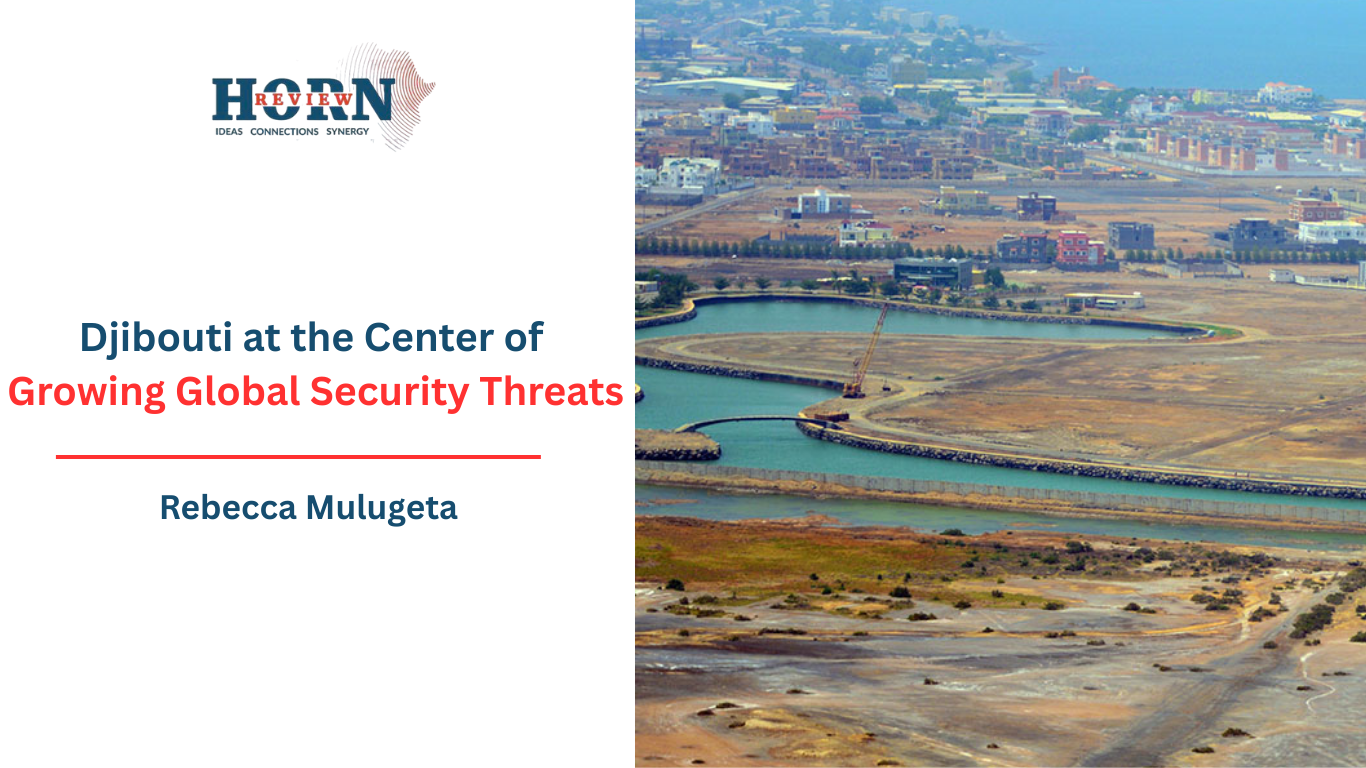
Imagine a tiny patch of sun-scorched desert, smaller than the state of Delaware, jammed between the fiery funnel of the Red Sea and the endless roll of the Indian Ocean. This is Djibouti, a corner of old French empire where Afar nomads once drove camel trains loaded with frankincense, and now the air thrums with American drone engines, Chinese submarines prowl hidden anchorages, and French fighter jets streak across skies too small for so much steel. Born in 1977 from the scraps of colonial maps, Djibouti stares down giants: Ethiopia’s massive highlands to the south, Eritrea’s armed suspicion to the north, Somalia’s clan wars to the east, and Yemen’s missiles arcing just 20 miles across the water. Surrounded by feuding neighbors and eyed by world powers playing their own games that may be risky, this speck of a country faced a simple choice: fight and fold, or find a way to survive. Its leaders chose genius desperation; they flung open the doors to foreign militaries, renting out bits of sand for millions, turning weakness into a wallet. What began as a soul-saving foreign policy trick to dodge destruction has exploded into chaos: too many armies, too many clashing ideas, too many hungers for oil, minerals, and control over trade lanes carrying 12 percent of the world’s goods. Now, this crush of rival powers risks turning the Horn of Africa into the next global war zone, just like Europe’s crowded naval bases sparked World War I and Pacific islands lit the fuse for World War II.
Djibouti’s story starts in pure survival panic, a lesson in how the smallest fish can swim with sharks by selling them beachfront. Going back to the 1880s, France snapped it up as French Somaliland, a humid outpost for coaling ships bound for Asia, ruling over Afar and Issa clans from Parisian desks. After Menelik’s stunning 1896 victory at Adwa crushed Italy, he swapped Obock for the breezier port of Djibouti-ville, giving France a prime Red Sea spot during Africa’s mad scramble. Independence finally hit in 1977 under Issa leader Hassan Gouled Aptidon, but freedom felt like a trap. Somalia’s Siad Barre dreamed of a greater Somalia swallowing Djibouti’s Issa people. Eritrea’s fighters mined roads that Ethiopia needed to survive. Djibouti had no army worth mentioning, no oil or diamonds, just the perfect location, handling 80 percent of landlocked Ethiopia’s trade. Gouled saw the play: why battle when you can bill? France stayed on as colonial muscle turned paid protector. Then came the 1990s Somali piracy plague lawless seas begged for patrols, and the UN waved flags for help. Enter America in 2002: fresh off 9/11, the U.S. turned a quiet French airstrip into Camp Lemonnier, swelling it to 4,000 troops chasing al-Qaeda shadows in Yemen and Somalia, paying $63 million a year in rent that supercharged the economy overnight.
The game leveled up under Ismaïl Omar Guelleh, who took power in 1999 amid quiet election fixes. Djibouti turned terror into treasure: invite the world, play them all. Guelleh whispered to everyone: Washington, base here for your terror hunt; Paris, keep your Legion cozy; Tokyo, save our seas from pirates. Japan jumped in 2011 its first troops overseas since World War II sending helicopter carriers to refuel in the Gulf of Aden, around its pacifist rules. Italy opened Base Amedeo Guillet in 2014, stationing Carabinieri to train police against migrant waves and smugglers. Money poured in $200 million a year by the 2020s, nearly a third of GDP building shiny skyscrapers, smooth roads, and a capital where nomads sell goat milk next to coffee shops.
China made the boldest move in 2017: billions in Belt and Road cash built the Doraleh Container Terminal, which they seized control of in 2018. then planted their first overseas military base submarines docking, marines drilling, officially a “logistics hub” but really a launchpad for Indian Ocean reach. Germany, Spain, and the UK rotated in under French logistics. Saudi Arabia has dangled a Houthi-fighting base since 2016. Ethiopia loved it trade flowed safe. Locals complained about GI price hikes but pocketed tips. Djibouti became the tightrope walker in a storm of swords, raking in rent while the world watched.
In 2026, Djibouti has evolved into a hyper-congested strategic garrison, where eight foreign powers are compressed into a territory the size of Vermont, creating an environment of high-stakes “deconfliction” and systemic friction. The sovereign soul of the nation is increasingly strained as U.S. Camp Lemonnier and China’s Doraleh support base operate in an uneasy, few-mile proximity, characterized by siloed intelligence and recurring “gray-zone” incidents reminiscent of pre-World War I naval brinkmanship. While the Guelleh administration continues to monetize this geography, generating roughly 10% of GDP from military rents, the “trickle-down” benefits remain non-existent for the 40% of the population living in poverty. Domestically, the nation faces a looming political transition crisis all while al-Shabaab exploits local grievances over resource scarcity and “infidel” presence to threaten the very supply routes that feed Djibouti’s rentier economy.a circus master friend to Trump, partner to Xi, lifeline to Macron risking drone strikes from annoyed Houthis or revolts from his own clans if one ball drops.
These homefront pains explode outward because of the neighbors’ nonstop knife fights, making the base party a powder keg accelerant. Ethiopia, home to 130 million people starving for sea access since Eritrea locked down Assab in 1993, sends 95 percent of its cargo through Djibouti but dreams of a stake in Somaliland’s Berbera port via UAE deals, enraging Eritrea. Egypt, furious over Ethiopia’s GERD dam choking the Nile, pumps weapons to proxies in Sudan. Russia eyes Port Sudan with a 25-year lease to offer warships and Su-30 jets for Sudan’s army against RSF rebels, paused in 2025 when Khartoum flirted with Washington but ready for Putin’s comeback after Ukraine losses. Turkey’s giant Mogadishu base trains Somalis against al-Shabaab while blocking UAE moves in Berbera. Qatar slips cash to Hamas and Houthi allies. Eritrea hosts UAE airstrips bombing Yemen, breeding drone swarms that wander into Djibouti’s skies. The powers bring their own poison: America pushes democracy and terror hunts; China chases lithium and potash harmony from Ethiopia’s Afar deserts; France clings to old colonial zones; Japan frets over Indo-Pacific seas; Italy fights migrants and mafia; Russia sells gold and guns. Their grudges chase resources and energy across borders: Red Sea oil, Danakil minerals just like Europe’s coal and steel grabs before World War I or Japan’s rubber and oil raids in the Pacific before World War II.
History whispers a chilling echo, as clear as the rifle cracks at Adwa in 1896. In Europe before 1914, factories pumped out dreadnought battleships Britain built 29, Germany 17 from Kiel ports until alliances froze into death traps, and one shot in Sarajevo pulled empires into 17 million graves. Cramped North Sea bases turned drills into disasters. The Pacific in 1941 saw Japan’s island outposts Truk and Rabaul starved of oil by U.S. embargoes, leading to Pearl Harbor and island hell up to the atomic blasts. Ports and bases provoked those pivots; now the Horn’s chokepoints do the same, but with drones, hypersonic missiles, and decisions flashing in minutes instead of months. Djibouti’s base overload copies the pattern: too many players, clashing dreams, on a shaky stage like the Balkans Ethiopia’s Tigray wounds still bleed, Sudan’s genocide has 20 million on the run, Somalia fractures endlessly.
Picture the spark igniting slowly as a nightmare. Dusk over the Gulf of Aden: a Houthi drone clips a French helicopter blade. scrambles jets from base 188 and calls in the EU’s Atalanta force. F-35s and Reapers roar from Lemonnier. subs race out to guard a trillion dollars in Belt and Road trade. positions carriers, sharing tips with Washington. gears up its trainers at Guillet. steams Slava cruisers from Sudan under the guise of “protecting grain ships.” The chain reaction builds: sending speedboat swarms, Egypt floods Sudan with arms, Turkey reinforces Mogadishu against UAE. The straits lock up oil hits $300 a barrel, bread riots rock Egypt, famines bite India. Old alliances harden into new ones: America-Japan-France-Italy against a China-Russia bloc, turning the Horn into island-hopping slaughter like Tarawa. The pirate cleanup that dropped attacks 90 percent? Gone. Base-built roads crumble under tanks.
Initially, these multinational deployments delivered tangible operational dividends: maritime security initiatives neutralized piracy, foreign-funded infrastructure linked regional markets, and bilateral training modernized local law enforcement. Strategic investments provided critical resources like water to nomadic communities, while coordinated intelligence-sharing and high-altitude surveillance degraded insurgent capabilities. These partnerships demonstrated that when global interests align, the resulting technological and security transfers can effectively bridge the infrastructure gap and catalyze localized stability. But too many cooks with too many recipes spoil the pot ideologies clash into accidents, borderless enemies turn local. Djibouti’s old survival trick now crushes its spirit: rents hide poverty, the balancing act breaks bodies.
Ethiopia feels it sharpest in the gut. Ancient Axum ruled these seas with galleys. Today, 130 million pay through the nose at Djibouti, haunted by GERD fights. Djibouti’s open invite started as a brilliant panic policy amid monster brawls. Now the crush of militaries, their ideology fires, global appetites forges war from welcome. World wars marched from Europe’s crowded ports to Pacific piers; the Horn’s harbors called next. Without safeguards, shared radars, no-fly deals, strong sovereignty the cage breaks. Humanity’s birthplace need not birth its end: snuff the fuse with bold federation, not blind firepower.
By Rebecca Mulugeta, Researcher, Horn Review