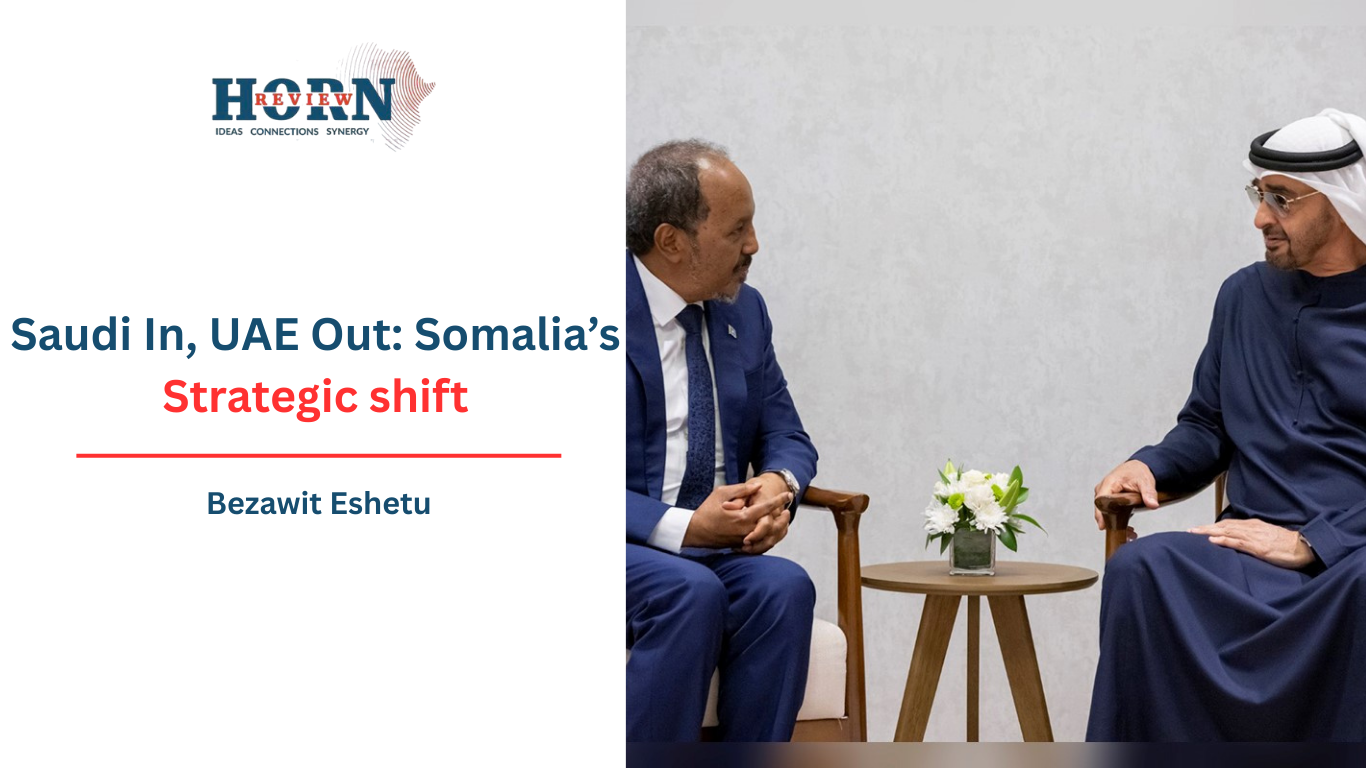
The Council of Ministers of the Federal Republic of Somalia has officially terminated all existing security and defense agreements with the United Arab Emirates (UAE). This decision, made in a Cabinet resolution, aims to protect the nation’s unity, territorial integrity, and constitutional order. The announcement, made in early January 2026 during a turbulent period in the Horn of Africa, comes with a prohibition on military and cargo aircraft owned or leased by the UAE from using Somali airspace. This marks a significant increase in regional tensions.
The action arises from suspicions that the UAE enabled Aidarus al-Zubaidi, the leader of Yemen’s Southern Transitional Council, to transit through Somali territory unauthorized. Al-Zubaidi, a central figure in Yemen’s separatist movement, allegedly fled Aden to Somaliland and then boarded a UAE-linked flight to Mogadishu and on to Abu Dhabi without Somali government approval. This event not only highlights Somalia’s vulnerable sovereignty but also shows how rivalries in the Gulf project power across the Red Sea, turning the Horn into a battleground for competitions that favor strategic posturing over stability.
This termination is more than just a diplomatic conflict; it reflects Mogadishu’s effort to assert control in response to ongoing grievances over Emirati influence. Historically, the UAE has invested significantly in the region, often working around central authorities to build ties with local groups. In Somaliland, which has claimed independence since 1991, Abu Dhabi has secured a long-term lease on the port of Berbera, turning it into a military and commercial center that competes with the strategic importance of Mogadishu.
This presence weakens Somalia’s control over the Bab el-Mandeb Strait, a key route for global trade where disruptions could affect oil shipments and raise energy prices worldwide. By supporting Somaliland’s autonomy, the UAE effectively weakens Somali unity, challenging the common belief that Gulf investments promote development; instead, they often deepen divisions to gain exclusive access to ports and resources, showing a strategy of calculated fragmentation rather than true partnership.
In Yemen, similar dynamics occurred as the UAE’s backing for the Southern Transitional Council weakened the central government. The STC controlled Aden and much of southern Yemen with Emirati support, including military training and infrastructure deals catering to Abu Dhabi’s interests in the Arabian Sea. This relationship diminishes the strategic necessity of a unified Yemen since UAE-controlled regions provide alternate bases for extending influence into the Indian Ocean.
Both situations illustrate a trend: the UAE strengthens separatists, gaining economic benefits while indirectly undermining Iranian influence, as fragmented states are tougher for Tehran-backed groups like the Houthis to dominate. However, this approach complicates the perception of Gulf states as singular entities; it reveals an internal fissure within the Gulf, where short-term advantages for one power heighten long-term instability for the region.
The connection between the situations in Somalia and Yemen showcases a deliberate Saudi strategy: maintaining federal structures not to promote regional harmony but to protect strategic interests that enhance Riyadh’s leverage. In Somalia, a unified state that includes Somaliland strengthens control over the Gulf of Aden, essential for monitoring maritime threats and securing trade routes. Without Somaliland, Mogadishu loses the potential of Berbera port, reducing its geopolitical significance and making it a less dependable partner for Saudi objectives against Iranian influence.
Likewise, in Yemen, maintaining control over the south, including the critical port of Aden, ensures dominance over the Bab el-Mandeb Strait, a vital corridor for global oil trade. A secessionist south aligned with the UAE would disrupt this control, diminishing Saudi competitiveness in energy security and regional power dynamics. Riyadh’s concern over these outcomes stems from a fear that successful separations would encourage similar fragmentation, weakening its network of allies and allowing rivals like Abu Dhabi to gain the upper hand in the Red Sea.
Saudi Arabia does not act as a benevolent stabilizer; instead, it is a self-serving actor focused on maintaining influence in federal structures to strengthen its own position. Interventions, whether in Yemen’s coalition leadership or potential action in Somalia, focus on countering UAE encroachments and upholding unified buffers against threats like the Houthis or Al Shabab. This strategy, while framed in the language of unity, often worsens local conflicts by favoring centralized control at the expense of more inclusive governance, perpetuating cycles where external support inhibits internal reconciliation.
This self-interested strategy, however, has prompted nations facing UAE-backed fragmentation to seek direct Saudi support as a countermeasure. In Somalia, this dynamic is starkly illustrated by the defense minister’s recent plea for Riyadh to intervene militarily against Somaliland’s secessionist ambitions, a request intensified by escalating tensions following Israel’s recognition of Somaliland. Such appeals underscore how vulnerable states view Saudi involvement not as altruistic aid, but as a pragmatic tool to preserve nominal state integrity amid rival Gulf influences.
This shift signals a broader trend among Muslim-majority nations in fragile contexts, where they increasingly bypass intermediaries like the UAE or Qatar in favor of Riyadh’s perceived military and economic leverage. Yet, this direct engagement does not elevate Saudi foreign policy to a proactive stabilizing force; rather, it reveals Riyadh’s opportunistic pursuit of dominance, as seen in Yemen where Saudi-aligned groups resist Southern Transitional Council (STC) autonomy. In both Somalia and Yemen, UAE advances are framed as existential threats that Riyadh exploits to contain rivals and secure its own interests, often at the cost of local cohesion.
Nevertheless, this growing reliance on Saudi intervention introduces substantial risks that could undermine the very stability these nations seek. In Yemen, efforts to integrate southern forces under Saudi leadership risk alienating STC supporters, potentially reigniting southern violence and diverting focus from the Houthi conflict, all while serving Riyadh’s agenda of centralized control.
Similarly, in Somalia, inviting Saudi military involvement could provoke backlash from Somaliland, which has already labeled such moves as provocations, deepening entrenched divisions rather than resolving them. Compounding these dangers is the potential to inflame non-state actors like Al Shabab, whose reactions could spiral into wider instability. Linked to Al Qaeda and controlling vast swaths of southern Somalia, Al Shabab has historically capitalized on foreign interventions, portraying them as violations of Somali sovereignty to rally support and intensify its insurgency.
Recent reports highlight growing ties between Al Shabab and Yemen’s Iran-backed Houthis, including arms smuggling across the Gulf of Aden and coordinated assaults on maritime targets. Sharing an anti-Saudi ideology, these groups could interpret any Riyadh military presence in Somalia as an extension of the Yemen conflict, triggering a unified backlash that amplifies threats across the region.
Somalia’s desperation for external aid, rooted in its internal vulnerabilities, thus risks backfiring spectacularly: Al Shabab might escalate urban bombings or rural attacks, framing Saudi forces as invaders and gaining ideological traction. This scenario challenges the illusion that foreign military backing fortifies weak states; in reality, it often empowers insurgents, fueling cross-border violence that aligns with Riyadh’s broader rivalries but erodes local sovereignty.
Ultimately, this episode exemplifies a persistent pattern in international relations: the pursuit of strategic advantage in fragile states frequently accelerates their disintegration. Somalia’s ban on UAE flights and appeal to Saudi Arabia may offer short-term leverage, but it fosters dependencies that compromise long-term autonomy. As Gulf powers vie for control over ports and proxies in the Horn of Africa, these rivalries threaten to ignite cascading conflicts with far-reaching global consequences. In this evolving regional landscape, direct appeals to powers like Saudi Arabia reflect a calculated dependence on demonstrated might—yet they also highlight the risks of enlisting external actors in domestic strife. Such invitations can revitalize insurgencies and generate spillovers that no single state can contain.
By Bezawit Eshetu, Researcher, Horn Review