Israeli Prime Minister Benjamin Netanyahu’s recent declaration, articulated during a joint appearance in Florida following discussions with United States President Donald Trump, marks a significant development in Israel’s public commitment to counterterrorism beyond its immediate region. The pledge driven by strategic reciprocity toward Evangelical Christians, who form one of Israel’s strongest and most reliable international allies through consistent political lobbying, financial aid, tourism, and advocacy. This alliance-building strengthens shared geopolitical interests against common threats, while reinforcing Evangelical backing amid challenges to Israel’s global image.
Israel’s declining image in Africa, battered by Gaza backlash including the AU-condemned Somaliland recognition and South Africa’s ICJ genocide case, paradoxically drives Netanyahu’s counterterrorism pledge as a bid to reposition Israel as a vital security guarantor against jihadist threats. However, this image erosion—manifesting in AU-wide condemnations, arms deal halts, and rival coalitions led by Turkey and Egypt—severely complicates immersion, risking rejection amid sovereignty sensitivities. On the other hand, the pledge has sparked diverse interpretations, ranging from a genuine security initiative to concerns over underlying geopolitical motives, including resource access and regional influence expansion. The 2025 reported designation of Major General Roman Gofman as the next Mossad director under Netanyahu signals a potential shift toward more militarized intelligence approaches, possibly extending to Africa amid ongoing regional partnerships, such as the 2026 military action plan with Morocco that includes joint training and counterterrorism exercises.
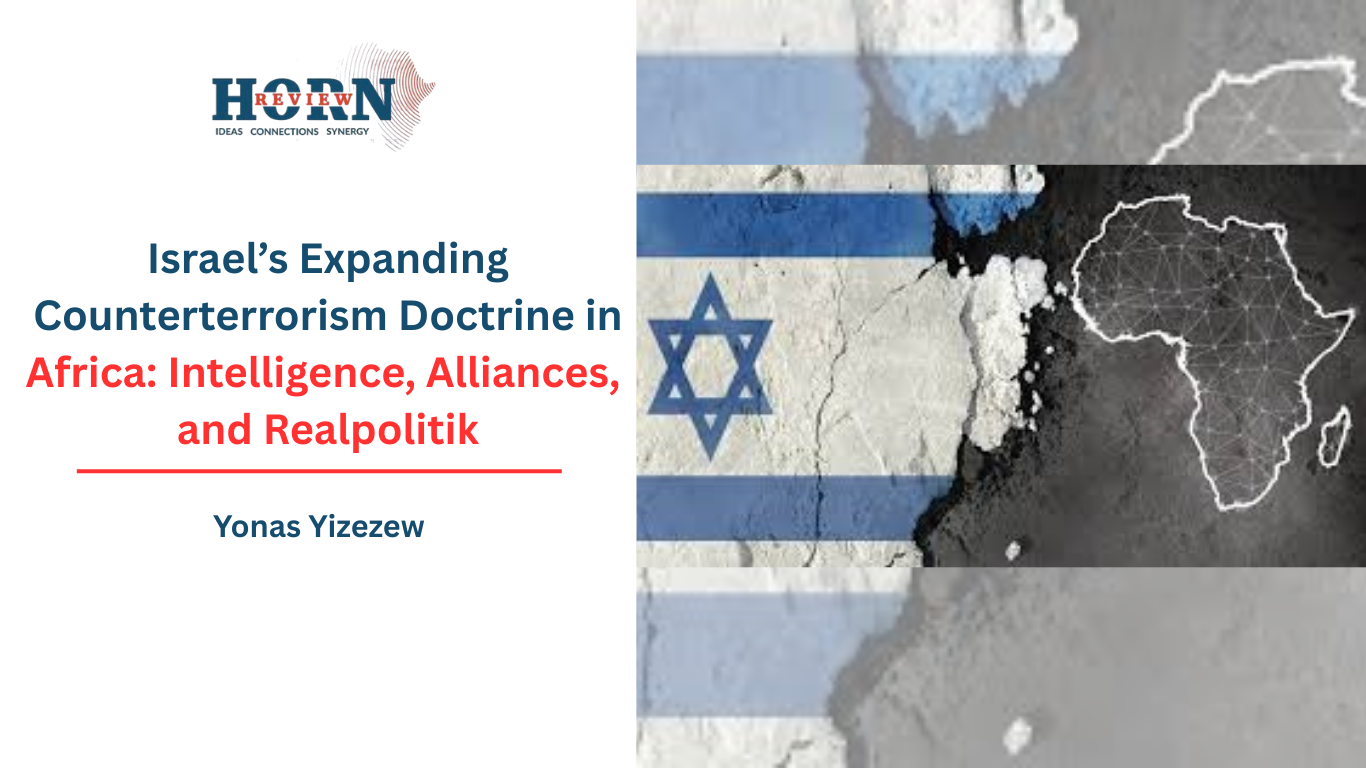
Netanyahu pledged to confront and defeat terrorism in Nigeria, broader Africa, and Europe, emphasizing intelligence sharing and enhanced capabilities as key tools. This statement, made amid U.S. airstrikes against the Islamic State militants in northwest Nigeria, demonstrates a strategic alignment that positions Israel as a pivotal actor in addressing Africa’s security challenges.
By framing the initiative as a defense of shared values against extremist threats, Netanyahu’s words connect historical alliances with contemporary geopolitical imperatives. It links regions like West Africa and the Horn of Africa through shared terrorist networks and Israel’s expanding intelligence footprint. Israel’s engagement with Africa traces back to the 1950s, when it forged developmental partnerships with newly independent states, offering expertise in agriculture, infrastructure, and security training to counter Arab isolationism.
Relationships with countries such as Ethiopia, Kenya, and Uganda flourished until the 1973 Yom Kippur War prompted a diplomatic rupture, as African nations aligned with Arab positions under the Organization of African Unity. The post-Cold War era saw a revival, driven by mutual concerns over transnational extremism, exemplified by Israel’s response to the 1998 Al-Qaeda bombings in Kenya and Tanzania through intelligence and training support. The Abraham Accords of 2020 further accelerated this, normalizing ties with Morocco and Sudan, and enabling joint counterterrorism efforts in the Sahel.
Netanyahu’s 2025 pledge builds on this foundation, evolving from discreet aid to a bolder, public stance that integrates intelligence operations across the continent, including Mossad’s longstanding activities in sub-Saharan Africa for intelligence and alliance-building. Netanyahu’s emphasis on Intel suggests an intensification of Mossad’s involvement, potentially sharing real-time data on militant networks linked to Middle Eastern sponsors.
In Nigeria, the pledge directly addresses a protracted insurgency led by Boko Haram and its splinters, ISWAP and the Jamā’at Ahl as-Sunnah lid-Da’wah wa’l-Jihād (JAS). Emerging in 2002 as a Salafist movement against Western influences, Boko Haram intensified into jihadist violence by 2009, aligning with the Islamic State in 2015. ISWAP, dominant since internal fractures, controls territories in the Lake Chad Basin, exploiting resources while launching attacks that have killed over thousands since 2000. Violence affects communities across religious lines: Christians face targeted persecution, with thousands killed and explicit threats of conversion or death, as in a recent Adamawa village assault. Yet, Muslim civilians, comprising the majority in northeastern states, endure the bulk of casualties in absolute terms due to indiscriminate tactics, including mosque bombings against perceived apostates.
Israel’s role in Nigeria has been understated but impactful, supplying surveillance technology and training through U.S.-brokered deals. Netanyahu’s emphasis on “intel” suggests Mossad’s intensification, sharing data on networks linked to Middle Eastern sponsors, countering Iran’s alleged proxy support via arms smuggling. This aligns with Israel’s broader motives: securing evangelical U.S. support by highlighting Christian persecution, while advancing economic interests in resources and defense exports.
Critics note potential irony, given regional sensitivities, but the pledge could disrupt militant financing through enhanced cyber tools. Parallels emerge in the Horn of Africa, where Al-Shabaab poses similar threats. Born from Somalia’s 1991 state collapse as ICU’s radical youth wing, Al-Shabaab aligned with Al-Qaeda in 2009, aiming for an Islamic emirate through strict Sharia enforcement. Despite African Union missions like AUSSOM, the group conducted grave attacks in 2025, controlling south-central territories and extending incursions into neighboring countries. Victimization mirrors Nigeria: Muslims suffer most from indiscriminate bombings in markets and mosques, while Christians endure acute targeting, with executions and forced secrecy in controlled areas.
Israel’s Horn involvement, historical in supporting Ethiopia has modernized through Abraham Accords-enabled maritime pacts against Houthi threats. The December 2025 recognition of Somaliland, a self-declared entity since 1991, exemplifies this escalation, offering Israel a Red Sea outpost for monitoring Houthi-Al-Shabaab links and countering Iranian influence.
Connecting these regions reveals transnational jihadist networks binding ISWAP and Al-Shabaab. Both are Islamic State affiliates, sharing Salafi-jihadist ideologies, tactics like territorial control and extortion—Al-Shabaab generates $100 million annually, akin to ISWAP’s resource exploitation. Reports document linkages through arms flows, training exchanges, and ideological cross-pollination across sub-Saharan Africa, with Al-Qaeda and Islamic State facilitating ties between West and East African groups.
Geopolitically, Netanyahu’s initiative intersects with U.S. priorities under Trump, whose administration endorsed airstrikes in both regions. This fosters new paths like joint intelligence hubs, potentially disrupting financing networks continent-wide. This initiative also enhances Israel’s arms, cybersecurity, and technology export markets in Africa. However, other actors influence is also another factor that complicate dynamics.
Turkey’s Mogadishu bases counter Israeli and Gulf moves, viewing Somaliland recognition as destabilizing, while Iran leverages proxies to challenge Western coalitions. China’s security pacts with 20+ African states, including Nigeria via the Belt and Road, provide surveillance tech and loans that rival Israeli exports, intensifying realpolitik access to resources like Nigerian oil. Critics argue that while motives framed for Netanyahu’s pledge blend security—countering global jihadism’s interconnections, from Hamas to African affiliates, it has tactical political considerations in realpolitik. It will bolster U.S. ties, accessing markets, and distracting from domestic issues. Implications are dual-edged: enhanced intelligence could reduce violence, but risks escalation, alienating populations by framing conflicts religiously fueling recruitment.
In Nigeria, dependency on foreign aid might bolster its defense capabilities but risking dependency, while in the Horn, Somaliland’s recognition could escalate the tension in the region, deepening proxy rivalries. New paths include hybrid coalitions integrating Israeli Intel with African Union peacekeeping, but success demands addressing root causes—poverty, unemployment, and weak institutions— through inclusive development. This interconnected web reveals Netanyahu’s declaration as a culmination of decades-long engagements, weaving Nigeria’s insurgency with the Horn’s through shared threats and Israeli strategies. As 2026 unfolds, the initiative’s effectiveness will hinge on balanced collaboration, respecting local agency to foster sustainable peace amid multipolar contests.
By Yonas Yizezew, Researcher, Horn Review