
Fragmentatio as Ratio Imperii in Hydro-Hegemony: Egypt and the Nile Cooperative Framework Agreement (CFA)
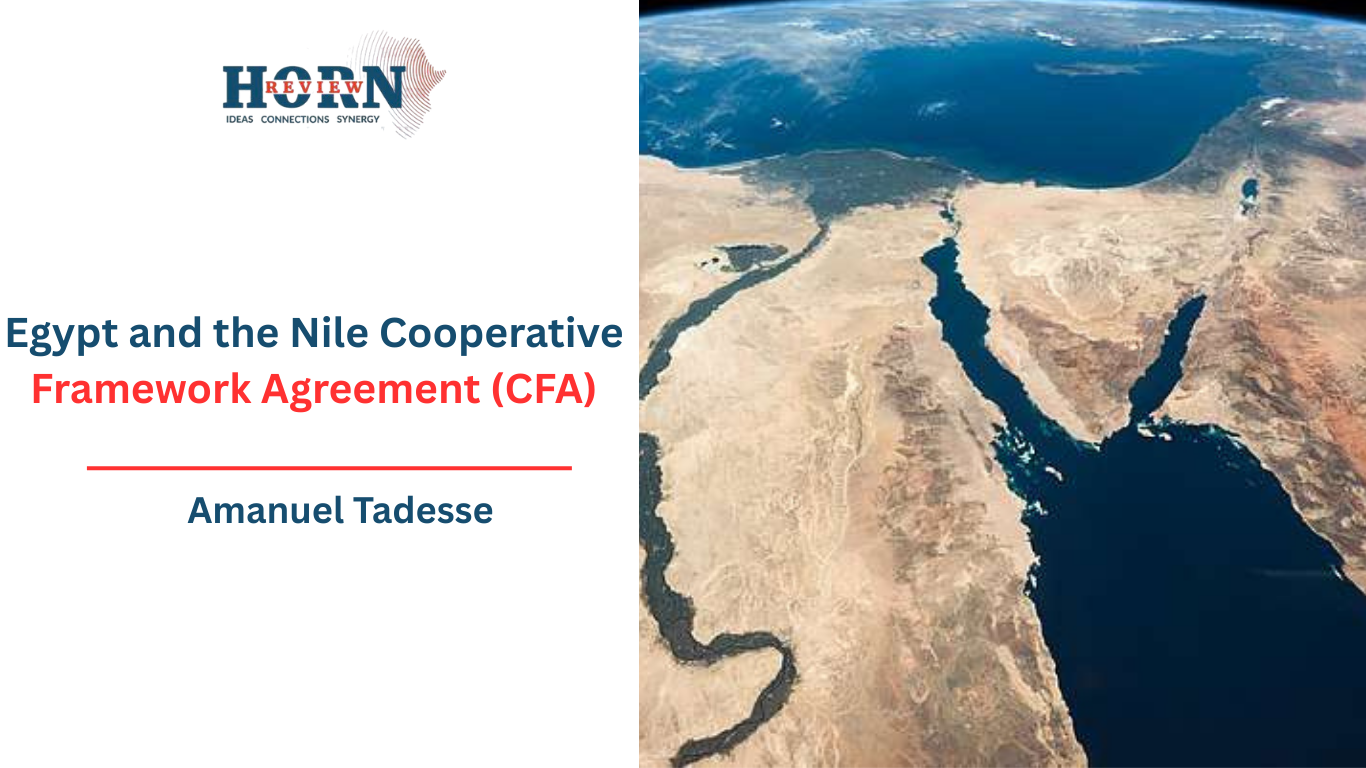
The Nile River is one of Africa’s most significant transboundary watercourses, straddling approximately 6,695 km and draining a basin of about 3.2 million sq. kms across eleven riparian States. The basin is home to an estimated 272 million people and is endowed with substantial ecological, environmental, and socio-economic resources. Hydrologically, the Nile is predominantly an upstream river, with its principal tributaries originate in the Ethiopian highlands, most notably the Blue Nile (Abay), which contributes the majority of the river’s annual flow before joining the White Nile originating in the Great Lakes region of Central Africa, at Khartoum. From this confluence, the river flows northward through Sudan and Egypt before discharging into the Mediterranean Sea.
Yet, despite this upstream hydrological reality, the Nile’s waters were, throughout much of the twentieth century, utilized almost exclusively by downstream States, particularly Egypt, under a deeply entrenched regime of asymmetrical control. This arrangement systematically excluded upstream riparian States, including Ethiopia, from meaningful participation in Nile development and governance. Such exclusion was neither hydrologically inevitable nor legally justified. Rather, it emerged from a colonial and post-colonial legal and political architecture that privileged downstream monopolization while marginalizing upstream development claims.
This pattern of dominance is best understood through the lens of hydro-hegemony, whereby control over shared water resources is exercised not only through material power but also through legal, institutional, and discursive strategies. Within this framework, fragmentation operates as ratio imperii – a deliberate technique of rule by which basin-wide legal integration is resisted in favor of divided, overlapping, and non-binding arrangements. Fragmentation, therefore, is not a failure of cooperation; it is a calculated strategic instrument designed to preserve asymmetrical power while formally invoking the rhetoric of international law, dialogue, and cooperation.
Beyond legal and institutional maneuvering, Egypt’s hydro-hegemonic posture has historically rested on entrenched multidimensional power asymmetries. These include material dominance through early infrastructure accumulation and storage capacity; financial leverage exercised through influence over development partners and international financial institutions; and ideational power manifested through expert discourse framing Nile utilization as a zero-sum security issue. Securitization narratives portraying upstream development as an existential threat to downstream survival have been central to this strategy. Fragmentation thus functions as the legal and institutional expression of these broader power asymmetries, enabling downstream dominance even international water law evolves toward equity and shared governance.
For decades, Ethiopia refrained from significant utilization of the Abay River, notwithstanding its contribution of the majority of the Nile’s flow. This historical imbalance began to be recalibrated in March 2011 with the launch of the Grand Ethiopian Renaissance Dam (GERD). Conceived as a sovereign development project, the GERD was designed primarily to address Ethiopia’s acute domestic energy deficit and to advance national development objectives. The project was financed entirely through domestic resources, reflecting a deliberate strategy to insulate it from external political conditionalities and hegemonic leverage. After more than a decade of construction, the GERD was completed and officially inaugurated under the leadership of Prime Minister Abiy Ahmed, with the participation of senior Ethiopian officials and representatives of Nile basin and neighboring States. Egypt and Sudan, though formally invited, declined to attend.
Subsequently, Egypt intensified its diplomatic and rhetorical opposition, portraying the GERD as a violation of international law and advancing these claims across multiple international fora and through state-aligned media platforms such as Ahram Online, Egypt Today Magazine, and Daily News Egypt. This campaign relied heavily on securitization narratives, framing Ethiopia’s lawful development as an existential threat. Such narratives seek to elevate a development issue into the realm of national emergency, thereby justifying extraordinary diplomatic and political measures. International watercourse law, however, does not permit the permanent freezing of upstream development rights on the basis of speculative and exaggerated harm.
Egypt’s legal objections to the GERD and the CFA consistently rest on three principal claims: alleged “historical rights” over Nile waters, downstream water security framed as existential necessity, and the obligation not to cause significant harm. None of these claims withstand scrutiny under contemporary international watercourse law. Colonial-era treaties, namely the 1902, 1929, and 1959 agreements, are incapable of producing opposable rights against non-parties, particularly upstream States such as Ethiopia. Under international law, treaties neither create obligations nor confer rights upon third States without their consent.
While downstream water security is a legitimate concern, as recognized under Article 14(b) of the CFA whose final formulation was annexed for resolution following the establishment of NRBC, attempts by Egypt and Sudan, to require the riparian States to frame this provision by incorporating the obligation “not to adversely affect water security and current uses and rights of any other Nile Basin” were expressly rejected by upstream States. Such language would have entrenched historically contingent, colonial-era allocations and effectively reintroduced a veto over future equitable utilization. The CFA was therefore deliberately framed to safeguard water security without subordinating the rights of other riparian States to historically derived claims.
Moreover, the obligation not to cause significant harm does not operate in isolation from, nor in opposition to, the principle of equitable and reasonable utilization. As reflected in both treaty law and international jurisprudence, the no-harm rule functions in a complimentary manner, requiring proportional balancing, due diligence, information exchange, and good-faith cooperation rather than prohibiting development per se. Ethiopia’s conduct in relation to the GERD including notification, technical engagement, and openness to cooperation aligns with these requirements.
These developments must be situated within the broader institutional history of Nile Basin cooperation. In 1999, riparian States established the Nile Basin Initiative (NBI) as a transitional intergovernmental mechanism intended to foster cooperation pending the adoption of a permanent legal framework. Over time, the majority of riparian States moved beyond NBI’s interim and non-binding framework by negotiating and adopting the Agreement on the Nile River Basin Cooperative Framework (CFA) in 2010. The CFA envisages the establishment of a permanent Nile River Basin Commission (NRBC), with international legal personality pursuant to Article 15 and 19, reflecting core principles of contemporary international watercourse law.
The CFA provides the legal foundation for transforming the NBI into the NRBC, thereby institutionalizing basin-wide cooperation, integrated water resources management, sustainable development, and environmental protection of the Nile Basin. To date, Ethiopia, Rwanda, Tanzania, Uganda, Burundi, and South Sudan have ratified the CFA, triggering its entry into force on 13 October 2024. According to sources from diplomatic canals, Kenya is in the process of ratifying the Agreement and is expected to deposit its instrument of ratification with the Africa Union (AU) in the near future, as required under Article 43 of the CFA.
Egypt’s approach to the CFA has been characterized not by mere ambiguity but by deliberate strategic obstruction. Egypt has neither signed nor ratified the Agreement, instead repeatedly invoking alleged historical rights incompatible with international law. Rather than engaging in good-faith negotiations toward a binding, inclusive, and basin-wide legal framework, Egypt has actively sought to preserve the NBI in its transitional and non-binding form. This strategy has manifested through diplomatic lobbying of non-signatory States; obstruction of the efforts of the tri-committee comprising Rwanda, South Sudan, and Uganda to encourage non-ratifying States to ratify the CFA; attempts to delay ratification by signatory and acceding States; pressure on both ratifying and non-ratifying States to reopen and reconsider the CFA agenda; and the deployment of selective political, financial, and institutional incentives designed to entrench divisions among riparian States. These tactics exemplify fragmentation as ration imperii.
Egypt has further employed procedural fragmentation through forum shopping, raising Nile-related disputes before the United Nations Security Council, the Arab League, and ad hoc mediation tracks. Such practices dilute legal coherence, politicize technical issues, and undermine basin-specific institutions envisaged under CFA. International water governance favors subsidiarity, whereby basin level mechanisms serve as the primary locus of cooperation and dispute settlement.
Recent signals from diplomatic circles suggest that Egypt may be reconsidering its position by settling its arrears and contemplating accession to the CFA, as well as seeking a role within its institutional structures. However, this apparent shift does not reflect a genuine embrace of cooperative, rule-based Nile governance. Rather, it indicates a strategic recalibration aimed at influencing the CFA regime from within, potentially weakening internal cohesion, exacerbating divisions among State Parties, and reasserting a fragmented basin architecture aligned with Egypt’s unilateral interests.
Egypt’s objection to the inauguration and operationalization of the NRBC is legally untenable. Despite not being a party to the CFA, Egypt has argued that the NBI must remain in place unless all riparian States unanimously agree to its dissolution. This naïve claim is directly contradicted by the text, object, and purpose of the CFA. Article 43 of the Agreement establishes that the Agreement enters into force upon ratification by six riparian States; unanimity is neither required nor contemplated. Article 31 further provides that, upon the entry into force of the framework, the NRBC shall succeed to all rights, obligations and assets of the NBI. The provision establishes an automatic (ipso jure) institutional succession, whereby leaving no room for discretion or additional validation.
Such succession clauses are well recognized in international organization law and are designed to ensure continuity, legal certainty, institutional stability. Egypt’s insistence on unanimity represents an attempt to impose an veto power absent from the treaty and unsupported by general treaty law, including Article 24 of the Vienna Convention on the Law of treaties. Moreover, the 2002 NBI Act itself envisaged the initiative as temporary, pending the establishment of a permanent basin organization-a commitment Egypt now seeks to disavow.
Uganda, as the NBI host State, initiated preparations in October 2024 for the formal inauguration of the NRBC and the dissolution of the NBI, issuing invitations to Head of States and Government of CFA-ratifying States and establishing a national steering committee. Egypt’s intervention in this process, despite its non-party status, was followed by the unexplained postponement of the inauguration. This episode illustrates a broader pattern of procedural disruption and political pressure aimed at undermining institutional consolidation.
Sudan occupies a legally and politically ambivalent position within the CFA framework. While historically aligned with Egypt, Sudan under downstream-centric arrangements, stands to benefit materially from upstream regulation, particularly through flood control and regulated flows associated the GERD. Its non-ratification indicates political indecision rather than doctrinal opposition, reinforcing the instability inherent in non-binding cooperative arrangement. The DRC’s non-participation similarly reflects capacity constraints and Egyptian’s influence rather principled resistance, though Egypt has sought to instrumentalize this position to project an exaggerated image of basin-wide dissent.
From a doctrinal perspective, scholars such as Mahemud Tekuya have observed that Egypt cannot prevent Ethiopia from constructing the GERD and that other riparian States may follow Ethiopia’s example by pursuing unilaterally development. While often framed as a risk to cooperation, this dynamic more accurately reflects a rebalancing toward the principle of equitable and reasonable utilization. Ethiopia’s experience demonstrates that upstream development and basin wide cooperation under the CFA are not mutually exclusive.
Egypt’s strategy of fragmentation has also been embedded within the instrumental architecture of the NBI itself. Basin-wide cooperation has been diluted through selective and instrumental engagement with subsidiary bodies established to operationalize investment and development under the Nile River Basin Investment Programme (NR-BIP), notably the Eastern Nile Subsidiary Action Program (ENSAP), comprising Egypt, Ethiopia, and Sudan, and the Nile Equatorial Lakes Subsidiary Action Program Coordination Unit (NELSAP-CU), which includes all NBI member States, albeit with Ethiopia participating only as an observer. While ENSAP has intended to serve as a vehicle for coordinated, development-oriented investment in the Eastern Nile, Egypt has consistently undermined its operational effectiveness by strategically privileging NELSAP-CU. This selective engagement has weakened basin-wide institutional coherence and entrenched asymmetrical decision-making structures.
This pattern became particularly evident during the deliberations on the NR-BIP. Ethiopia, acting in good faith and in furtherance of equitable basin development, submitted several investment proposals through ENSAP. These proposals were opposed by Egypt during meetings of the Nile Technical Advisory Committee (Nile-TAC). Egypt invoked alleged “historical rights” and contended that Ethiopian projects including Dinder Bereha, Anget, Geba, and Baro-Akobo-Sobat, planned on the Abay river and its tributaries lacked a basin-wide operational coordination framework and adequate safeguards for the Eastern Nile region. Egypt. together with aligned scholars, further lobbied international development partners to withhold financing and to exclude these projects from the NR-BIP, notwithstanding the fact that the projects fully satisfied agreed eligibility and selection criteria adopted by Nile-TAC members. This position not only contravenes the UN Watercourses Convention but also seeks to preserve a monopolistic and exclusionary allocation of Nile waters rooted in an obsolete and inequitable legal paradigm. Ultimately, Egypt’s objections were rejected by the Nile TAC, which accepted the Ethiopian projects and reaffirmed a cooperative, basin-wide approaches grounded in principles of equitable and reasonable utilization, rather than unilateral entitlement.
Egypt’s posture toward Ethiopia’s sovereign rights to development, particularly in relation to the GERD further illustrates this this selective and inconsistent invocation of international law. At various points, Egypt has advanced mutually contradictory claims alternately alleging that GERD operations reduce downstream flows, while simultaneously asserting that GERD must be jointly operated and managed, and seeking to compel Ethiopia to enter into a binding agreement governing GERD operations and to forego future upstream development projects. These positions fundamentally mischaracterize Ethiopia’s rights under international law. Ethiopia’s entitlement to utilize its transboundary watercourses for national development flows directly from the principle of equitable and reasonable utilization and does not depend on prior consent from any State, including downstream riparian’s. Nor does international law require the conclusion of a binding agreement as a precondition for the exercise of such rights.
Ethiopia’s position is further reinforced by its demonstrated technical, institutional, and professional capacity in dam safety, environmental safeguards, and hydrological management. The country possesses a substantial pool of highly qualified water resource professionals, hydrologists, and engineers, supported by strong academic institutions, particularly its first-generation universities. These capabilities collectively enable Ethiopia to manage large-scale hydraulic infrastructure responsibly and sustainably, while also providing meaningful technical cooperation to other riparian States. Such capacity constitutes a strategic asset underpinning Ethiopia’s role in lawful and sustainable Nile Basin development.
Ultimately, Egypt’s resistance to the CFA and the NRBC reveals not a principled defense of international law, but a selective and instrumentalized deployment of it. Fragmentation, deployed as ratio imperii, has long served to preserve hydro-hegemonic dominance amid shifting legal and political realities. The gradual consolidation of the CFA regime demonstrates that cooperative, rule-based Nile, and Africa-led Nile governance is no longer merely aspirational but decisively emergent.
As recommendations, State Parties should proceed without delay with the formal inauguration and full operationalization of the NRBC in accordance with the CFA, without conditioning progress on unanimity. The CFA and interim NRBC Technical Advisory Committee should urgently adopt a clear and time-bound roadmap toward full institutional functionality, including the establishment of permanent organs and operational procedures. The CFA and the NRBC should be affirmed as the sole operative legal and institutional framework for Nile Basin governance, with all legacy NBI projects and assets integrated into the CFA regime to ensure coherence and continuity. Ethiopia, in coordination with other CFA State Parties, should intensify structured diplomatic engagement with non-ratifying States while decisively rejecting fragmentation, veto-politics, and procedural obstruction as legitimate strategies for Nile cooperation.
By Amanuel Tadesse, International Law and Foreign Relations Expert

RELATED
Posts
23
Sep
The Alliance for “Survival” as Eritrea’s Proxy Coalition
By Amanuel Tadesse, International Law and Foreign Relations Expert
Eritrea’s relationship...
21
Sep
How Cairo’s Institutions Read Ethiopia
Egypt’s policy thinking toward Ethiopia has evolved from a primarily...
21
Sep
Sudan’s Rejection of War with Ethiopia Despite Hardline Voices in Khartoum
The closed door meeting in Djibouti in early May...

21
Sep
Somalia’s Informal Economy in U.S. Security and Financial Policy
In various settings, the line between formal and informal economic...
21
Sep
Security Dependencies and Al Shabaab’s Dominance
The Federal Government of Somalia exists in a condition that...
19
Sep
Eritrea’s Sanctions Expired, Not Formally Lifted
The U.S. sanctions on several Eritrean entities and individuals did...
16
Sep
Why Eritrea Turned from Engaging Somaliland in 2019 to Opposing It Today
In March 2019 Eritrean Foreign Minister Osman Saleh accompanied by...
16
Sep
Ethiopia and the U.S. After the War on Terror: Within a New Arc of Terrorism
The War on Terror began as a direct response to...
16
Sep
Why the Abraham Accords Will Not Expand Yet
The claim that Israel is unlikely to find an...
16
Sep
The Real Houthi Weapon Was Mobilization, Not Missiles
Fatima Abo Alasrar frames the Houthi ground strategy as...