
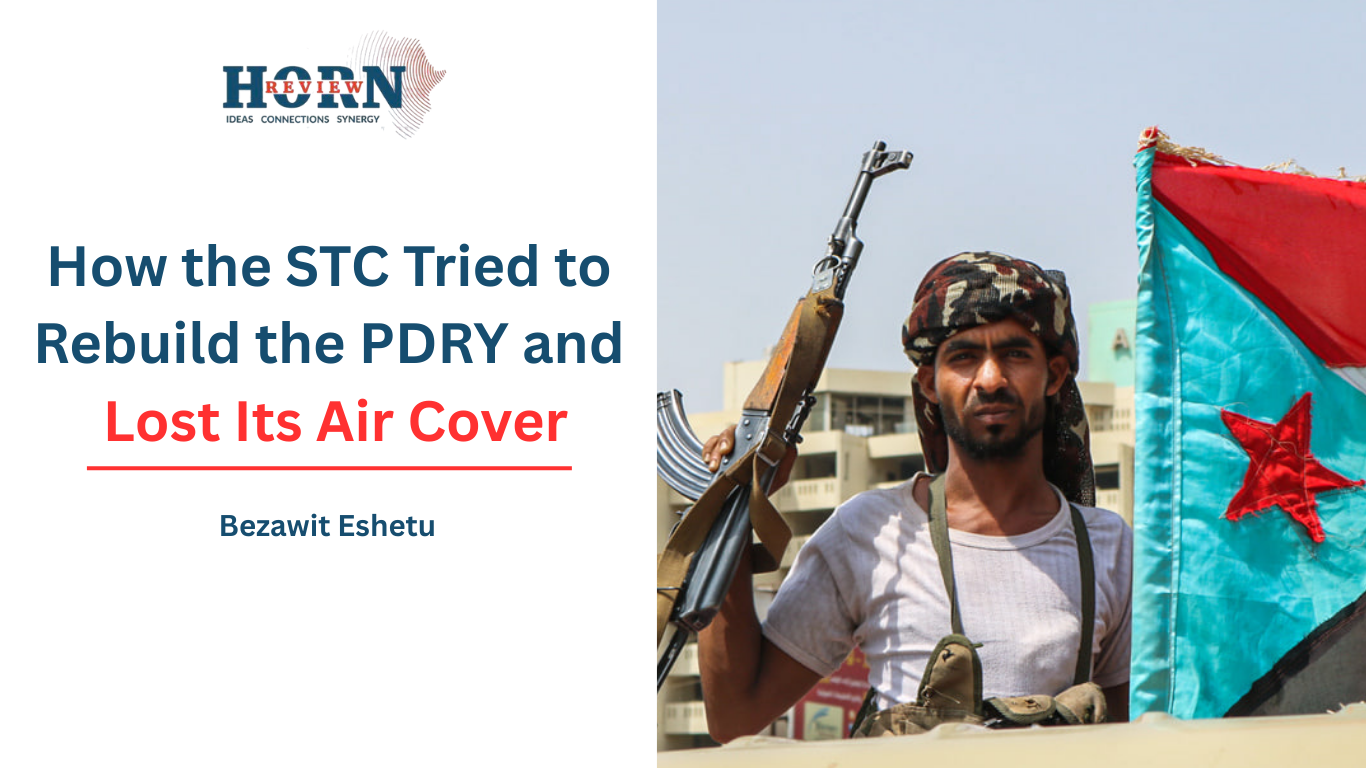
How the STC Tried to Rebuild the PDRY and Lost Its Air Cover
The quest for southern sovereignty in Yemen is not a modern anomaly but the resurgence of a distinct state identity that was never fully submerged by the tide of the 1990 unification. The Republic of Yemen, often presented to the world as a singular Westphalian entity, has functioned more as a volatile marriage of convenience between two incompatible political cultures: the Marxist-secularist legacy of the South and the tribal-theocratic patronage of the North.
To understand the current drive for independence led by the Southern Transitional Council (STC), one must look beyond immediate tactical maneuvers and examine the profound institutional and social divergence that defined the People’s Democratic Republic of Yemen (PDRY) from 1967 to 1990. This history of self-governance provides the bedrock for what is now termed “remedial secession,” where a population seeks to reclaim its sovereignty after a failed union characterized by marginalization, economic exploitation, and military subjugation.
The institutional legacy of the PDRY remains the psychological anchor for southern separatism. Upon the British withdrawal from Aden in 1967, the National Liberation Front did not merely inherit a colony; it sought to engineer a new society. Under the Yemeni Socialist Party, the South became the only Marxist state in the Arab world, adopting a centrally planned economy and a secular legal framework that stood in radical opposition to the North’s conservative, Zaydi-influenced social structures.
The PDRY’s 1974 Family Law remains a landmark in regional history, having restricted polygamy, raised the marriage age, and mandated equal rights in divorce, reforms that significantly empowered southern women compared to their northern counterparts. This era established a professionalized bureaucracy and a disciplined military apparatus that created a sense of civic identity distinct from the tribal loyalties that dictated life in Sanaa. While the PDRY suffered from internal factionalism and economic reliance on the Soviet Union, it successfully socialized a generation into a state-centric identity that valued education, secular law, and institutional order.
The unification of May 22, 1990, was born more of geopolitical desperation than shared ideological vision. Following the collapse of Soviet subsidies in 1989, the southern leadership, led by Ali Salem al-Beidh, viewed merger with the North as an economic lifeline. However, the power-sharing agreement was structurally flawed from its inception. The larger population and entrenched military-tribal networks of the North, commanded by Ali Abdullah Saleh, quickly began to eclipse the southern socialist cadre.
What was promised as a partnership of equals rapidly devolved into an annexation. By 1993, the southern leadership realized that the “unity” project was being used to dismantle their secular institutions and redistribute southern land and oil resources to northern loyalists. This disillusionment culminated in the 1994 civil war, where northern forces crushed the southern attempt to re-establish independence. The subsequent occupation of Aden marked the beginning of a “victor’s peace,” characterized by the mass dismissal of southern military officers and civil servants, effectively turning the South into an internal colony.
The post-1994 era exacerbated these grievances, as the Saleh regime utilized a “politics of plunder” to maintain its patronage network. Southern oil fields, which account for the vast majority of Yemen’s total production, became the primary source of revenue for a northern elite that provided little in return by way of infrastructure or social services to the southern provinces.
This systematic marginalization birthed the Al-Hirak (Southern Movement) in 2007, which evolved from pension protests into a mass movement for secession. The narrative of “Northern Occupation” became the dominant lens through which southerners viewed the unified state. When the 2011 Arab Spring ousted Saleh and the subsequent Houthi insurgency toppled the central government in 2014, the vacuum allowed the southern movement to transition from a protest group into a militarized political force capable of governing territory.
The emergence of the Southern Transitional Council in 2017 represented the professionalization of this separatist sentiment. Under the leadership of Aidarous al-Zubaidi, the STC integrated various southern militias such as the Security Belt Forces and the Giants Brigades into a cohesive military wing with the backing of the United Arab Emirates.
This UAE patronage provided the logistics and air support necessary to clear southern provinces of both Houthi rebels and extremist groups like Al-Qaeda in the Arabian Peninsula. By securing the South from external threats, the STC proved its capability as a de facto state actor, contrasting sharply with the internationally recognized government, which remained largely in exile.
This momentum culminated in late 2025, when the STC launched a lightning offensive to seize the oil-rich provinces of Hadramawt and al-Mahra, directly challenging Saudi Arabia’s “red lines” along its southern border. The seizure of the PetroMasila oil facility and the consolidation of control over the east represented the most significant territorial shift since the start of the civil war.
By early December, the STC held nearly half of Yemen’s territory, including the strategic coastline and most of the former South’s borders. However, this expansion triggered an unprecedented rupture within the Gulf coalition. Saudi Arabia, viewing the STC’s moves as a UAE-backed preparation for unilateral secession, responded with decisive military force. On December 30, 2025, the Royal Saudi Air-Force conducted airstrikes on the port of Mukalla, targeting what it alleged were weapon shipments from the UAE intended for STC forces.
The fallout from these strikes was immediate and transformative. In a startling diplomatic escalation, Saudi Arabia demanded the total withdrawal of Emirati forces from Yemen, characterizing their presence as a threat to the Kingdom’s national security. Facing intense pressure and a direct military confrontation with its primary ally, the UAE announced on January 2, 2026, that it had completed the withdrawal of all its remaining troops from Yemen.
This sudden exit left the STC without its primary air cover and logistical lifeline just as the Saudi-backed Presidential Leadership Council (PLC) launched a massive counteroffensive. On the same day as the UAE withdrawal, Aidarous al-Zubaidi issued his defiant “Constitutional Declaration,” proclaiming the independent “State of South Arabia” and announcing a two-year transitional period leading to a referendum. The declaration was done to convert military gains into political reality before the tide turned on the ground.
The events of early January 2026 however signal a rapid turnaround for the Southern Transitional Council (STC). Initially, the STC’s push for greater autonomy gained momentum, supported by local forces and external allies. However, this movement faced a strong counteroffensive as Saudi-backed PLC formations, including National Shield units and the Giants Brigades loyal to the government, advanced into STC-held territory.
By January 7, they had taken control of Aden’s key institutions, including the airport, the Central Bank, and the Maashiq Presidential Palace, marking a significant shift in the region’s power dynamics.Those captures were less about symbolism alone than about control: taking the nodes of finance, governance and logistics immediately degraded the STC’s ability to claim effective sovereignty or run parallel state functions in the temporary capital.
That military shift cannot be disentangled from changing regional patronage. The UAE’s withdrawal from a visible military role removed the STC’s most powerful on-the-ground protector, while Riyadh moved to prevent a durable secession that would complicate its wider regional calculations. In this sense the fighting was as much a contest of external influence as of local power: Saudi political and economic leverage amplified the PLC-aligned forces’ capacity to impose order, and the result was a reordering of patron-client relationships in the south. The consequence is a formal diminution of STC authority, not its political erasure—control has been reclaimed, but loyalties and grievances remain.
Strategically, the immediate reassertion of government authority in Aden buys the PLC short-term advantages in logistics, revenue and the optics of legitimacy. Control of the airport and Central Bank restores channels for movement, cash flow and administration that are vital to running the temporary capital. Yet this tactical success sits uneasily beside a larger cost: the fragmentation of the anti-Houthi coalition. The public rupture between Riyadh and Abu Dhabi, and the reconfiguration of proxies on the ground, weakens coordinated strategy against the north and shifts the dynamic from a unified front to competing local and regional priorities.
The human and economic toll of the confrontation complicates any neat reading of military gains. Urban fighting, curfews and displacement deepen civilian suffering in a population already exhausted by years of conflict; interruptions to trade, aid and banking services impede both relief efforts and basic economic functioning. Even where the PLC has established checkpoints and administrative control, the legitimacy deficit among southern communities, rooted in historical grievances from the PDRY era and the 1994 conflict, means that restored order may be fragile and public services difficult to stabilize without broader acceptance.
Beneath the immediate maneuvers lies the persistent political problem: the southern quest for self-determination is driven by identity, historical memory and structural grievances, not merely by which armed group holds which street. A change of flags at government buildings addresses the visible symptoms but not the causes that gave rise to separatist sentiment. Until those underlying issues, including questions of representation, resource sharing, and local governance, are meaningfully addressed, the posture of unity now maintained by external intervention will remain provisional rather than durable.
In the end, The STC’s bold attempt to revive the PDRY’s legacy through territorial consolidation and statements has revealed the fragility of separatist goals in a setting influenced by outside forces and internal conflicts. The loss of UAE air support and the rapid PLC recapture of Aden have struck a heavy blow to southern sovereignty. However, they highlight a deeper reality: Yemen’s fractured unity relies not on true reconciliation but on a delicate balance of regional powers. As the anti-Houthi alliance weakens and southern grievances grow, achieving lasting peace requires more than military actions; it must address the ongoing desire for equity and self-determination that cannot be silenced by airstrikes or occupation.
By Bezawit Eshetu, Researcher, Horn Review

RELATED
Posts
21
Sep
Saudi Arabia’s Increasing Isolation Against the Houthis
Saudi Arabia’s renewed confrontation with Yemen’s Houthis has exposed how...
21
Sep
Yemen Between Britain and Saudi Arabia
The Houthi advance along Yemen’s Red Sea coast has exposed...
21
Sep
The Cairo-Ankara Rapprochement: A Tactical Mirage of Two Separate Hedges
The recent run of headlines out of Cairo and Ankara,...
20
Sep
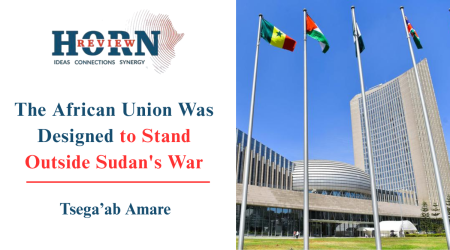
The African Union Was Designed to Stand Outside Sudan's War
Every time Sudan's war comes up in public discussion, mentioning...
2
Sep
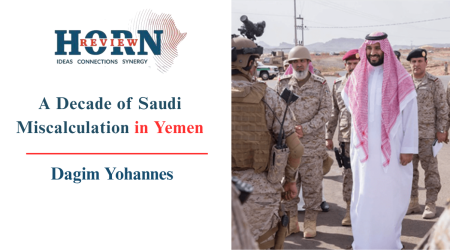
A Decade of Saudi Miscalculation in Yemen
On March 26, 2015, Mohammed bin Salman, then a thirty-year-old...
31
Aug
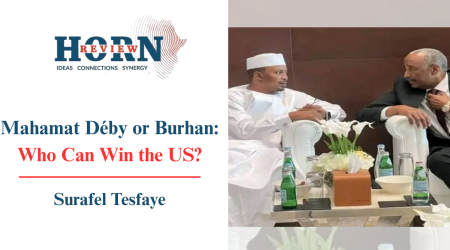
Mahamat Déby or Burhan: Who Can Win the US?
On August 20, 2026, Sudanese warplanes and drones pursued a...
27
Aug
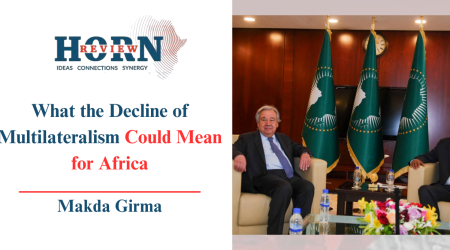
What the Decline of Multilateralism Could Mean for Africa
Multilateralism is weakening just as African states need it most....
19
Aug
Who Gets a Seat in Saudi Arabia’s Red Sea Security Order?
Saudi Arabia’s new maritime defence architecture exposes a contradiction at...
18
Aug
Asymmetric Attrition in Hormuz: Decoding the Escalation Against State Energy Assets
The attacks on ADNOC vessels in the Strait of Hormuz...
17
Aug
Egypt Skipped the Mecca Pact Because It Lacks the Leverage to Join
Egypt’s continued absence from the Mecca collective-defense pact reflects a...