The bilateral relationship between Ethiopia and Eritrea has been dominated by a deep and frequently unstable cyclical trend in the last thirty years. Rather than the early optimism that followed Eritrea’s breakaway in the early 1990s, the path has mostly been one of unrealized potential, punctuated by spasms of severe fighting, long periods of stalemate, and brief measures of rapprochement.
This protracted uncertainty has exacted a heavy price on the people of both nations, particularly Eritrea’s young people compelled by conscription and mass poverty, and generated an enormous quantity of instability across the wider Horn of Africa. Clarity around the fundamental drivers of this complex dynamic is essential to grounding sustained and effective means of pursuing a better, more secure future for the region.
Historically, the course of Ethiopia-Eritrea relations from the 1990s can be defined in large terms into four stages: initial cooperation, outright conflict (1998-2000), a long “no war, no peace” stalemate, and a similarly short reprise of friendship following the 2018 peace accord. All of the transitions have been marked by tension, often ending in profound regional anxiety.
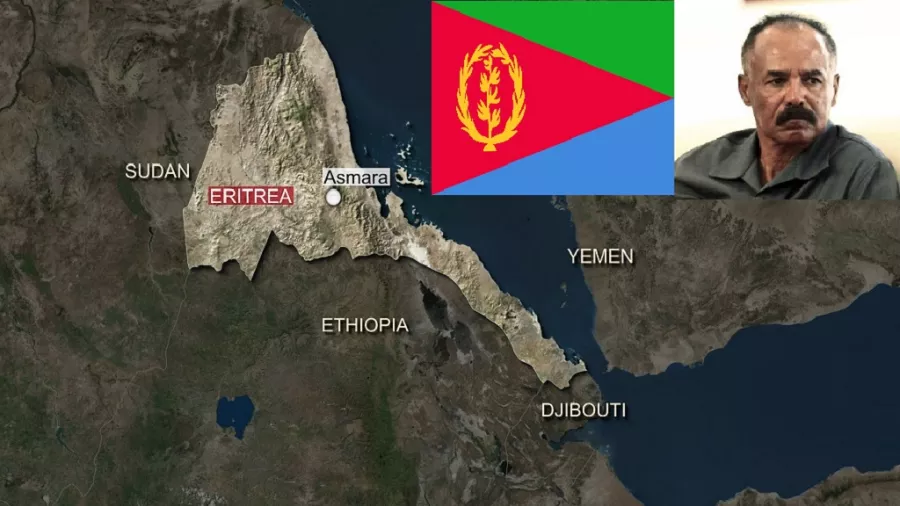
A key analytic challenge in this case stems from Eritrea’s ongoing perception of an existential threat from Ethiopia, and particularly in terms of access to the sea. This geopolitics asymmetry where Eritrea boasts a long coastline while Ethiopia remains landlocked has been a key point of contention. Despite Ethiopia’s repeated assertions of respect for Eritrean sovereignty, the context of past conflicts over territory, together with Ethiopia’s recent strategic pronouncements regarding sea access, is ongoing and continues to sustain Asmara’s historic deep-seated phobia.
This has weighed heavily on Eritrea’s national security policy, which prioritizes an assertive military posture and has caused its prolonged militarization as well as its internal policies of forced conscription and political repression, paradoxically accelerating its external isolation.
The current phase of this relationship is evidently conflictual and has put alarm bells ringing throughout the international community. As highlighted by the Clingendael Institute in its March 2025 alert note, “A dangerous frenemy: Averting a showdown between Eritrea and Ethiopia”,
Eritrea’s nationwide military mobilization in February 2025 has significantly escalated tensions with Ethiopia. This irritation can be partly explained by the geopolitical shift following the Pretoria Agreement between the Ethiopian Federal Government and the TPLF that might have been perceived by Eritrea as altering the regional power balance against it. Furthermore, Ethiopian Prime Minister Abiy Ahmed’s professed quest for seacoast access is perceived in Asmara as a baldly strategic threat and helps feed the report’s grim conclusion that full-scale war between the two nations is a valid danger.
The potential consequences of a full-scale war between Ethiopia and Eritrea are catastrophic and extend far beyond their border. Such a conflict would be catastrophically costly in terms of human lives, further deepening Eritrea’s twenty-year path of militarization, oppression, and underdevelopment. Regionally, it would unleash horrific consequences for the volatile Horn of Africa, which is likely to reignite other dormant conflicts and initiate fresh humanitarian crises.
Globally, the escalation of such a war would present a threat to the world’s busiest shipping lanes, particularly through the Bab-el-Mandeb Strait, impacting a large proportion of the world’s trade, an estimated 20 percent of overall EU trade (12 percent of world trade), valued at USD 1 trillion annually. Aside from that, it would automatically heighten migratory flows from the Horn to Europe and the Arabian Gulf and would add to present humanitarian and security concerns.
The sustainability of the 2018 peace deal, while initially hopeful, remains precarious. Eritrean military intervention in the conflict of Tigray, and subsequent collapse of an entirely open and institutionalized withdrawal, has added to fears of return to violence. For sustained peace and stability, there needs to be a more institutionalized and participatory framework of managing this relationship.
This framework should comprise regular, senior bilateral talks, joint commissions for border demarcation and resource management, and confidence-building measures that lead to transparency and mutual trust. Eritrea’s current diplomatic isolation, characterized by moves like the US visa ban on its citizens, is obviously a result of its strained relationship with Ethiopia.
Historically, periods of improved relations with Ethiopia have always followed with increased Eritrean diplomatic power and international engagement, as in the periods of the past Prime Minister Meles Zenawi and now Prime Minister Abiy Ahmed. This suggests a strategic imperative for Eritrea to stabilize its relations with Ethiopia because its international image, economic advancement, and ability to integrate regionally are all inextricably linked to this critical bilateral relationship.
While the primary responsibility to negotiate this complex relationship lies with the Eritrean government, regional and international actors have a critical role in de-escalation and securing lasting peace. Global stakeholders should proactively encourage Ethiopia and Eritrea to address the underlying causes that have been destabilizing their relationship, including unresolved border issues, Eritrea’s strongly ingrained perception of Ethiopia as a constant threat, and Ethiopia’s strategic pursuit of access to the sea.
The African Union (AU) must actively engage Eritrea in the framework of dialogue concerning the application of the Pretoria Agreement, leveraging its regional clout and expertise with conflict resolution. Principal external actors with significant interests and stakes in the region, such as Saudi Arabia, the UAE, and China, need to utilize their economic and political power over both parties to demand de-escalation and negotiations. Concurrently, the US and the EU need to back these diplomatic efforts by using their own economic power and diplomatic channels to facilitate peaceful resolution. Apart from averting a catastrophic war, such concerted action on de-escalation and the potential cementing of existing relations are invaluable to both Eritrea and Ethiopia, fostering regional stability as well as economic unification.
Lastly, a hard look at past history and on both sides an acceptance to engage in having tough but necessary conversations are most crucial. For the Eritrean government, this could be a serious consideration of the historical grievances and fears that have shaped its foreign policy, including contentious circumstances of its split with Ethiopia and current border conflicts. One path to genuine reconciliation and trust-building could be through accepting historical complexity and negotiating dramatic, visionary concessions focusing on shared benefit.
While a “confederal structure” is a very bold suggestion, it is the kind of outside-the-box thinking that can make more people-to-people interaction, common economic spaces, and regional integration possible, beyond the zero-sum game that has defined their relationship for much too long. To move away from a pattern of animosity to one of common benefit, there is a necessity for prioritizing short-term de-escalation.
By Markos Haile Feseha and Bethelhem Fikru,Researchers,Horn Review
Reference:
- Clingendael: Netherlands Institute of International Relations. “A dangerous frenemy: Averting a showdown between Eritrea and Ethiopia.” March 2025.