
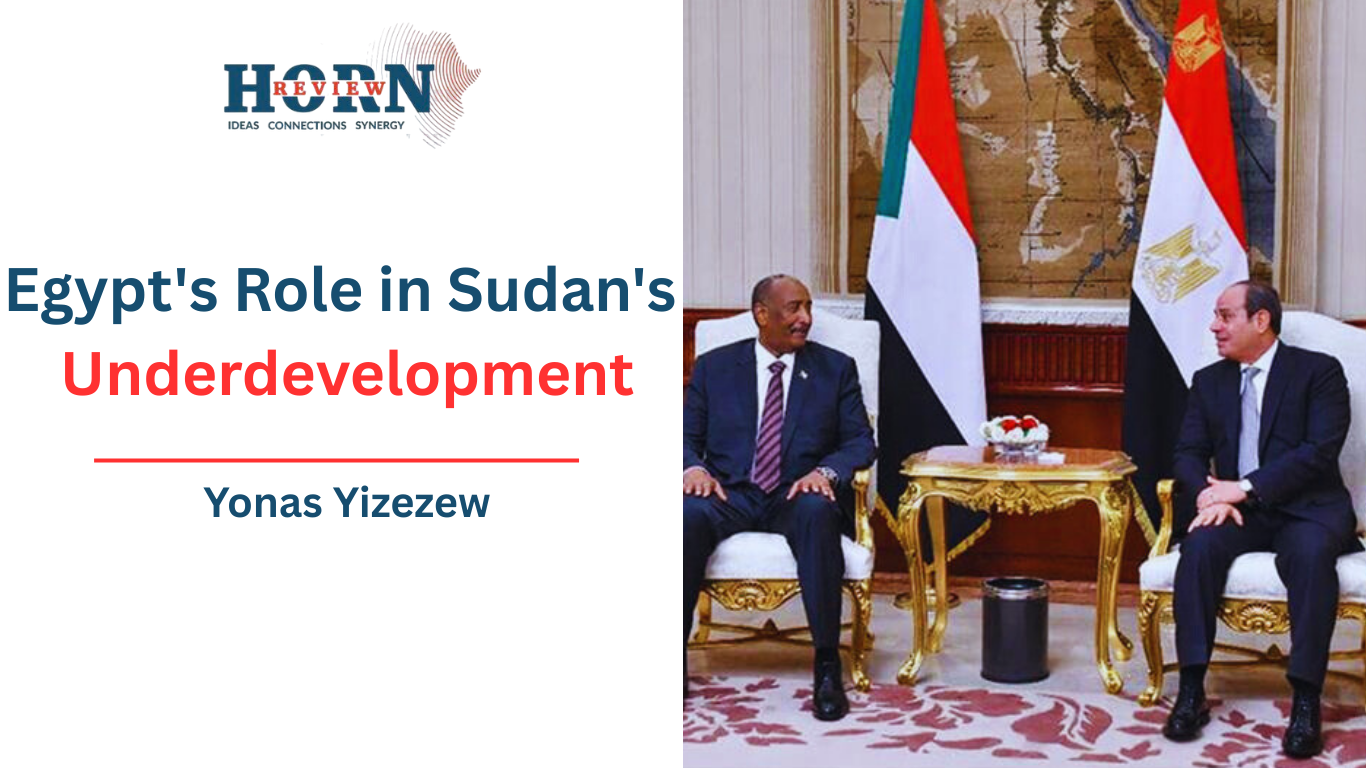
Egypt’s Role in Sudan’s Underdevelopment
On 28 June 1924, the leader of Egypt’s nationalist Wafd Party, Prime Minister Sa‘d Zaghlul Pasha, stated in the Egyptian Chamber of Deputies,
“This is our situation in respect to the Sudan: We spend money there, we shed blood there, we endure hardships there, and our fathers endured such before us, and we draw life from that river which pours forth from the highest reaches of the Sudan. In any case, it is impossible, unless we were a lifeless people, that we leave one speck of the Sudan for others.”
For more than a century, Egypt’s approach toward Sudan has combined involvement in development with sustained efforts to shape, direct, and constrain it according to downstream strategic priorities. From the colonial condominium period to contemporary civil war dynamics, Cairo has participated in financing, engineering, and promoting major agricultural and hydraulic schemes inside Sudan. Yet these interventions were rarely neutral acts of partnership. They were embedded within a framework that prioritized Nile water security, political influence, and long-term leverage over Sudanese sovereign autonomy.
The cumulative effect has been paradoxical. While Egypt contributed to certain infrastructure projects and agricultural expansion, those contributions were structured in ways that protected Egyptian allocations, limited Sudan’s independent decision-making, and conditioned development on compliance with downstream interests. What emerges is not a simple narrative of assistance or obstruction, but a patterned system in which Sudan’s development was permitted, encouraged, or restricted depending on its compatibility with Egyptian water hegemony and regional strategy.
Britain’s Imposition and Egypt’s Inherited Entitlement (1899-1956)
The 1899 Anglo-Egyptian Condominium Agreement established joint governance that was, in practice, British control with Egyptian financing. The agreement formally designated territory south of the twenty-second parallel as Anglo-Egyptian Sudan, with sovereignty theoretically shared between the Khedive and the British Crown. However, in practice the structure of the Condominium ensured full British control over Sudan.
Egypt’s role was primarily financial rather than administrative. During the Anglo-Egyptian Condominium period, Sudan remained dependent on Egyptian subsidies for many years, with the Egyptian treasury bearing the greater part of the expense of the Sudan campaigns. Crucially, this financing was not voluntary Egyptian development assistance but British-imposed obligation.
The Gezira Scheme, established in 1925 as the world’s largest irrigation project, exemplifies this dynamic. British engineers designed the project to produce long-staple cotton for Britain mills, financed largely through Egyptian treasury bonds. Egypt’s “reward” was the implicit understanding that Sudanese Nile waters would remain available to Egyptian agriculture, an arrangement formalized in the 1929 Nile Waters Agreement, which granted Egypt veto power over upstream projects and allocated 48 billion cubic meters annually to Egypt versus only 4 billion to Sudan.
This arrangement established the template for future Egyptian behavior: Sudanese development was acceptable only insofar as it served Egyptian interests. When Sudanese nationalists in the 1940s began advocating for irrigation expansion, Egyptian politicians responded with alarm. During Sidqi’s premiership in 1946, he led negotiations with Britain that produced the draft Bevin–Sidqi Protocol, which addressed troop withdrawal and the future of Sudan. Egypt’s position rested on the doctrine of the “unity of the Nile Valley,” asserting that Sudan and Egypt formed a single political entity under the Egyptian crown.
At the time, Egyptian officials consistently framed Nile waters as existential to national survival and opposed any independent Sudanese hydraulic development that might affect downstream flow. Cairo’s approach favored development in Sudan only within arrangements that ensured Egyptian oversight and protected its water security.
The decolonization period (1952-1956) further revealed Egyptian intentions. Gamal Abdel Nasser initially supported “unity” between Egypt and Sudan under the slogan “Unity of the Nile Valley,” a formulation widely interpreted in Sudan as implying Egyptian dominance or potential annexation. When Sudanese nationalists rejected this in favor of independence, Nasser reluctantly acquiesced but worked to ensure that post-independence Sudan would remain within Egypt’s sphere of influence. Egyptian intelligence began cultivating relationships with Sudanese military officers and politicians who would prove amenable to Cairo’s interests—a pattern that would repeat for decades.
Post-Independence: The 1959 Agreement and Systematic Obstruction (1956-2011)
Following Sudan’s independence on January 1, 1956, negotiations over Nile allocation proceeded slowly. According to detailed research on this period, Negotiations made little progress between 1954 and 1958, even given Sudan’s independence in 1956. The breakthrough came only after military intervention: It was only after pro-Egyptian General Ibrahim Abboud took power in a coup in 1958 did negotiations move towards resolution. Following the Suez Crisis and Egypt’s decision to build the Aswan High Dam, Nasser needed Sudan’s cooperation to inundate Nubian lands and increase Egypt’s water storage capacity.
The agreement, signed by General Ibrahim Abboud’s military regime, allocated 55.5 billion cubic meters to Egypt and 18.5 billion to Sudan from the Nile’s total flow, while completely ignoring upstream nations. Crucially, Sudanese technical experts opposed the agreement. In a commentary published in Sudan Tribune, Ali Abdella Ali noted that, at the time, some Sudanese experts argued that the allocation undervalued Sudan’s future agricultural potential and effectively locked the country into a position of long-term water scarcity. Abboud, financially dependent on Egyptian aid and politically aligned with Nasser’s pan-Arabism, overruled his own experts and signed the agreement in Cairo in 1959. This pattern of Egyptian pressure on pliable Sudanese leaders to accept arrangements detrimental to long-term Sudanese development became standard operating procedure.
Egypt’s pattern of obstructing Sudanese development that might increase water consumption is documented but requires careful examination. A 2019 Bloomberg investigation reported that “Egypt is deeply concerned about the prospect of large-scale agricultural expansion upstream” and that “according to Fadil and other Sudanese officials, the country has conspired to kill off projects in the past.” The article further notes Egyptian efforts to neuter “the Arab Organization for Agricultural Development, a branch of the Arab League, headquartered in Khartoum that was established to support agriculture in Sudan.
During the Nimeiri era (1969-1985), Egypt’s interference reached new heights. Nimeiri’s close relationship with Anwar Sadat created what Egyptian commentators called the “integration strategy”—effectively treating Sudan as Egypt’s agricultural hinterland. The 1974 Integration Charter envisioned Sudanese agriculture producing food for Egyptian consumption, with Egypt providing capital and expertise. In practice, this meant Egyptian private sector acquisition of vast Sudanese agricultural lands while opposing Sudanese government projects that might increase domestic water consumption.
There are also some reports indicating in 2010 that an Egyptian ambassador made a statement encapsulating Cairo’s attitude toward its southern neighbor: ‘if anyone wishes to intervene in Sudanese affairs has to go through Egypt’s door first!!’
This declaration, remarkable for its colonial overtones in the 21st century, reveals the paternalistic framework through which Egypt has historically approached Sudan. Sudan was considered not as a sovereign equal, but as a client state whose independence exists only within Cairo-approved parameters. While Egyptian officials routinely invoke the rhetoric of “brotherly ties” and “shared Nile destiny,” the historical record shows several examples that challenge this claim. It is one of systematic obstruction of Sudanese development, interference in internal affairs, and the subordination of Sudanese sovereignty to Egyptian water security interests.
The Contemporary Period: Civil War, Regional Competition, and Persistent Interference (2011-2026)
Sudan’s 2011 partition following South Sudan’s independence fundamentally altered regional dynamics while intensifying Egyptian concerns. The loss of oil revenues and agricultural lands in the South made northern Sudan more dependent on Nile-based agriculture precisely as regional competition for influence intensified. Egypt’s response combined traditional obstruction with new forms of interference adapted to the changed landscape.
The 2013 opening of the Grand Ethiopian Renaissance Dam (GERD) construction marked a watershed moment. Egypt’s vociferous opposition to GERD—including threats of military action by then-President Mohamed Morsi in 2013—demonstrated Cairo’s determination to maintain Nile hegemony. Sudan’s initial support for GERD under President Omar al-Bashir created significant Egyptian anxiety. Egypt responded by cultivating alternative Sudanese political actors, including military factions and opposition groups, who might prove more amenable to Egyptian interests.
The 2019 Sudanese revolution and al-Bashir’s overthrow created new opportunities for Egyptian interference. Egypt, along with UAE and Saudi Arabia, moved quickly to influence the transitional government. Egyptian intelligence Chief Abbas Kamel made several visits to Khartoum between 2019 and 2021, far more than any other regional intelligence chief.
Egypt’s position on the current SAF-RSF conflict (which began in April 2023 and continues into 2026) reveals its priorities with stark clarity. While initially calling for ceasefire and dialogue, Egypt has provided support to the Sudanese Armed Forces (SAF) led by Abdel Fattah al-Burhan, viewing SAF as the more institutionally stable actor likely to maintain centralized control compatible with Egyptian interests and it also mirrors its own military-centric governance model. Recent investigations confirm Egypt has escalated its role in Sudan’s civil war by hosting and launching Turkish-made drones from its territory to strike RSF targets, marking a shift from mediation and covert support to direct military involvement.
Furthermore, Egypt opposes the agricultural dimension of foreign involvement in Sudan’s civil war. UAE, Saudi Arabia, Qatar, and Turkey have all expressed interest in post-conflict agricultural development projects in Sudan. Various Egyptian officials in various settings stated that sustainable peace in Sudan requires careful management of natural resources, particularly water resources that affect downstream states. This coded language reveals Egyptian concern that post-war reconstruction might include massive agricultural expansion funded by wealthy Gulf States, potentially consuming water Egypt considers its own.
Ethiopia’s Confrontation with Egyptian-Controlled Sudan
If current trends continue, Ethiopia faces a future of perpetual confrontation with an Egyptian-influenced or controlled Sudanese government. This scenario carries profound implications for regional stability, Ethiopian development, and the future of the Nile Basin.
Egypt’s strategic imperative is maintaining Nile water hegemony, which requires controlling or neutralizing both upstream (Ethiopian) and mid-stream (Sudanese) development. An independent Sudan pursuing its own development interests—particularly if those interests aligned with Ethiopian GERD electricity availability for Sudanese irrigation—would fundamentally be perceived as a threat by Egypt. Therefore, Egypt has strong incentives to ensure that whatever government emerges from Sudan’s current crisis remains within Cairo’s sphere of influence. With Ethiopia emerging as the principal upstream power in the Nile Basin, Egypt’s consolidation of influence in Sudan forms a core component of a broader containment strategy designed to constrain Addis Ababa’s strategic space in both the Horn of Africa and the Red Sea corridor.
Ethiopia’s strategic imperative is exactly opposite: utilizing GERD to generate electricity for domestic development and export, which requires markets and partners. Sudan is Ethiopia’s natural partner—geographically proximate, electricity-deficient, and possessing complementary agricultural potential that could benefit from reliable power for irrigation pumps. A Sudanese government free to pursue this partnership would provide Ethiopia with economic benefits and strategic depth.
These conflicting imperatives create inherent confrontation. If Egypt successfully cultivates a Sudanese military government (likely SAF-dominated) that maintains centralized control while deferring to Egyptian positions on Nile issues, Ethiopia should prepare its foreign policy according to that, requiring a different approach. This government receives Egyptian financial support, military assistance, and diplomatic backing in exchange for limiting agricultural expansion, opposing Ethiopian partnership proposals, and maintaining existing Nile agreements. Ethiopia faces a hostile neighbor which would be against GERD, supporting Egyptian GERD opposition, and potentially hosting Egyptian military assets near Ethiopian borders.
For Ethiopia, a Sudanese government (or governments) subordinate to Egyptian interests, systematic opposition to Ethiopian-Sudanese partnership, and potential security threats along Ethiopia’s western flank. For instance, amid the ongoing tensions between the Federal Government of Ethiopia and the TPLF in northern Ethiopia, including the involvement of Eritrean forces, reports indicate that Sudan may also be implicated in the escalation. Some reports suggest that a TPLF unit referred to as “Army 70” has been training on Sudanese territory under the supervision of the Sudanese Armed Forces. This development would introduce an additional layer of complexity along Ethiopia’s western flank.
First, it would likely intensify tensions between Sudan and Ethiopia. In 2022, while the Ethiopian government was engaged in active conflict with the TPLF, Sudanese forces took control of parts of the al-Fashaga border area, a long-contested agricultural zone. Any further security entanglement linked to northern Ethiopia could transform the disputed border into a more direct arena of confrontation.
Moreover, such a dynamic could create an opening for Egypt to expand its strategic leverage vis-à-vis Ethiopia. Given existing disagreements over Nile waters and broader regional competition, heightened Sudan–Ethiopia friction could indirectly facilitate Cairo’s broader effort to constrain Ethiopia’s room for maneuver in the Nile Basin and the wider Horn of Africa.
In another scenario, if the conflict in Sudan persists and the country remains fragmented under competing armed factions, Ethiopia needs to recalibrate its foreign policy approach toward its western neighbor. A prolonged power vacuum or divided authority in Khartoum would complicate border management, security coordination, and diplomatic engagement.
In this sense, these developments demonstrate the difficult strategic environment Ethiopia faces with regard to Sudan. Rather than dealing with a coherent state counterpart, Addis Ababa risks navigating a protracted quagmire marked by instability, shifting alliances, and unpredictable cross-border security dynamics.
Breaking the Pattern Requires Recognizing It
Egypt has consistently prioritized control over Sudanese development policy, particularly regarding Nile waters, above respect for Sudanese sovereignty. From the British-imposed Condominium financing, through the coerced 1959 agreement, to contemporary civil war interventions, Egyptian policy follows consistent logic: Sudan may develop only within parameters set by Egyptian water security requirements.
Egyptian rhetoric about “support” and “brotherhood” serves to obscure this reality. The actual record shows systematic opposition to Sudanese agricultural expansion, obstruction of dam construction, interference in constitutional processes, cultivation of dependent client leaders, and diplomatic isolation of Sudan from alternative partnerships. When Egyptian ambassadors declare that access to Sudan runs “through Egypt’s door first,” they are not being arrogant—they are being honest about how Egypt views the relationship.
For Sudan’s future development, the critical question is whether Sudanese political actors can break this pattern. This requires several difficult steps. First, acknowledging that Egyptian “assistance” historically served Egyptian interests rather than Sudanese development; second, building alternative partnerships that reduce Egyptian leverage; third, reforming Sudanese military and political institutions to resist foreign manipulation; and fourth, developing independent technical capacity to assess and pursue Sudanese interests in Nile negotiations.
For Ethiopia, the implications are immense. An Egypt-controlled Sudan represents a permanent hostile presence on western borders and an obstacle to mutually beneficial economic integration. Ethiopia must either accept this reality and prepare for permanent confrontation, achieve the unlikely goal of securing Egyptian accommodation, or proactively manage its foreign policy and plan its approach accordingly.
The Nile Basin would transform from managed tension to open strategic contestation. Egypt’s determination to preserve hegemony through control of Sudan, regardless of Sudanese sovereignty or regional stability costs, forces all basin states to choose between submission and resistance. The decade ahead will likely determine whether the Nile Basin transitions to equitable multilateral governance or remains trapped in colonial-era hierarchies maintained through persistent interference and domination.
The pattern is evident, and its recognition constitutes the first step toward effecting change. Whether the political will exists in Khartoum, Addis Ababa, and other basin capitals to actually undertake that change remains the region’s defining question.
By Yonas Yizezew, Researcher, Horn Review

RELATED
Posts
12
Oct
The Recurring Script of Eritrea’s Invasion-Victim Cycle
In the Horn of Africa, history under Isaias Afwerki does...
12
Oct
Under the Banner of Red Sea Security, Egypt Encircles Ethiopia
Reports of Egyptian naval movements toward the southern Red...
12
Oct
Egypt's Attack on Sudan's Gold Mines and the Long Road That Led to It
The airstrikes that tore through the artisanal gold mining...
9
Oct
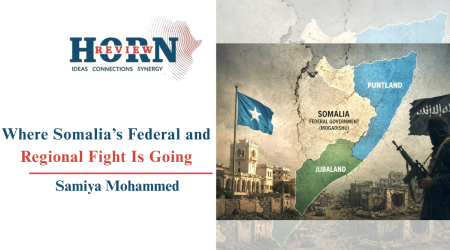
Where Somalia’s Federal and Regional Fight Is Going
The 2012 federal settlement was less a constitutional order...
9
Oct
Eritrea’s Post-Pretoria Strategy and the Escalation in Ethiopia
Our latest report examines Eritrea’s post-Pretoria trajectory and how selective...
8
Oct
The Houthi-al-Shabaab Nexus and the Emerging Security Architecture of the Gulf of Aden
The growing relationship between Yemen’s Houthi movement and Somalia’s al-Shabaab...
7
Oct
“Decaffeinated Sovereignty”: Eritrea’s One-Way Street with Ethiopia
There is a peculiar contradiction at the heart of Eritrea’s...

7
Oct
Leaked Documents Allege Sudanese Army Weapons Pipeline to TPLF-Aligned Forces as Tigray War Reignites
Leaked documents alleging a Sudanese army weapons pipeline to TPLF-aligned...
7
Oct
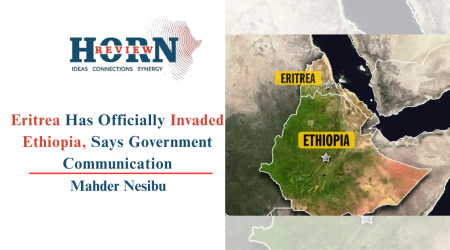
Eritrea Has Officially Invaded Ethiopia, Says Government Communication
Ethiopian Government Formally Condemns Eritrean Territorial Incursion as Its Forces...
7
Oct
Turkey, Somalia and the Transactional Reading of Alamein
The Alamein Declaration functions less as a coherent framework...