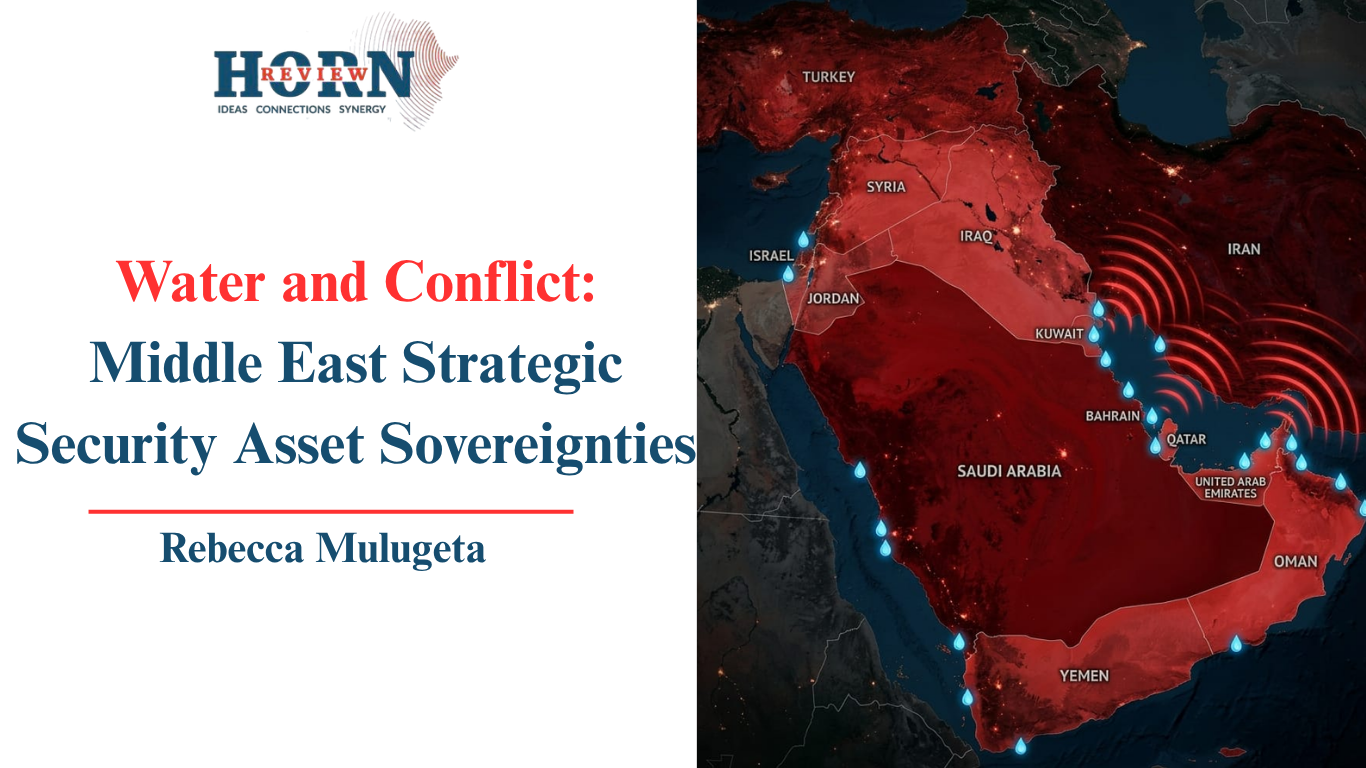
Water is a security asset in the Middle East in much the same way oil is, and it is increasingly shaping the dynamics of contemporary conflict. What makes the current moment particularly unsettling is that the weaponization of water has shifted from a historical pattern to a systematic and existential threat. Controlling water to coerce an adversary is not new, but today’s scale of dependency and the immediacy of its impact are unprecedented, especially within the fragile hydro-politics of the Gulf. Nowhere is this shift more evident than in the strategic posturing of Iran. The Iranian leadership has increasingly signaled its intent to use “water war” as a primary mechanism to leverage regional power.
History offers many examples of water systems being dismantled or diverted to influence military outcomes. Yet today, these systems have moved beyond tactical assets. They are becoming instruments that shape not only the battlefield, but the survival of entire civilian populations. Across the Gulf, states such as Saudi Arabia, the United Arab Emirates, Kuwait, and Qatar have built modern life on desalination. This is not a supplementary system; it is the backbone of daily existence. Entire populations rely on a continuous cycle in which seawater is extracted, processed through energy-intensive facilities, and distributed across vast urban networks. What appears to be resilience is, in reality, a highly centralized form of dependence. Water has been industrialized, concentrated, and embedded in infrastructure that must function without interruption.
What distinguishes the present Gulf context is precisely this near-total dependence on desalination. In earlier periods, water systems were tied to broader ecological or river-based networks. They could be damaged, but not entirely replaced or centralized. In countries like Saudi Arabia or the United Arab Emirates, water is no longer part of a natural cycle that can be partially restored. It is produced, and it flows through a limited number of highly technical facilities that must operate continuously. This creates a level of exposure that is historically unprecedented.
It is within this context that the idea of a “water war” begins to take shape. Not as a dramatic replacement of oil conflict, but as a transformation in how pressure is applied within existing rivalries. In any escalation involving Iran and Gulf states, the logic of targeting may evolve. Oil infrastructure will remain important, but water systems introduce a different form of leverage. They allow pressure to be applied not through markets or revenues, but directly through societal stability.
Here, rhetoric and signaling from Iran take on added weight. Iranian strategic thinking has long emphasized asymmetric tools, ways to offset conventional disadvantages by targeting vulnerabilities rather than strengths. In a region where desalination underpins survival even the suggestion that such infrastructure could fall within the spectrum of retaliation introduces a new level of deterrence and risk. It reflects an awareness that leverage now lies not only in oil shipments or maritime disruption, but in the systems that sustain daily life.
At the same time, water has long been entangled with conflict in the Middle East itself. During the Six-Day War, control over water resources, particularly those linked to the Jordan River basin, formed part of broader strategic calculations. Water diversion projects and disputes over access were not the sole drivers of war, but they were a critical layer beneath territorial and political tensions. Control over water meant control over population sustainability and long-term viability.
Decades later, during the Gulf War, the targeting of infrastructure showed how modern warfare increasingly affects civilian systems. While the focus remained on military and energy assets, the destruction of electricity grids had cascading effects on water treatment and distribution. More recent conflicts in Iraq and Syria have made this relationship even more direct. Armed groups have seized dams, diverted rivers, and cut off supplies to entire regions. In Iraq, control over key dams became a strategic objective, allowing actors to regulate water flow and even threaten flooding or deprivation. In Syria, water infrastructure in cities like Aleppo and Damascus was repeatedly manipulated with supply cuts used to pressure civilian populations and force concessions. These were not incidental outcomes of war, but calculated strategies built on dependency.
Beyond the Middle East, history reinforces this pattern. During World War II, both Allied and Axis powers targeted infrastructure linked to water and sanitation, recognizing its importance for civilian resilience. In the Vietnam war, bombing campaigns damaged irrigation systems and dikes, disrupting agricultural production and water management. Across these cases, the logic is consistent: when water systems underpin societal stability, they become tools of pressure.
The implications extend far beyond the Gulf. The Middle East is deeply connected to the Horn of Africa through trade, investment, and security engagement. Countries such as Ethiopia, Somalia, and Djibouti are part of a wider system in which Gulf states play a significant role. Ports, logistics corridors, and financial flows bind these regions together in ways that are often underestimated.
If water vulnerability begins to shape strategic priorities in the Gulf, the effects will ripple outward. States facing heightened internal risk are likely to turn inward like they do when their oil sources are hit. Resources that might have supported external engagement whether through investment, military presence, or diplomacy, may instead be redirected toward domestic stability. This would alter patterns of engagement in the Horn of Africa, where Gulf involvement has become increasingly influential.
Trade flows could also feel the impact. The Gulf serves as a central hub for global shipping, including goods destined for East Africa. If tensions escalate and infrastructure becomes a target, even indirectly, perceptions of risk alone could disrupt these flows. supply chains may become less predictable. For countries in the Horn, this would translate into higher costs, delays, and potential shortages.
As a result, internal dynamics within the Horn could shift. Reduced Gulf engagement may open space for new actors or expose existing vulnerabilities. Economies reliant on trade and external investment could face added strain, while political dynamics may become more fluid as governments respond to changing external conditions. In this sense, the strategic repositioning of water in the Middle East carries consequences that extend into the security and development trajectories of neighboring regions.
At a broader level, the emergence of water as a central strategic concern challenges how conflict itself is understood. Traditional frameworks focused on territory, ideology, or resource competition need to expand to account for infrastructure dependency and systemic vulnerability. Water does not fit neatly into existing categories. It is not traded like oil, nor confined to fixed geographic features. It is embedded in systems that sustain everyday life, making its disruption both a strategic act and a humanitarian crisis.
This dual nature complicates deterrence. States must weigh not only the immediate tactical value of targeting water infrastructure, but also the wider consequences for escalation and international response. The line between acceptable and unacceptable targets becomes increasingly blurred, raising the risk of miscalculation in an already tense region. What is emerging is not a simple shift from oil wars to water wars, but a layering of new vulnerabilities onto existing rivalries. Oil will continue to matter shaping markets and alliances. But water introduces a different kind of pressure, one that operates closer to the level of human survival. It shortens the distance between conflict and consequence making outcomes more immediate and less predictable.
For the Middle East this marks a shift from a geopolitics of wealth to a geopolitics of survival. For the Horn of Africa, it points to a future where external dynamics grow more volatile. And for the international system, it shows the need to rethink how critical resources are protected and integrated into security planning. What is changing is its strategic meaning of Water. In a region where it is produced rather than found, dependent on systems rather than seasons, and vulnerable to disruption rather than simple contestation, water is becoming something else entirely. Not just a resource, but a fault line.
By Rebecca Mulugeta, Reseracher, Horn Review