
26
Mar
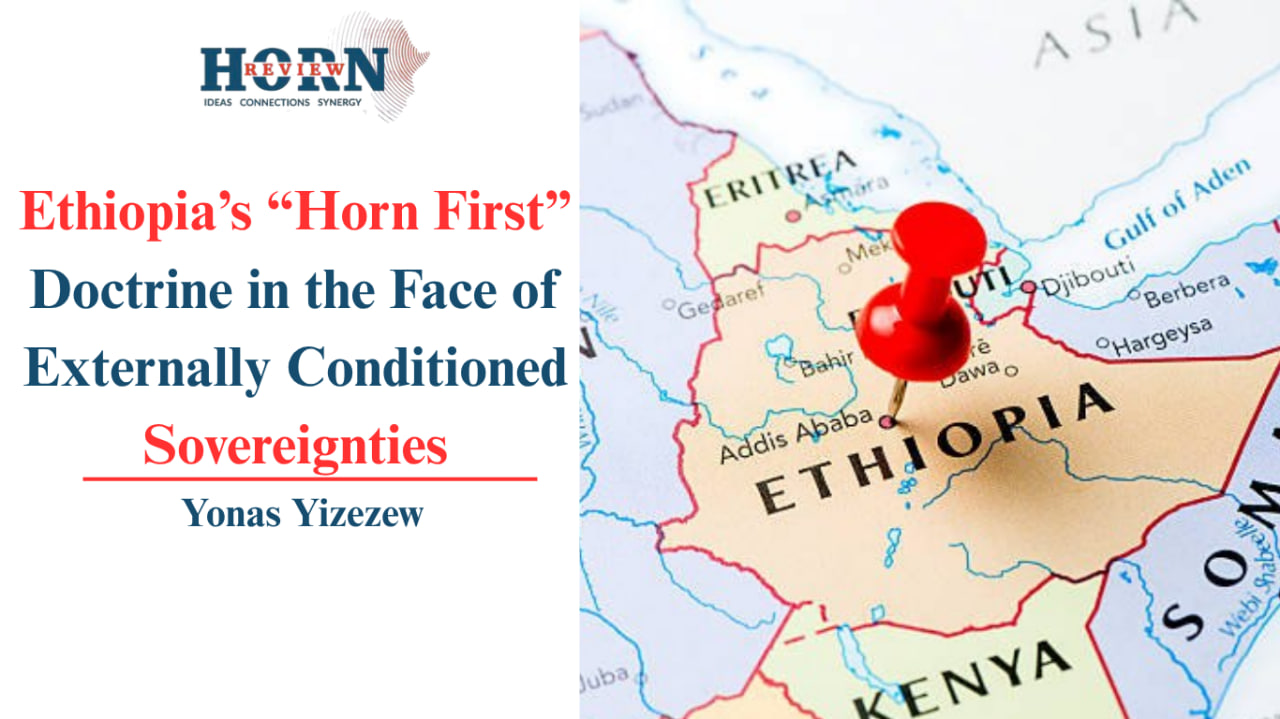
Ethiopia’s “Horn First” Doctrine in the Face of Externally Conditioned Sovereignties
The geopolitical landscape of the Horn of Africa is shifting substantially, reshaping the strategic environment in which Ethiopia conducts its regional policy. States across the Horn of Africa increasingly interact with a growing number of external powers whose economic resources, military capabilities, and diplomatic ambitions extend deep into the region’s political systems. The result is a strategic landscape in which neighboring governments continue to maintain sovereignty yet operate within environments sometimes shaped and heavily influenced by foreign engagement.
This transformation complicates Ethiopia’s regional strategy, as its engagement with these countries must account for the foreign actors deeply embedded within their political and security structures. Historically, Addis Ababa managed its relations with neighboring states through regional institutions, bilateral diplomacy, and its position as a key provider of economic and security support in the region. Ethiopian forces played central roles in regional stabilization efforts, particularly in counterinsurgency operations against Al-Shabaab in Somalia. In many cases, Ethiopia’s geographic proximity, cultural affinity, economic and military capacity created a level of strategic leverage in regional affairs.
In the current regional context, Ethiopia contends with an expanded footprint of external actors, including Egypt, Turkey, Saudi Arabia, Qatar, the United Arab Emirates, and other middle and global powers. Their engagement ranges from military bases and security partnerships to infrastructure investment, ideological alignment, intelligence cooperation, and political patronage and financing. Even though these engagements do not currently eliminate the sovereignty of regional states, they increasingly shape the strategic environment within which these governments make decisions.
Conceptual Framework: Externally Conditioned Sovereignty
Understanding this evolving regional order requires moving beyond the traditional dichotomy that classifies states either as independent actors or as client states. With the partial exception of Somalia and Sudan, the latter of which is currently in civil war, most countries in Ethiopia’s neighborhood retain functioning state institutions and the capacity to pursue autonomous policies. Yet the scale of external engagement has produced conditions in which foreign actors gain increasing leverage over key strategic sectors.
The concept that best captures this dynamic is ‘externally conditioned sovereignty’. Under this condition, states remain formally sovereign, yet their political and strategic choices become influenced by external actors embedded within their security systems, economic structures, or diplomatic networks. Sovereignty therefore continues to exist, but it operates within an environment saturated by external interests.
Since 2018, Ethiopia has pursued a Horn First foreign policy, prioritizing proactive regional engagement and strategic influence in the Horn of Africa. In following this approach, Addis Ababa must carefully assess the degree of autonomy its neighbors retain, given the deep and growing influence of external actors within their political, security, and economic systems. This perspective shapes Ethiopia’s regional strategy, requiring it to navigate each neighboring state’s externally conditioned sovereignty when advancing its interests and initiatives.
Within the Horn of Africa, this externally conditioned sovereignty manifests through several distinct patterns with each pattern reflecting different degrees and mechanisms of foreign influence. When examined through specific country cases, these patterns reveal how external engagement increasingly shapes the region’s strategic landscape and how it may affect Ethiopia’s national interests.
Somalia: Strategic Penetration and the Erosion of a Security Partner
The situation in Somalia is best understood through the concept of strategic penetration, which occurs when external actors embed themselves within a state’s political, security, or fiscal systems without eliminating its formal sovereignty, thereby shaping key decision-making processes. In Somalia, external actors are not merely partners, as they have become integrated into the country’s security and fiscal architecture. When foreign funding covered soldiers’ wages or when training bases operated by external powers became permanent fixtures in Mogadishu, decision-making began to reflect the interests of these patrons as much as domestic considerations. Consequently, even routine developments, such as maritime agreements or troop rotations, quickly draw in actors from Ankara, the Gulf capitals, and, more recently, Cairo.
This makes Somalia the most acute example of externally conditioned sovereignty in Ethiopia’s neighborhood, and arguably the country where the consequences for Ethiopian security interests have been most immediate. For more than a decade, Ethiopia has been the indispensable external actor in both Somali and the region’s security. Ethiopian forces entered Mogadishu in 2006 to dislodge the Islamic Courts Union and subsequently provided the backbone of regional stabilization efforts under the African Union framework. This role gave Addis Ababa unmatched political influence in Mogadishu and made Ethiopia the effective guarantor of the fragile state-building project that successive Somali governments were attempting.
That relationship has been progressively hollowed out by the arrival of a dense constellation of competing external actors. The United Arab Emirates moved early and decisively, at one stage financing significant portions of Somalia’s security sector including direct payments to segments of the national army and police. This arrangement illustrated with particular clarity how external financing can penetrate the core institutions of state authority in ways that shift the loyalties of those institutions toward the patron. This relation soured in early 2026, prompting Somalia to cancel all agreements with Abu Dhabi after accusing it of sovereignty violations, such as facilitating a Yemeni separatist leader’s transit through Somaliland and implicitly facilitating the recognition of Somaliland by Israel. However, the Emirates continues to maintain influence in the federal member states.
This rift accelerated Somalia’s pivot toward a coalition including Egypt, Turkey, Saudi Arabia, and Qatar, exemplified by a January 2026 military pact with Saudi Arabia and Egypt aimed at Red Sea security and countering UAE influence. Qatar and Saudi Arabia have ramped up diplomatic and financial support amid Israel’s recognition of Somaliland, which drew condemnations and intensified aid inflows.
Turkey’s engagement with Somalia has become one of the most structurally significant in the region. The Turkish military training base established in Mogadishu in 2017, known as Camp TURKSOM, is among the largest overseas military facilities Ankara operates anywhere in the world. It has trained thousands of Somali soldiers and created an enduring institutional relationship between the Turkish military and Somalia’s armed forces that gives Ankara influence well beyond what its relatively modest financial investment would suggest. Turkey has simultaneously maintained an extensive humanitarian and infrastructure presence in Somalia that gives it deep political roots in Somali society. Qatar has cultivated close ties with the Somali presidency and has served at various points as a mediator in disputes between Mogadishu and federal member states, inserting itself into the constitutional architecture of Somali politics. Egypt, following the deterioration of relations between Addis Ababa and Mogadishu after Ethiopia’s maritime Memorandum of Understanding with Somaliland in 2024, moved with unusual speed to sign a military cooperation agreement with Somalia and began transferring weapons and military equipment to Mogadishu in what represented an explicit use of the Somali relationship as a tool in Cairo’s broader confrontation with Ethiopia.
The confidence with which Somali authorities moved in 2024 to challenge Ethiopia’s security role, demanding the withdrawal of Ethiopian troops from the African Union mission and aligning publicly with Cairo’s positions on regional security, must be understood partly as an expression of the political incentives created by this external architecture rather than simply as an exercise of Somali sovereign judgment. Somalia remains formally sovereign, but the political calculations shaping its decisions increasingly emerge from the strategic interests of external partners who view Somalia through the lens of their own regional rivalries. Although Somalia has at times sought to distance itself from Ethiopia, Ethiopia’s deep and sustained engagement with various Somali stakeholders has constrained the Hassan Sheik Mohammed’s government from fully opposing Ethiopian interests.
Nonetheless, for Ethiopia, the strategic consequence is that a country it once treated as a security dependent has been transformed into a platform from which adversarial powers can project influence and pressure. In engaging Somalia today, Ethiopia faces a landscape where external actors exert significant influence over Somali decision-making, altering the dynamics of bilateral interaction compared to the past and requiring Ethiopia to take these actors’ interests and influence into account.
Djibouti: Sovereignty Under Competitive Patronage
A second pattern is competitive patronage, which characterizes the strategic environment in Djibouti. In this arrangement, a state deliberately hosts multiple external actors and balances them against one another in order to maintain autonomy and maximize economic benefits. Djibouti’s location at the entrance of the Red Sea has turned it into one of the most militarized strategic nodes in the world.
Several major powers operate military installations in Djibouti, generating substantial revenue for the Djiboutian government and provide the country with diplomatic leverage in global politics. By allowing multiple powers to maintain a presence, Djibouti avoids becoming dependent on any single patron.
However, competitive patronage also produces an environment in which external actors gain structural influence over key sectors of the state. Ethiopia’s trade flows depend heavily on Djiboutian ports, creating deep infrastructural interdependence between the two countries. At the same time, Djibouti’s economic model relies heavily on port services connected to Ethiopian commerce. To reduce this dependency, Ethiopia is pursuing the establishment of a sovereign maritime access. In such an environment, Djibouti’s position on issues such as Ethiopia’s search for a sovereign maritime access may become intertwined with the interests of Djibouti itself and the external actors present within the country.
Djibouti itself might be cautious about Ethiopia acquiring its own sovereign maritime access, given the deep economic interdependence between the two countries and the potential loss of revenue Djibouti could face if Ethiopia secures a sovereign access. At the same time, this dependence is harmful to Ethiopia’s economy, reinforcing its vulnerability and creating leverage for external actors with aligned interests who may seek to limit Addis Ababa’s maritime autonomy. In this pattern Djibouti is in, sovereignty remains intact, yet the policy environment might become influenced and sometimes shaped by the interests of actors embedded within the country’s strategic infrastructure. This dynamic is one of the factors behind the United States’ concern over Djibouti’s increasing reliance on China.
Sudan: Internationalized and proxy-conditioned conflict
A third configuration is a fully internationalized and proxy-conditioned conflict, in which domestic sovereignty is heavily shaped and constrained by external actors across multiple dimensions. Sudan’s current war exemplifies this pattern, illustrating both internationalized civil war and competitive proxy warfare simultaneously. These frameworks complement each other: internationalized civil war explains how Sudan’s internal conflict is embedded within regional and global strategic competition, while competitive proxy warfare highlights how rival factions are actively sustained and leveraged by multiple external sponsors to advance their geopolitical objectives.
From the perspective of internationalized civil war, Sudan’s conflict cannot be analyzed as a purely domestic struggle because external powers have become structurally embedded in the balance of power. Egypt’s relationship with the Sudanese Armed Forces exemplifies this dynamic, not as mere influence but as direct operational control over critical military capabilities. Cairo has long maintained deep institutional links with the SAF, including intelligence cooperation, weapons transfers, and strategic coordination. In the current conflict, Egypt has gone further, reportedly conducting drone strikes from its own territory to directly shape battlefield outcomes in favor of the SAF. This level of involvement demonstrates that Cairo seeks to dictate Sudan’s strategic and operational decisions across the board, encompassing not only military actions but also internal governance, foreign policy alignments, and economic strategies.
At the same time, the SAF receives support from other external actors that bolster its operational capacity and strategic posture. Gulf states and regional powers provide funding, military equipment, and training, reinforcing Cairo’s influence while ensuring that the SAF remains embedded in a broader network of external sponsorship that shapes and heavily influence its battlefield and political decisions. The SAF’s autonomy is therefore heavily constrained, with major decisions increasingly conditioned by its backers’ priorities rather than domestic considerations.
The conflict also exemplifies competitive proxy warfare, where Sudanese factions function as instruments for external powers competing against each other. The RSF, under Hemedti, has received significant external backing in the form of funding, military equipment, and strategic support, including connections to gold trading networks and control over key infrastructure projects. This support has enabled the RSF to sustain operations, expand territorial control, and maintain logistical resilience despite ongoing military pressure from the Sudanese Armed Forces. The integration of financial resources, military technology, and strategic assets into the RSF’s operational capacity illustrates how external involvement continues to shape the trajectory of the conflict and reinforces Sudan’s status as a highly internationalized battlefield.
These two frameworks intersect in Sudan’s current crisis. Sovereignty of Sudan is co-constituted by external actors, with internal military and political outcomes directly linked to the priorities and interventions of foreign states. Sudanese decision-making, both in war and in potential post-conflict governance, is filtered through these external relationships. For Ethiopia, this poses a strategic challenge as the policy space for bilateral engagement with Khartoum is constrained by embedded external actors. Egyptian influence over the SAF, for instance, directly affects Ethiopia- Sudan relations and negotiations over the GERD, border security in Al-Fashaga, and Red Sea maritime arrangements. At the same time, Ethiopia must account for the presence of these external actors whenever engaging with Sudan, as their embedded influence over Sudanese factions shapes every decision Sudan makes. Regardless of whether Sudan’s stance appears favorable or unfavorable to Ethiopian interests, its policies are filtered through these external sponsors, requiring Addis Ababa to navigate a conflict and post-conflict landscape heavily conditioned by foreign involvement.
Eritrea and the Logic of Selective Geopolitical Instrumentalization
A fourth configuration is selective geopolitical instrumentalization, where a sovereign state becomes a tactical partner for an external power in specific strategic contests. Eritrea occupies a distinctive position in this regional pattern. Throughout his tenure, Isaias Afwerki has exhibited a rigid and often uncompromising approach to political independence, routinely dismissing external engagement and rejecting foreign assistance or cooperation, even when such support could have alleviated Eritrea’s economic and institutional constraints.
The absence of institutional depth and the regime’s persistent inward isolation have enabled Eritrea’s leadership to prioritize geopolitical maneuvering over domestic state-building. The unchallenged rule of Isaias Afwerki has further centralized decision-making to the extent that foreign policy often reflects the preferences of the ruling elite rather than clearly articulated national or societal interests.
At the same time, Eritrea engages external partners from a position of structural asymmetry. Its limited economic capacity, narrow diplomatic network, and weak institutional base constrain the range of resources it can bring to strategic partnerships. Consequently, in engagements with more powerful states, Eritrea often provides geopolitical utility—such as geographic access or strategic alignment—while receiving economic, military, or political support in return. This imbalance reduces Eritrea’s bargaining leverage and increases the likelihood that external actors shape the terms of cooperation. Over time, such arrangements risk eroding policy autonomy, effectively trading elements of sovereignty for regime survival and strategic patronage.
Eritrea under Isaias’s leadership has at various points alienated the United States, defied African Union resolutions, and maintained positions in regional disputes that placed it at odds with the preferences of far more powerful actors. This political posture distinguishes Eritrea from cases such as Somalia or Sudan.
Yet Eritrea’s strategic location along the Red Sea coast, combined with the chronic hostility that defined relations between Asmara and Addis Ababa for much of the post-secession period, has made Eritrea an attractive instrument for external powers seeking to complicate Ethiopia’s strategic position. Egypt has long recognized this potential and has periodically cultivated its relationship with Asmara during periods of heightened tension with Ethiopia. President Isaias himself acknowledged in an interview that Egypt had sought to use Eritrea as a geopolitical lever against Ethiopia. Although he acknowledged that Eritrea was being used as an instrument, he nonetheless pursued engagements that aligned with shared interests, as adversaries to Ethiopia.
The warming of relations between Asmara and Addis Ababa that followed the 2018 peace agreement introduced a new dimension to this dynamic. Ethiopia’s rapprochement with Eritrea temporarily disrupted the strategic logic that had made Eritrea useful to Egypt and others as a counterweight. However, the subsequent deterioration of relations between the two countries further revived the relationship between Egypt and Eritrea.
The revival of Eritrean-Egyptian ties gained momentum through the October 2024 trilateral alliance with Somalia, forming an ‘axis against Ethiopia’ that includes security pacts and joint efforts to undermine Addis Ababa’s maritime and Nile interests. Frequent summits, including President Isaias’s visits to Cairo in late 2024 and October 2025, have formalized this instrumentalization, with Eritrea aligning with Egypt on Sudanese and Somali affairs. This alignment epitomizes the collective dynamics of externally conditioned sovereignties, consolidating individual patterns of influence into a coordinated front that challenges Ethiopian interests. Even if this alignment remains limited in institutional depth, it implies that challenges to Ethiopia may arise not only through diplomatic channels but also through evolving security and political dynamics along its northern and northwestern peripheries. Their support to the Sudanese Armed Forces in Sudanese civil war further complicates the regional equation, effectively reinforcing a strategic triangle that Ethiopia will need to monitor closely from a strategic standpoint.
Strategic Considerations for Ethiopia’s Foreign Policy
Ethiopia’s foreign policy must be guided by a comprehensive understanding of the networks of influence operating across its neighborhood, identifying not just which external actors are present but the depth, motives, and mechanisms of their engagement. States such as Somalia, Djibouti, Sudan, and Eritrea exemplify distinct patterns of externally conditioned sovereignty, ranging from strategic penetration and competitive patronage to influence-saturated governance and selective instrumentalization. Each pattern presents its own set of opportunities and constraints for Ethiopia’s regional strategy. External actors pursue diverse objectives and the intensity of their involvement varies from deep institutional embedding to selective, issue-specific engagement. Mapping these relationships allows Ethiopia to anticipate how foreign presence shapes neighboring states’ decisions, creating both potential leverage points and constraints on Ethiopian action.
Ethiopia can derive strategic advantage through a calibrated hedging strategy that leverages its comparatively broad network of partnerships with external actors operating in the Horn of Africa. Unlike several regional states whose alignments are often tied to specific disputes or narrow security dependencies, Ethiopia maintains generally functional relations with a wide range of external stakeholders. This is exemplified by the recent visits of various rival states to Addis Ababa, reflecting Ethiopia’s ability to engage multiple external actors simultaneously and position itself as a central partner in the Horn of Africa. This diplomatic breadth provides Addis Ababa with flexibility and increases its ability to maneuver among competing external interests. By clearly identifying what external actors seek in the region and aligning those interests with what Ethiopia can credibly offer—whether security cooperation, market access, or regional connectivity—Ethiopia can position itself as a more capable and valuable partner than neighboring states with limited strategic assets.
Sustaining this advantage, however, requires anchoring external engagement in strong domestic resilience. Strategic autonomy ultimately depends on reducing internal vulnerabilities that external actors might exploit. A stable political environment and stronger institutional capacity enhance Ethiopia’s bargaining position, reinforce deterrence, and ensure that partnerships remain instruments serving national priorities rather than sources of external leverage. Domestic strength therefore functions as the foundation upon which Ethiopia’s external strategy can operate effectively.
Within the regional order, Ethiopia occupies a structurally distinct position. Through its diplomatic influence in institutions such as the IGAD and the African Union, its role in counterterrorism coordination and intelligence-sharing, and its extensive economic interdependence with neighboring states, Ethiopia possesses tools that allow it to shape regional dynamics rather than merely respond to them. In addition, the strategic importance of the Grand Ethiopian Renaissance Dam and Ethiopia’s growing capacity to export hydropower provide economic instruments that can be integrated into diplomatic and security engagement.
When these political, security, and economic capabilities are combined, Ethiopia can structure its engagement with both neighboring states and external actors in ways that transform its contributions into sources of leverage. This approach enables Addis Ababa to influence regional outcomes, facilitate cooperative security and development initiatives, and ensure that external partnerships reinforce its broader strategic objectives. Recent diplomatic attention from multiple external actors toward Ethiopia reflects this central position within the Horn of Africa’s evolving geopolitical landscape.
Alongside this, Ethiopia should practice disciplined multi-vector diplomacy by engaging competing external powers with carefully calibrated, mutually beneficial arrangements that preserve its ability to adjust or hedge when needed. This approach makes foreign influence more visible, harder to exploit, and easier to manage, strengthening Ethiopia’s autonomy while enabling proactive regional action.
Conclusion
The patterns of externally conditioned sovereignty documented across Somalia, Djibouti, Sudan, and Eritrea illustrate a profound shift in the Horn of Africa’s strategic environment. Ethiopia now navigates a region where formal sovereignty coexists with deepening external conditioning of political and security choices. Adapting to this reality will require sustained attention to the mechanisms and motives of foreign engagement, coupled with internal strengthening and strategic diplomatic hedging.
The multipolar contest risks entrenching proxy tensions along Red Sea corridors and the wider region, yet it also demonstrates Addis Ababa’s enduring centrality as a demographic and diplomatic anchor. By prioritizing resilient domestic consolidation, diversified partnerships, and proactive narrative framing around African-led solutions and mutual interdependence, Ethiopia can transform external conditioning from a constraint into a navigable landscape, safeguarding its autonomy while contributing to a more balanced regional order in this era of intensified competition.
References
- Abbink, Jon. “Proxy Wars and Prospects of Peace in the Horn of Africa.” PhD diss., Leiden University, 2003.
- Abdi, Mohamed. “Somalia and Qatar Sign Defence Pact Amid Regional Strategic Shift.” Dawan Africa, January 19, 2026.
- Aftandilian, Gregory. “Egypt: Partnering with Saudi Arabia on Security in the Red Sea and Gulf of Aden.” Arab Center Washington DC, January 27, 2026.
- Africa Intelligence. “Cairo Increasingly Drawn into the Sudan Conflict.” Africa Intelligence, March 13, 2026.
- Aina, Folahanmi, and John Sunday Ojo. “Strategic Partnership or Strategic Expansionism? NATO’s Out-of-Area Operations on Peacekeeping with the African Union.” African Security, November 29, 2025.
- Al Jazeera. “Egypt Delivers Second Stockpile of Weapons to Somalia amid Ethiopia Tension.” September 23, 2024.
- Al Jazeera. “Somalia, Saudi Arabia Sign Agreement on Military Cooperation.” February 10, 2026.
- Al Jazeera. “Turkey Sets Up Largest Overseas Army Base in Somalia.” October 1, 2017.
- Ali, Faisal. “Somalia Cancels All Agreements with UAE over Alleged Sovereignty Violations.” Al Jazeera, January 12, 2026.
- Ali, Usman, Mohammad Nawaz Bhatti, and Adnan Nawaz. “A Geo Strategic Importance of Djibouti: Presence of Foreign Military Bases.” Social Sciences Spectrum 4, no. 2 (2025): 681–688.
- Ayin Network. “Inside Egypt’s Expanding Support for Sudan’s Army.” Ayin Network, March 19, 2026.
- Badi, Emadeddin. “Sudan Is Caught in a Web of External Interference. So Why Is an International Response Still Lacking?” Atlantic Council — MENASource, December 17, 2024.
- Cafiero, Giorgio. “Saudi Arabia Confronts the Israel–UAE Alignment in Somalia.” Arab Center Washington DC, February 26, 2026.
- Elmi, Asha. “Eritrean President Begins Five Day Visit to Egypt.” Dawan Africa, October 30, 2025.
- Levy, Ido. “Emirati Military Support Is Making a Difference in Somalia.” The Washington Institute for Near East Policy, March 18, 2024.
- Maruf, Harun. “Somalia Wants All Ethiopian Troops to Leave by December.” Voice of America, June 3, 2024.
- Mulat, Yonas Ketsela. “Domestic Sources of International Action: Ethiopia and the Global War on Terrorism.” African Journal of Political Science and International Relations 10, no. 11 (2016): 131–144.
- Nordic Monitor. “Turkey Cements Military Ties with Somalia, Has Already Trained One-Third of Its Army.” August 29, 2022.
- Negash, Mossa Hussen. “External Powers Involvement in the Horn of Africa: Implications for Ethiopia’s Security.” African Identities 22, no. 4 (2023): 1119–1143.
- Paravicini, Giulia. “Somali Regions Reject Mogadishu’s Move to Cut Ties With UAE.” Al Monitor, January 13, 2026.
- Reuters. “Israel Becomes First Country to Formally Recognise Somaliland as Independent State.” December 27, 2025.
- Schoeman, Albert. “Beyond the State-Centric Lens of the Fragile State Discourse: The Case for Hybrid Political Orders in Somaliland.” PhD diss., University of the Free State, 2021.
- Tadesse, Amanuel. “Eritrea’s Totalitarian Order and the Isaias Doctrine: A Strategic Case for Its Collapse.” Horn Review, November 20, 2025.
- Tekle, Abraham. “Egypt, Somalia, Eritrea Form Axis amid Tensions with Ethiopia.” The Reporter Ethiopia, October 12, 2024.
- USIP China-Red Sea Arena Senior Study Group. China’s Impact on Conflict Dynamics in the Red Sea Arena. Washington, DC: United States Institute of Peace, April 27, 2020.
- Walsh, Declan, Malachy Browne, Eric Schmitt, and Nick Cumming Bruce. “The Secret Egyptian Air Base Powering Sudan’s Drone War.” The New York Times, February 1, 2026.
- Wedi Wel Wel (channel). 2020. “(English CC) Isaias Afwerki on Egypt’s Nile View, Eritrea Referendum and Relationship with Ethiopia from 1996 Public Q&A.” YouTube video, July 19, 2020. https://www.youtube.com/watch?v=OrX2Px2EC1Y.
- Woodward, Peter. The Horn of Africa: Politics and International Relations. London: I.B. Tauris, 1996.
- Ylönen, Aleksi. “External Relations and Local Agency in the Horn of Africa.” Current History 122, no. 844 (May 2023): 185–190.
- Yemane, Merhawi, and Iris Borowy. “Review of Inter State and Intra State Wars and Conflicts in the Horn of Africa.” EAS Journal of Humanities and Cultural Studies 5, no. 4 (July–August 2023): 210–219.
- Yizezew, Yonas. “Hybrid Insurgency to Quasi-State: Ethiopia’s Role in Containing an Al-Shabab-Led Somalia.” Horn Review, July 25, 2025.
By Yonas Yizezew, Researcher, Horn Review

RELATED
Posts
23
Mar
Why Ethiopia Should Treat the Sahel as an Immediate Neighbor
Ethiopia’s foreign policy has long been guided by a map...
19
Mar
Pre-War Equilibrium: Why Ethiopia Holds Time and Eritrea Is Racing Against It
The contemporary dynamics of interstate relations between Ethiopia and Eritrea...
18
Mar
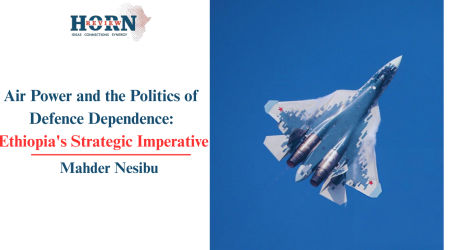
Air Power and the Politics of Defence Dependence: Ethiopia's Strategic Imperative
In 2020, former Malaysian Prime Minister Mahathir Mohamad, in discussing...
13
Mar
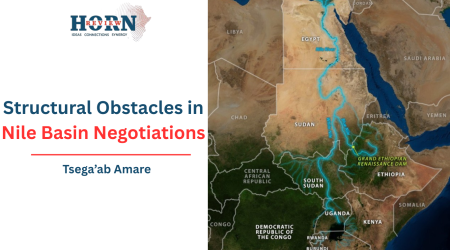
Structural Obstacles in Nile Basin Negotiations
The hydropolitics of the Nile Basin have long represented an...
13
Mar
Gulf Experiences and Strategic Choices for the Horn of Africa
Within the volatile architecture of modern international relations, few...
12
Mar
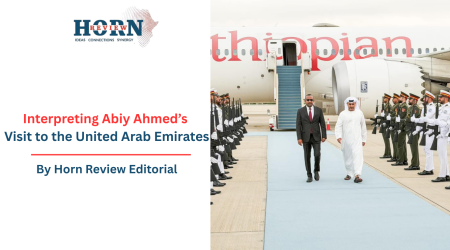
Interpreting Abiy Ahmed’s Visit to the United Arab Emirates
The visit by Abiy Ahmed to the United Arab Emirates...
28
Feb
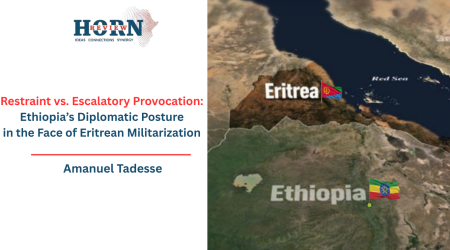
Restraint vs. Escalatory Provocation: Ethiopia’s Diplomatic Posture in the Face of Eritrean Militarization
Ethiopia, as a pivotal geopolitical anchor state for peace and...
24
Feb
Egypt's Offer to Ethiopia and The Juridical Void with Enforceability Gap
For over a decade the diplomacy of Egypt over the...