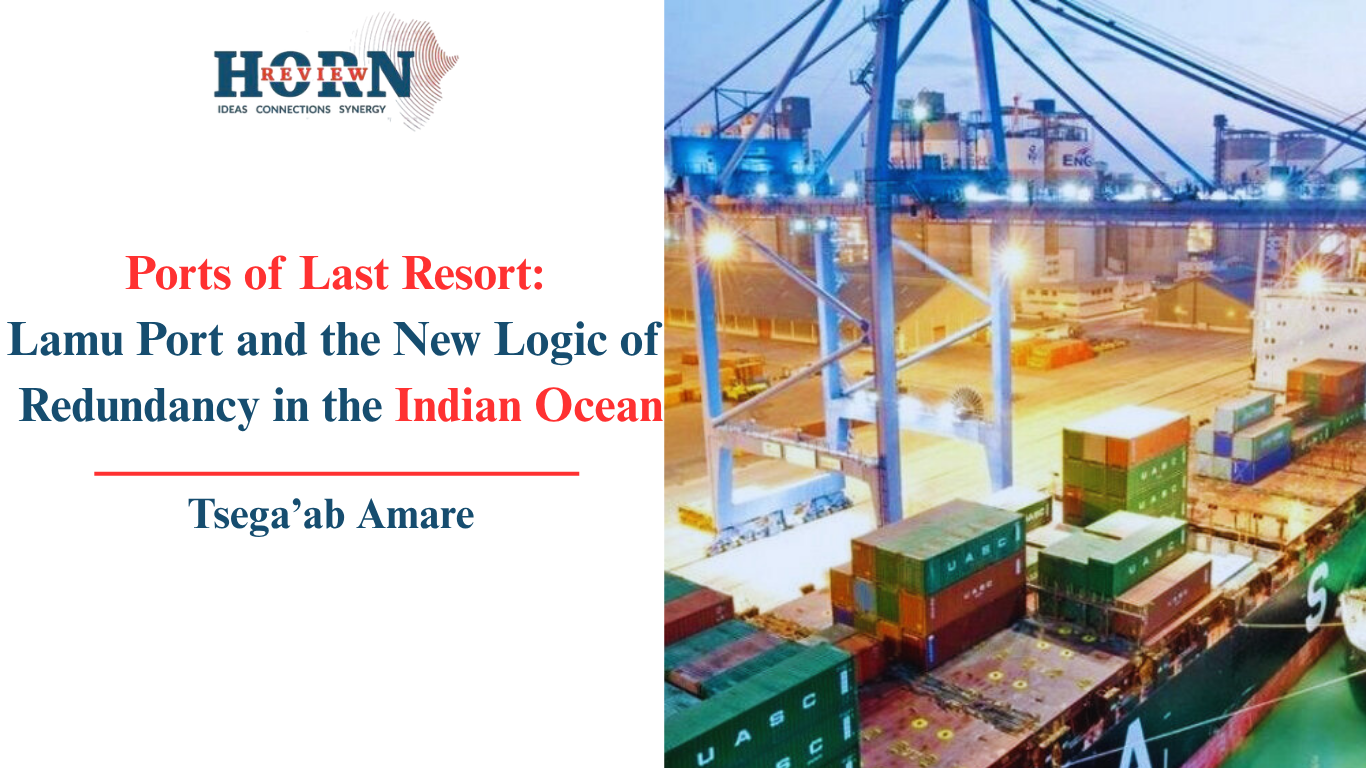
On March 18, 2026, the Grande Florida, a car carrier operated by the Grimaldi Group with a capacity of 9,000 units, docked at Kenya’s Port of Lamu. Carrying 3,800 vehicles from Yokohama, Japan, originally destined for Saudi Arabia’s Port of Jebel Ali, the vessel’s diversion is not an isolated logistical adjustment. It is a material signal of a broader geopolitical realignment. Just one week earlier, the MV Grande Auckland made its maiden call at Lamu, offloading 469 European-manufactured vehicles similarly rerouted due to hostilities in the Persian Gulf.
Lamu’s sudden prominence must be understood as a visible symptom of disruption in the Gulf. The ongoing Middle East conflict has placed the Strait of Hormuz under conditions of functional closure. While Tehran maintains that the waterway remains officially open, tanker traffic has sharply declined amid systematic disruptions to satellite navigation systems and a doubling of insurance premiums for Gulf-bound vessels. In this environment, defined by the breakdown of just-in-time logistics, Lamu has emerged as a safe and strategically proximate alternative, positioned outside the immediate conflict zone yet connected to continental markets.
The recent evolution of the LAPSSET corridor reflects a deeper structural shift. Infrastructure in the Horn of Africa is no longer governed primarily through the language of development. It is increasingly recoded through a logic of security, protection, and controlled access.
This security turn is visible in Kenya’s formal linkage of Operation Amani Boni to the protection of the LAPSSET corridor through expanded patrols and site security. It was further institutionalized on March 4, 2026, when Ethiopia and Kenya agreed to launch joint military operations to secure the Moyale–Marsabit–Turkana corridor. By coordinating between the Ethiopian National Defence Force and the Kenya Defence Forces, both states are attempting to insulate critical infrastructure from the instability that has historically delayed its implementation.
The corridor is no longer just an economic project. It is a strategic asset governed by military presence, risk management, and deterrence.
For Ethiopia, the world’s most populous landlocked country, LAPSSET is not optional. It is central to a broader effort to overcome a geographic constraint on national development. With over 95 percent of trade currently routed through Djibouti, maritime access has been reframed as both a national security imperative and a question of economic sovereignty.
Ethiopia’s approach reflects a dual-track strategy. The first is deterrence, aimed at managing external pressures and perceived structural vulnerabilities in the regional system. The second is integration, pursued through port diversification and infrastructural expansion toward Berbera and Lamu in order to reduce reliance on a single corridor.
Ethiopia’s Participation, although as an observer, in the “Will for Peace 2026” naval exercises alongside BRICS+ states signals an important shift in posture. It allows Ethiopia to position itself as an emerging stakeholder in Indian Ocean security while gradually building naval doctrine without provoking immediate sensitivities among littoral states. Within this framework, Lamu is not just a port. It is part of a broader strategic architecture through which Ethiopia seeks to rebalance its geographic and economic position.
Lamu’s growing relevance is grounded in its technical characteristics. Its natural deep-water design of 17.5 to 18 meters allows it to accommodate large Post-Panamax vessels that cannot easily access shallower ports such as Mombasa. This gives it a clear advantage in handling high-capacity transshipment flows.
This advantage is reflected in recent performance. Cargo throughput increased from 74,380 metric tons in 2024 to 799,161 metric tons in 2025, representing a dramatic expansion. The Kenya Ports Authority has reinforced this growth through aggressive incentives, including 60 days of free storage for transshipment cargo and a 40 percent reduction in key handling charges.
Yet Lamu does not operate in isolation. It faces direct competition from Berbera, which has undergone a 442-million-dollar upgrade under DP World. Berbera’s strength lies not in maritime depth but in its logistical integration. Its road corridor provides an approximately 11-hour connection to Ethiopia’s hinterland, giving it a practical advantage for time-sensitive cargo.
The emerging dynamic is not one of simple competition, but of redundancy. Both ports are positioning themselves as alternative nodes within a fragmented regional system where resilience is increasingly valued over singular efficiency.
The current conflict has underscored a critical reality. Modern infrastructure is not only physically exposed. It is digitally vulnerable. Since February 28, the region has experienced an escalation in hybrid digital operations, including coordinated targeting of energy and transport systems. The reported use of mobile-based espionage malware and AI-assisted targeting of industrial control systems highlights the growing integration of cyber tools into geopolitical conflict.
For an emerging hub like Lamu, such threats are existential. The disruption of a single control system could halt port operations, with cascading effects across the corridor. The security turn in LAPSSET governance must therefore extend beyond physical protection to include robust cyber defense, ensuring that digital systems are as resilient as physical infrastructure.
Despite the strategic significance of the Lamu project, there is a sense of uneven development at the local level. The benefits of the large-scale investment have not been equally shared; this has created a situation of ambivalent temporality. While the port is clearly part of a dynamic of rapid change, at the local level there is a sense of stagnation. There are still questions related to land acquisition, compensation, and the completion of project components. The overall vision of the LAPSSET project includes resort cities, airports, and local development; however, there is a threat of the corridor being reduced to a narrowly conceived security-focused port infrastructure.
The docking of the Grande Florida at Lamu signals more than a temporary rerouting of cargo. In a context defined by chokepoint instability, rising insurance costs, and systemic uncertainty, the value of a port is no longer determined solely by location or efficiency. It is defined by its capacity to function as a secure and scalable alternative when primary routes fail.
Lamu has begun to position itself within this emerging logic. Its depth, incentives, and relative insulation from conflict make it an attractive fallback node within the Indian Ocean corridor. However, its long-term viability will depend on completing the broader infrastructural ecosystem, including rail and pipeline networks.
By Tsega’ab Amare, Researcher, Horn Review