Intelligence can move ahead of military power in ways that aren’t always obvious. Armies, weapons, and positions are visible, which makes them easier to track and respond to. Intelligence works differently. It stays in the background, uses uncertainty to its advantage, and can quietly shape the situation before anything unfolds in the open. In places shaped by conflict, people often judge strength by what they can see. Numbers of troops, weapons, and control over land tend to define how power is understood. But history keeps pointing to something less visible. States haven’t always fallen because they were outgunned.
They fell because they did not understand the environment they were operating in. They misread intentions, underestimated actors, or reacted too late. In that sense, the most decisive battles are not fought on the battlefield, but in the realm of information. Information gathering, more than firepower, determines whether a state survives prolonged pressure or slowly unravels under it. In recent Israel and Iran context, this has meant that much of the strategic contest unfolds. It is continuous, adaptive, and difficult to fully detect. Success is measured not only by what happens, but by what is prevented from happening
Israel’s experience offers one of the clearest illustrations of this logic. From the moment it emerged as a state, it faced a structural imbalance. Its geography exposed it, its demography limited it and its adversaries, at least in conventional terms, could outnumber and outposition it. What followed was not simply a military response to these constraints, but a strategic reorientation. Israel chose to compete where asymmetry could be turned into advantage. It invested not just in strength, but in awareness of its neighbors.
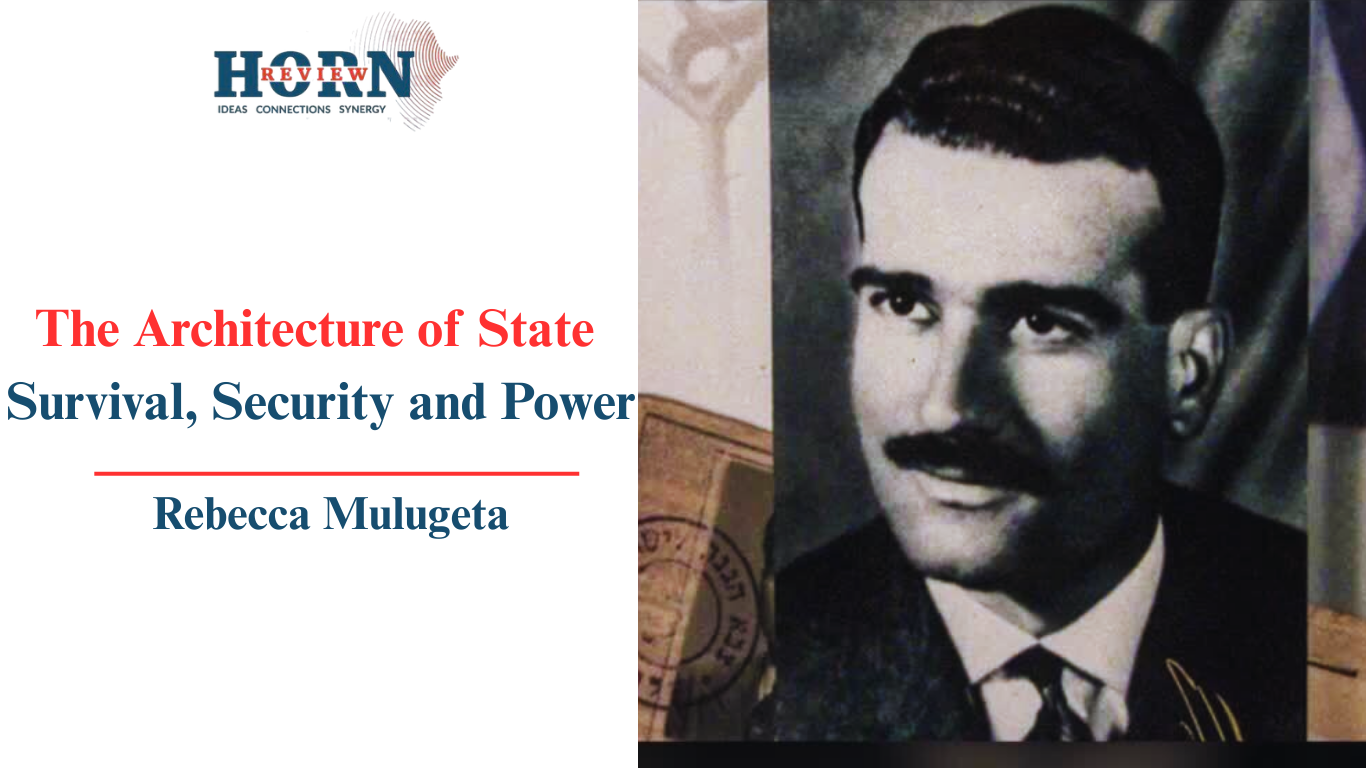
The stories of individuals like Eli Cohen, Shula Cohen, Rafi Eitan, Meir Dagan and Wolfgang Lotz are often told as dramatic episodes of espionage, but their deeper significance lies elsewhere. They represent a form of strategic penetration that goes beyond information gathering. The known Eli Cohen, embedded within the Syrian political and military elite, did not simply observe from a distance.
Eli Cohen’s infiltration of the Syrian high command served as a foundational audit of the state’s military-industrial complex, providing Israel with a granular blueprint of Syria’s Order of Battle (ORBAT) that proved decisive for national survival. By integrating himself into the Ba’athist elite, Cohen moved beyond tactical eavesdropping to perform a systemic mapping of the Syrian military structure, identifying the specific hierarchy of command, the location of static defensive batteries on the Golan Heights, and the precise technical specifications of Soviet-supplied hardware, to the extent of offer position to be deputy defence ministry in Syria.
The planting of eucalyptus trees across the Golan Heights was a masterstroke of operational pre-visualization that effectively hard-coded Syrian vulnerability into the physical landscape. Eli Cohen’s recommendation established a permanent, fixed-point target bank that bypassed the limitations of 1960s-era surveillance. For the Israeli Air Force and artillery units, these trees functioned as analog GPS markers, providing high-contrast visual cues that stripped away the tactical advantage of Syrian camouflage and entrenched bunkers. When the 1967 conflict commenced, the military did not need to hunt for hidden batteries; they simply executed a pre-calculated kinetic audit against the very landmarks Cohen had strategically placed. This transformation of the environment into a structured intelligence map enabled Israel to achieve surgical precision and rapid territorial dominance, neutralizing the Syrian high ground before the opposition could mount a coordinated defense.
His intelligence regarding the Jordan River diversion project acted as a strategic fail-safe, delivering the exact engineering coordinates and construction timelines necessary for Israel to execute preemptive kinetic strikes against Syrian hydraulic infrastructure, thereby neutralizing an existential threat to the nation’s water security. Ultimately, Cohen functioned as a forward-deployed diagnostic sensor; his ability to relay the internal friction between Syrian political factions and military leadership allowed the military to exploit institutional vulnerabilities, transforming the 1967 conflict from an unpredictable war of attrition into a calculated exercise in information dominance.
Not only Eli Cohen known by the gathering information, Wolfgang Lotz’s operations in Egypt exemplified the power of social-access espionage, where a constructed identity provided the critical context needed to interpret the adversary’s military ambitions and limitations. By infiltrating elite circles, he acted as an “alliance spy,” navigating informal power structures to turn trust and perception into a decisive strategic lens.
The evolution of this system in the contemporary confrontation between Israel and Iran shows how intelligence has adapted to technological and geopolitical change. The conflict itself is often described in terms of potential escalation, missile capabilities, and regional alliances, but much of its substance lies beneath that surface. It is a contest of penetration and disruption. Covert networks, pre-positioned capabilities, and operations that rely on local recruitment and technological coordination point to a model of warfare that is deeply embedded within the adversary’s own space.
This is not incidental. It reflects a deliberate strategy of shifting the battlefield inward. By operating within the territory of an adversary, intelligence transforms geography from a constraint into an opportunity. Distance becomes less relevant and traditional defensive measures become less effective. The state is no longer dealing with threats at its borders, but with vulnerabilities within its own system. This is a profound shift, and it is one that places intelligence at the center of strategic competition.
The implications of this model extend beyond any single conflict. In regions characterized by volatility, fragmentation, and external competition, the absence of strong information sharing capabilities can be deeply destabilizing. The Horn of Africa exemplifies such an environment. It is a region where borders are not always barriers, where internal and external dynamics intersect, and where state and non-state actors operate simultaneously across multiple layers.
Ethiopia occupies a pivotal yet delicate position within the Horn of Africa, the country often finds itself on external powers looking to turn local fractures into their own leverage. In this kind of environment, intelligence isn’t just a background service; it is the state’s most essential filter. It’s what allows leadership to tell the difference between a genuine internal grievance and one that’s being fueled or manufactured by outside interests. When intelligence works as a diagnostic tool rather than just a blunt, reactive force it gives the state the clarity to map out risks before they ever reach a boiling point. This kind of foresight is what keeps external players from turning small, local vulnerabilities into massive, uncontrollable feedback loops. Having high-quality information ensures that the state can handle threats with precision, keeping the cost of fixing national issues manageable instead of letting them become existential threats.
Intelligence, when properly structured to engage these challenges early, preserves institutional stability by mitigating the likelihood of such escalations. This reflects a broader shift where modern power is increasingly defined by awareness rather than the mere accumulation of visible assets. Military strength remains vital but is reframed as a single component of a larger strategic system, guided and enhanced by the ability to interpret complex environments and anticipate change
Israel’s experience, including its ongoing confrontation with Iran, demonstrates how this system can function under sustained pressure. It shows how intelligence can compensate for structural disadvantages, create strategic flexibility, and enable a state to operate effectively in hostile environments. At the same time, it shows the continuous nature of this effort. Intelligence is not a one-time investment. It requires constant adaptation, learning, and refinement.
The strategic environment is becoming more complex, not less. The boundaries between internal and external security are increasingly blurred. The pace of change is accelerating. In such conditions, the margin for error narrows. The states that endure will not necessarily be those with the largest armies, but those with the clearest understanding of the worlds they inhabit and the quiet conflicts that shape them long before they become visible.
By Rebecca Mulugeta, Researcher, Horn Review