
4
Mar
The Red Sea Security Dilemma: Maritime Access and the Fragmentation of Regional Order
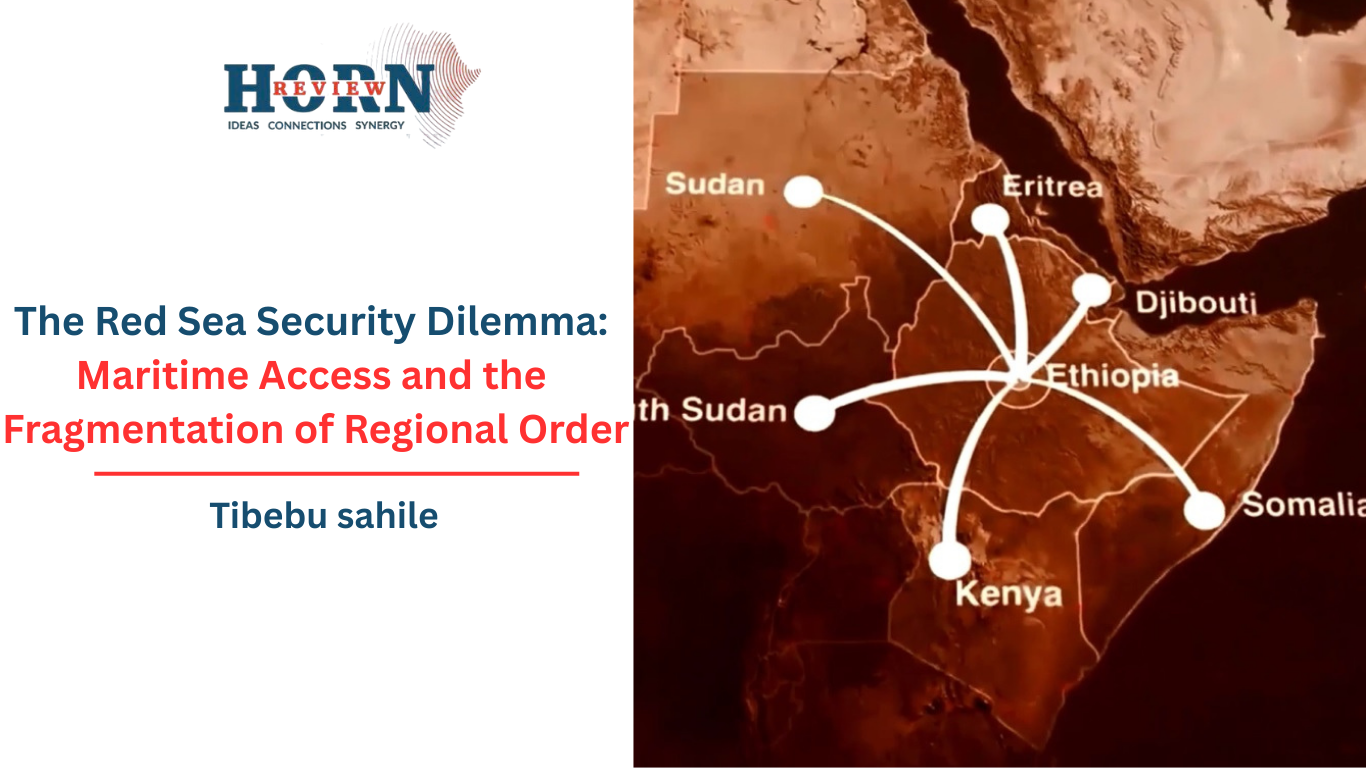
In recent years, the Red Sea has shifted from a strategic waterway to a militarized geopolitical arena. Long valued as one of the world’s most critical maritime chokepoints, the corridor linking the Mediterranean to the Indian Ocean has become increasingly congested with naval deployments, foreign bases, proxy competition, and infrastructure rivalries. The war in Yemen, Houthi attacks on commercial shipping, Gulf rivalries, and renewed great-power attention have transformed the Red Sea–Gulf of Aden axis into a theater of layered competition.
This marks the corridor not just as a commercial hub, but a contested arena. Within this environment of mounting militarization, a pivotal Horn development, the Somaliland recognition question, and Somalia’s reactive territorial stance, has triggered a broader chain reaction, offering a short-term solution that risks backfiring regionally in the long run.
In January 2024, Ethiopia signed an MOU, linking potential recognition to a 50-year lease on approximately 20 kilometers of coastline near Berbera. For Addis Ababa, landlocked since Eritrea’s independence, maritime access is not symbolic diplomacy but tectonically necessary. Reliance on Djibouti has long exposed Ethiopia to economic and asymmetric vulnerability. In a Red Sea increasingly shaped by naval presence and external patronage networks, diversification of access has become a vital objective.
Yet what appeared to Ethiopia as a sovereign maritime recalibration was interpreted by others as a destabilizing precedent. Somalia rejected the arrangement outright, while Turkey, Egypt, and Saudi Arabia began coordinating diplomatic pressure to deter formal recognition. The dispute quickly expanded beyond bilateral friction into a test of regional coalition.
Turkish President Recep Tayyip Erdoğan’s public admonishment over Somalia’s territorial integrity marked a visible departure from Ankara’s traditionally measured language. The intervention followed diplomatic engagements in Riyadh, including discussions involving Saudi Foreign Minister Faisal bin Farhan. On February 9, Egyptian President Abdel Fattah el-Sisi also visited the United Arab Emirates amid escalating Red Sea tensions. The sequence of meetings, unified rhetoric, and synchronized messaging suggested deliberate coordination rather than coincidence.
For Ankara, Somaliland recognition threatens more than Somali unity. Since establishing its military base in Mogadishu in 2017, a sprawling 30-hectare complex housing around 1,000 Turkish personnel, Bayraktar TB2 and Aksungur drones, 155mm howitzers, and naval patrol vessels. Turkey has entrenched itself as Somalia’s principal security patron. Turkish officers train 10,000+ Somali recruits annually, conduct drone operations against Al-Shabaab, deploy F16 jets, and oversee major infrastructure projects like the 350-million-dollar Mogadishu Airport expansion. This presence anchors Turkey’s broader Horn strategy, positioning it as Mogadishu’s primary external partner in competition with Gulf actors. Recognition of Somaliland would dilute Somali federal authority and potentially empower rival actors operating through Berbera, directly challenging a decade of Turkish investment.
Egypt’s concerns are rooted in geography and existential vulnerability. The Grand Ethiopian Renaissance Dam dispute has already heightened Cairo’s anxiety over Ethiopia’s expanding leverage. An Ethiopian–Somaliland maritime corridor, particularly if paired with Emirati port infrastructure or Israeli security cooperation, raises fears of strategic encirclement. From Cairo’s perspective, Ethiopian access to the Red Sea intersects with Nile security and Suez corridor primacy. Opposition to recognition therefore reflects not abstract legal principle but preservation of a fragile regional balance.
Saudi Arabia’s posture is pragmatic, prioritizing Red Sea littoral stability and managing competition without open confrontation. Riyadh views unilateral Somaliland recognition as destabilizing, risking armament along its vital maritime corridor, while lacking Turkey’s deep institutional stake in Somalia. By engaging Ethiopia diplomatically, as shown by Foreign Minister Prince Faisal bin Farhan’s February 2026 visit to Addis Ababa and the prior reciprocal invitation to Ethiopian Foreign Minister Gedion Timotheo, Saudi Arabia positions itself as convener rather than ideological partisan.
Riyadh’s position in the anti-recognition bloc combines maintaining Somali territorial integrity, Red Sea stability, limiting Israeli expansion, and balancing UAE influence in the Horn. Courting influential Ethiopia counters Abu Dhabi’s sway without unconditional alignment, testing Addis Ababa’s willingness to diversify from UAE ties. Riyadh’s motives remain strategic, advancing economic interests through back-and-forth high-level diplomacy
Yet the region’s Polarizations are not rigid. The United Arab Emirates occupies a pivotal but distinct position. Abu Dhabi’s strategy in the Horn is anchored in ports, connectivity, and maritime influence. Berbera forms part of a wider Emirati network linking the Gulf to East Africa and the western Indian Ocean, underpinned by DP World’s 442 million Dollars of investment since the 2016 agreement, with Phase 1 expansion starting in 2018 to boost capacity from 150,000 to over 1 million TEUs annually. Investment in Somaliland enhances commercial reach and logistical flexibility, as demonstrated in previous regional security operations. Recognition would formalize relationships already embedded through infrastructure and capital flows.
At the same time, Emirati engagement places Abu Dhabi at subtle odds with Cairo and Riyadh, underscoring the fluidity of Gulf politics. Saudi-Emirati rivalry persists beneath surface cooperation, particularly over influence along the Red Sea rim. Somaliland has become one arena where these competitive undercurrents surface.
Israel’s interest adds a further overriding layer. Prime Minister Benjamin Netanyahu has articulated a broader alliance framework linking Middle Eastern, Mediterranean, African, and Asian partners into an integrated security network. Within that architecture, the Bab el-Mandeb and Gulf of Aden, through which 12% of global seaborne oil trade flows, directly threatening Israeli-bound imports amid Houthi disruptions, are critical chokepoints. A presence in Somaliland would allow Israel to monitor shipping lanes, project deterrence near Houthi operational zones, and secure commercial routes increasingly vulnerable to disruption. For Ankara and Cairo, such a foothold would represent a structural shift in the Red Sea balance.
Somalia’s agency, though often overshadowed by external actors, remains central. Mogadishu aligns with Turkey, Saudi Arabia, and Qatar not merely from dependency but from security necessity. Federal fragility and the ongoing threat of Al-Shabaab make external backing indispensable. Recognition of Somaliland would weaken Somalia’s territorial claim and risk further fragmentation, reinforcing its reliance on supportive patrons.
Ethiopia, naturally, sees this diplomatic push as another example of external interference in what it considers a vital sovereign pursuit. Addis Ababa’s calculus is shaped by demographic scale, economic ambition, and the vulnerability inherent in landlocked status. In an environment of growing Red Sea militarization, for Ethiopia, maritime access is framed as existential. Overt pressure from Ankara, Cairo, and Riyadh may therefore entrench rather than deter Ethiopia’s resolve, incentivizing it to wield recognition or port arrangements as a linchpin objective.
Despite growing talk of two camps, the emerging axis is better understood as tactical convergence. Turkey and Saudi Arabia have pursued rapprochement since 2022. Egypt maintains close ties with the UAE despite divergences over Horn politics. Israel and the UAE cooperate within broader normalization frameworks. These overlapping relationships reflect hedging behavior rather than hardened blocs.
The Somaliland issue has crystallized a temporary polarity. On one side stands a loose constellation linking Ethiopia, the UAE, and potentially Israel through maritime and infrastructure alignment. On the other stands a Saudi-mediated convergence between Turkey and Egypt focused on preserving Somali unity and stabilizing littoral control. This emerging “northern Red Sea axis” prioritizes chokepoint stability, coordinated diplomacy, and maritime deterrence without a formal alliance.
The stakes are material rather than symbolic. If an Ethiopia-UAE-Somaliland-Israel axis consolidates, Berbera could evolve into a crucial hub combining Emirati capital, Ethiopian land power, and Israeli security capability. Such a configuration would reorient influence along the Red Sea rim toward Abu Dhabi and Tel Aviv. If, conversely, the counter blocks recognition, Somalia’s territorial integrity would be preserved, though a Dysfunctional federation, leading to Israel’s footprint being constrained, but Ethiopia’s maritime dilemma would remain unresolved.
The Red Sea’s tactical buildup has created an environment in which even localized recognition debates reverberate across regions. Somaliland has become a proxy arena for broader competition over ports , patronage networks, and it is vitally important geographically. As external actors entrench themselves along the Horn’s coastline, the question is no longer whether block formation will occur, but how durable they will prove under shifting pressures.
In this evolving order, the Horn of Africa is no longer peripheral to Middle Eastern security. It is central to it. And the outcome of the Somaliland question may help determine which A constellation of powers shapes the future of the Red Sea corridor. As Somalia’s reactive diplomacy leads to more militarization from different corners, this shows a looming threat that should be managed with caution and neutralized sooner rather than later.
To navigate this pivotal juncture and shape a stable Red Sea future, Ethiopia should adopt a tactical, conditional framework that secures its interests amid fluid tactical convergences. Ethiopia faces a strategic imperative to secure maritime access while mitigating Somalia’s growing militarization and managing regional power dynamics involving Turkey, the UAE, Israel, and Saudi Arabia.
A tactical, conditional approach is recommended: first, expand functional integration with Somaliland through trade, logistics, and port arrangements framed as economic and infrastructure initiatives, with Somalia’s oversight. Creating de facto access while avoiding provocative sovereignty claims. Concurrently, engage Saudi Arabia privately to pre-commit the Kingdom as a stabilizing mediator through a “Horn Stabilization Compact,” incorporating coordinated Red Sea security, joint anti-Al-Shabaab operations leveraging Ethiopian intelligence with Riyadh’s support under AU oversight, and demilitarized border arrangements designed to reduce Somalia’s troop concentration near Berbera.
As Turkey’s potential reaction should be carefully managed, emphasizing development and stability rather than military expansion, while discreet hedging with the UAE and Israel preserves leverage if Saudi mediation falters. Ethiopia should also explore ties with Kenya to diversify maritime access through Mombasa or Lamu, connecting it via the LAPSSET corridor’s planned Standard Gauge Railway, reducing reliance on a single corridor and reinforcing regional economic integration. Formal recognition of Somaliland should remain conditional, as it’s seen that Puntland’s defiance signals the federation could fracture further under recognition. pressure framed publicly as a stabilizing measure and a development initiative, allowing Ethiopia to secure ports, tactically curb Somalia’s militarization, and position itself as the indispensable regional balancer without triggering escalation.
By Tibebu sahile, Researcher, Horn Review

RELATED
Posts
26
Mar
Sudan’s Shadow Alignment: Military Dependence and Diplomatic Denial Amid a Middle East War
The geopolitical orientation of the Sudanese Armed Forces (SAF), under...
23
Mar
Africa in Iran’s Broader Geopolitical Strategy
The eruption of the 2026 military conflict between Iran and...
23
Mar
The Ultimatum as Narrative: How it is Reframing Escalation and Reimagining the Horn of Africa’s Place in a Changing Regional Order
The escalating tensions between the United States and Iran are...
17
Mar
Reassessing Egypt’s Myth of Regional Leadership
In the unstable landscape of the Middle East and North...

17
Mar
The Profits of Collapse: Sudan’s Civil War and the Rise of an Industrial Narco-Economy
This analysis examines how the ongoing conflict in Sudan is...
16
Mar
The Radicalization Arcade: The Brotherhood at the Border
Why the Muslim Brotherhood's Control of Sudan's Military Is...
16
Mar
The Profits of Collapse: Sudan’s Civil War and the Rise of an Industrial Narco- Economy
This analysis is based on the landmark report released by...
13
Mar
The Horn of Africa Beneath the Shadow of Middle East Turbulence
The Horn of Africa has officially evolved from a silent...
13
Mar
Sudan’s Civil War and the Structural Return of Muslim Brotherhood Power Networks in the Red Sea
Sudan’s current foreign alignment reflects the structural imperatives imposed by...

13
Mar
South Sudan’s Violence and The Strategic Unraveling of The Horn
For decades, the Horn of Africa has been defined as...