How Eritrean Ports Could Become Iran’s Forward Base
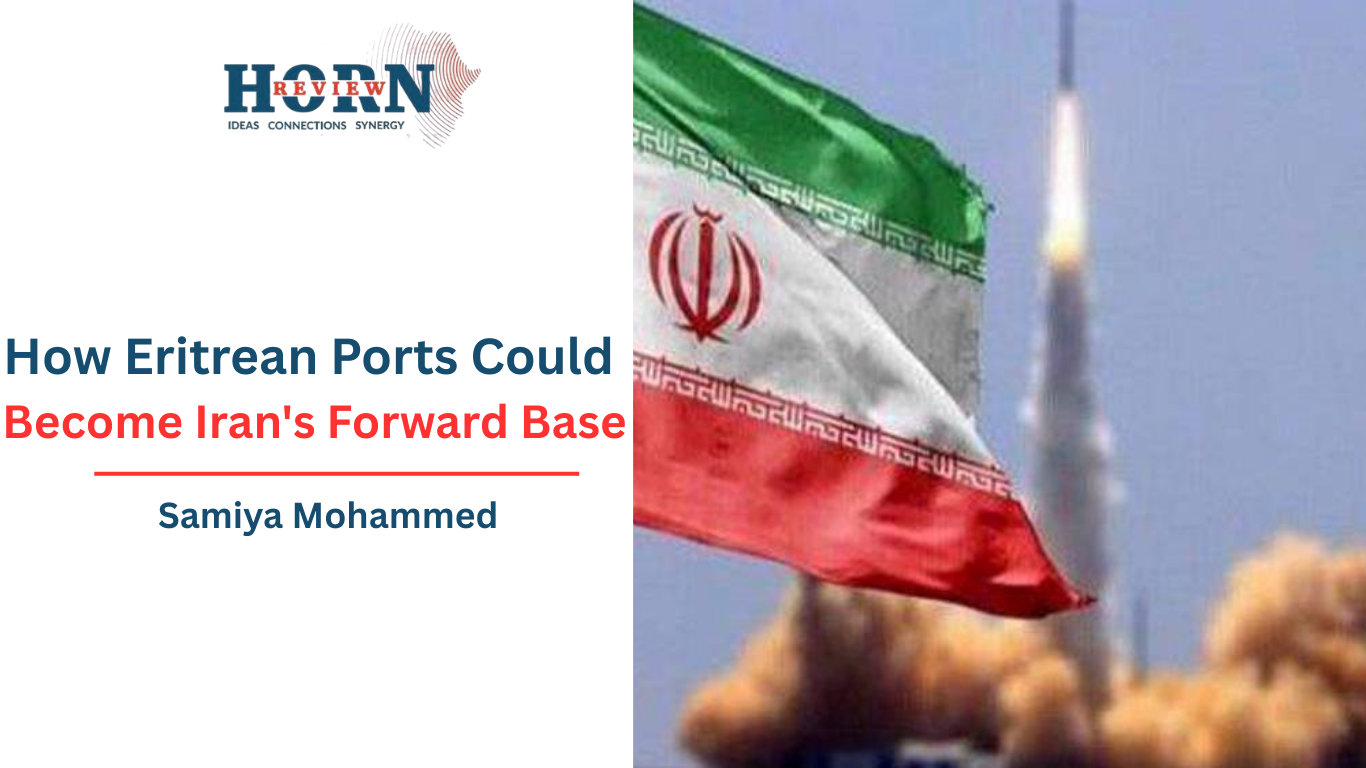
What began on February 28, 2026 with coordinated American and Israeli strikes on Iranian military infrastructure and the reported death of Ayatollah Khamenei has fundamentally altered the foundations of Middle Eastern security. As Tehran contemplates retaliation the world’s gaze has fixed predictably on the Persian Gulf and the Strait of Hormuz where one third of the world’s seaborne oil passes. But this focus however understandable risks blindness to a more insidious and potentially transformative front with the western shore of the Red Sea, where Iran has spent years quietly assembling the components of a two front maritime campaign.
The proposition demands urgent examination with Iran could utilize Eritrean ports specifically Assab and Massawa as staging grounds for retaliatory attacks coordinated with the Houthis in Yemen, al-Qaeda in the Arabian Peninsula and al-Shabaab in Somalia. This is not alarmist conjecture but a plausible synthesis of existing patterns with documented Iranian logistical access to Eritrean infrastructure, established proxy relationships on both shores of the Bab el-Mandeb and crop up of tactical cooperation between Houthi and Somali militant networks.
The notion of Iran operating from Eritrean soil is not novel but its recent revival carries new and dangerous implications. Tehran’s relationship with Asmara dates to the mid 2000s when Iranian vessels regularly called at Eritrean ports to resupply and transit goods. That relationship atrophied under international pressure but has demonstrably regenerated since 2024. Reports have confirmed that Iran has regained access to key Eritrean facilities including the deep water port of Assab and the harbor of Massawa for activities that goes far off routine diplomatic or commercial engagement.
Intelligence indicates that Iranian cargo flights and shipments linked to entities under international sanction have utilized Eritrean infrastructure to facilitate the transfer of drone components and related weapons technology. In November 2025 for instance Iran reportedly supplied drones and associated systems to Eritrea itself with these transfers moving through the very same ports that could now support offensive operations. For a power seeking to project coercive pressure into the Red Sea while maintaining plausible deniability Assab offers what Yemen’s western coastline provides the Houthis a perch from which to observe, harass, and interdict.
The combination of Iranian in Eritrea and Houthi firepower in Yemen creates a two-shore envelope around the Bab el-Mandeb. The strait where Yemen and Djibouti are separated by just 18 miles of water becomes a canal bracketed by hostile actors. From the Yemeni coast the Houths can launch anti-ship ballistic missiles and one-way attack drones. From the Eritrean coast Iran could stage additional assets or forward deploy smaller fast attack craft.
In the context of direct American Israeli strikes on Iranian soil and leadership the desire for retaliation is not probable but virtually certain. Tehran’s culture demands response to restore deterrence. Yet Iran also understands that direct confrontation with the United States is prohibitively costly. The optimal solution therefore lies in escalation by proxy actions that impose costs on adversaries while preserving a shield of deniability.
Eritrean ports could serve for precisely such calibrated retaliation. Consider a plausible sequence from facilities at Assab or Massawa, Iranian personnel perhaps operating under cover of military advising or port management contracts prepare and stage unmanned aerial vehicles. These drones assembled from components shipped via previous cargo flights are launched not from Yemeni soil which would invite immediate retaliation against Houthi leadership but from Eritrean territory where the attribution chain is murkier. Their targets potentially the U.S. naval facilities at Djibouti.
At the same time, Houthi forces in Yemen acting on directives from Tehran resume and intensify their missile and drone campaigns against shipping and Israeli territory. The Houthi leadership has already signalled its full preparedness to act in solidarity with Iran framing such actions as legitimate resistance to American and Israeli tyranny. Across the Gulf of Aden, al-Shabaab elements, equipped with Houthi supplied weaponry and guidance conduct maritime raids or port side attacks in Somalia further complicating the battle space and forcing naval commanders to disperse their forces.
The cumulative effect would be transformative. The Red Sea through which approximately twelve percent of global trade passes would become a high risk transit zone. Insurance premiums would spike, shipping companies would divert vessels around the Cape of Good Hope, as several major liners have already begun to do. Global supply chains would face new strains. The United States and its allies would confront not a single adversary but a distributed network spanning two continents, capable of absorbing losses and adapting faster than centralized command structures can respond.
Any such escalation would reverberate powerfully inland with Ethiopia particularly exposed and Should Iranian backed forces operate from Eritrean soil in a manner that threatens regional stability, Ethiopia would face pressure to safeguard its interests though its response would likely manifest through diplomatic channels rather than military confrontation. To argue that this scenario is plausible is not to assert its inevitability. Significant hurdles remain. Eritrean President Isaias Afwerki while historically willing to engage with Iran is a notoriously unpredictable actor above alliance commitments.
Similarly, Iran’s operational control over al-Shabaab is minimal at best. The group has its own leadership, its own priorities and its own theological commitments. Cooperation with the Houthis remains transactional and contingent not ideological. As some report reportedly noted that while al-Shabaab receives weapons and training from Houthi intermediaries, it has not subordinated its decision making to Tehran.
However these constraints while real are not static. Crises compress timelines and reshape risk calculations. As international attention focuses on the Persian Gulf, the Red Sea’s western shore offers Iran an asymmetric option where a place to strike where the United States is looking away. The infrastructure exists. The relationships have been cultivated. The motive in the wake of direct attacks on Iran’s homeland and leadership is acute.The emerging threat is trans regional, adaptive and opportunistic. Iran’s access to Eritrean ports, combined with its proxy relationships on both shores of the Bab el-Mandeb creates a potential platform for escalation that could bypass traditional defensive postures and strike.
The warning signs are visible. Eritrean port activity bears watching. Communications between Houthi leadership and Somali militant networks merit intensive scrutiny. Piracy surges in the Gulf of Aden should be treated not as local crime but as potential indicators of coordinated strategy. The window for preventive action through diplomatic pressure on Asmara, intelligence cooperation with regional partners, and contingency planning for maritime defense remains open but narrowing. If that window closes, the Red Sea may become not just a corridor of commerce but a cauldron of conflict with Iran’s silent axis on the African shore holding the match.
By Samiya Mohammed, Researcher, Horn Review