
28
Feb
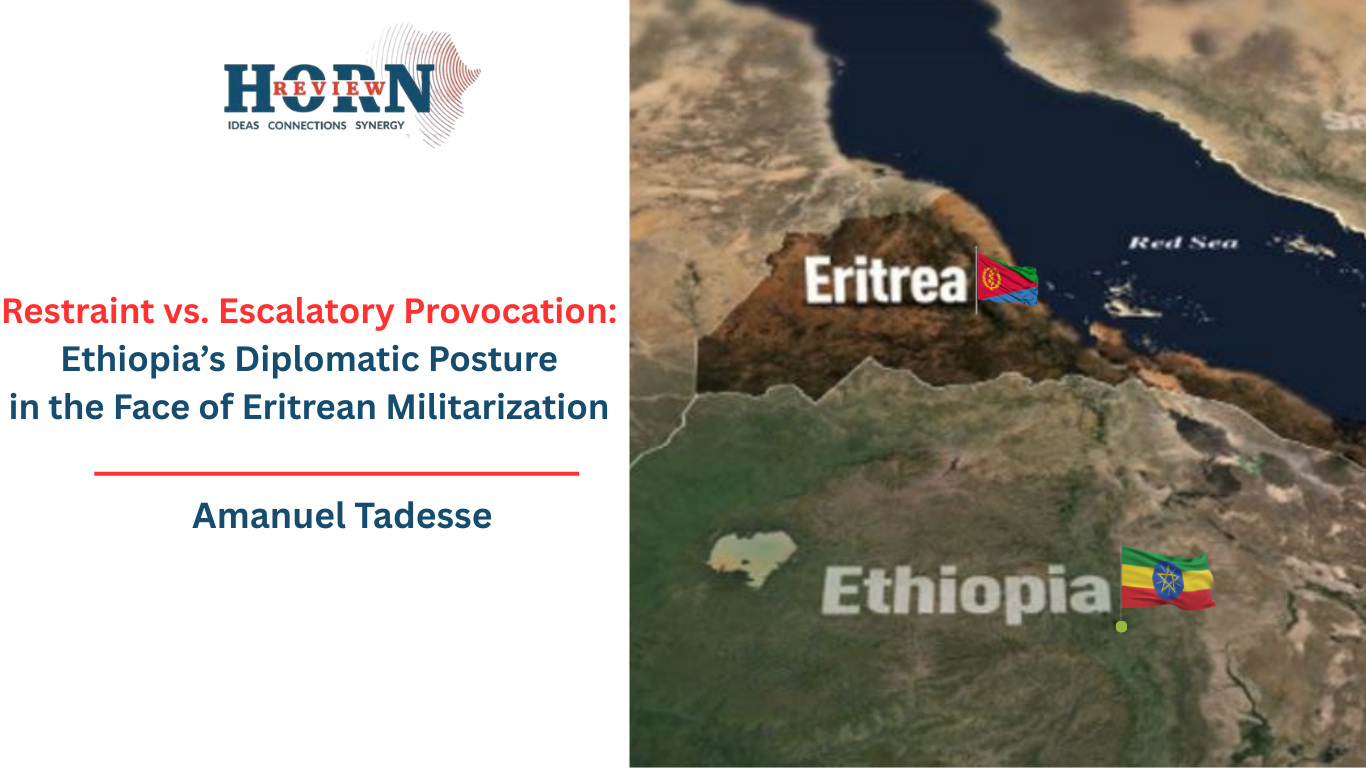
Restraint vs. Escalatory Provocation: Ethiopia’s Diplomatic Posture in the Face of Eritrean Militarization
Ethiopia, as a pivotal geopolitical anchor state for peace and stability in the Horn of Africa, has since the 2018 rapprochement pursued a foreign policy firmly grounded in regional cooperation, peaceful coexistence, sovereign equality, and the peaceful settlement of disputes. This principled orientation has guided Ethiopia’s diplomatic engagement across political, security, and economic dimensions, including its historical complex relationship with Eritrea. The decision to end the protracted condition of “no war, no peace” was not a matter of tactical expediency but a deliberate political recalibration aimed at long-term regional stability under international law.
Under the leadership of Prime Minister Abiy Ahmed, Ethiopia undertook bold diplomatic initiatives to normalize relations and promote reconciliation. These efforts were anchored in Article 2(3) of the UN Charter, which obliges states to settle disputes peacefully, as well as in the broader principles of non-use of force and respect for territorial integrity. Ethiopia’s diplomatic posture was designed to consolidate peace dividends not only bilaterally but also for the wider Horn of Africa.
Despite these constructive efforts, Eritrean under President Isaias Afwerki has increasingly adopted a confrontational posture. Ethiopia has raised concerns regarding the alleged continued presence of Eritrean forces in internationally recognized Ethiopian territories and the reported support to armed non-state actors operating within Ethiopia. Such conduct constitutes serious breaches of Article 2(4) of the UN Charter, the principle of non-intervention, and the prohibition on the use of force as norms recognized both in treaty law and customary international law.
Even in the face of these alleged violations, Ethiopia has exercised notable strategic restraint. Where international law would permit proportionate countermeasures or recourse to self-defense under Article 51 of the UN Charter, Ethiopia has consistently prioritized diplomacy over escalation, reflecting a conscious strategy to preserve regional stability and prevent a cycle of retaliatory conflict. This piece reviews Ethiopia’s diplomatic correspondence, the practical restraints it has observed, Eritrea’s responses, and the measures Ethiopia should take in line with international law.
Ethiopia’s Diplomatic Correspondence in Context
On 20 June 2025, Ethiopia, through its Ministry of Foreign Affairs, addressed a formal letter to the United States Secretary of State, Marco Rubio, expressed its concerns regarding Eritrea’s alleged provocations and infringements upon Ethiopia’s sovereignty and territorial integrity. The communication underscored the destabilizing implications for the fragile security architecture of the Horn of Africa. Importantly, the letter engaged the United States in dual capacity as a witness to the Algiers Agreement and as a permanent member of the United Nations Security Council, thereby situating Ethiopia’s concerns within established international frameworks rather than unilateral confrontation.
On 2 October 2025, Ethiopia addressed a further communication to the Secretary-General of the UN, Antonio Guterres. In this letter, Ethiopia reiterated its concerns regarding Eritrea’s alleged hostile acts and framed the matter squarely within the UN mandate for the peaceful settlement of disputes. The communication outlined reported developments, including alleged support to militant groups and continued military activities along the border. It urged the cessation of both direct and indirect hostile acts and called for non-interference in Ethiopia’s internal affairs. The letter also reiterated its commitment to constructive dialogue, including on matters relating to maritime access, and reaffirmed that its aspirations would be pursued exclusively through lawful and peaceful means.
On 7 February 2026, following both bilateral and multilateral exchanges, Ethiopia reportedly transmitted a diplomatic note to Minister of Eritrean Foreign Affairs, Osman Saleh M. This correspondence reiterated allegations concerning the occupation of sovereign Ethiopian territory, support for militant groups, and military maneuvers along the North-western and North-eastern borders.
These communications called for withdrawal of forces, cessation of interference manifested by support to armed non-state actors, and engagement in good-faith dialogue, including on maritime matters. This recourse to direct diplomatic diplomacy further underscores Ethiopia’s consistent preference for negotiated resolution.
Ethiopia’s Legal and Diplomatic Claims Against Eritrea
In its recent diplomatic communications, Ethiopia has articulated a series of legal and diplomatic claims concerning the conduct of the Eritrean regime. These communications are not merely political statements; they function as formal diplomatic protest constitutes an important mechanism through which states preserve legal claims, prevent acquiescence, and notify the international community of alleged internationally wrongful acts.
Ethiopia’s position hinges on the protection of sovereignty and territorial integrity as core attributes of statehood enshrined under Article 2(1) and Article 2(4) of the Charter of the UN. These principles underpin the post-1945 international order and remain central to Africa’s peace and security architecture.
Ethiopia’s claims in its diplomatic notes are aimed to inform concerned international actors of what it characterizes as Eritrea’s state-led destabilization activities and to situate these concerns within established principles of international law. The legitimate claims and its restraints efforts from its diplomatic notes have been substantiated and argued as follows
- Alleged Infringement of Territorial Integrity and Occupation
Ethiopia asserts that Eritrean forces have maintained a military presence in areas internationally recognized as falling within Ethiopian sovereignty, including more than fifty-two administrative localities in North-western and North-eastern Tigray. These reportedly include Tahtay Adiyabo (around Shiraro, including Ademeyti, Haykdem, Selam, Adi Raserto), Adi Deder, Gamhalo, Badme, Gulomahda (Zalambesa, Martha, Adi Tsefa, Addis Aleme, and Sebeya), and Erob (Endalgeda, Wereatele, Ager Lahima, and Ali Tena).
Article 2(4) of the UN Charter prohibits the threat or use of force against the territorial integrity or political independence of any state. This prohibition is widely recognized as a peremptory norm (jus cogens). In Nicaragua v. U.S. and DRC v. Uganda, the ICJ noted that military occupation of foreign territory without the consent of the territorial state constitutes a violation of the prohibition on the use of force and the principle of non-intervention. In the present case, Eritrean military and security forces are presented without Ethiopia’s outright consent and outside any lawful justification; such presence in the sovereign territory of Ethiopia would therefore amount to an internationally wrongful act.
Ethiopia further contends that the regime in Asmara has compelled Ethiopian nationals to assume Eritrean civilian status, issued Eritrean identity documents, and subjected individuals to military conscription. This conduct is repugnant with the law of occupation, which prohibits forced alteration of nationality, as enshrined under the 1907 Hague Regulation and Fourth Geneva Convention of 1949. The imposition of allegiance and military conscriptions upon protected persons in occupied territory is clearly inconsistent with these norms.
- Suspension of Aviation Links
Following the 2018 rapprochement expressed through the Joint Declaration of Peace and Friendship (Asmara Declaration), bilateral normalization included restoration of diplomatic relations and resumption of direct aviation services. Ethiopia through its airlines resumed flights to Eritrea after more than a decade as a part of reconciliation efforts. However, the Eritrean authorities subsequently banned flights operated by Ethiopian Airlines and frozen its assets, thereby halting direct aviation links between the two countries in a manner that is arbitrary and in violation of the bilateral agreements and international civil aviation norms commonly recognized in the Chicago Convention. This conducts of the concerned state amounts to an illegal economic counter measures which can never be proportional and based on necessity as it is recognized under international aviation law.
- Support for Armed Groups and Indirect Use of Force
Ethiopia asserts that Eritrea has provided financial, logistical, and political support to armed non-state actors, including elements associated the TPLF and Fano militia groups operating in Amhara regions as it has blatantly declared their alliance as Tsimdo. In accordance with international law, intervening in the internal matters of a given states jurisdiction is prohibited as a principle of non-intervention doctrine recognized under Article 2(7) of the UN Charter. This universal principle has developed into a status of jus cogens and affirmed by the ICJ in Nicaragua v. U.S that provides financial and logistical support to armed groups is a violation of the principle of non-intervention and arming and training irregular forces amounts to unlawful use of force.
It also engages in belligerent occupation and proxy warfare that constitutes as indirect aggression. In this vein, under the General Assembly Resolution 3314 states that aggression is a state’s substantial involvement in armed bands carrying out acts of force. As it can be deduced from Ethiopia’s diplomatic note, the Eritrean regime has been organizing, financing and directing armed militant groups in conducting hostile operations within Ethiopia. It is thus, such conducts are a breach of the prohibition of use of force, a violation of the duty of good neighborliness and a breach of regional peace and security norms.
- Sea Access Aspiration for Economic Sovereignty and the Rectification of Structural Disadvantages
Ethiopia’s quest for sea access is not an incidental aspiration; rather, it is a matter of existential necessity, rooted in economic sovereignty, the rectification of historical injustice, and the mitigation of security vulnerabilities in the Red Sea region. Prior to Eritrea’s independence in 1993, Ethiopia exercised sovereign access to the Red Sea through the ports of Assab and Massawa. However, geopolitical reconfiguration and political decisions influenced by external actors made Ethiopia a landlocked state, systematically excluding it from direct maritime access.
This exclusion from the Red Sea has created detrimental challenges. Ethiopia today depends almost entirely on a single sea corridor through Djibouti, which inflates trade and logistical costs, constrains national development, increases exposure to geopolitical risks, and limits its capacity to contribute to maritime security and regional stability in an increasingly volatile Red Sea corridor. A country of over 120 million people cannot live in a geographic prison and should not be permanently landlocked under conditions that compromise its economic sovereignty and strategic security interests.
Ethiopia therefore rejects the reductive characterization of its maritime aspiration as merely a request for transit privileges. The issue transcends technical corridor access. While transit rights under UNCLOS are necessary, they are inherently conditional and subject to unilateral policy shifts. Sustainable economic development requires reliable, durable, and institutionalized maritime access arrangements. The Red Sea is not only a national concern; it is a global strategic artery whose stability directly impacts regional and international trade and security. Ethiopia’s economic viability and the broader Horn of Africa’s stability are intrinsically linked to predictable maritime governance structures.
Ethiopia’s position is forward-looking rather than nostalgic or revisionist claim. It is not a historical sentiment but a policy based on economic rationality, regional integration, and principles of international law. Its aspiration for structured and dependable access, including constructive dialogue regarding the Port of Assab, must be understood within this framework. Ethiopia has consistently expressed its willingness to pursue maritime arrangements through good-faith negotiations, mutual benefit, and good-neighborliness. However, Eritrea has adopted a confrontational posture, opposing constructive engagement and portraying Ethiopia’s maritime aspirations as unlawful or militaristic, thereby attempting to confine Ethiopia to permanent geographic disadvantage.
Eritrea’s War Posture and Challenge to Peaceful Settlement Norms
Following the 2018 rapprochement, Ethiopia has consistently maintained that it embarked upon a course of post-conflict stabilization, normalization of relations, and constructive diplomatic efforts. Ethiopia has presented its approach as a deliberate policy of de-escalation and regional integration, and peaceful coexistence, rooted in mutual respect and international legality. In contrast, Eritrea’s posture has increasingly been characterized by a rigid, security-centered orientation that appears resistant to broader political engagement. The divergence between these approaches now lies at the heart of renewed tensions in the Horn of Africa.
In response to Ethiopia’s diplomatic communications, the Eritrea regime has repeatedly rejected calls for dialogue. Notably, in its June 26 statement issued through its Ministry of Information, entitled “Ethiopia: Floating False Flags to Rationalize and Ignite Conflict,” Eritrea portrayed Ethiopia’s actions as deceptive and framed them as an attempt to mislead the international community and mobilize sympathy for a purported “war agenda.” Eritrea reiterated its strict adherence to the 2002 decision of the Eritrea-Ethiopia Boundary Commission (EEBC) and suggested that Ethiopia’s long-standing aspiration for maritime access reflects an unlawful ambition to be pursued “legally if possible and militarily if necessary.” So, such rhetoric from the Eritrean’s side signals a profound deficit of trust and a refusal to frame dispute settlement within a cooperative diplomatic language. Under international law, dialogue is not merely symbolic; it is a strategic and legal mechanism designed to manage mistrust and prevent escalation. A rigid interpretation of the Algiers Agreement cannot preclude engagement on broader bilateral issues, including troop withdrawal, non-support for armed groups, and regional stabilization. The categorical dismissal of diplomatic engagement undermines peaceful dispute settlement, sovereign equality, and non-intervention principles enshrined in the UN Charter and customary international law.
On 11 October 2025, Eritrea, through its Foreign Minister Osman Saleh, addressed the meeting of the Group of Friends of the Charter of the UN in response to Ethiopia’s October 2 letter reaffirming its commitment to the UN Charter, the principle of sovereignty, and the peaceful resolution of disputes. In his statement, Minister Saleh highlighted Eritrea’s claimed willingness to facilitate Ethiopia’s maritime access under the 1993 and 2018 agreements, while denying any involvement in destabilizing activities or support for armed groups within Ethiopia. Eritrea also voiced concerns regarding Ethiopia’s statements on Red Sea issues, portraying them as heightening regional tensions, and reiterated that it has no territorial ambitions. The letter emphasized Eritrea’s stated readiness for good-faith negotiations on mutually beneficial maritime arrangements and broader economic cooperation, promoting dialogue, stability, and shared prosperity in the Horn of Africa.
However, Eritrea’s presentation before the UN sought to project an image of constructive engagement, particularly concerning the Port of Assab, while denying support to militant groups in Ethiopia. In practice, these denials contradict observed patterns of Eritrean behavior. The Eritrean regime continues to demonstrate reluctance to engage meaningfully with Ethiopia on critical matters, including maritime access and its practical use, suggesting that its statements at the UN may be aimed at buying time rather than fostering genuine cooperation.
Similarly, in response to Ethiopia’s February 7, 2026 Letter proposing good-faith dialogue and calling for the withdrawal of Eritrean forces from Ethiopian territory, as well as cessation of support to militant groups, the Eritrean regime rejected the communication in their February 9, 2026 reply. The response dismissed Ethiopia’s legitimate concerns as “false accusations and an extension of a hostile campaign, and explicitly stated that Eritrea has no appetite for or desire to engage in dialogue.” This position raises serious concerns regarding Eritrea’s willingness to resolve disputes through peaceful means. The absence of substantive rebuttal to allegations relating to territorial occupation, subversion, and interference further weakens confidence-building efforts and risks normalizing destabilizing conduct. Under international law, persistent unlawful conduct shall entitle an injured state, for our case Ethiopia to consider lawful countermeasures, provided such measures respect the principle of necessity, proportionality, and non-escalation. Ethiopia has nonetheless demonstrated notable patience and continues to prioritize de-escalation over confrontation.
Restraint as Ethiopia’s Strategic Diplomatic Statecraft
Ethiopia frames its current strategy as one of maximum restraint and principled diplomacy. It has relied on bilateral engagement and multilateral consultations to de-escalate tensions, informing international partners, including United States, of its concerns and requesting support in urging Eritrea to respect Ethiopia’s sovereignty, territorial integrity, and political independence. By prioritizing peaceful dispute settlement, Ethiopia strengthens its legal and moral standing in potential international forums, including the UN and regional mechanisms such as the African Union.
Ethiopia underscores, however, that restraint is not unconditional or indefinite. Where diplomatic avenues are exhausted and core sovereign interests are persistently undermined, international law recognizes a state’s right to adopt appropriate and proportionate responses consistent with the UN Charter and customary international law. Ethiopia’s position remains firmly anchored in legality, emphasizing that any future action would be guided by international norms rather than unilateral adventurism.
In conclusion, Ethiopia’s diplomatic communications present a narrative grounded in sovereignty, territorial integrity, non-intervention, and peaceful dispute settlement. Ethiopia portrays its conduct as restrained, law-based, and multilateral in orientation, while expressing concern that Eritrea’s posture risks undermining regional stability. Ethiopia maintains that its overriding objective is the preservation of regional peace and security, coupled with the protection of its sovereign rights. Before Ethiopia’s restraint is exhausted, the international community, including the UN, the AU, and concerned governments, should exert constructive diplomatic pressure on the Eritrean regime to cease any unlawful activities that infringe upon Ethiopia’s territorial integrity and to recommit to dialogue in accordance with established norms of international law.
By Amanuel Tadesse, International Law and Foreign Relations Expert (the author can be reached at: amanuethio.tadesse3@gmail.com)

RELATED
Posts

9
Apr
Helium Geopolitics: Scarcity and Ethiopia’s Strategic Window
Helium is the second most abundant element in the...
8
Apr
Who Remains Turkiye’s Reliable Strategic Gateway to a Complicated Horn of Africa?
Turkiye, much like the financially powerful Gulf states and the...
26
Mar
Meles Zenawi’s Prescience: The Case for SWS, Puntland and Jubaland and the Domino Effect
Revisiting Meles Zenawi’s Case for Semi-Recognition
On March 17, 2026...
26
Mar
Ethiopia’s “Horn First” Doctrine in the Face of Externally Conditioned Sovereignties
The geopolitical landscape of the Horn of Africa is shifting...
23
Mar
Why Ethiopia Should Treat the Sahel as an Immediate Neighbor
Ethiopia’s foreign policy has long been guided by a map...
19
Mar
Pre-War Equilibrium: Why Ethiopia Holds Time and Eritrea Is Racing Against It
The contemporary dynamics of interstate relations between Ethiopia and Eritrea...
18
Mar
Air Power and the Politics of Defence Dependence: Ethiopia's Strategic Imperative
In 2020, former Malaysian Prime Minister Mahathir Mohamad, in discussing...

13
Mar
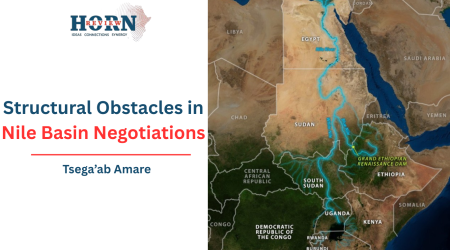
Structural Obstacles in Nile Basin Negotiations
The hydropolitics of the Nile Basin have long represented an...
13
Mar
Gulf Experiences and Strategic Choices for the Horn of Africa
Within the volatile architecture of modern international relations, few...