
24
Feb
From Hormuz to Bab el- Mandeb: Coercion, Compromise and Continuity
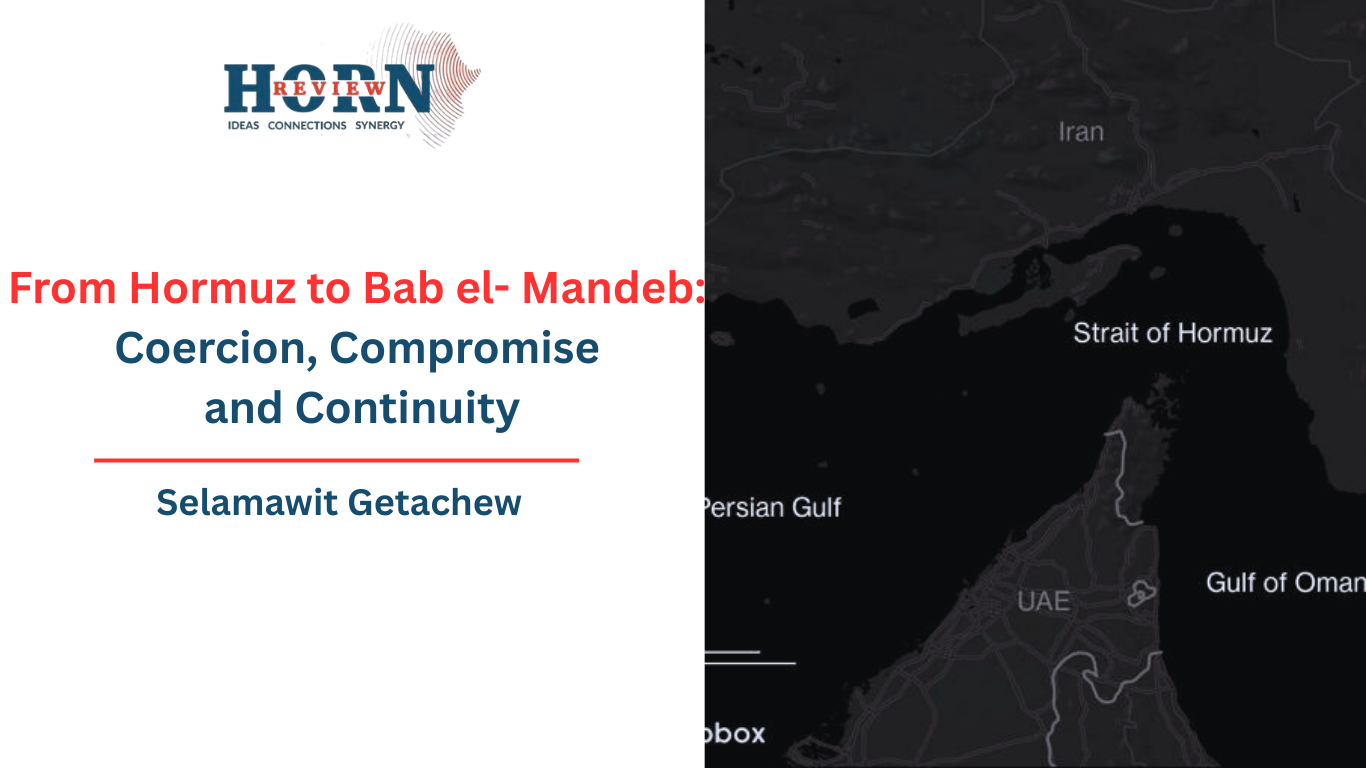
The renewed 2026 U.S.-Iran dialogue is not a return to cooperative diplomacy. It is an effort to regulate confrontation within a Gulf security that no longer rests on uncontested American primacy nor on Iranian isolation. From the Strait of Hormuz to the Bab el-Mandeb, nuclear latency, proxy warfare, and maritime vulnerability form a dual checkpoint deterrence system. What unfolds in Muscat reverberates beyond the Gulf, extending into the Red Sea corridor and the Horn of Africa.
In early February 2026, the United States and Iran resumed indirect negotiations in Muscat, mediated by the Omani Foreign Ministry, with a follow-up in Geneva February 17 between Iran’s Foreign Minister Abbas Araghchi and U.S. envoys Steve Witkoff and Jared Kushner. The talks reopened amid overt military signaling and bargain space remains narrow: enrichment limits for sanctions relief. U.S. efforts to widen talks to missiles and regional posture meet firm Iranian resistance. While verification coordination with the IAEA proceeds in parallel, overall architecture remains deterrence-backed crisis management rather than recalibration
Although the talk described as constructive, the optimism is procedural, not substantive. Dialogue has not collapsed reducing immediate volatility, yet neither side has conceded core strategic instruments. The relationship reflects a security dilemma operating within structural asymmetry; a global power seeking containment and a regional power pursuing regime survival. Each frames its posture as defensive while interpreting the other’s as escalatory. Washington views enrichment limits as essential to regional balance; Tehran insists enrichment capability and missile deterrence as regime insurance against external coercion.
The asymmetry is clear. The United States demands restrictions on enrichment levels and broader constraints, reflecting pressure from regional allies, particularly Israel. Coercive diplomacy remains central: sanctions and forward naval presence persists as leverage.
Israel’s influence on the Iran file has operated through both overt security signaling and sustained diplomatic pressure. Successive Israeli governments have framed Iran’s enrichment capacity approaching weapons-grade purity as an existential threat. Israeli intelligence disclosures in 2018 regarding Iran’s past nuclear archive shaped U.S. domestic debate ahead of the U.S. withdrawal JCPOA. Israeli leaders, including Prime Minister Benjamin Netanyahu, have consistently argued that sanctions relief without permanent structural limits enables Iranian strategic entrenchment across the region.
Israel, conducting what analysts describe as a “campaign between wars,” involving airstrikes against Iranian-linked infrastructure in Syria and reported covert actions targeting nuclear and missile facilities inside Iran. These actions have aimed to delay technological advancement while avoiding full-scale war. Though not formally acknowledged in all instances, the pattern of calibrated disruption reinforces deterrence signaling independent of formal negotiations.
In the present 2026 context, Israel is not a direct participant in Muscat or Geneva, yet Washington must weigh allied deterrence credibility alongside escalation management. Thus, Israeli strategic posture functions as an external variable shaping the negotiation bandwidth: excessive U.S. concessions risk alliance strain; excessive pressure risks regional escalation.
U.S.-Iran rivalry is not historically fixed. Prior to the 1979 Islamic Revolution, Iran under Mohammad Reza Pahlavi was a central U.S. security partner. Cooperated economically on nuclear development under the 1957 Atoms for Peace Programme, and provided security guarantees that underwrote Tehran’s defense posture throughout the 1960s and 1970s.
That alignment collapsed after the 1979 revolution, which replaced with a theocratic republic that opposed U.S. regional role. Yet event such as the 1953 Anglo-American backed coup against Prime Minister Mohammed Mossadegh, indicate historical rupture explaining why cooperation remains conditional, mistrust deeply embedded reinforcing Iranian regime survival logic that shapes contemporary behavior. Current negotiations therefore reflect tactical convergence avoiding war, reflecting bargain under threat, preferring to minimize catastrophic escalation.
Iran Deputy Foreign Minister Majid Takht Ravanchi publicly framed progress as contingent on U.S. seriousness. Tehran signals willingness to dilute portions of its 60 percent enriched uranium stockpile in exchange for measurable economic concessions. An echo of the 2015 Joint Comprehensive Plan of Action, but without the same multilateral enforcement depth.
Unlike 2015, the current process lack a comprehensive institutional anchor; narrower, more fragile and centered on reciprocal signaling. Sanctions as constraint; enrichment as insurance. Both sides seek predictability within rivalry.
The collapse of the JCPOA in 2018 marked the breakdown of institutionalized deterrence stability. Following the United States withdrew under President Donald Trump, verification mechanisms weakened, and Iran incrementally expanded enrichment beyond 3.67 percent cap, reaching 60 percent purity. The nuclear file shifted from multilateral compliance into a bilateral pressure contest. The question since has not been whether diplomacy exists, but whether diplomacy can coexist with coercion.
Deterrence has repeatedly approached rupture. The January 2020 killing of Qasem Soleimani demonstrate how managed confrontation can near uncontrolled escalation. The United States framed the strike as deterrence restoration; Iran’s calibrated missile retaliation against Ain al-Asad airbase in Iraq signaled capability without crossing the threshold of full-scale war. Resolve was demonstrated on both sides, yet escalation was contained.
Maritime signaling reinforces this pattern. Roughly one-fifth of global traded oil transits the strait of Hormuz. Even limited incident there affects energy markets. The 2019 tanker incidents disrupted insurance premiums and increased naval deployments. Maritime risk pricing become a highly sensitive to geopolitical tension alongside other market variables. The pattern reappeared in late 2023, when Red Sea instability and Houthi operation widely reported as aligned with Iranian strategic interests prompted major shipping firms to reroute vessels around the Cape of Good Hope. Freight rates surged; transit time extended. Approximately 6-7 million barrels per day of oil and petroleum produces pass through the Bab el-Mandeb. The nuclear dispute thus indirectly shapes maritime stability by influencing escalation thresholds in the Gulf, though proxy dynamics particularly Yemen retain operational autonomy.
The Gulf-Red Sea corridor are therefore strategically fused; the Strait of Hormuz in North and Bab el-Mandeb in South. This southern hinge places the Horn of Africa within the same deterrence arena. As escalation in the Persian Gulf expand, naval deployment increase by both regional and external powers. while primarily concentrated near Hormuz Strait, these deployment increase maritime density across the northern Arabian Sea and can expand operational attention toward Bab el-Mandeb, particularly when Red Sea instability coincides.
Djibouti, hosting U.S., Chinese, and French military bases experiences heightened geopolitical centrality. Maritime instability increases its logistical importance while intensifying great-power positioning. Also confrontation between Washington and Tehran intensifies, the concentration of external military assets in Djibouti increases relevance.
For Ethiopia, whose external trade conducts transit Djibouti’s ports, this positioning ties domestic economic stability directly to Red Sea corridor security. Insurance premiums and reroutes costs transmit geopolitical risk directly into the Horn economies. Somalia’s exposure operates within same pattern as naval patrols and external deployment along its coastline. Security coordination and global power presence in adjacent water alter the political and security environment along its coastline.
Bab el-Mandeb therefore not peripheral to Horn; It is embedded in the same strategic equation. The Horn state are not merely passive recipients of external rivalry. Djibouti leverages base diplomacy for strategic bargaining power, while regional actors calibrate external partnerships to maximize security and economic gains within the global power competition.
Historical precedent supports this transmission mechanism. After the 2015 JCPOA limited enrichment and expanded inspections, maritime incidents declined relative to the later 2019 peak, as regional tensions temporarily eased. Insurance markets recalibrated as risk perception diminished. Conversely, after the 2018 U.S. withdrawal and subsequent tanker incidents, premiums surged and naval deployments expanded. The 2023 Red Sea disruptions replicated this escalation-to-insurance pipeline.
Multipolarity further complicates the landscape. Growing military coordination between Iran and Russia expands Tehran diplomatic depth. Parallel to this, China brokerage of the 2023 Saudi-Iran rapprochement and its permanent naval presence in Djibouti embed additional pole into the Gulf-Red Sea. Thus, Hormuz and Bab el-Mandeb are no longer arenas of bilateral U.S.-Iran contestant alone; they are enclosed within multi-polar competition.
Further Joint naval drills conducted by Iran, Russia and China, parallel to their alignment within the Shanghai Cooperation Organization signals coordinated stance without constituting formal military alliance. For Tehran, these ties provide insurance against economic isolation and expand deterrence options beyond the Gulf, complicating Western pressure. Thus, Hormuz and Bab el-Mandeb are no longer arenas of bilateral U.S.-Iran contestation alone; they are enclosed within broader multi-power competition.
If the 2026 talks produce even limited stabilization, maritime risk may moderate and naval posture gradually could shift from escalation toward monitoring presence. Freight volatility would decline, easing transit uncertainty across the Red Sea corridor. The Horn economies would indirectly but tangible benefit.
However, stabilization will depend not only on enrichment limit but on perception management: while proxy leverage persists particularly Iran’s influnce in Yemen; Bab el-Mandeb instability will likely endure irrespective of nuclear diplomacy.
From Hormuz to Bab el-Mandeb, coercion and compromise coexist with in single strategic corridor. Whether these dialogue recalibrates escalation or merely manages it remains uncertain. What is clear is that consequences of miscalculation now travel farther beyond the negotiating table.
By Selamawit Getachew, Researcher, Horn Review

RELATED
Posts
2
Apr
Networked Conflict, A Place Beyond Terrorist Cells.
The Sahel rarely commands the frantic, immediate attention of the...
2
Apr
Self-Reliance or Struggle? How the Alliance of Sahel States Plans to Sustain Its New Security Coalition
The military leaders of Burkina Faso, Mali, and Niger are...
2
Apr
A Threat Deferred : The Strait and the Shadow
Deconstructing the Houthi Threat to Bab el-Mandeb
On March ,...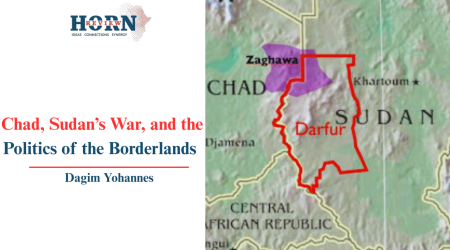
2
Apr
Chad, Sudan’s War, and the Politics of the Borderlands
Chad and Sudan’s relations have never been confined by cartography,their...
2
Apr
Modi’s Knesset Covenant: Will the Hexagon Axis Remake the Red Sea Order?
Prime Minister Narendra Modi’s historic February 25, 2026, Knesset speech,...
2
Apr
Israel’s Hexagon and the Red Sea Gateway: Strategic Implications for the Horn of Africa
Across the Eastern Mediterranean, the Gulf, and the Red Sea...
2
Apr
The Muslim Brotherhood, Wartime Sudan, and the U.S. Terrorist Designation
On Monday March 9, 2026 the U.S. state department...
26
Mar
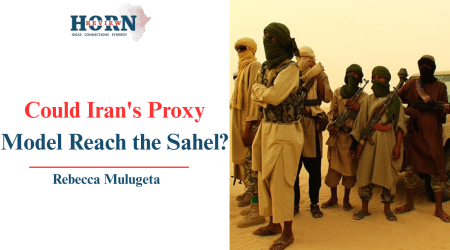
Could Iran's Proxy Model Reach the Sahel?
Recently It looks like the Sahel has graduated from a...
23
Mar
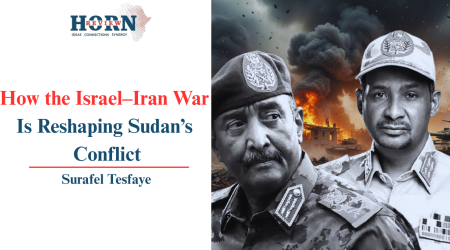
How the Israel–Iran War Is Reshaping Sudan’s Conflict
The launch of Operation Epic Fury on February 28,...