Eritrea today moves with the weight of its history pressing on every decision it makes, its leadership locked in a strategic posture that often seems at odds with the realities of the present. The tension with Ethiopia – the very neighbour from which it seceded after decades of struggle – now dominates its foreign policy and security thinking. This tension is no longer simply rooted in a direct bilateral rivalry, but in a complex web of alliances, historical anxieties, shifting regional alignments, and domestic political imperatives that have hardened into what can only be described as a pervasive strategic fear.
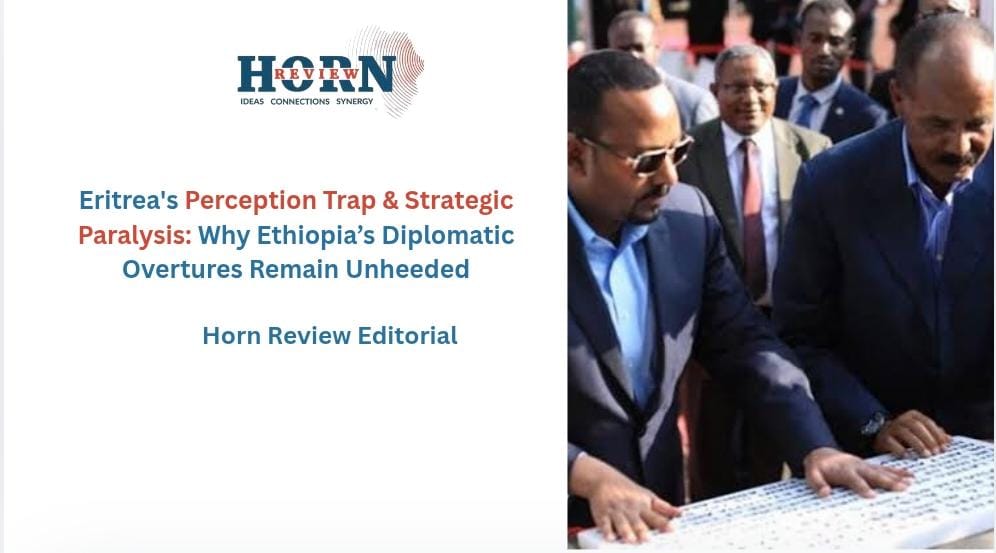
At the heart of Eritrea’s stance is a long memory: the bitter border war from 1998 to 2000, which left deep psychological and institutional scars, and the protracted period of “no war, no peace” that followed the Algiers Agreement. That conflict did not merely produce a ceasefire; it embedded a worldview in Asmara’s leadership in which Ethiopia is seen not just as a rival but as a source of chronic insecurity. Even when diplomatic overtures emerged upon the initiation of the Ethiopian Prime Minister Abiy Ahmed – such as the historic 2018 summit that formally ended decades of estrangement and reopened borders – the underlying distrust of Eritrean elites never fully dissipated.
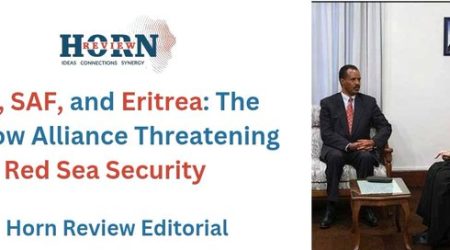
Today’s tensions reflect a striking paradox: Eritrea has strengthened its long-standing ties with Ethiopia’s historical adversary – Egypt, engaged in tactical alignment with a splinter faction of the Fano and the Tigray People’s Liberation Front, utilising that relationship as part of its regional strategy. Yet this tactical posture has done little to mitigate its deeper fear of Ethiopia as an unpredictable and potentially dominant state. Any sober policy analyses would suggest that Eritrea’s recent escalations are less about the operational capacity of that splinter group, and more about Asmara’s broader strategy to maintain leverage against an Ethiopia it perceives as both powerful and threatening.
This fear is not without contextual roots. Ethiopia – unlike its rivals, Eritrea included – remains a unified state with demographic heft, economic potential, and a modernising military. Even as Ethiopia struggles with internal divisions, such as factions within the TPLF itself, Amhara unrest, and security challenges in Oromia, its core institutions remain intact. Analysts have observed that external actors like Eritrea often exploit internal instability in Ethiopia as part of broader geopolitical calculations – yet the federal state’s endurance and centralising tendencies temper those opportunities.
Hence, Eritrea’s anxiety is amplified by the fragility of the alliances it has pursued. Tactical alignments with splinter groups or proxy actors – whether factions of the TPLF or militias operating in Ethiopia – are inherently unstable and conditional. These actors often lack coherent long‑term strategy, are subject to shifting loyalties, and reflect internal Ethiopian dynamics rather than a unified anti‑Addis political front. In investing future security in such transient partnerships, Eritrea and its proxy handlers risks strategic overreach, particularly as those alliances are most likely to unravel when Eritrea needs them most.
The broader Horn of Africa context only intensifies this uncertainty. Competing regional powers, external influences from Gulf states, and old unresolved disputes over issues such as Ethiopia’s quest for independent access to the Red Sea all complicate the picture. Ethiopia’s historic desire for maritime access – a central element in its development strategy and demographic logic – remains a red line for Eritrea, which rhetorically frames any transactional negotiations and mutually beneficial logical concessions over ports or borders as a direct existential threat. Nonetheless, the tension between the two states is more about Eritrea’s subversion than it ever was about Ethiopia’s geography.
Hence, while the structural sources of tension are real, the psychological weight of historical memory cannot be understated. Eritrea’s leadership, shaped by decades of revolutionary struggle and siege mentality, often interprets diplomatic openings as strategic manoeuvres rather than genuine attempts at compromise. This makes negotiation a psychologically fraught prospect; extending an olive branch may be perceived internally not as prudence but as concession or weakness. Political legitimacy in Asmara has long been tied to survival under external threat, and reframing that narrative to embrace negotiation requires a recalibration that current leadership has shown little inclination to make.
From Ethiopia’s perspective, this hardened posture has been met with official accusations of aggression and interference, including claims that Eritrea is backing armed groups within Ethiopian territory and occupying parts of the shared border. Addis Ababa has publicly accused Eritrea of military provocations and aggression while also stating a willingness to engage in dialogue if Eritrea respects Ethiopia’s sovereignty. This dual posture – asserting readiness to negotiate while bracing for conflict – reflects Ethiopia’s own strategic dilemma, mindful of regional stability but determined to defend what it considers legitimate interests, including access to ports.
The cost of misperception is enormous. The Horn of Africa has already shouldered decades of conflict, displacement, and economic stagnation. Analytical estimates argue that war has drained hundreds of billions of dollars in potential development, cost hundreds of thousands of lives, and left deep social scars that will take generations to heal. Civilian suffering in previous conflicts, including documented atrocities, continues to shape public attitudes toward militarisation and diplomacy alike.
Yet, amid this complexity, the door to negotiation remains open. Ethiopia’s official stance, as stated in the Minister of Foreign Affairs’ letters to various international actors including his Eritrean counterpart, includes an offer of dialogue, and regional actors continue to advocate for diplomacy as the most viable path toward long‑term stability. The key strategic question for Eritrea is whether it can begin to distinguish between necessary vigilance and self‑perpetuating fear. Negotiation does not require naïveté; it demands strategic clarity – a recognition that rigid postures rooted in historical grievances can trap states in cycles of hostility far more costly than the threats they fear.
In this light, Eritrea’s strategic dilemma transcends the tactical alignments and military mobilisations of the moment. It points to a broader challenge faced by many post‑conflict states: how to transform security paradigms shaped by historic war into a forward‑looking approach capable of managing uncertainty. True stability in the Horn of Africa will not emerge from hardened fear, but from a political imagination that embraces negotiation not as a surrender to vulnerability, but as an instrument of strategic strength – one that acknowledges past wounds without being governed by them.
By Horn Review Editorial