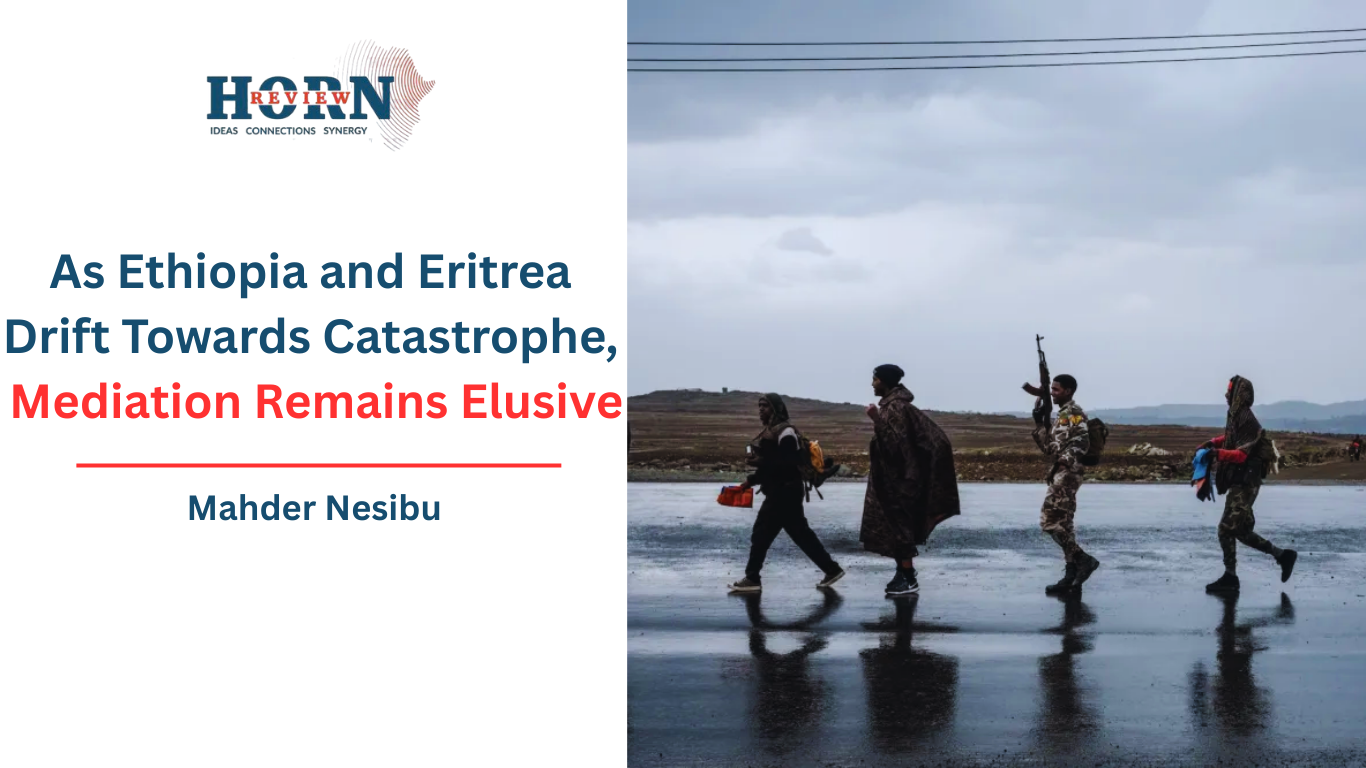
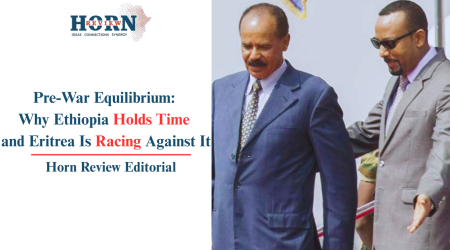
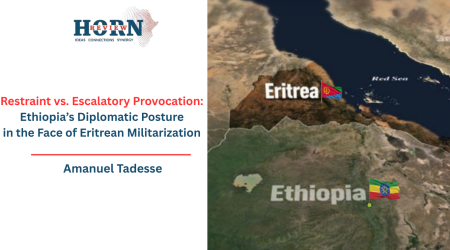
The deteriorating relationship between Ethiopia and Eritrea appears to have reached a critical juncture, with multiple reports suggesting that open hostilities may be increasingly imminent. While bilateral relations have been in gradual decline for some time, with speculation about war becoming a regular feature of international discourse, recent weeks have witnessed a significant escalation in tensions, dramatically heightening the likelihood of military confrontation.
What precipitated the current crisis was an offensive launched by the Tigray People’s Liberation Front (TPLF) that shattered months of political deadlock. The underlying dynamics had been evident for some time: mounting tensions between Asmara and Addis Ababa, TPLF’s own fallout with the federal government, the TPLF’s own fallout with the Federal Government, the emergence of the Tsimdo alliance between Eritrea and various armed groups operating within Ethiopia (including the TPLF and Fano militias in the Amhara region), and Ethiopia’s persistent quest for maritime access. Despite these simmering tensions, however, active combat had remained limited, creating a state of strategic stagnation in which the peace accord signed in Pretoria existed in political limbo.
The TPLF offensive, which occurred late last month, was ultimately repelled by the Ethiopian National Defence Forces (ENDF). Interim President Tadesse Worede acknowledged the attack and its repulsion, while former Interim President of Tigray, Getachew Reda, characterized the operation in more strategic terms, describing it as “coercive bargaining,” reescalation designed to extract concessions. This framing reveals much about the TPLF’s current strategic posture.
The reality is that the TPLF now stands unable to sustain a war effort comparable to the one it prosecuted several years ago. Internal divisions have weakened the organization, and it has forfeited significant popular support within Tigray itself. These factors have severely constrained its ability to dictate political terms to the federal government. Instead, the TPLF finds itself increasingly reliant on Asmara for material and strategic support. The alliance of convenience has, in effect, become the TPLF’s sole lifeline.
This dependency became even more pronounced after the TPLF was repelled by the Ethiopian Defence Forces. In response to the failed offensive, Eritrean forces have established a greater presence within Tigray, providing the kind of support that the TPLF can no longer generate internally. Asmara has systematically exploited the arrangement to undermine Ethiopia’s internal security and to weaken the federal government’s capacity to establish and maintain order across its territory.
The essential point is that, as the TPLF’s capacity to exert independent pressure on the federal government continues to erode, the Tsimdo alliance is being perceived as existentially necessary. This growing dependency, however, exacts a considerable cost from an already fragile peace. With Eritrean military forces now gaining increased access to Ethiopian territory and operating in areas they previously did not have access to, the Ethiopian government finds itself in an increasingly untenable position, one that will likely necessitate a forceful response.
The letter sent by the Ethiopian Foreign Minister to his Eritrean counterpart came shortly after the failed TPLF offensive. It reflected the Ethiopian government’s mounting frustration with Eritrean intervention in Tigray, which has emboldened the TPLF and significantly worsened the security situation across the northern region.
Asmara’s response, however, was a public denial, even as Eritrean soldiers have expanded their presence on the ground. Reports indicate that Eritrean forces are not only amassing troops in previously occupied areas but are pushing deeper into Ethiopian territory, with some accounts placing them as far as Mekelle. Coordination between Eritrean forces and the TPLF on the ground has intensified, further complicating the security landscape.
As Eritrea is actively expanding its alliances with non-state armed actors operating within Ethiopia. Its military presence is growing significantly, extending beyond formerly occupied zones and reaching areas considered a red line by the Ethiopian government.
This escalation appears to have triggered a decisive reaction from Ethiopia. Following the successful repulsion of the TPLF offensive, reports have emerged of extensive mobilization by the ENDF. The Ethiopian government now finds itself confronting a strategic quagmire. Since the conclusion of the Tigray conflict, it has invested heavily in rebuilding and enhancing the capabilities of the Ethiopian National Defence Forces, amassing troops, upgrading equipment, and limiting fighting with internal armed actors. The ENDF now possesses a capable, well-equipped force.
However, this military build-up has not achieved its intended deterrent effect. Despite Ethiopia’s enhanced military posture, Eritrea appears increasingly willing to instigate conflict through its proxy networks. Rather than being deterred, Asmara has grown more assertive, expanding its footprint and deepening its involvement in Ethiopia’s internal affairs. This represents a fundamental failure of deterrence strategy and places the Ethiopian government in a difficult position. The risks inherent in this trajectory are substantial.
The region stands on the precipice of what could become a devastating and multifaceted conflict. The Ethiopian Defence Forces, now battle-tested and well-equipped, could find themselves simultaneously confronting the Eritrean Army, the TPLF, and the Fano insurgency in Amhara, all operating within a framework coordinated by Asmara. This convergence of hostile forces represents a dire scenario for regional stability.
Moreover, this coalition of actors may potentially receive support from external powers, including the Sudanese Armed Forces and possibly Egypt, both of which maintain their own strategic interests in the region. Such external involvement would transform what might otherwise be a bilateral conflict into a complex, multi-actor regional war with unpredictable consequences.
The potential human and economic toll on both Ethiopia and Eritrea would be catastrophic. The Horn of Africa as a whole, already contending with internal instability and interstate tensions, would face further devastation. Infrastructure, livelihoods, and lives would be destroyed on a massive scale.
Neighbouring Sudan provides a telling cautionary example of the current regional landscape. What appears on the surface to be a civil war has been fuelled and sustained by a complex web of foreign interference. This external involvement has multiplied the scale of conflict and destruction, protracted the fighting, and rendered ceasefires or peace agreements exceptionally difficult to achieve. The conflict has become self-sustaining, fed by competing regional interests that have no incentive to see it end.
Ethiopia and Eritrea could easily follow a similar trajectory. With multiple regional actors holding significant stakes in both countries, the likelihood of external intervention is high. Such interference would not only expand the scope and intensity of the conflict but would also make any negotiated settlement far more difficult to achieve. Once regional powers become directly invested in the outcome, the conflict assumes a life of its own, driven by competing interests that extend far beyond the original grievances.
The prospects for effective mediation appear limited. The fundamental problem is that most of the region’s middle powers are too deeply invested in one side or the other. They do not operate from a position of neutrality but rather from a position of interest, which undermines their credibility as honest brokers. Saudi Arabia could theoretically serve as a mediator, given its regional influence and diplomatic capacity. However, similar to Turkey and the United Arab Emirates, Saudi Arabia maintains significant vested interests across the Horn of Africa. These interests inevitably colour its approach to regional disputes, making it a biased mediator that would likely struggle to bring the parties to any meaningful consensus.
What is required is a truly neutral third party with sufficient leverage and credibility to bring both sides to the negotiating table. Unfortunately, in the current regional landscape, such an actor is difficult to identify. The African Union, while theoretically positioned to play this role, has filed to ensure parties to Pretoria, the agreement that brought peace to Tigray, remain committed. The international community, including the United Nations and multilateral institutions, could potentially play a role, but their influence and interest in the region has waned in recent years. Moreover, Eritrea has thus far resisted Ethiopia’s calls for dialogue and there has not been a serious effort from Washington or any other party to establish negotiations. As tensions escalate and military mobilization accelerates, the window for diplomatic resolution continues to narrow.
By Mahder Nesibu, Researcher, Horn Review