Command and Contention
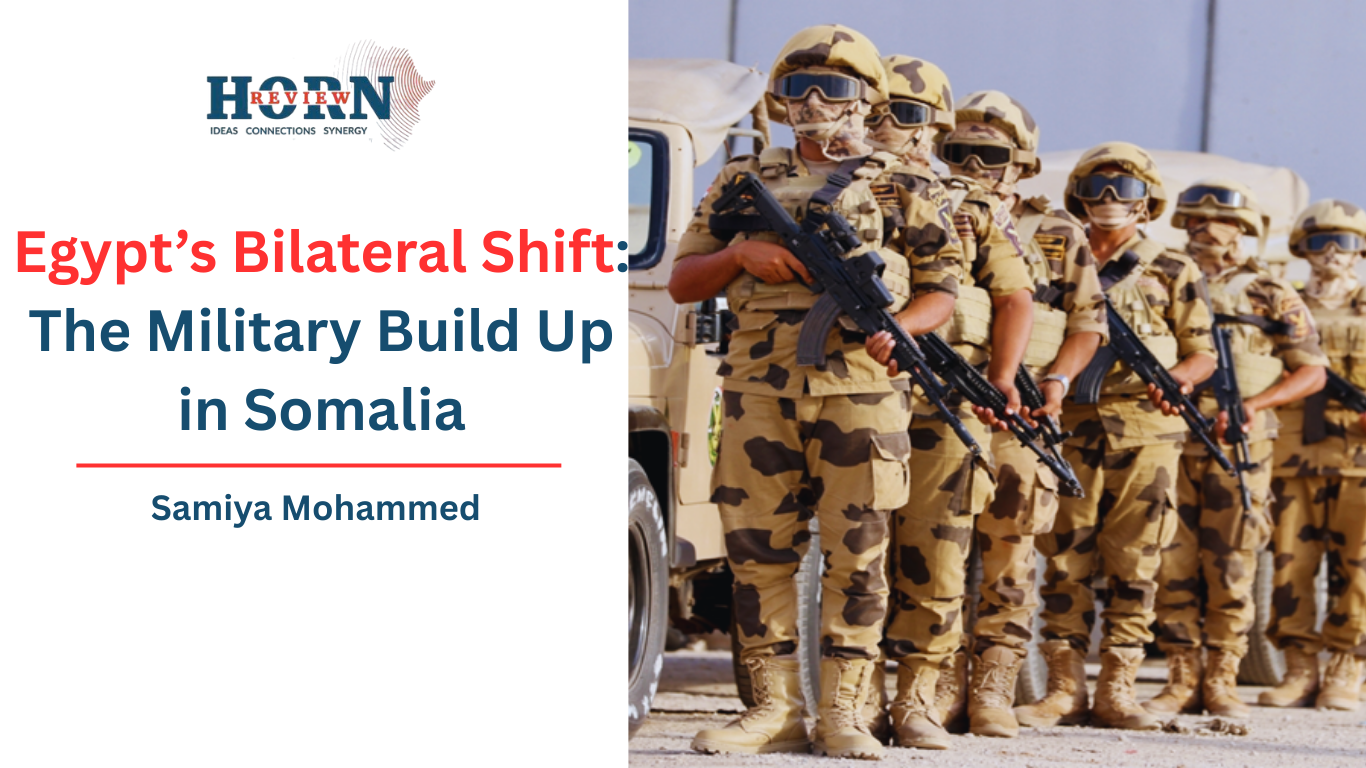
What began as a symbolic political partnership between Egypt and Somalia is evolving into a direct and substantial military engagement fundamentally shifting the changing of foreign intervention in the region. Having first positioned its involvement within a multilateral structure of the African Union’s support mission Cairo’s growing involvement is increasingly denoted by bilateral agreements and direct force projection. This solidified in the February 2026 Cairo talks between Presidents Abdel-Fattah El-Sisi and Hassan Sheikh Mohamud indicates a serious escalation that could shape the balance of power.
The foundation for Egypt’s current military posture in Somalia was laid over several years of calculated diplomacy and this partnership was operationalized through concrete military agreements. As reported Egyptian military shipments began arriving in Somalia in late 2024 followed by the formal authorization of the African Union Support and Stabilization Mission. While Egypt has publicly committed to contributing forces under this AU banner the diplomatic sequence enabled a pronounced shift transforming Somalia into an arena for broader regional intention. The recent February 2026 summit served as the latest confirmation of this course with President El-Sisi explicitly stating that Egypt is proceeding with the deployment of its forces to support stability in Somalia.
The core of the current escalation lies in the nature of Egypt’s engagement which is decisively tilting from multilateral oversight toward bilateral arrangements. This transition carries implications for regional security, command structures and accountability. Unlike traditional peacekeeping under strict multinational mandates bilateral deployments offer Cairo a more direct and unfettered relationship with the Somali government.
This model allows for operations in sensitive areas including regions near the Ethiopian border with potentially greater independence from AU or UN coordination mechanisms. The reported operational design suggests an initial contingent of over a thousand personnel under the AUSSOM framework could expand through bilateral channels to involve a much larger track with a potential total scale of up to 10,000 personnel.
This bilateral shift reduces institutional oversight and increases the potential for independent Egyptian operations tailored to Cairo’s interests rather than solely to a unified multinational mandate. This creates a dangerous operational patchwork that complicates command, control and interoperability with other foreign forces in Somalia.
The single most powerful driver is Egypt’s determination to counter Ethiopia’s regional ambitions. The dispute over the GERD on the Nile, pursuit of Red Sea access and continued assertions of interest is viewed in Cairo. The permanent security presence in Somalia provides Egypt with a durable counterweight, offering a platform to constrain Ethiopian influence and gain additional diplomatic leverage in their overarching contest.
Egypt has positioned itself as the foremost external guarantor of Somalia’s territorial integrity. This stance gained renewed urgency following Israel’s reported recognition of Somaliland in December condemned by both Cairo and Mogadishu as a violation of international law. President El-Sisi has said any recognition of secession as a dangerous precedent threatening the entire Horn.
Egyptian officials consistently emphasize that responsibility for securing the Red Sea and Gulf of Aden rests exclusively with the states bordering them. The shift toward a heavy trace, bilateral military strategy is fraught with risks that could undermine Somalia’s long term stability and trigger wider conflict.
A primary concern is the potential diversion of advanced weapons, vehicles, and sustainment materiel. As seen in conflicts from Iraq to Afghanistan when large scale military deployments flood a dainty state with equipment, the risk of these assets being lost, stolen or captured by insurgent groups is high. In Somalia such diversion could empower Al-Shabaab or clan militias dramatically increasing their tactical capabilities and enabling more attacks.
Ethiopia has lodged diplomatic objections and has thus far prioritized de-escalation. However, the presence of Egyptian forces operating bilaterally near borders increases the risk of direct or indirect clashes. This could destabilize the delicate political accommodations within Somalia itself.
The bilateral track risks eroding the cohesion and legitimacy of the AU led mission. It creates a two tiered system of foreign engagement where some actors operate with greater autonomy than others. Furthermore, short term military solutions cannot substitute for the inclusive political governance needed to build lasting local legitimacy. Over securitization may provide tactical gains but risks creating a long term security deficit that weakens the very state institutions it aims to bolster.
The confirmation of advancing Egyptian troop deployments following the February 2026 Cairo summit is not a routine diplomatic development. It is of a deliberate years long strategy by Egypt to establish a direct and potent military in Somalia. This transition from primarily multilateral support to robust bilateral engagement marks a serious and escalatory new chapter in the Horn of Africa.
Driven by an intense rivalry and a determination to control the Red Sea security paradigm, Egypt’s lobbying and agreements have successfully positioned it as Mogadishu’s primary security partner. However the bilateral nature of this shift with its reduced oversight and direct linkage to Cairo’s national interests introduces new risks. It increases the potential for materiel diversion, empowers non state actors and transforms Somalia into a stage for great power competition.
The coming times will reveal whether this escalation can be managed that prioritizes Somali sovereignty and regional stability or whether it will instead become the catalyst for a broader and more destructive confrontation in the region. The mature, diplomatic ways championed by other regional actors now face a challenge from Cairo’s more direct and militarized approach.
By Samiya Mohammed, Researcher, Horn Review