
13
Feb
Deadlock on the Nile: Egypt’s longstanding Hydropolitical Standoff with Ethiopia
While Egypt and Ethiopia have cultivated a diplomatic relationship spanning nearly a century, the persistence of the Nile dispute reveals a paradox that cannot be dismissed as mere policy friction. Beneath the visible architecture of cooperation lies a precarious equilibrium, one in which Cairo demonstrates a willingness to collaborate across domains that demand profound institutional trust the two countries have signed more then 30 bilateral agreements spanning from trade,investment,aviation,dispute resolution, yet adopts an unequivocal rigidity when the conversation turns to shared water use.
The Investment Treaty of 2006, formally guaranteeing protection from expropriation and permitting the unhindered transfer of capital, illustrates a relationship robust enough to shoulder the risk inherent in cross-border investment while expecting both parties to reap the benefits of economic interdependence. Such a framework is not crafted between adversaries, nor is it sustained between states that perceive one another as structurally irresponsible. Rather, it signals recognition of Ethiopia as a credible economic partner within an increasingly interconnected regional order.
This pattern extends beyond finance into the realm of hard security. The 2018 Security Cooperation Memorandum, centered on counterterrorism and regional stability, suggests that Egypt is prepared to divulge strategic sensitivities and coordinate within environments where miscalculation carries consequences far graver than commercial loss. Security cooperation, after all, is rarely a panacea, but it does presuppose a baseline confidence that neither party seeks to destabilize the other. Yet the moment hydraulic development enters the diplomatic arena, this confidence appears to evaporate, replaced by narratives that portray upstream initiatives as existential threats. The contrast is striking: a state willing to coordinate against shared security risks becomes markedly inflexible when confronted with the prospect of equitable river governance, as though cooperation itself were acceptable only so long as it does not unsettle inherited advantage.
Perhaps most revealing is the 1986 Dispute Settlement Agreement, a mechanism explicitly designed to prevent bilateral tensions from escalating into confrontation. Its existence undermines the recurring claim that the Nile impasse stems from an absence of institutional pathways for dialogue. Mechanisms exist; what remains absent is the political disposition to activate them when the outcome might redistribute long-entrenched privileges. To continue demanding exceptional guarantees in this context risks reinventing the wheel, particularly when both states have already affirmed principles of negotiated resolution. The cumulative implication is difficult to ignore: the failure to reach agreement on the Nile is not born of technical impossibility, nor of diplomatic illiteracy, but of a deeper reluctance to transition from hydro-hegemony toward a genuinely shared regime of water governance. So why not agree on Nile?
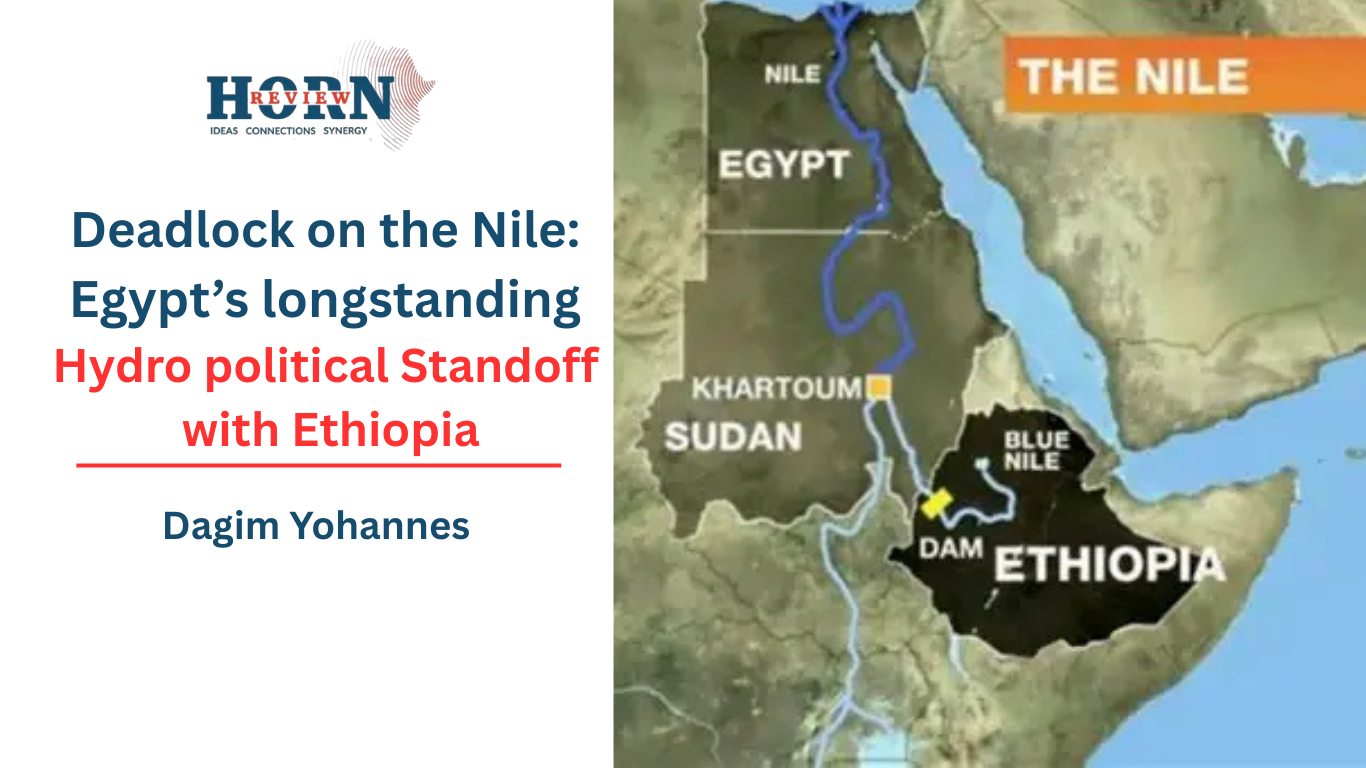
Egypt’s claim that the Nile is a “red line” is rooted in a real sense of vulnerability: the country is one of the most water-scarce in the world, with per capita water availability far below the internationally recognized water poverty threshold, and over 95 percent of its renewable freshwater coming from beyond its borders. This structural dependency has shaped a strategic culture where water security is treated as synonymous with national survival. Cooperative flexibility looks precarious, and resistance is framed as prudence. But this narrative of existential threat collapses when Egypt’s own water management shortcomings are considered. Its ambitious desert reclamation projects, the construction of water-intensive luxury golf courses are examples. Agricultural practices remain highly inefficient, dominated by flood irrigation and crops unsuitable for arid conditions, while urban systems continue to lose water through outdated infrastructure and leakage.Egypt’s narrative of existential dependence on the Nile often overlooks the substantial groundwater reserves already within its reach. Groundwater is the country’s second-largest water source, with about 6.1 billion cubic meters extracted annually from the Nile Valley and Delta alone, while broader aquifer availability is estimated at over 11 billion cubic meters per year.More consequential is the Nubian Sandstone Aquifer, a transboundary fossil reserve storing roughly 40,000 km³ of paleowater, underscoring that Egypt is not hydrologically bereft but strategically under-diversified.Although much of this water is non-renewable and demands disciplined governance, its scale challenges the unequivocal survivalist discourse that frames the Nile as Egypt’s sole lifeline. A state endowed with such subterranean capital should shoulder the risk of optimizing groundwater and integrated water management rather than securitizing river flows. Doing so would dilute zero-sum basin politics and signal a transition from historical entitlement toward adaptive stewardship. In contrast, Ethiopia’s management of the Blue Nile through the Grand Ethiopian Renaissance Dam shows rational and sovereign use of resources aimed at hydropower generation, regulating seasonal flows, and supporting development for millions. By securitizing the Nile while overlooking these domestic inefficiencies, Egypt frames upstream development as an existential threat, when in reality it is Ethiopia’s careful, forward-looking governance that offers the Nile basin a sustainable and equitable future.
Egypt’s posture on the Nile is strongly reinforced by a sense of historic entitlement. The hydro-political order was profoundly shaped by the 1929 Anglo-Egyptian Treaty, which granted Egypt extensive control over river use and effectively gave it veto power over upstream projects. This position was further consolidated through the 1959 Nile Waters Agreement with Sudan, allocating the overwhelming majority of the river’s average annual flow to the two downstream states while excluding upstream nations entirely. Ethiopia, despite contributing the dominant share of the Nile waters through the Blue Nile, was never a signatory. Today, this historical and psychological legacy continues to shape Egyptian expectations, framing equitable calls from upstream states as challenges to a deeply internalized hierarchy of rights.
Yet these colonial-era treaties and downstream agreements are fundamentally unacceptable to other riparian states. They institutionalize asymmetry, ignore the legitimate needs and rights of upstream nations, and perpetuate a zero-sum approach to shared resources. Ethiopia, as the primary source of the Blue Nile, has the sovereign right to utilize its waters, and the sustainable development of the river requires inclusive, basin-wide cooperation. Egypt should therefore abandon reliance on historical privilege and actively participate in multilateral frameworks such as the Nile Basin Initiative and the Cooperative Framework Agreement, which focus on equitable, shared use of the Nile. By engaging constructively within these cooperative mechanisms, the Nile can become a source of shared prosperity rather than a flashpoint of historical grievances.
Egypt’s domestic political considerations often compound the rigidity of its Nile stance. Historically, from the Gamal Abdul Nasser era to el-Sisi’s administration, the Nile agenda has repeatedly been leveraged to shift public focus away from economic hardship, rising inflation, or internal dissatisfaction. Leaders have understood how deeply Egyptians perceive the river as a symbol of civilization and national identity, and they have used this sensitivity to redirect popular attention. During Nasser’s time, Nile issues were entwined with the construction of the Aswan High Dam, projecting a narrative of national pride and progress while consolidating political authority. Similarly, in more recent years, el-Sisi has framed upstream developments, particularly Ethiopia’s dam, as existential threats, amplifying the Nile’s securitized rhetoric even as domestic economic and political challenges mount. By emphasizing the river as both a historical duty and a sovereign right, successive governments have narrowed the space for diplomatic nuance, making any conciliatory approach appear as strategic negligence. In this sense, the Nile agenda has functioned less as a purely hydrological or developmental concern and more as a tool of regime insulation, allowing leaders to channel public scrutiny away from internal fragilities and toward an externalized, emotionally charged cause.
Equally consequential is the unfolding regional power shift, which Egypt perceives with growing unease. Ethiopia’s infrastructural expansion, particularly the Grand Ethiopian Renaissance Dam, signals the emergence of an upstream actor increasingly capable of shaping the hydraulic and developmental future of the basin. Geography alone grants Ethiopia a formidable advantage: the highlands generate the majority of the Nile’s volume, positioning the country as a natural anchor state within the watershed. For downstream powers accustomed to predictable flows under a historically asymmetric order, this transformation introduces strategic ambiguity and the erosion of unilateral influence. Yet Ethiopia’s ambitions extend beyond asserting hydrological sovereignty. Through the generation of electricity and the integration of energy networks, the country aspires to connect the Horn of Africa and Northeast Africa, creating regional interdependence while emerging as a continental power hub. As Werner Muzinger once warned, Egypt has historically approached Ethiopia with a mindset of containment – seeking either to dominate the upstream state or to leave it in disorder – reflecting a long-standing reluctance to accommodate Ethiopia’s ascent. In this light, the Nile is not merely a resource; it is a political instrument through which Egypt has attempted to curtail Ethiopia’s rise, even as Ethiopia’s development trajectory underscores the potential for shared prosperity and regional integration rather than zero-sum confrontation.
Over all, Egypt’s refusal to engage in meaningful collaboration over the Nile is a clear expression of its longstanding hydro-hegemony. Drawing on material, bargaining, and ideational power although it Lack’s locational power,Egypt has long sought to set the rules of the game in its favor, maintaining control over river flows and denying upstream nations meaningful agency. Historical treaties such as the 1929 Anglo-Egyptian agreement and the 1959 Nile Waters Agreement exemplify how this dominance has been institutionalized, granting Egypt veto authority over upstream projects while sidelining nations like Ethiopia. Beyond legal instruments, Egypt leverages economic influence and diplomatic pressure, framing any upstream development as a threat to its existential water security, thereby justifying a rigid, zero-sum approach to Nile politics. Even in the 21st century, such tactics persist, as seen in Cairo’s repeated attempts to delay or delegitimize the Grand Ethiopian Renaissance Dam, casting Ethiopia’s sovereign development as a destabilizing act rather than a lawful exercise of rights.
Ethiopia, however, is actively challenging this entrenched hydro-hegemony. By invoking morality and international law, it asserts the equitable and reasonable use of the Nile, emphasizing the principle that upstream nations cannot be permanently subordinated to historical privilege. The construction of the GERD, financed in large part through contributions from Ethiopian citizens, underscores both popular support and the determination to pursue national development independent of downstream vetoes. Ethiopia’s approach is not confrontational for its own sake; it is rooted in the pursuit of energy security, industrialization, and regional prosperity. Moreover, Ethiopia has repeatedly signaled readiness to engage in constructive negotiations, aiming for a positive-sum outcome that benefits all riparian states. By combining lawful claims, economic development imperatives, citizen-driven investment, and cooperative diplomacy, Ethiopia is not only curbing Egypt’s historical dominance but also redefining Nile politics toward shared benefit, challenging the very foundations of hydro-hegemony that Cairo has long sought to preserve.
To break the long-standing deadlock over the Nile, Egypt must shift from a posture of rigid control to one of practical cooperation that recognizes the legitimate needs of all riparian states. While historical treaties and domestic pressures have long shaped its approach, the current realities demand constructive engagement with Ethiopia and other Nile Basin countries. Egypt should fully embrace the Cooperative Framework Agreement (CFA) as a platform to negotiate water-sharing arrangements that protect its water security while allowing upstream states the space to pursue sustainable development. At the same time, the Nile Basin Initiative (NBI) must be strengthened to enable joint planning, coordinated project implementation, and sustainable management, ensuring that dams, irrigation, and other infrastructure do not create unilateral risks. The experience of the Mekong River Commission (MRC) offers a clear example: despite contested histories,the river flows from Chinese high mountains all the way to South China sea covering 6 riparian state on its way, Mekong states share hydrological data, coordinate dam operations, and plan irrigation and flood control together, preventing conflict and building trust. Egypt can adopt a similar approach fo stering transparency, sharing critical Nile data, and supporting equitable utilization of water. By doing so, it can transform its historical hydro-hegemony into leadership through collaboration, securing its water needs while promoting stability and prosperity across the entire Nile Basin, where upstream and downstream states jointly shoulder risks and share benefits.
By Dagim Yohannes, Researcher, Horn Review

RELATED
Posts
26
Mar
Sudan’s Shadow Alignment: Military Dependence and Diplomatic Denial Amid a Middle East War
The geopolitical orientation of the Sudanese Armed Forces (SAF), under...
23
Mar
Africa in Iran’s Broader Geopolitical Strategy
The eruption of the 2026 military conflict between Iran and...
23
Mar
The Ultimatum as Narrative: How it is Reframing Escalation and Reimagining the Horn of Africa’s Place in a Changing Regional Order
The escalating tensions between the United States and Iran are...
17
Mar
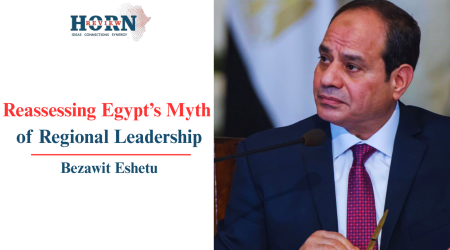
Reassessing Egypt’s Myth of Regional Leadership
In the unstable landscape of the Middle East and North...
17
Mar
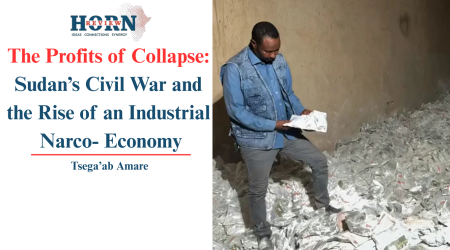
The Profits of Collapse: Sudan’s Civil War and the Rise of an Industrial Narco-Economy
This analysis examines how the ongoing conflict in Sudan is...
16
Mar
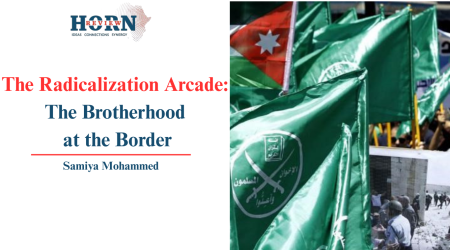
The Radicalization Arcade: The Brotherhood at the Border
Why the Muslim Brotherhood's Control of Sudan's Military Is...
16
Mar
The Profits of Collapse: Sudan’s Civil War and the Rise of an Industrial Narco- Economy
This analysis is based on the landmark report released by...
13
Mar
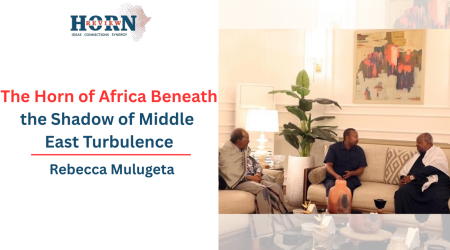
The Horn of Africa Beneath the Shadow of Middle East Turbulence
The Horn of Africa has officially evolved from a silent...
13
Mar
Sudan’s Civil War and the Structural Return of Muslim Brotherhood Power Networks in the Red Sea
Sudan’s current foreign alignment reflects the structural imperatives imposed by...

13
Mar
South Sudan’s Violence and The Strategic Unraveling of The Horn
For decades, the Horn of Africa has been defined as...