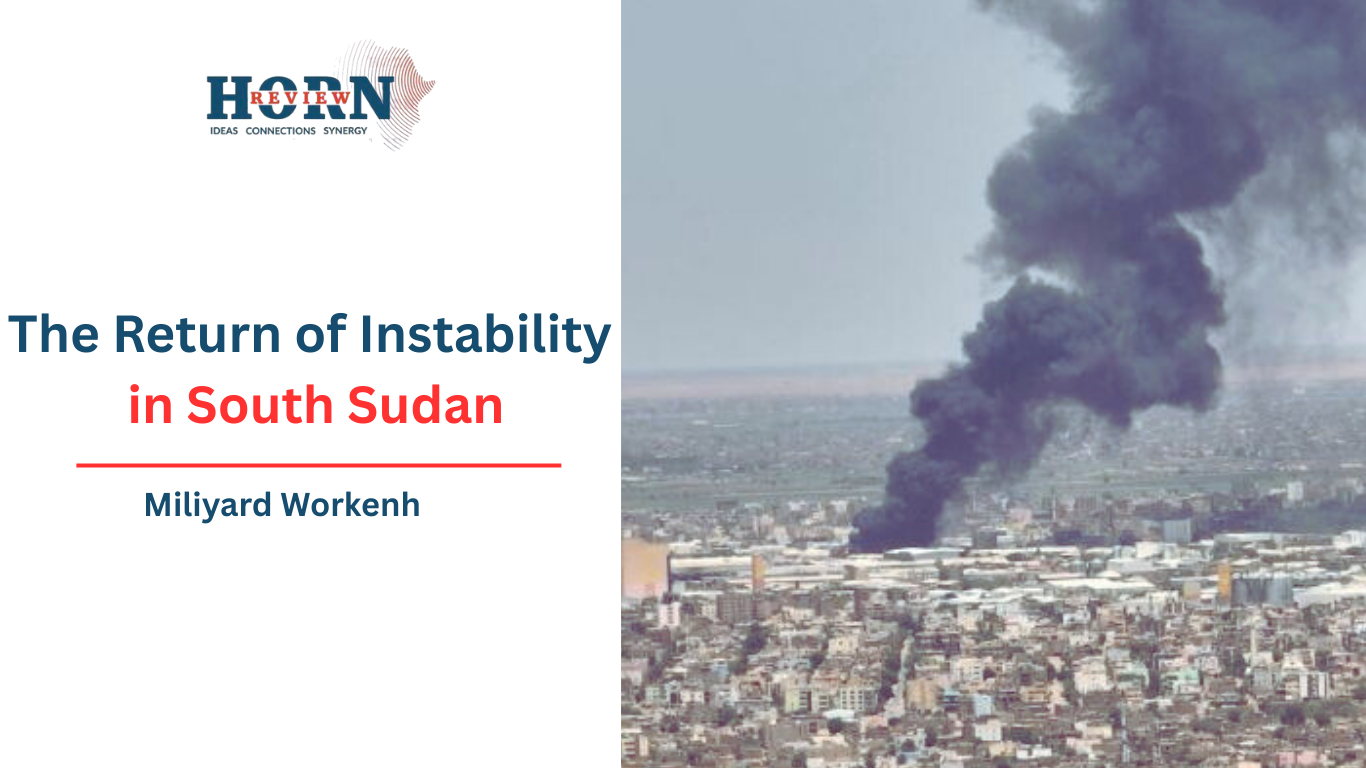
South Sudan, the world’s newest state, has continued to search for a path toward sustainable peace since gaining independence in 2011. However, the country remains trapped in cycles of instability driven by political power struggles, competition over oil resources, and deep ethnic divisions. These factors have not only threatened to drag South Sudan back into civil war, but also risk destabilizing the wider Horn of Africa.
Following independence, South Sudan descended into repeated internal conflicts, most notably the civil war between 2013 and 2018. This war formally ended with the signing of the 2018 peace agreement, officially known as the Revitalized Agreement on the Resolution of the Conflict in the Republic of South Sudan (R-ARCSS). The agreement aimed to restore peace and security through power-sharing, security reforms, and the formation of a transitional government that included rival political factions.
Despite this framework, recent developments have placed the agreement under risk. According to reports by the Associated Press, President Salva Kiir dismissed the interior minister, Angelina Teny who is also the wife of opposition leader Riek Machar both of whom assumed office as part of the power-sharing deal. At the same time, forces loyal to Machar, including the White Army have made territorial gains against government troops in Jonglei State capturing areas such as Pajut, about 300 km from the capital Juba while renewed clashes have been reported in Upper Nile. These events signal a dangerous deterioration of trust between former rivals.
The roots of this conflict can be traced back to the 1990s, when divisions emerged within the Sudan People’s Liberation Movement (SPLM). The split between the SPLM faction led by John Garang, often associated with the Dinka, and SPLM-Nasir led by Riek Machar largely supported by the Nuer, institutionalized ethnic and political rivalries. These tensions have continued to shape South Sudan’s political landscape with the Dinka remaining the largest ethnic group, concentrated in Bahr El Ghazal, Jonglei, and parts of Upper Nile.
Regional Implications: Impact on Ethiopia and Sudan
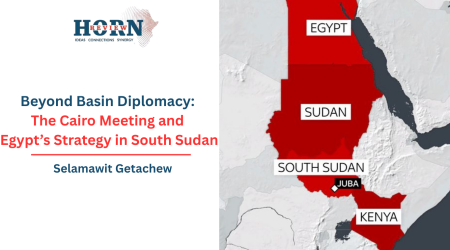
The recent conflict and instability pose a significant threat not only to South Sudan but also to neighboring countries like Ethiopia and Sudan. In the case of Ethiopia, South Sudan and Ethiopia share the western border, meeting in the Gambela Region and South Sudan’s Upper Nile and Jonglei states. Instabilities in South Sudan have a significant impact on the stability of Ethiopia. From past experiences, instability in South Sudan has led to the flow of a significant number of refugees into Ethiopia. According to a UNICEF report, as of March–May 2025, hundreds of thousands of refugees were reported in Ethiopian camps. This has an impact on Ethiopia, as there will be shortages or depletion of resources since refugee camps demand food, water, shelter, healthcare, education, and other necessities which put pressure on the government. Another major impact is security, which is very crucial, especially in the current period. Instabilities in South Sudan make it challenging for Ethiopia to manage its borders and poor border management can lead to the flow of arms into Ethiopia to support armed groups potentially reversing the current peace initiatives undertaken by the Ethiopian government. In addition, the current conflict in South Sudan can draw Ethiopian actors into the arena of conflict as there are ethnic-based relations that can intensify clashes between the Nuer many of whom are refugees from South Sudan and the indigenous Anuak group.
Implication on Sudan the one is that the instability in South Sudan can create humanitarian crisis in Sudan, Sudan already hosts number of refugees from South Sudan which lead to strained resources and increase food insecurity in the country, the instability also has Economic dimension the current conflict in South Sudan together with the conflict in Sudan between the SAF and RSF can disrupt the flow of oil which hinders development in Sudan.
The other dimension is security in this regard the flow of refugee from South Sudan can open the door for the free movement of extremist groups in addition it can intensify the current conflict in Sudan between the SAF and RSF according to reports by Aljazeera the SAF have said that they have captured south Sudanese fighting supporting RSF.
External Powers influence in the cure Conflict in South Sudan
The ongoing conflict in South Sudan, in addition to the internal struggle for power, resources, and ethnicity, is shaped by external action and influence.
One of the external involvements in South Sudan is from its neighbor Uganda, which has deployed forces in the capital, Juba, in support of Salva Kiir, with Uganda’s interests being economic interest regional interest and to secure its borders and minimize the spillover effects from South Sudan. However, this action can hinder peace development in South Sudan by reinforcing one sided support instead of promoting neutral mediation Between the two groups.
In the current conflict, even though there is no evidence for the direct involvement of Gulf states in South Sudan, their involvement in the current conflict in Sudan between the SAF and RSF has a huge impact on South Sudan, which can lead to an intensified conflict in South Sudan. Regional actors like IGAD and the AU are actively engaging to stabilize South Sudan and encourage adherence to the Revitalized Agreement on the Resolution of the Conflict in South Sudan
The current conflict in South Sudan is a warning sign that shows the risk of reversing the small gains of peace in the country, especially after the Revitalized Agreement on the Resolution of the Conflict in the Republic of South Sudan. This situation highlights how weak the peace process remains and how easily the country could return to widespread violence. To preserve peace in South Sudan and the wider Horn of Africa, South Sudanese leaders must renew their commitment to the peace agreement, prioritize dialogue over confrontation, and fully implement security and political reforms.
By Miliyard Workenh, Researcher, Horn Review