
12
Feb
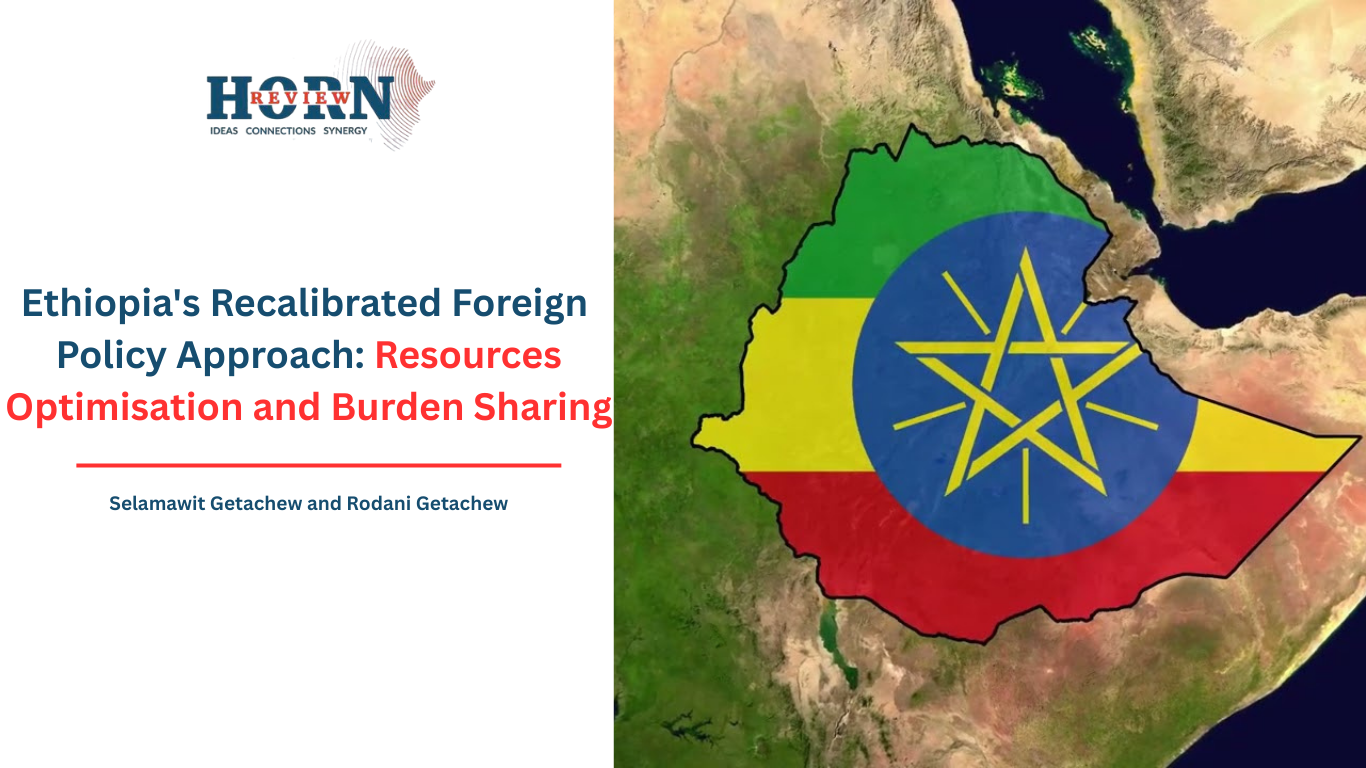
Ethiopia’s Recaliberated Foreign Policy Approach: Resources Optimisation and Burden Sharing
The Grand Ethiopian Renaissance Dam (GERD) is the largest hydro-power project in Africa, with an installed generation capacity of 5,150 MW. Ethiopia has long planned to develop infrastructure on the Nile, dating back to the regime of Emperor Haile Selassie, during which the first scientific studies were conducted on the Abbay (Blue Nile). Construction of the GERD began in 2011 at a border site under the leadership of the late prime minister Meles Zenawi, and the project was completed and inaugurated in September 2025 under prime minister Abiy Ahmed.
The GERD is a significant given Ethiopia’s demographic and developmental realities. With an estimated population of 135 million, nearly 60% if Ethiopia still lack access to electricity. This demonstrates that the GERD is a developmental necessity, and not just political ambition.
Ethiopia had always shown its willingness to share the benefits of GERD by exporting hydroelectric power to the neighboring countries. The office of the prime minister of Ethiopia tweeted following the compilation and inauguration of the Dam “Ethiopia takes what it deserves while passing on what others deserve.” This declaration underscores the good intention of Ethiopia and that it views the dam as regional asset and never intended for unilateral use.
Egypt continues to frame GERD a an “existential right” relying on colonial era agreements the 1929 Anglo Egyptian treaty and the Nile water Agreement to assert veto power over any upstream projects. Ethiopia rejects the validity of these agreements, arguing that Ethiopia was never a party to them and that treaties imposed under colonial rule cannot bind independent states.
The recent announcement by the United States an ally of Egypt that U.S. intends to restart mediation on the GERD raises serious concerns regarding the neutrality and legitimacy of the process. Effective Mediation requires strict adherence to the principle of neutrality, which entails genuine impartiality and freedom from political influence. Without such neutrality, mediation risk losing the trust of the parties, thereby undermining its credibility and effectiveness.
Ethiopia’s withdrawal from the mediation process held in Washington in 2020 illustrates the importance of this principle. Ethiopia had concerns that the proposed agreement was not solely an outcome of trilateral negotiation but had been initialed by Egypt and U.S., implying that the U.S. and World Bank had overstepped their role and proposed drought mitigation measures the favored Cairo. Ethiopia argued that the mediators failed to maintain neutrality and instead showed bias toward one party. Leaving Ethiopia with little confidence that its interests would be fairly represented.
Ethiopia has been one of the three countries willing to resolve the GERD dispute through the African Union led negotiations process. In contrast, Egypt an Sudan sought to involve the UNSC by mobilization the League of Arab States, raises serious question about their lack fidelity to AU-led tripartite process.
Research from the MIT Joint Program on the Science and Policy of Global Change, including the updated 2025 J-WAFS report “The Grand Ethiopian Renaissance Dam: Benefits and Concerns.” confirms that coordinated operation reduces evaporation and maximizes basin-wide energy efficiency. Oxford Academic further highlights a stark efficiency gap: the High Aswan Dam loses an estimated 10 to 12 BCM annually to evaporation due to the extreme heat and the vast surface area of Lake Nasser, often referred to by hydrologists as the “Large Hot Pan in the Sahara.” by contrast the GERD is located in a cool, deep-canyon gorge, where evaporation rates are estimated at 1.5 to 1.7 BCM. By regulating flows upstream and shifting the primary storage to the Ethiopian highlands, the GERD effectively saves water annually for the entire basin water that would otherwise disappear across the basin. In the terminology of the 2026 U.S. NSS, this is a “Strategic Resource Conservation” success. Ethiopia is not diverting water away, but optimizing the Nile’s volume to benefit a regional “Trade over Aid” ecosystem.
While regional political discourse often frames the Grand Ethiopian Renaissance Dam (GERD) as a zero-sum “existential” crisis, a scientific assessment of the Nile’s infrastructure reveals a manageable technical transition.For Ethiopia, rights-based arguments of the past are increasingly neglected in favor of profitable partnerships. The United State is no longer looking for who is “right” under 1959 colonial laws; they are looking for which nation provides the best “deal” for regional stability and U.S. commercial access.
From a systems perspective, the High Aswan Dam functions as massive water battery for Egypt, with a storage capacity of approximately 162 billion cubic meters (BCM). Measure against Egypt’s annual usage of roughly 55.5 BCM measured, the unilateral claim derived from the 1959 colonial-era treaty; 162 BCM reservoir holds enough water to cover Egypt’s total demanded share. Ethiopia does not recognize the 55.5 BCM as a “legal right” or “entitlement.” As a non-signatory to the 1959 bilateral deal between Egypt and Sudan, Ethiopia views that number as an anachronistic monopoly that ignores the rights of Ethiopian, country that contribute 86% of the water.
Recent satellite altimetry and monitoring data published in PNAS Nexus (July 2024/ Vol. 3, No. 7) “Watching the Grand Ethiopian Renaissance Dam from a distance: Implications for sustainable water management.” confirms that even after the GERD’s final filling stages, the High Awsan Dam’s “Minimum Operating Level” was never at risk, downstream irrigation demands were fully met. Downstream irrigation demands remained fully met because the Nile’s system operates with a massive built-in redundancy. Moreover, any attempt by Ethiopia to fully block flow would be economically suicidal, as excessive reservoir levels would rise too high and risk structural damage to the GERD with zero electricity production.
Ethiopia’s greatest leverage is its ability to disprove the Egypt’s “existential threat” narrative with verifiable evidences. According to “Watching the Grand Ethiopian Renaissance Dam from a distance: Implications for sustainable water management of the Nile water” satellite data published in PNAS Nexus, Volume 3, Issue 7, July 2024, pgae219, the High Aswan Dam’s role as a “strategic water battery” means Egypt effectively holds a reserve, even without upstream inflow. This scientific reality transforms the GERD from a “threat” into a “Resource Optimization” project one that reduces evaporation losses by storing water in cooler highlands rather than the Saharan sun, where the Aswan reservoir loses up to 10–16 BCM annually.
By emphasizing Burden-Sharing diplomatic strategy where the GERD provides the energy necessary to stabilize the Horn of Africa without U.S. aid, Ethiopia can align with the “Trade over Aid” mandate of the current administration. This Ethiopia’s technical solution to a regional problem as coordination operation reduces evaporation can frame its data within current the United State’s “America First” pillars; as leverage where the current Trump administration values Peace through Strength” and securing strategic corridors.
The traditional “rights-based” diplomacy that has characterized the Nile dispute for decades, often rooted in century-old colonial treaties is now strategically outdated in the face of a shifting American foreign policy. In January 2026, the White House released its latest National Security Strategy (NSS), signaling a decisive turn toward “Flexible Realism.’’ This explicitly moves the United State away from the liberal ideological aims of previous decades, prioritizing instead a “Trade over Aid” Model. Under this framework, the U.S. Department of State is tasked with identifying capable, reliable states that can serve as regional anchors for American commercial interests and maritime security.
For Ethiopia to secure a fair stage in this new era of U.S.-led mediation, it must move past the rhetoric of sovereign entitlement and reframe the Grand Ethiopian Renaissance Dam (GERD) as a strategic stability liability. It requires shift from abstract legalism to transactional diplomacy. By positioning the GERD as the primary strategic tool as response to mitigate regional energy poverty and mass migration; two of the primary National Interest priorities for the current U.S. administration. Ethiopia can transform a perceived unilateral project into a base of the U.S. Investment and Growth Model for the Horn of Africa.
The current American administration’s approach can be seen built on a fundamental rejection of unilateralism. In Trump’s January 16, 2026 correspondence, President Trump stated that “no state in this region should unilaterally control the precious resources of the Nile.” While this is challenge to Ethiopia, it also may creates a fair stage depending how Ethiopia present the GERD; as a regional partnership cause.
Energy for Security Trade-off ?
A central pillar of the 2026 U.S. mediation proposal is the concept of a regional energy partnership. Trump has suggested that Ethiopia generate “very substantial amounts of electricity” from the GERD to be sold or given to Egypt, Sudan.
Ethiopia’s goal of becoming a regional energy foretaste by exporting surplus power, Ethiopia not giving away water; it monetizes the river’s flow. This transforms the GERD into a tool for regional integration economically, a deal where Egypt, Sudan receives energy security and Ethiopia receives the foreign currency and regional influence it needs. As of September 2025, the GERD was officially inaugurated with a total capacity of 5,150 MW, specifically designed to double Ethiopia’s energy output and facilitate cross-border exports to Sudan, Egypt and Kenya and other states.
Functional Deals vs. Binding Constraints for Ethiopia ?
The primary barrier in previous negotiations has been Ethiopia’s refusal to sign a legally binding treaty that might limit its future development rights. The 2026 U.S. framework provides an out. Trump’s preference for “Flexible Realism” focuses on Data-Driven Coordination and drought safeguards rather than rigid legal quotas. With same logic for Ethiopia, a Technical Coordination Mechanism is far more advantageous than a binding treaty. It allows for the sharing of operational data (guaranteeing water flow during droughts) without signing away the Right to Equitable Utilization.
This satisfies Trump’s inclination to get it settled through monitoring and coordination while protecting Ethiopia’s Strategic Autonomy. In this framework, the U.S. acts not as a legal judge, but as a deal monitor, ensuring that technical targets are met without infringing on national sovereignty. While Egypt has historically welcomed U.S. mediation as a way to formalize its “historical rights,” Egypt’s strategy of legally binding treaty based on the 1959 colonial-era water quotas. The 2026, Trump administration geopolitical might hands Ethiopia a unique strategic advantage. The mediator not a legal referee looking at old treaties, but a deal-maker looking at current power realities moves away from enforcing international legal norms and toward transaction stability.
Technical Coordination Mechanism ;
Because the GERD is already complete and operational (as of September 2025), Ethiopia is negotiating from a position of facts on the ground. Trump’s 2026 mediation framework focuses on predictable water releases rather than water ownership; for Ethiopia, a technical coordination deal sought win.
The GERD was financed by Ethiopian after international funding was constrained by geopolitical pressures. 91% through the commercial bank of Ethiopia and the remaining from public contribution, including bond sales, salary deduction, donation and gifts, and from the Ethiopia diasporas. As a nationally financed project, the GERD is a sovereign development asset. Ethiopia should be talking numbers not being asked to negotiate a binding agreement on its economic sovereignty.
In president trump’s letter, the suggestion that Ethiopia generate “substantial amounts of electricity” to be given or sold to Egypt and Sudan has introduce unnecessary ambiguity. Providing electricity as a gift contradicts both the economical logic and social purpose of the GERD, which was built to end domestic energy poverty while generating sustainable regional benefits. Ethiopia’s preference for “sell” model is both practical and strategic: commercial energy trade creates durable independence, whereas donor-recipient arrangements foster instability. Trade partners are far less likely to ener conflict than aid dependent counterparts.
Geopolitical Implication ;
As the United State interest in the Gulf of Aden centers on maritime security and trade de-risking, counter-terrorism. Ethiopia stabilizes this region not through military force alone, but through energy diplomacy. Ethiopia, a landlocked country without a naval force maintains one of the most capable military in Africa, particularly in terms of it’s land and air forces. The Ethiopian Armed Force have extensive operational experience in peacekeeping, counter-terrorism, and regional security, including their significant role in joint operation against Al-Shabaab militants. Coupled with its strategic geographic position and large population, Ethiopia stands out as a credible, and reliable partner in regional and international security cooperation.
Ethiopia establishment of power-interconnection lines with Kenya, Sudan, and Djibouti, with Tanzania and potentially Yemen next. Ethiopia’s energy exports to Djibouti and its strategic maritime partnership with Somaliland (the 2024/25 MOU) provide a stabilizing economic corridor.
Egypt’s influence may be trans-boundary, but lack foundational. Egypt as the primary downstream power, Egypt maintains a diplomatic voice, yet it cannot provide the physical infrastructure (roads, electricity, water regulation) that keeps the people of the Horn of Africa from migrating or falling into energy poverty which Ethiopian’s geographical advantage can benefit the region and the US current foreign policy.
Ethiopia proposes a Technical Coordination Mechanism that prioritizes predictable water releases over rigid legal ownership, offering a Drought Mitigation Guarantee to maintain Egypt’s “Minimum Operating Level” at the High Aswan Dam (HAD) through satellite-verified operational data as evidenced by the July 2024 PNAS Nexus and 2025 J-WAFS benchmarks; simultaneously, Ethiopia invites the U.S. to serve as a Technical Auditor and “Deal-Maker” rather than a legal judge, ensuring transparency without touch on national sovereignty.
while advancing a “Sell, Don’t Give” Regional Energy Partnership that monetizes the GERD’s 5,150 MW capacity to foster Commercial Interdependence with Egypt and Sudan, thereby reducing regional conflict and stabilizing strategic corridors in alignment with U.S. “Trade over Aid” and “America First” pillars; furthermore, this framework leverages the Highland Storage Advantage to save an estimated 1.5- 1.7 BCM of water annually transforming the Nile from a “Large Hot Pan” of Saharan evaporation (12 BCM loss at Aswan) into a Strategic Resource Conservation asset and positions Ethiopia as the Foundational Anchor with geographical advantage for Red Sea and Gulf of Aden security, offering the U.S. a self-sustaining, non-interventionist model for maritime security and trade de-risking through its established power-interconnections and strategic maritime access.
By Selamawit Getachew and Rodani Getachew, Researchers, Horn Review

RELATED
Posts
12
Feb
Abiy Ahmed Represents a State That Respects Itself, & Others
By Blen Mamo
In contemporary international relations, the proliferation of...
12
Feb
African Unity and Strategic Autonomy: Ethiopia’s Vision at the 48th AU Executive Council
At the 48th Ordinary Session of the African Union Executive...
12
Feb
Ethiopia’s Somaliland Policy and the Puntland Dimension
By Nolawi M. Engdayehu
Recent counter-terrorism operations in Puntland have, without...

11
Feb
Ethiopia Weighing Saudi Overtures Amid Gulf Rivalry
Saudi Arabia’s invitation to Ethiopia’s foreign minister Gedion Timothewos for...

11
Feb
Ethiopia & the Emerging Saudi-UAE Axis Politics
The Red Sea is no longer governed by informal understandings...

11
Feb
Siad Barre's Water War: The Ogaden War as a Battle for Upstream Control
The Hidden Objective of the 1977 Somali Invasion
In July...
11
Feb
Red Sea Rebranding: From Ethiopian Herds to Djiboutian Certificates
The Hidden Cost of Livestock Trade
The Transboundary livestock trade...
9
Feb
Water, Power, and Voice: How Africa Is Rewriting the Narrative at the 39th AU Summit and the Italy–Africa Dialogue
Addis Ababa rises at a historic moment. This year, it...
7
Feb
Ethiopia’s Concept of Order: The Horn as a Non-Hegemonic Geo-Economic Sociality
Geo-Economy Remapping the Global Geography
In a contested and less collaborative...