
12
Feb
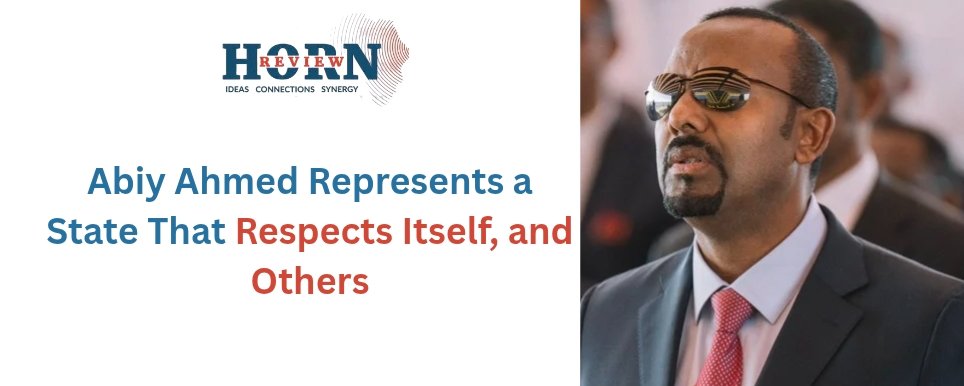
Abiy Ahmed Represents a State That Respects Itself, & Others
By Blen Mamo
In contemporary international relations, the proliferation of instantaneous commentary and social-media-driven outrage often distorts public understanding of diplomacy and reveals a troubling intellectual shallowness in public discourse. A recent preoccupation with Prime Minister Abiy Ahmed’s seating posture during his meeting with the Saudi foreign minister illustrates this phenomenon. A diplomatic encounter of strategic consequence and a moment intended to signify bilateral engagement has been reduced to a matter of body language and framed, in certain quarters, as a cultural transgression or diplomatic faux pas. Such interpretations, untethered from the principles of sovereign equality and the institutional norms of international relations, risk trivializing the conduct of foreign policy and misrepresenting the nature of Ethiopia’s external engagements. This episode also invites a deeper reflection not merely on Ethiopia’s diplomacy, but on the analytical impoverishment that accompanies gesture-based interpretations of statecraft.
The study of diplomacy – whether in classical European traditions, Islamic political thought, or modern international law – has never reduced sovereign equality to bodily posture. Protocol regulates precedence, parity, ceremonial order, and institutional reciprocity – but not the micro‑gestures of posture. To elevate a culturally specific interpretation of gesture into a universal diplomatic norm is to confuse social etiquette with international law. While in certain Arab contexts the visible sole of a shoe may carry informal connotations of discourtesy, and cultural cognizance is a valuable dimension of international relations, such symbolism should not be abstracted into a normative requirement that eclipses state sovereignty or the substantive content of diplomacy.
More importantly, diplomacy is not adjudicated through semiotic literalism. The shallow nature of gesture analysis – the attempt to extract grand political meaning from a freeze-framed limb – distracts from the structural realities of interstate relations. Respect between states is measured through parity of reception, continuity of engagement, substance of agreements, and durability of partnership. In the meeting in question, the Saudi foreign minister was received by Ethiopia’s prime minister, in Ethiopia’s highest political space – not relegated to a secondary bureaucratic encounter, in a national palace setting – conveying nothing but institutional esteem. That fact alone carries greater diplomatic weight than any interpretive debate over posture. Besides, the continuity of bilateral dialogue between the two nations conveys respect, the absence of formal protest conveys acceptance. These are the metrics that matter in diplomatic practice.
To properly situate Ethiopia–Saudi relations requires a longer historical lens. The relationship between the Horn of Africa and the Arabian Peninsula predates modern statehood. And so do the ties between the two states, which have long engaged as nations with distinct civilizational traditions, and with respect between them embedded in structural sovereign parity, sustained dialogue, and substantive policy engagement rather than the choreography of physical posture. Both states interact within established frameworks of bilateral relations characterized by mutual interests, formal communiqués, reciprocal visits, and institutional continuity – rather than a purported controversy that exists largely within the amplified contours of online discourse and not in the assessed realities of interstate relations.
It is also essential to situate contemporary Ethiopia–Arab relations within their deeper civilizational context. From the earliest centuries of Islam to the present day, Ethiopia has not merely accommodated Arab and Islamic culture; it has, in significant respects, embraced and internalized it. Islam has flourished in Ethiopia for over a millennium and today constitutes an integral and inseparable component of the country’s religious landscape, cultural inheritance, and social fabric. Across the Red Sea, centuries of trade, scholarship, migration, and intermarriage have produced dense and enduring civilizational linkages. The relationship is neither incidental nor recent; it is foundational, layered, and historically continuous. Within Islamic tradition, the first hijra – the migration of the early Muslim community to the court of the Christian ruler of Aksum, known as al-Najashi – occupies a position of profound symbolic importance. At a moment of existential vulnerability for the nascent Muslim community, Ethiopia provided refuge, security, and justice. This episode remains embedded in Islamic historical memory as a testament to Ethiopian hospitality, moral rectitude, and principled statecraft. It established not merely a diplomatic contact, but a civilizational bond grounded in mutual recognition and ethical conduct.
Against this historical backdrop, the suggestion that Ethiopia’s Prime Minister would intentionally flout an Arab cultural norm in order to slight Saudi Arabia – a valued and strategically consequential trade and investment partner – is analytically untenable and diplomatically unconvincing. Such a claim disregards centuries of intertwined history, civilizational continuity, and institutional parity, and reduces a mature and substantive interstate relations to speculative symbolism detached from both context and evidence. Abiy’s diplomatic style has also often been characterized by simplicity and directness. He frequently receives leaders personally, emphasizes interpersonal engagement, and projects an ease that contrasts with overly rigid ceremonialism. This simplicity should not be mistaken for informality devoid of structure. Rather, it reflects the confidence of a state and a leader that are secure in their historical identity, institutional continuity and strategic clarity – rather than an exaggerated performative stiffness to overstate dignity.
Equally unfounded is the narrative – circulating in some commentaries – that the Saudi foreign minister’s visit functioned as a warning to Prime Minister Abiy Ahmed regarding Ethiopia’s relations with the United Arab Emirates. Such conjectures misinterpret the strategic logic guiding Ethiopia’s foreign policy and the nature of Gulf–Horn interactions. Ethiopia is neither a subordinate actor nor a passive adjudicator of external rivalries. It is a strategically significant state, with demographic weight, geographic centrality to the Red Sea corridor, and institutional positioning as host of the African Union. These factors collectively inform a foreign policy that pursues diversification and sovereign agency rather than dependence. In addition, Ethiopia’s modern era foreign relations has demonstrated diplomatic maturity in navigating intra-Gulf tensions as well. During periods of strain between Doha and Riyadh, Addis Ababa maintained functional engagement with both sides, preserving strategic balance without theatrical alignment. That precedent illustrates Ethiopia’s long-standing capacity to accommodate regional rivalries without subordinating its sovereign agency.
Any notion that suggests Ethiopia would be publicly reprimanded or that its leader would receive moral admonition in a staged photo opportunity ignores this historical pattern of diplomatic steadiness and tradition of balanced engagement within a framework of multipolar pragmatism. And that’s beside being inconsistent with the norms of contemporary intergovernmental relations, where disagreements are addressed discreetly and professionally through formal diplomatic channels.
It is precisely in this context that the sophistication of Abiy Ahmed’s diplomatic approach should be recognized. Since assuming office, he has pursued an outward-facing, strategic foreign policy characterized by regional de-escalation, economic diplomacy, and multipolar engagement. His early initiative to normalize relations with both immediate and distant neighbours reshaped the geopolitics of the Horn of Africa, diplomatic engagements with the Middle East and Gulf states, and underscored Ethiopia’s capacity for proactive, transformative diplomacy. More broadly, his government has sought to position Ethiopia not merely as a landlocked state constrained by geography, but as a regional hub capable of leveraging its human, economic, and infrastructural resources to influence the Red Sea corridor, Horn of Africa stability, and continental economic networks.
Post 2018, Ethiopia has cultivated diversified partnerships that extend across the Gulf, Asia, Africa, and the West. Engagements with Saudi Arabia and the UAE, for instance, are pursued with a strategic emphasis on investment, labor mobility, and infrastructure development, rather than as acts of dependence or acquiescence. Similarly, diplomatic relations with emerging powers are maintained alongside traditional Western partners, reflecting a pragmatic multipolar orientation designed to maximize strategic autonomy. At the continental level, Ethiopia’s continued role as host of the African Union enables it to exert normative and operational influence, advocating for African agency in global governance and security dialogues. These initiatives illustrate a coherent, long-term vision in which Ethiopia negotiates from a position of confidence and sovereign equality.
That said, Ethiopia’s foreign policy under Abiy has demonstrated an understanding of the multiplicity of contemporary global linkages. This multipolar orientation does not signify incoherence but reflects a deliberate strategy to balance interests in a complex international environment. The substantive content of these relationships – trade agreements, investment flows, security cooperation – carries far more significance for Ethiopia’s development trajectory. These are substantive manifestations of Ethiopia’s standing in international affairs, borne of institutional continuity rather than transient symbolic gestures.
Thus, to reduce Ethiopia’s diplomatic engagement to an exercise in posture analysis is to diminish the complexity of statecraft and to overlook the calibrated logic that underpins contemporary foreign policy. It subtly perpetuates the expectation that African states must display exaggerated deference in their interactions with wealthier or geopolitically influential partners – a premise neither supported by modern diplomatic practice nor compatible with the foundational principle of sovereign equality. National dignity in international relations is not constituted through rigid physical formalism. It is sustained through historical consciousness, strategic coherence, institutional composure, and the capacity to navigate layered regional and global environments with confidence and clarity. Viewed within this broader continuum, Prime Minister Abiy Ahmed’s meeting with the Saudi foreign minister represents not a rupture, but a continuation of Ethiopia’s longstanding diplomatic tradition – a sovereign state engaging another sovereign state within a relationship that has endured for centuries, consistent with established norms of diplomatic conduct and reciprocity. The recent engagement projects neither insecurity nor impropriety; rather, it reflects the assured dignity of the Ethiopian state – a dignity rooted in policy substance, institutional integrity, and measured global engagement. It also underscores the value Ethiopia places on its partnerships, whether grounded in deep historical ties or emerging strategic cooperation. Across time, Ethiopia’s diplomatic posture has exhibited a consistent pattern: accommodation without subservience, partnership without dependency, and respect without insecurity.
Authors Bio
Blen Mamo is Executive Director of Horn Review and a researcher specializing in law, international security, and geopolitics in the Horn of Africa. She holds an LL.B and an M.Sc. in International Security and Global Governance.

RELATED
Posts

26
Mar
Ethiopia’s “Horn First” Doctrine in the Face of Externally Conditioned Sovereignties
The geopolitical landscape of the Horn of Africa is shifting...
23
Mar
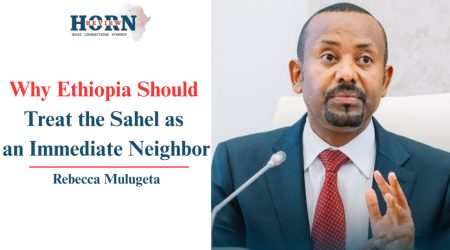
Why Ethiopia Should Treat the Sahel as an Immediate Neighbor
Ethiopia’s foreign policy has long been guided by a map...
19
Mar
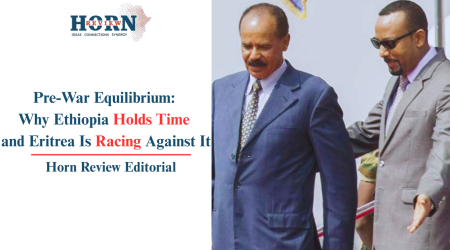
Pre-War Equilibrium: Why Ethiopia Holds Time and Eritrea Is Racing Against It
The contemporary dynamics of interstate relations between Ethiopia and Eritrea...
18
Mar
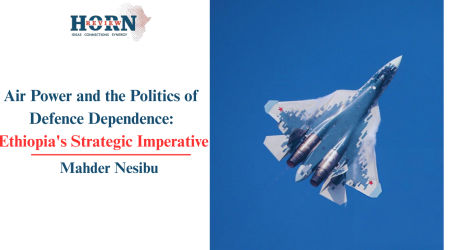
Air Power and the Politics of Defence Dependence: Ethiopia's Strategic Imperative
In 2020, former Malaysian Prime Minister Mahathir Mohamad, in discussing...

13
Mar
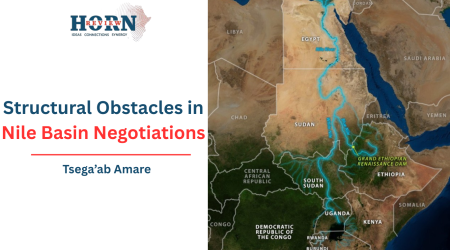
Structural Obstacles in Nile Basin Negotiations
The hydropolitics of the Nile Basin have long represented an...
13
Mar
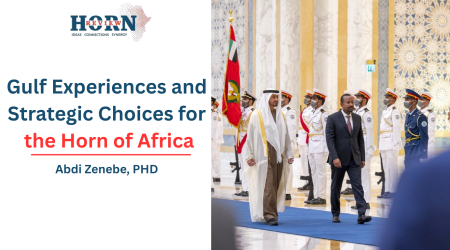
Gulf Experiences and Strategic Choices for the Horn of Africa
Within the volatile architecture of modern international relations, few...
12
Mar
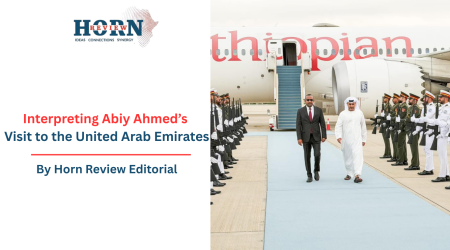
Interpreting Abiy Ahmed’s Visit to the United Arab Emirates
The visit by Abiy Ahmed to the United Arab Emirates...
28
Feb
Restraint vs. Escalatory Provocation: Ethiopia’s Diplomatic Posture in the Face of Eritrean Militarization
Ethiopia, as a pivotal geopolitical anchor state for peace and...