Reassessing the Asymmetrical Interdependence between Djibouti and Ethiopia
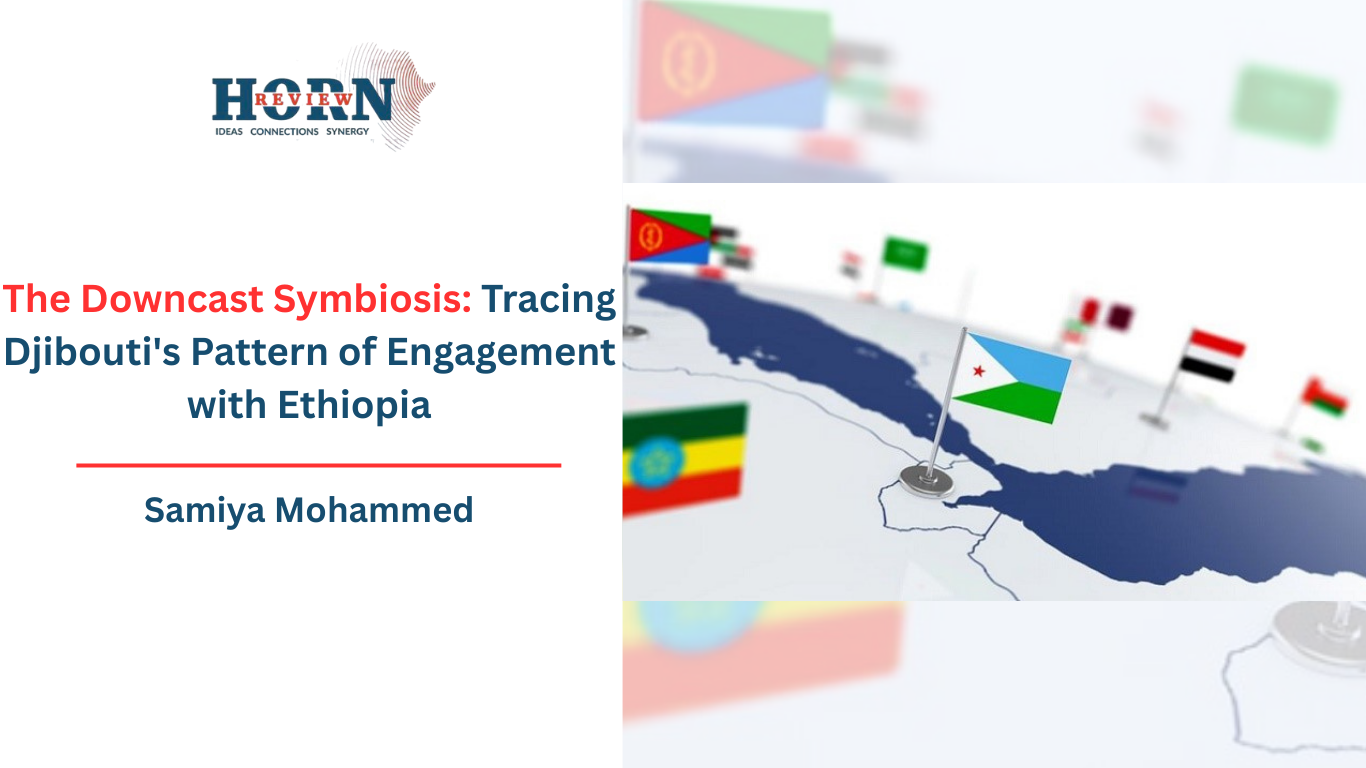
The relationship between Djibouti and Ethiopia is frequently described in diplomatic communiques as historic, fraternal and vital. This is not without foundation given the deep ethnic, cultural and religious ties that bind the populations of the Horn. However under this mutual necessity lies a persistent and counterproductive pattern of engagement that undermines long term regional stability.
As history reveals a recurring cycle with Djibouti despite being the economic beneficiary of the partnership repeatedly engages in short term and transactional moves. These include dallying with some actors and the imposition of economic hurdles typically executed when Ethiopia appears politically vulnerable or asserts autonomy. This is invariably followed by conciliatory offers of port access or renewed diplomatic warmth only when Ethiopia demonstrates resilience or applies counter pressure. This pattern is a symptom of a fundamental flaw in Djibouti which views its neighbour as a captive resource to be managed and monopolized. Ethiopia’s consequent and rational drive for economic diversification and sovereign sea access is a positive force for regional balance and the stability of the relationship depends on Djibouti abandoning this pragmatism for genuine forward thinking partnership.
This lopsided interdependence has bred an anomaly where Djibouti is the principal beneficiary it acts from a perceived position of weakness and leverage. Its entire modern economic model from port revenues to the hosting of foreign military bases is predicated on Ethiopia’s status. Djibouti also has little incentive to see Ethiopia gain its own sovereign port because Ethiopian trade is the backbone of Djibouti’s economy and political leverage. This creates a perverse disincentive for cooperative growth. Instead of leveraging this unique position to build irreversible and deep economic integration, Djibouti’s behaviour suggests a strategy of maximizing monopoly rents while actively working to maintain Ethiopian dependency. The despondent pattern comes directly from this contradiction as Djibouti seeks to reinforce its leverage whenever Ethiopia’s policies threaten to dilute it.
The nature of Djibouti’s engagement is clearly visible in its responses to Ethiopia’s legitimate diversification efforts. When Ethiopia pursues alternatives to reduce vulnerability such as pursuing port agreements or advancing Ethiopia Transport Corridor project, Djibouti’s reaction is often one of public criticism or the erection of subtle bureaucratic hurdles. The oratory from Djiboutian officials including dismissals of Ethiopia’s sovereign right to sea access in contrast to Djibouti’s own hosting of multiple foreign naval bases showing a clear double standard. This defiant posture is most prominently adopted when Ethiopia is perceived as domestically preoccupied or diplomatically isolated.
However when these Ethiopian initiatives gain credible momentum or when responds with firm diplomatic or economic pressure Djibouti’s stance undergoes a predictable road toward conciliation. A clear example is the sudden offer of expanded port access such as the promotion of the port of Tadjoura or the acceleration of stalled joint commission meetings. These are not actions born of alignment but tactical corrections aimed at appeasing a patron whose continued reliance must be ensured. This flip flop diplomacy reveals an approach devoid of long term depth treating the relationship as a series of discrete transactions rather than a permanent evolving partnership.
This transactional approach extends port politics into broader regional diplomacy further illustrating the pattern. Djibouti has at times warmed relations with actors whose core interests are directly antagonistic to Ethiopia’s. The most illustrative case is its engagement with Egypt. In December 2025, the two nations signed a series of agreements covering ports, logistics and energy cooperation. The center piece was a Green Port Solar Project a 23 megawatt solar plant designed to power the Doraleh port complex.
Even though seen as a developmental project the context is unmistakable. Djibouti’s Energy Minister had previously acknowledged that about fifty percent of the country’s electricity comes from Ethiopia a reliance that leaves strategic infrastructure exposed to supply constraints. The deal with Egypt can be interpreted as an attempt to diversify away from Ethiopian energy as a form of hedging. This move taken during a period of regional tension signals alignment with a party actively seeking to counter Ethiopian influence directly undermining the spirit of partnership.
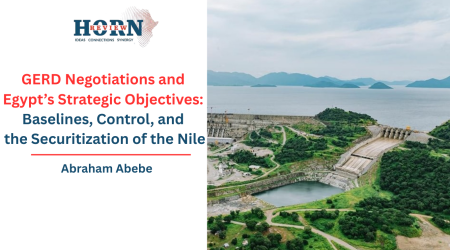
The long term counter effects of this sad pattern are detrimental but pose a risk to Djibouti. For Ethiopia this validates and accelerates its pursuit of diversification. The commissioning of the GERD which doubled Ethiopia’s power generation capacity and concrete plans for a second electricity interconnector to Djibouti shows Ethiopia’s commitment to being a regional power exporter and industrial place. By treating Ethiopia as a cash cow Djibouti incentivizes the very behaviour it fears like the redirection of trade. Ultimately Djibouti’s short term tactics undermine the long term stability and deepening of integration that would secure its own economic future. It fosters mistrust, raises costs for economies and risks marginalizing Djibouti as Ethiopia successfully cultivates multiple, redundant trade gateways.
The prescription for a sustainable future is evident but requires a shift in political thinking from Djibouti not in transactional flips but in locking in mutual gains through irreversible integration. This would involve moving far of monopoly pricing toward fair, transparent port fees and logistics tariffs. It necessitates transforming the economic relationship from one of just transit to joint development co-investing in industrial zones along the corridor, value added processing facilities and shared energy infrastructure that treats Ethiopian power not as an import but as a pillar of a unified regional grid.
Djibouti must recognize that Ethiopia’s growth and quest for autonomy are not threats but opportunities. A richer, more industrialized Ethiopia even with diversified port options would generate exponentially more trade a rising tide that would lift all ports including Djibouti’s.
Ethiopia’s rise as a regional anchor is inevitable. The question is whether Djibouti will choose to be a central integrated partner in this ascendancy or a peripheral resented toll collector gradually bypassed by new infrastructure. True partnership requires Djibouti to break its self defeating cycle. It must perceive Ethiopia not as a giant to be kept dependent but as a neighbour with whom intertwined destiny is the only viable security. Ending the sad pattern of opportunistic engagement is the first step toward building that mature strategically deep alliance which is the only durable foundation for prosperity and stability in the Horn.
By Samiya Mohammed, Researcher, Horn Review