The Hidden Objective of the 1977 Somali Invasion
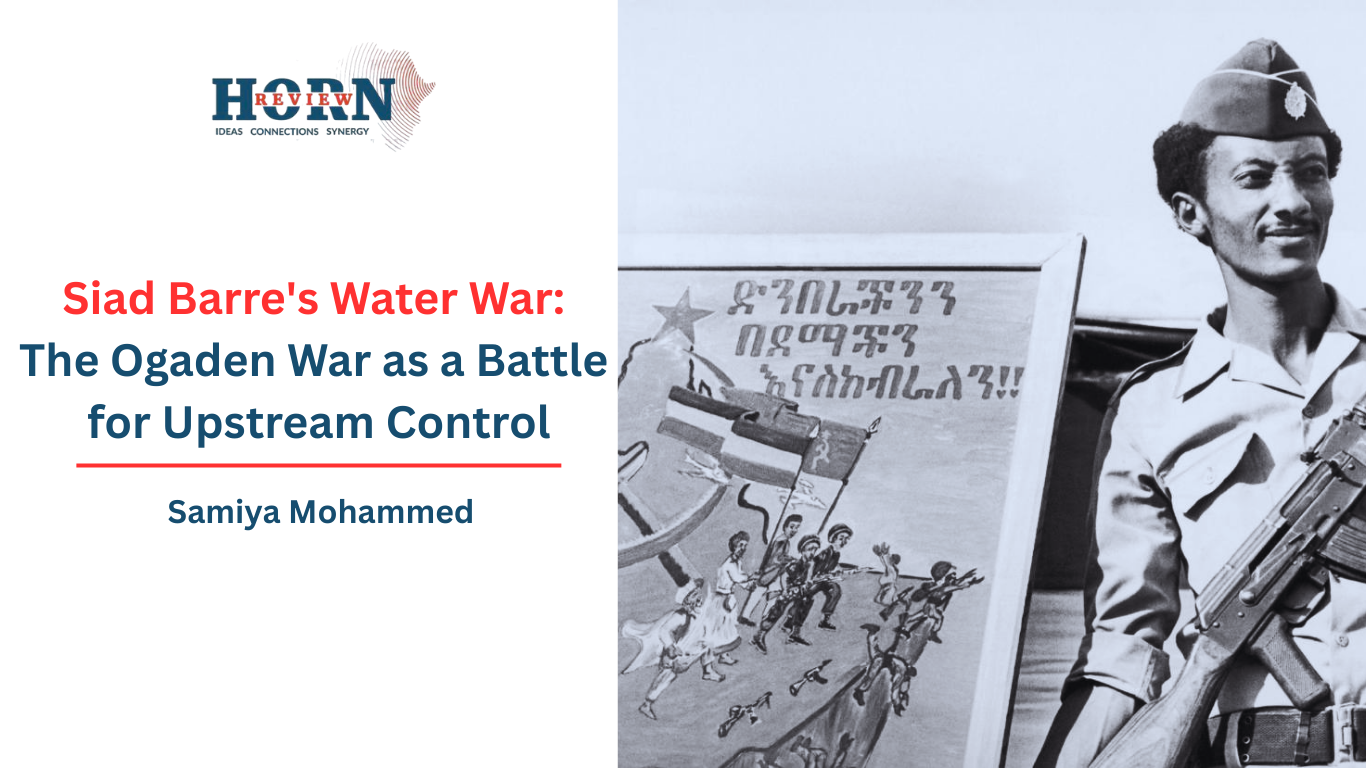
In July 1977 Somali tanks advanced across the arid plains of Ethiopia’s Ogaden region initiating a conflict traditionally seen as the peak of pan Somali nationalism. For decades the Ogaden War has been interpreted through the eyes of irredentist ideology with Siad Barre’s intent to unite all ethnic Somalis within a Greater Somalia that would incorporate territories in Ethiopia, Kenya, and Djibouti. This established account points up ethnic kinship, colonial border injustices and Cold War proxy kinesis as the primary catalysts for the Somali invasion. However near this surface of nationalist oratory a more fundamental prudent arithmetic was at work.
A closer examination of the geographical and hydrological realities of the Horn reveals that the Ogaden War was in weighty measure a conflict over the control of key water resources and fertile riverine land. This was not only just a war for people and territory but an all or nothing operation for hydrological security driven by Somalia’s dependence on rivers whose originated far off its borders. This shows often overlooked dimension that explains why the ostensibly barren Ogaden held such immense value for the Barre regime a value worth risking the stability of his government and his alliance with the Soviet Union.
Somalia’s agrarian and pastoral economy hinges on two river systems those being the Juba and the Shabelle. These are the nation’s only perennial rivers Approximately 90% of their combined flow originates not within Somalia’s own territory but from the Ethiopian highlands. This makes Somalia one of the most water dependent nations on Earth with its primary agricultural zones functioning at the mercy of rainfall patterns and upstream activity.
The Shabelle River historically known as the Nile of Mogadishu begins its 2,064 kilometer journey in the Ethiopian highlands before flowing southeast into Somalia. The Juba River is similarly transnational formed in Ethiopia by the confluence of the Genale, Dawa, and Weyb tributaries. For Somalia these rivers are the foundation of national sustenance. Their alluvial plains constitute the country’s agricultural breadbasket where for decades irrigated farming produced maize, sesame, fruits, and cash crops like sugarcane for both domestic consumption and export.
Conventional descriptions of the Ogaden the eastern Ethiopian region at the main of the 1977 conflict often emphasize its aridity labelling it a barren plain between the Somali border and the Ethiopian highlands. This characterization while accurate for much of its expanse obscures the region’s critical hydrological value. The Ogaden is not just a vast scrubland however is the gateway through which the Shabelle River flows into Somalia and the region containing the headwaters of the Genale a key tributary of the Juba River.
Within this predominantly pastoral landscape the river valleys carved by the Shabelle and its tributaries create ribbons of exceptional fertility. These corridors feature rich alluvial soils capable of supporting not just grazing but also rain fed and irrigated agriculture. Historically the potential of these areas has been recognized and harnessed from the sophisticated hydraulic engineering of the medieval Ajuran Empire to more recent development plans.
The Ogaden presented more than ethnic Somali homeland and a tangible solution to resource constraints. Controlling the Ogaden meant securing direct access to these fertile pockets for expanded agricultural production and more critically gaining sovereign authority over the upper basins of the rivers that sustained Somalia. It was a bid to transform Somalia from a vulnerable downstream dependent into a hydrologically empowered state with leverage over its own water destiny.
Siad Barre’s public justification for the invasion was rooted in the diction of national unification a powerful mobilizing force. Privately however the decision to launch a major conventional war was almost certainly underpinned by a hard nosed assessment of state resources and the logic was compelling.
Capturing the Ogaden would achieve two interconnected objectives. It would provide Somalia with direct access to the fertile riverine lands within the region opening new frontiers for state led agricultural projects to boost production and achieve greater food self sufficiency. Second and arguably more important it would grant Somalia control over the upper reaches of the Shabelle and the headwaters of the Juba’s tributaries. This upstream position would serve a dual purpose where it would secure a more reliable and controllable flow of water for Somalia’s own downstream agricultural infrastructure and it would deny Ethiopia the unilateral freedom to divert, dam, or otherwise manipulate that flow to Somalia’s detriment in the future.
The 1977-1978 Ogaden War perch as a potent case study in the varied nature of interstate conflict. While pan Somali nationalism provided the ideological fuel and mobilizing narrative a deeper layer of resource strategy provided a compelling rationale. Viewing the war solely as an irredentist enterprise fails to explain why a leader would stake his regime on conquering a sparsely populated arid region. When analyzed as in part a water war the logic becomes clearer. The Ogaden was the key to the hydrological kingdom where a region whose rivers and fertile valleys presented the basis of agricultural viability and by extension state power for a resource poor Somalia.
This reinterpretation offers a crucial lesson for understanding conflict in the Horn. Ethnic and ideological narratives often dominate historical explanations obscuring the material drivers rooted in competition for essential scarce resources like water and arable land. The Ogaden War serves as an early warning of how hydrological dependence and upstream-downstream asymmetries can escalate into open warfare. The conflict reminds us that national security is linked to resource security and that the maps which matter most are not only those of political borders but also those of watersheds, river flows and fertile soil. The tanks that rolled into the Ogaden in 1977 were not just advancing a vision of greater national unity but they were in a very concrete sense fighting to secure their nation’s water.
By Samiya Mohammed, Researcher, Horn Review