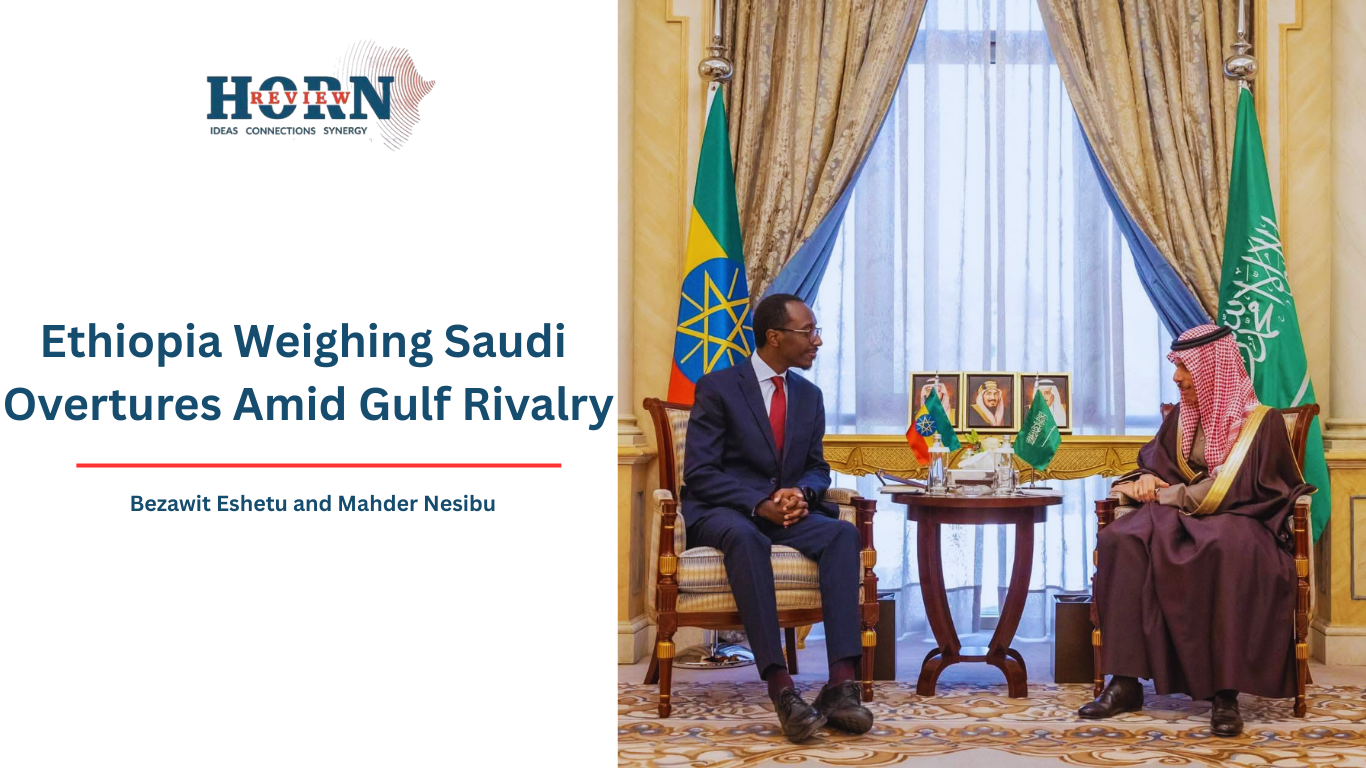
Saudi Arabia’s invitation to Ethiopia’s foreign minister Gedion Timothewos for talks in Riyadh on February 2, hosted by Prince Faisal bin Farhan Al Saud, is a deliberate diplomatic move. Riyadh’s offer to strengthen bilateral ties, broaden economic cooperation, and pursue joint approaches to Horn of Africa stability signals a desire to draw Addis Ababa into its orbit amid intensifying Gulf competition.
For Ethiopia, whose population now tops 135 million and which hosts the African Union, this Saudi initiative demands careful evaluation. It opens possibilities for diversification, but it also calls for caution to safeguard national priorities such as sovereign maritime access, economic resilience, and regional arrangements that respect state sovereignty without exposing Ethiopia to undue external influence.
Ethiopia’s longstanding pursuit of reliable sea access has shaped its strategic diplomacy since becoming landlocked in 1993. Dependence on external ports has repeatedly revealed supply chain vulnerabilities, so Addis Ababa has pursued pragmatic solutions rather than confrontational ones. The 2024 memorandum of understanding with Somaliland on Berbera reflects this approach, representing a measured effort to expand options while managing regional sensitivities. These steps show that Ethiopia favors equitable, commercially oriented arrangements that generate shared benefits and avoid escalation that could destabilize the Horn.
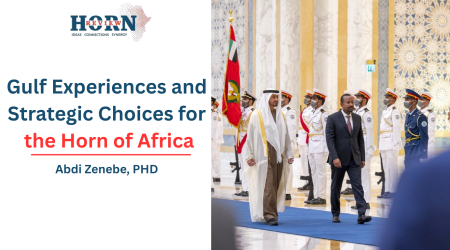
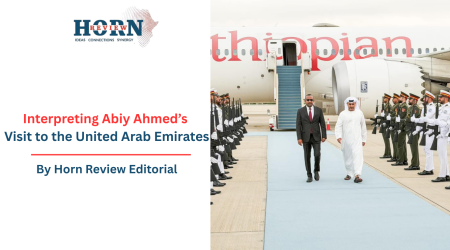
The United Arab Emirates remains an indispensable partner for Ethiopia, delivering critical infrastructure investment, port development, and assistance tied to recovery from internal crises. Abu Dhabi’s support, ranging from financial backing for reforms to security cooperation has underpinned Ethiopia’s recent progress and given Addis Ababa a strong foothold in regional logistics. That relationship yields leverage. As new overtures from other capitals arrive, Ethiopia should preserve and strengthen its ties with the UAE even as it explores complementary partnerships, ensuring it does not replace one dependence with another.
Riyadh’s outreach is rooted in kingdom-centric imperatives tied to a rivalry with the UAE that escalated in late 2025. Saudi operations in Yemen against forces linked to the Southern Transitional Council, which has affinity with Abu Dhabi, reflect divergent Gulf models. Saudi Arabia emphasizes state cohesion to protect its borders, while the UAE has shown a preference for flexible, localized partnerships.
From the Saudi perspective, courting Ethiopia, an influential Horn actor and anchor of the Intergovernmental Authority on Development, serves to counterbalance Abu Dhabi’s sway. But Riyadh’s motives are strategic rather than unconditional. The invitation tests Ethiopia’s willingness to diversify away from the UAE without promising alignment with Ethiopian priorities.
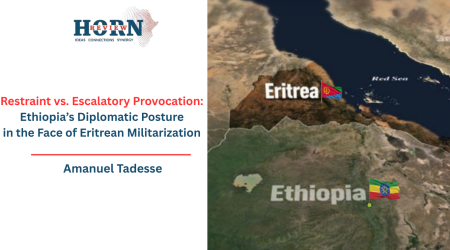
That calculation introduces risks. Saudi partners such as Egypt and Eritrea have historically pursued policies that constrain Ethiopia’s regional ambitions, particularly around the Grand Ethiopian Renaissance Dam and maritime access. Cairo’s posture favors coastal prerogatives that can limit Ethiopian influence, and Asmara’s tense relationship with Addis Ababa compounds political friction. While Saudi diplomacy may open channels, it is unlikely to elevate Ethiopian interests above those of Egypt, a key Riyadh ally in Yemen and Sudan. Addis Ababa must therefore engage cautiously, seeking to avoid moves that would antagonize important neighbors or narrow its strategic room for maneuver.
Ethiopia’s importance, however, gives it options. As a major African peacekeeper and advocate for negotiated solutions, Addis Ababa brings credibility and convening power to any partnership. Saudi offers could translate into investments in agriculture, mining, and technology that complement UAE-backed projects and accelerate Ethiopia’s development agenda. If Ethiopia conditions engagement on clear protections for its maritime access and on safeguards that prevent political entanglement, it can use Riyadh’s interest as leverage rather than as a binding commitment to Saudi objectives.
The UAE-Ethiopia relationship is precisely what alarms Riyadh. Abu Dhabi’s investments in ports, unmanned systems, and intelligence capabilities have strengthened Ethiopia’s maritime posture, including interests in Berbera and Assab. Riyadh perceives this as a strategic alignment that could complicate its Red Sea priorities, which in turn helps explain its tentative invitation.
Historical attempts to sideline Ethiopia through Nile politics or maritime exclusion, from colonial-era divisions to Egypt’s century-old treaties of 1929 and 1959 that ignored upstream riparians, and the post-1993 Eritrean secession that stripped Addis Ababa of Red Sea ports such as Assab and Massawa, have often produced instability rather than durable order, fueling conflict, economic harm, and proxy struggles across the Horn. Riyadh’s outreach signals a shift: Saudi leaders now see that shutting out Ethiopia undermines any credible plan to steady the Red Sea, amid efforts to build broader regional ties to counter Houthi attacks on shipping lanes and Tehran’s reach.
Though landlocked, Ethiopia plays a key role in Red Sea security. Its population tops 135 million, and it fields Africa’s largest army, with about 503,000 troops, a force widely regarded as battle-hardened and central to regional stability. Ethiopian units long served as the core of African Union missions in Somalia (ATMIS, formerly AMISOM), carrying out major counter-insurgency campaigns that rolled back Al-Shabaab, the al-Qaeda affiliate whose safe refuges feed piracy, arms smuggling, human trafficking, and attacks that put the Bab el-Mandeb Strait and Gulf of Aden, sea lanes that carry an estimated 12–15 percent of global maritime trade in danger. Those operations not only protect trade routes but lay groundwork for wider regional cooperation.
Addis Ababa’s diplomatic efforts amplify that stabilizing role. Ethiopia has hosted inclusive Red Sea and Gulf of Aden dialogue meetings, including a third regional meeting in May, 2025 run by the Institute of Foreign Affairs; it has urged IGAD and new regional forums to adopt governance rules that treat non-littoral states as essential partners, and it has pressed for multilateral steps that stop exclusionary arrangements that breed instability. Its economic weight, reliance on Djibouti for more than 90 percent of external trade, the Berbera MoU with Somaliland, and upstream control of the Nile through the GERD create strong reasons for regional interdependence and grant Addis Ababa the influence to deter shocks that could spill into Red Sea crises.
In navigating the Gulf-Horn nexus, Ethiopia’s demographic weight, economic potential, and diplomatic credibility allow it to be selective. Preserving deep ties with the UAE and cautiously exploring Saudi proposals while maintaining constructive relations with Turkey and Somalia’s central government, enables Addis Ababa to promote a framework founded on mutual dependency and respect for borders.
The Riyadh meeting is thus a strategic inflection point. Ethiopia should respond with calibrated firmness, using the opening to secure concrete economic benefits and assurances that protect its maritime claims, while avoiding commitments that would subordinate its core interests to external contests. By balancing opportunity with caution, Addis Ababa can turn Gulf outreach into an asset for national development and regional stability, reinforcing its role as a stabilizing power in the Horn.
By Bezawit Eshetu and Mahder Nesibu, Researchers, Horn Review